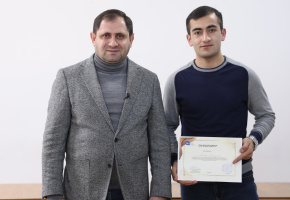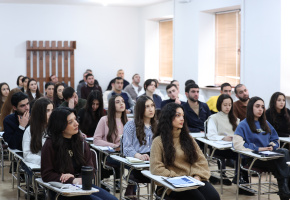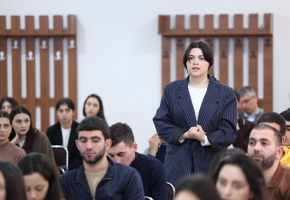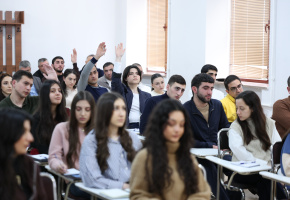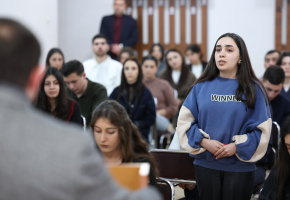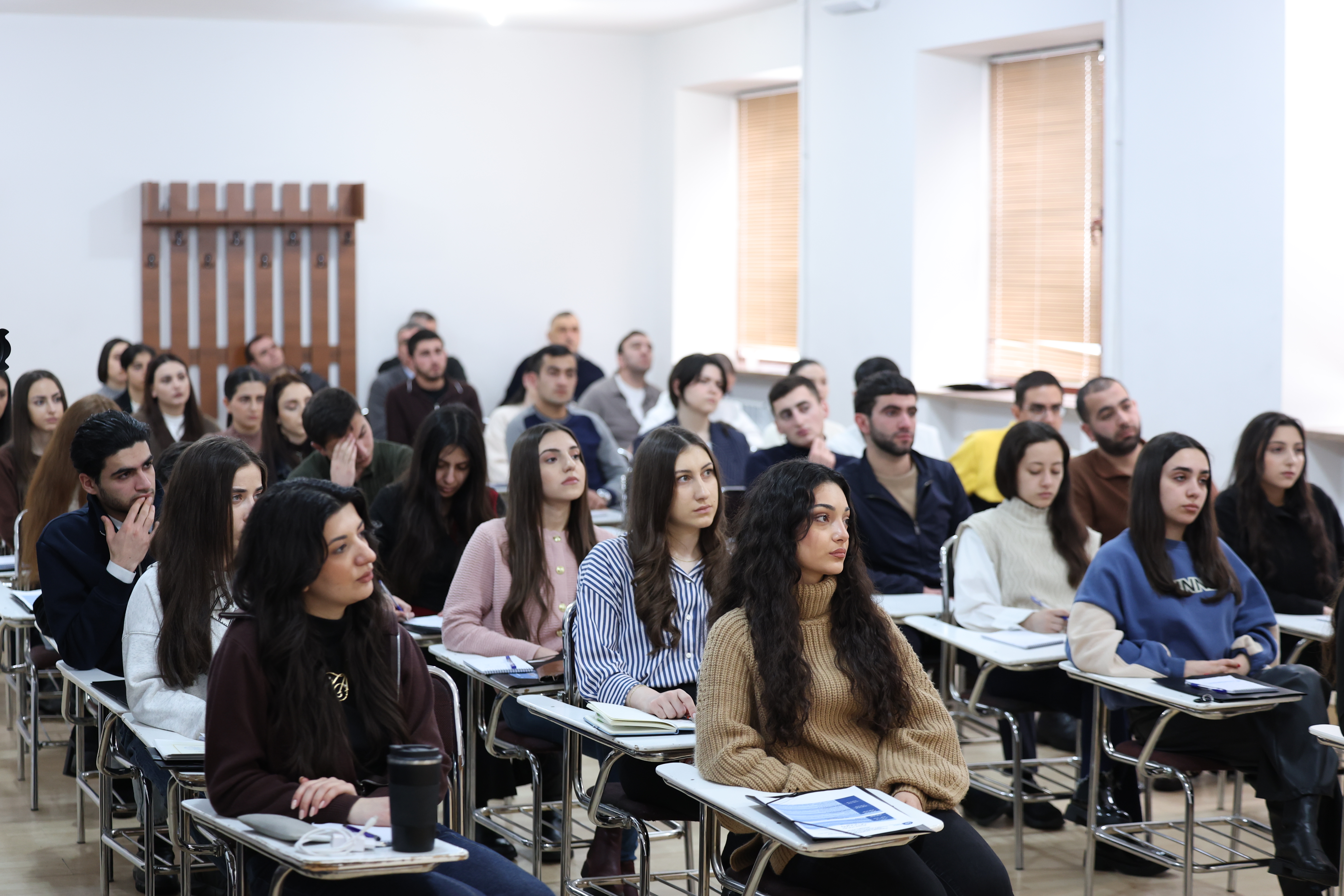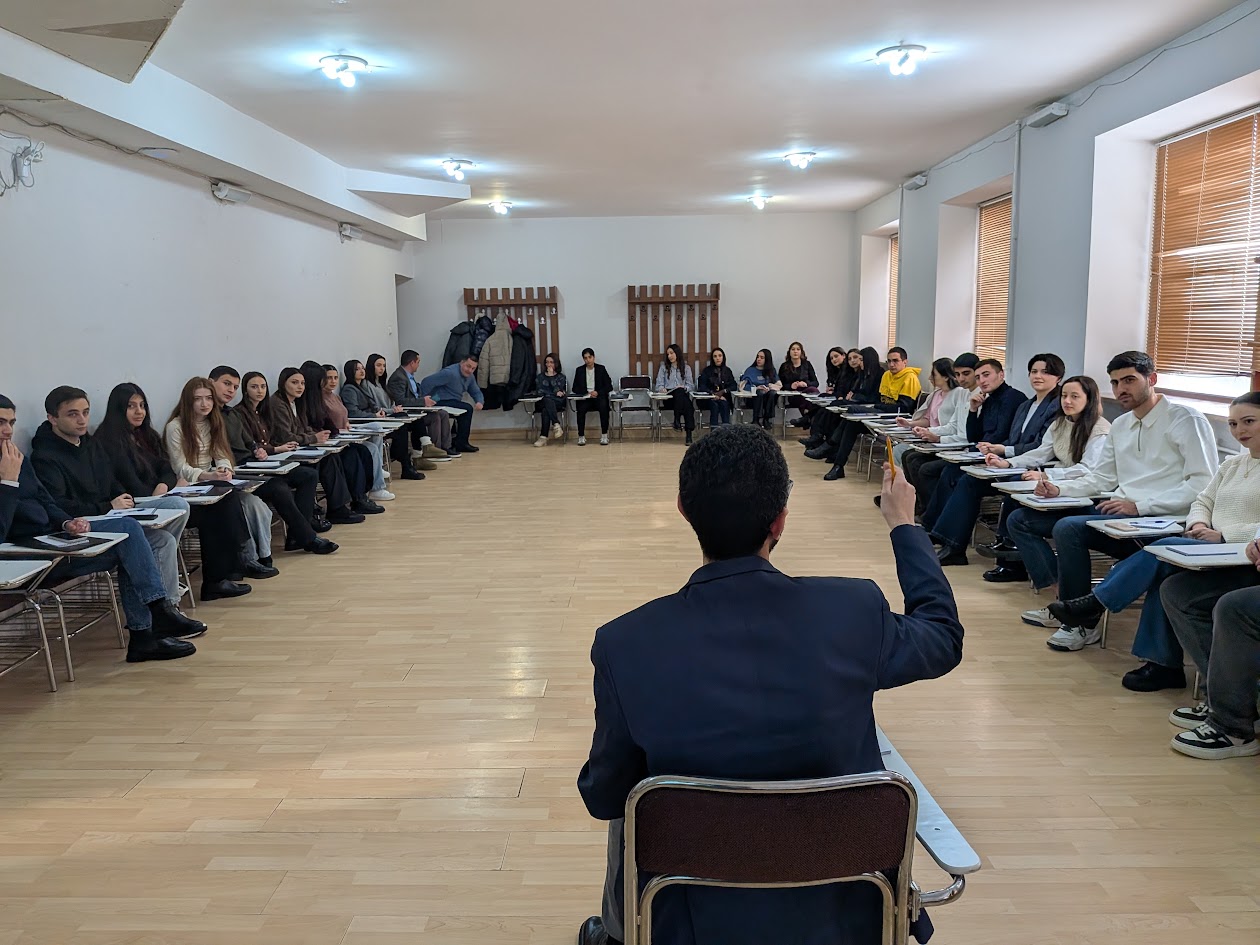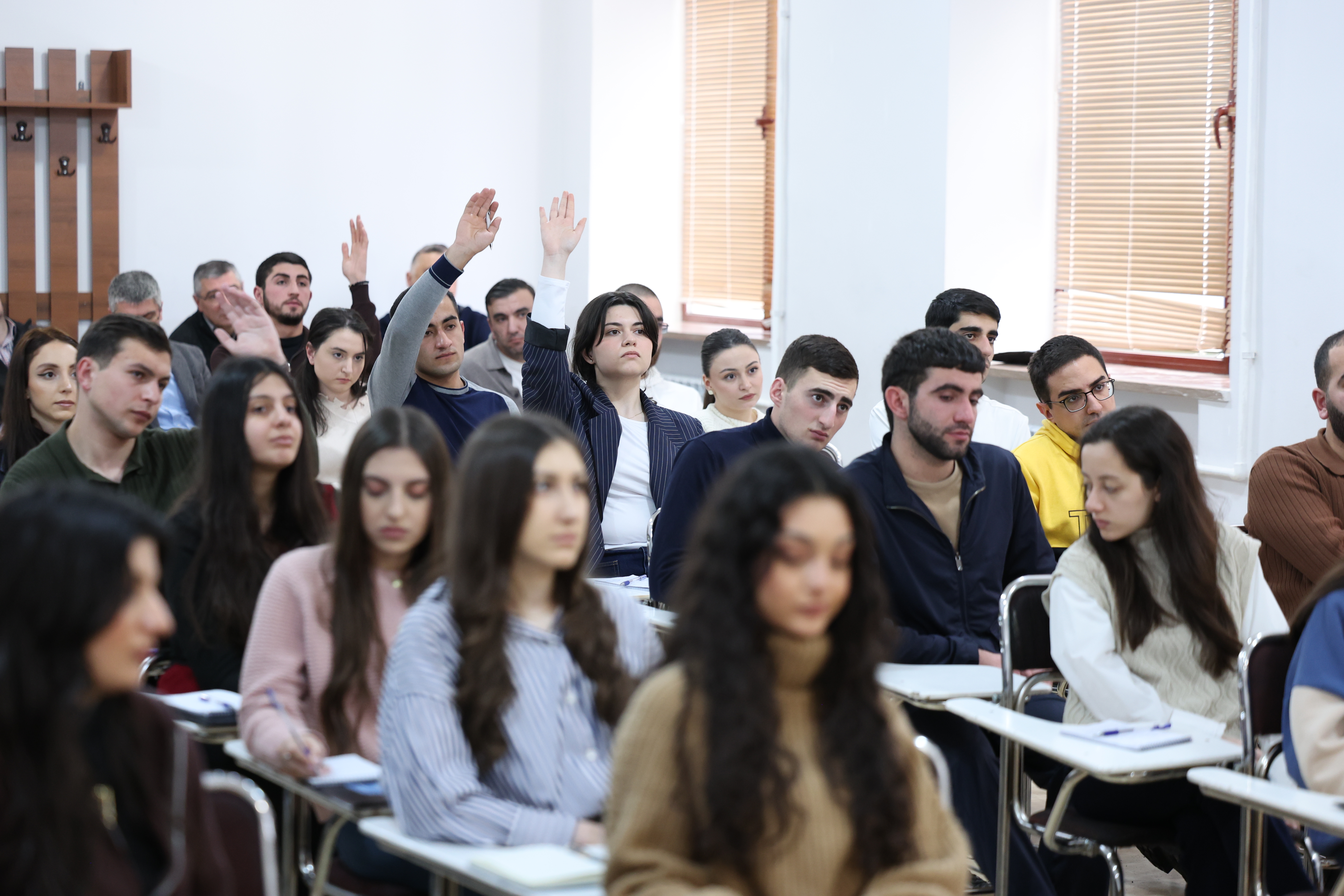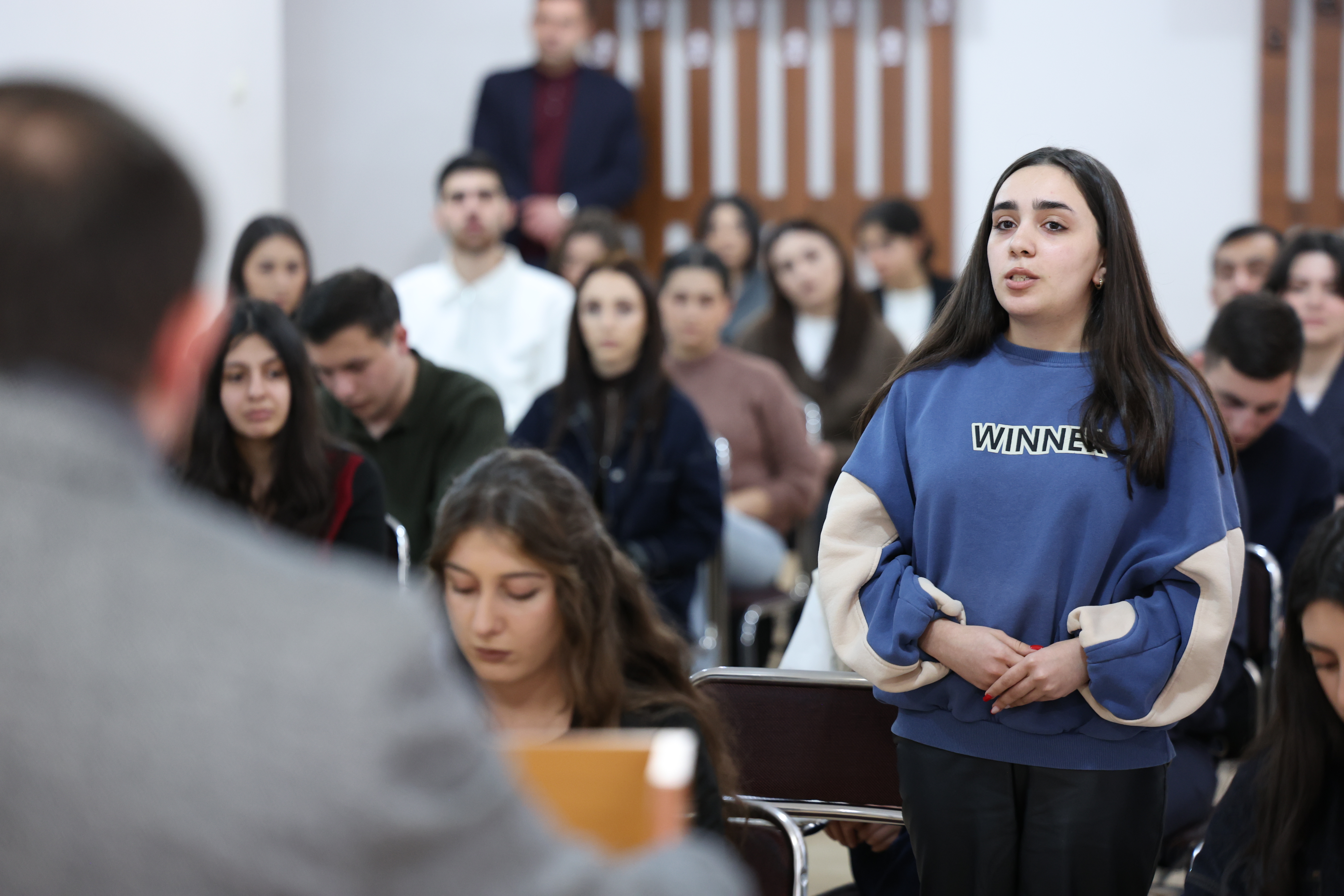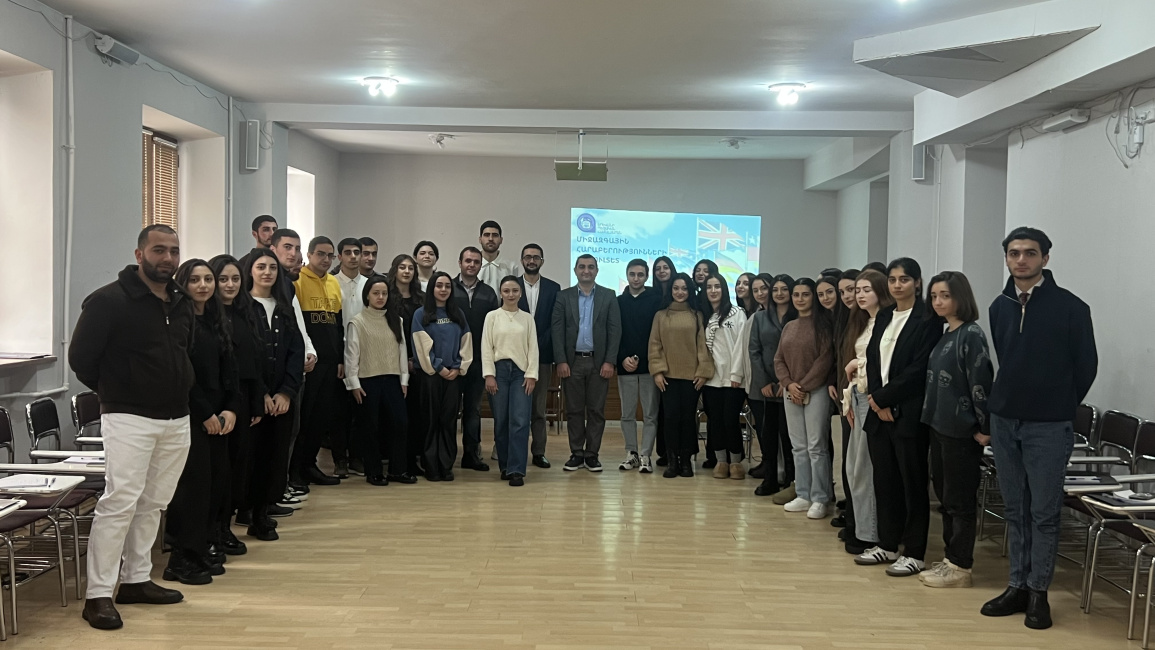
From February 13 to 15, the winter school titled "Sustainability and Development: Armenia's Challenges in the Transforming World" was held in Tsaghkadzor, organized by the YSU Faculty of International Relations. The program aimed to deepen students' professional knowledge, develop analytical thinking, and cultivate a culture of debate on global processes.
By combining theoretical knowledge with practical skills, participants had the opportunity during the winter school to analyze Armenia's political, economic, security, and social challenges within the rapidly changing international environment.
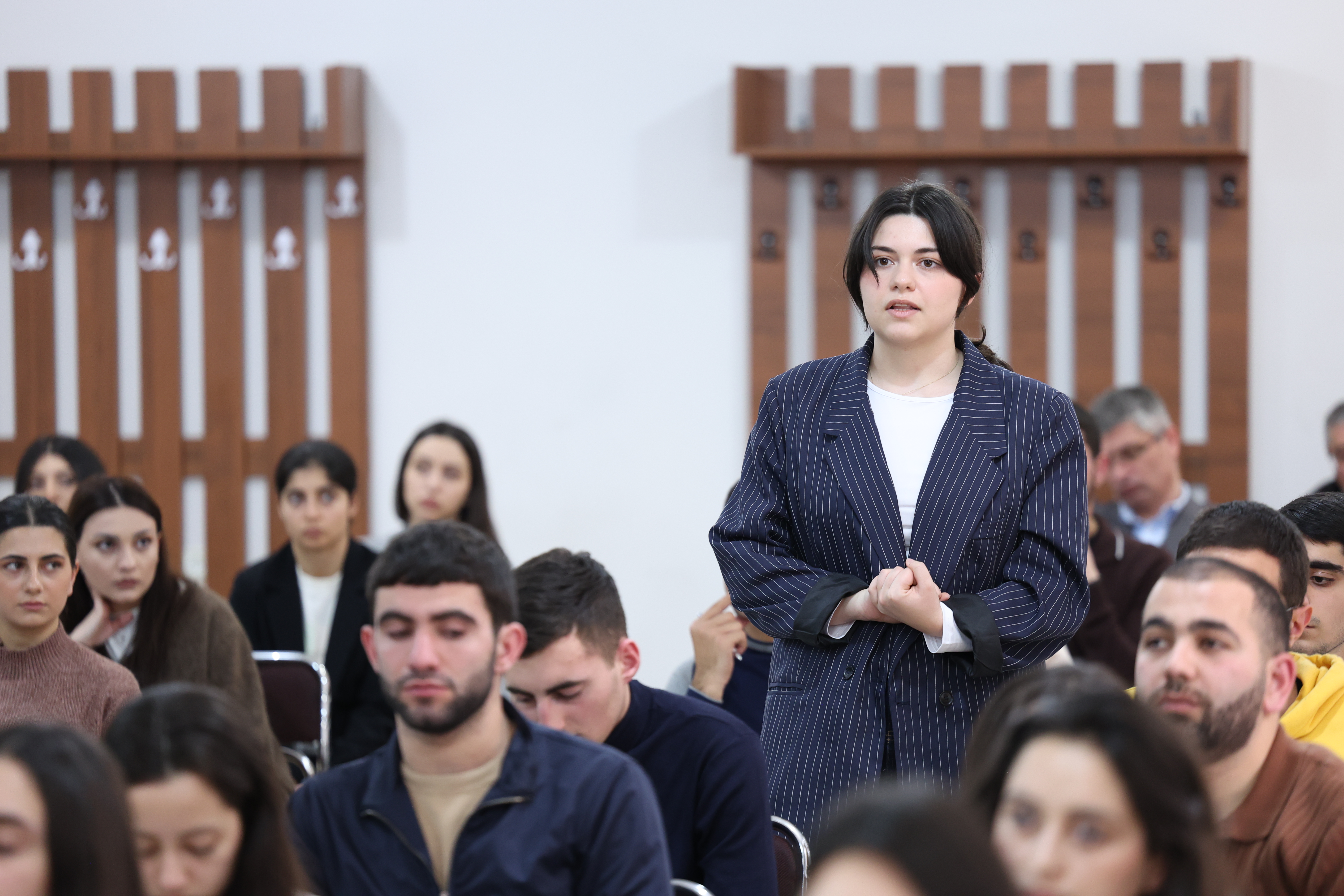
The program featured presentations by representatives of Armenian state institutions, field experts, professors, and researchers, who addressed topics such as regional security dynamics, the sustainable development agenda, global power restructuring, and Armenia's foreign policy priorities. The discussions were conducted in an interactive format, encouraging active student engagement and fostering a culture of debate.
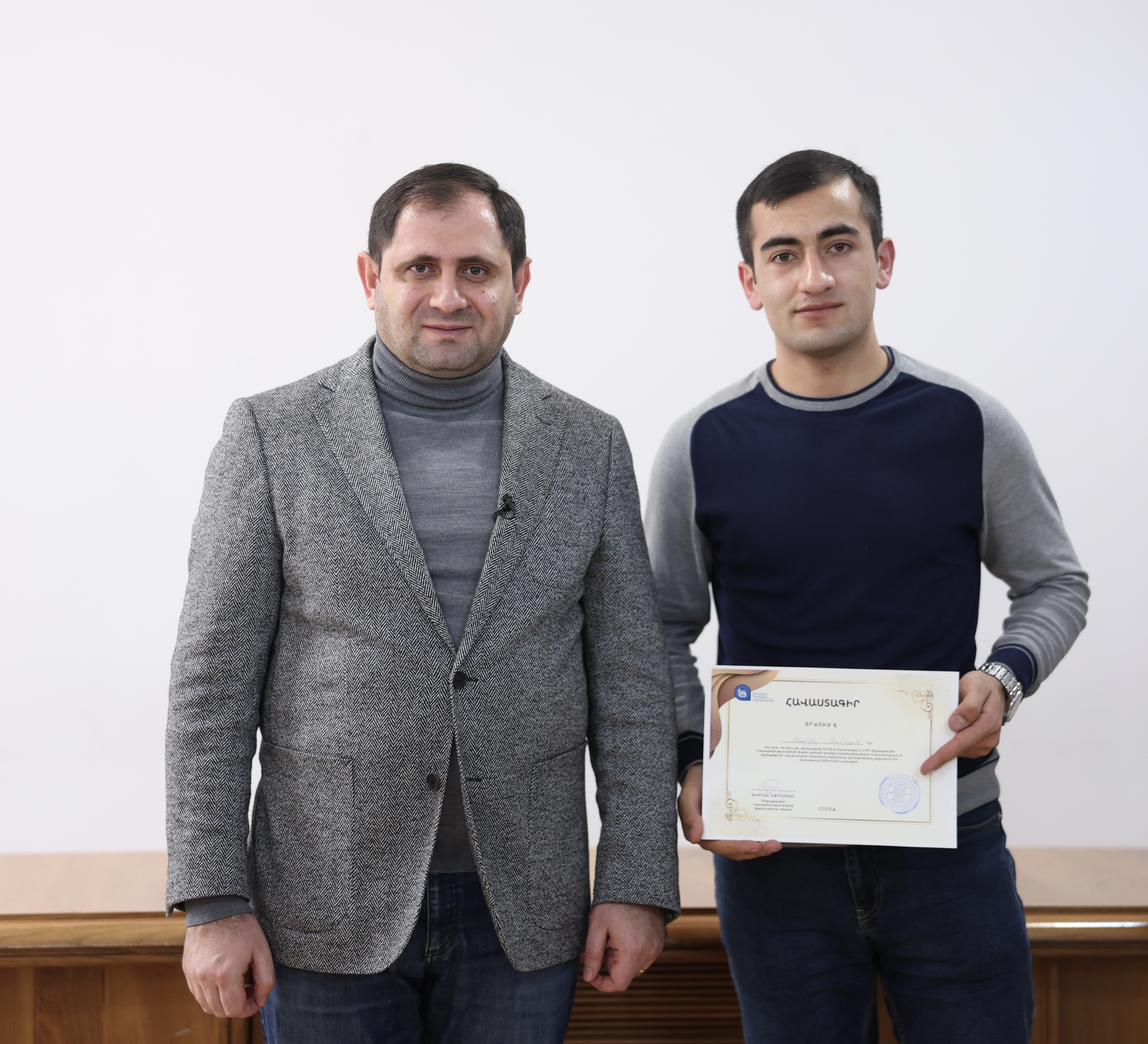
Lecturers included Armenian Minister of Defense Suren Papikyan, who presented on "New Resources for Armenia's Security Resilience in the Transforming World"; Deputy Minister of Internal Affairs Armen Ghazaryan, on "Institutional Modernization as a Guarantee of Resilience"; Head of the Secretariat of the Ministry of Territorial Administration and Infrastructure Varuzhan Harutyunyan, on "Strategic Infrastructure Projects in Armenia"; Dean of the YSU Faculty of International Relations Tigran Yepremyan, on "The Transformation of the Global Order and Challenges Facing Armenia"; Head of the Chair of Public Administration Vahagn Aglyan; Head of the Chair of Political Science at the Faculty of International Relations Ashot Aleksanyan and Associate Professor Gor Petrosyan, on "Challenges to the Resilience of Armenia's Political System"; and Head of the Chair of International Relations and Diplomacy Zhak Manukyan, on "The South Caucasus as a Geopolitical Membrane".
The winter school turned into an effective platform for professional networking and experience sharing. It contributed to the development of students' strategic thinking, enhanced sectoral awareness, and fostered a sense of civic responsibility.
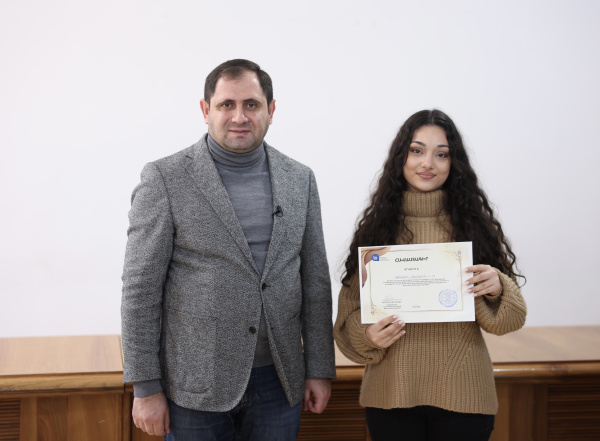
International relations student Grizelda Galstyan shared her impressions of the program: "Participation in the winter school was an exceptionally valuable and enriching experience for me. The program stood out for its contemporary and in-depth thematic coverage. The discussions on resilience and current geopolitical developments were particularly engaging, as they are highly relevant in today's international context. Through these discussions, we re-evaluated entrenched stereotypes, approached various processes from alternative perspectives, cultivated a more critical approach, and conducted comprehensive analyses. Exchanging professional insights with representatives of state institutions and other sector leaders was particularly valuable. This format allowed us to gain a more complete understanding of the scope and complexity of the current challenges, as well as a deeper appreciation of the multifaceted diplomatic processes in contemporary international relations."
The event also provided students with opportunities to establish professional connections and exchange experiences, thereby broadening their horizons, enhancing critical thinking, and promoting civic-minded perspectives.
Gor Petrosyan, Deputy Dean of the Faculty of International Relations, Head of the Faculty Office, and PhD in Political Science, highlighted the program's significance: "At the Faculty of International Relations, priority is given not only to classroom education but also to extracurricular meetings and lectures organized in informal formats, which continuously develop students' professional skills and knowledge. In this context, the faculty's traditional initiatives include summer and winter schools, which serve as effective platforms for combining theoretical knowledge with practical experience. Within these programs, students have the opportunity to attend lectures by both the faculty's academic staff and policymakers and practitioners."
Such initiatives are important not only for engaging students in discussions of contemporary issues but also for involving them in shaping Armenia's development pathways.