September 25, 2026 | 16:05
Educational programs
International cooperation
Events
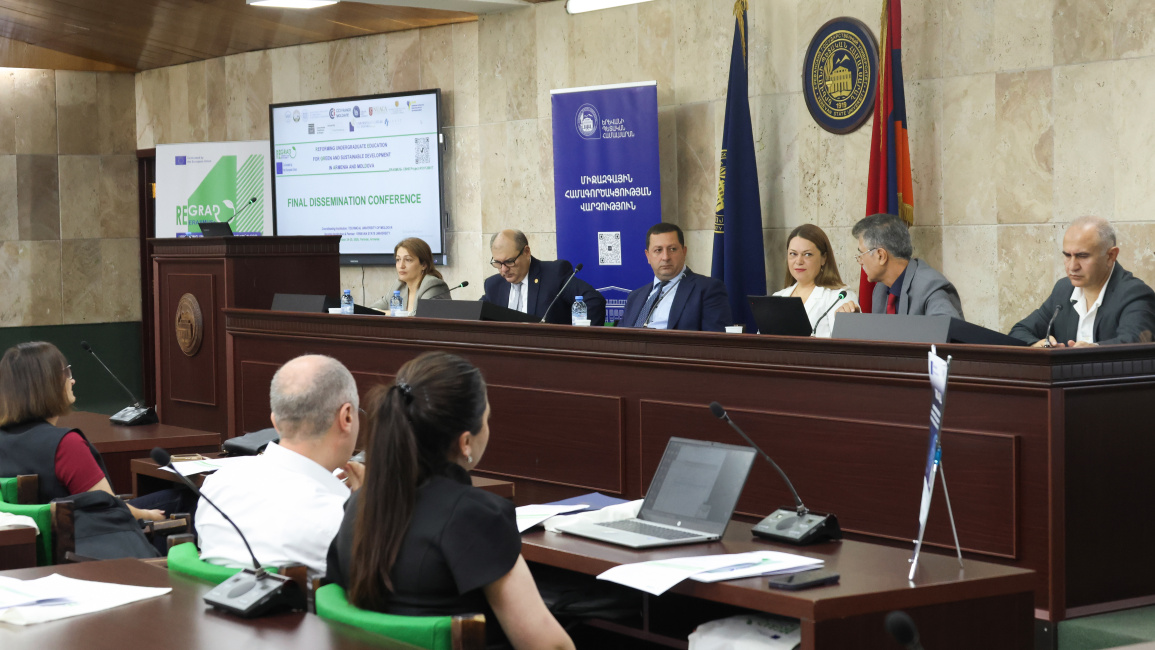
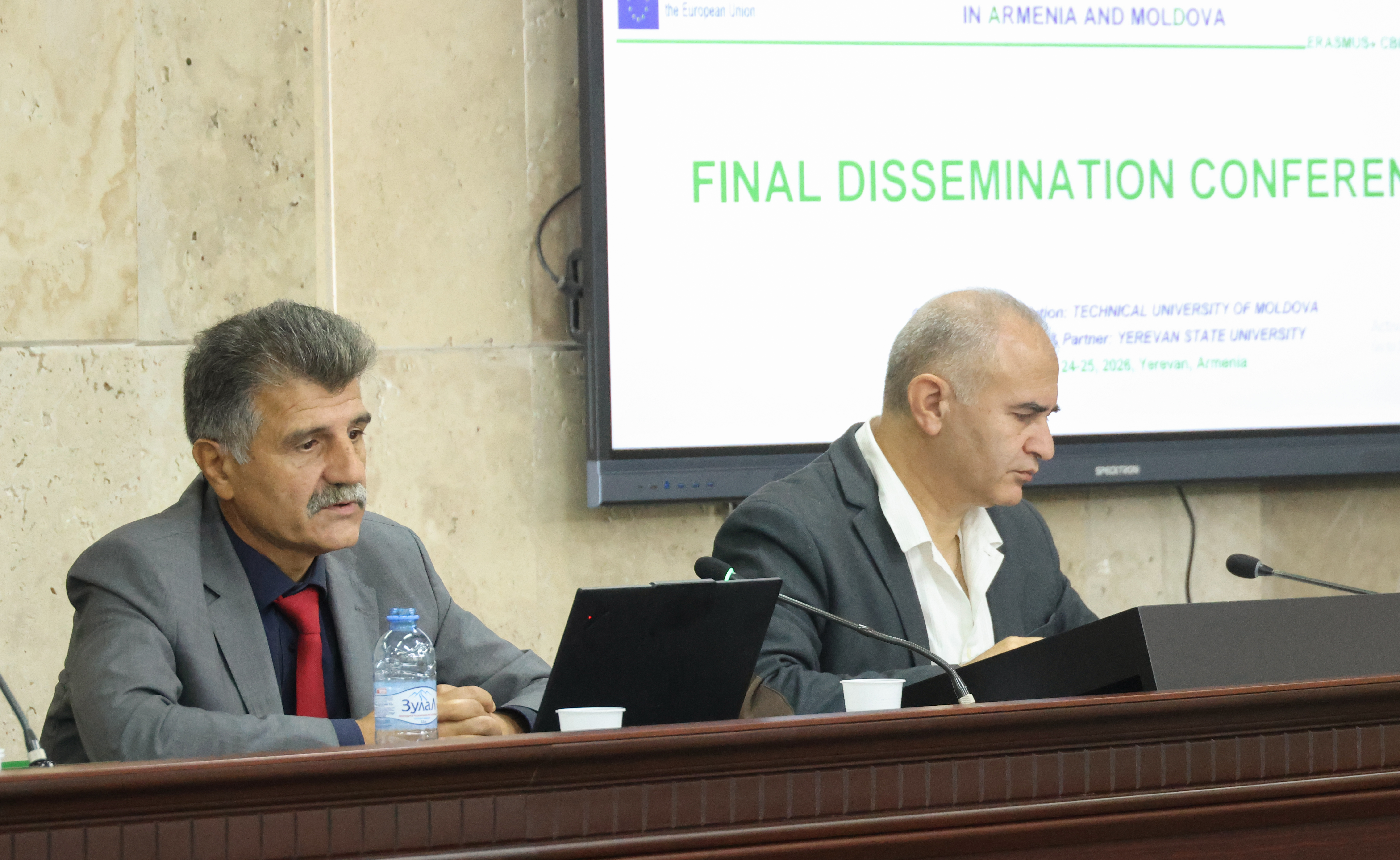
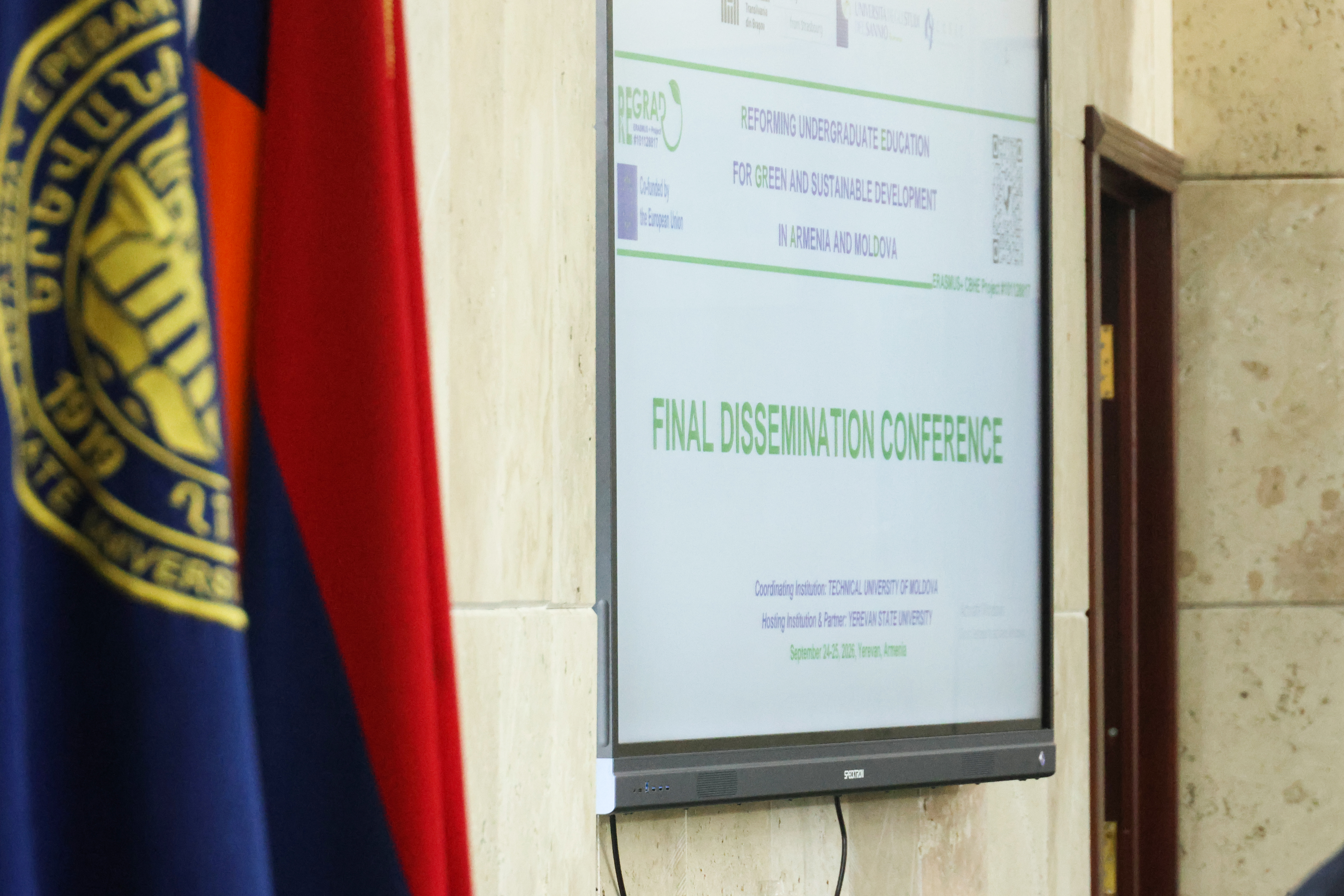
Within the ReGrad project, bachelor's degree programs were revised, sectoral qualification frameworks were developed, new teaching and learning approaches were introduced, and capacity-building activities for academic staff were carried out at partner universities.
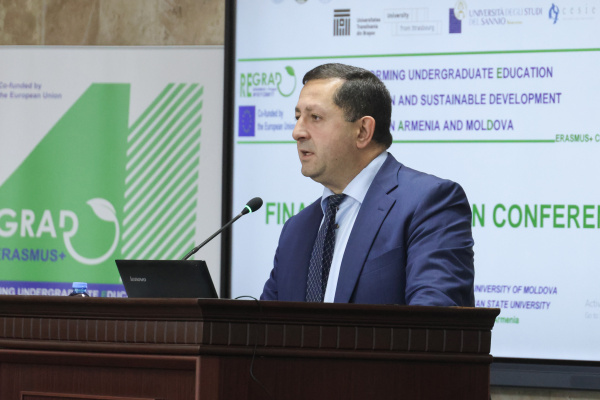
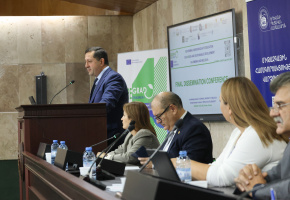
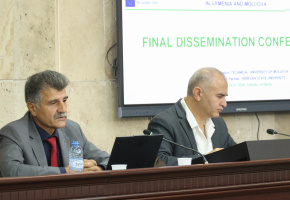
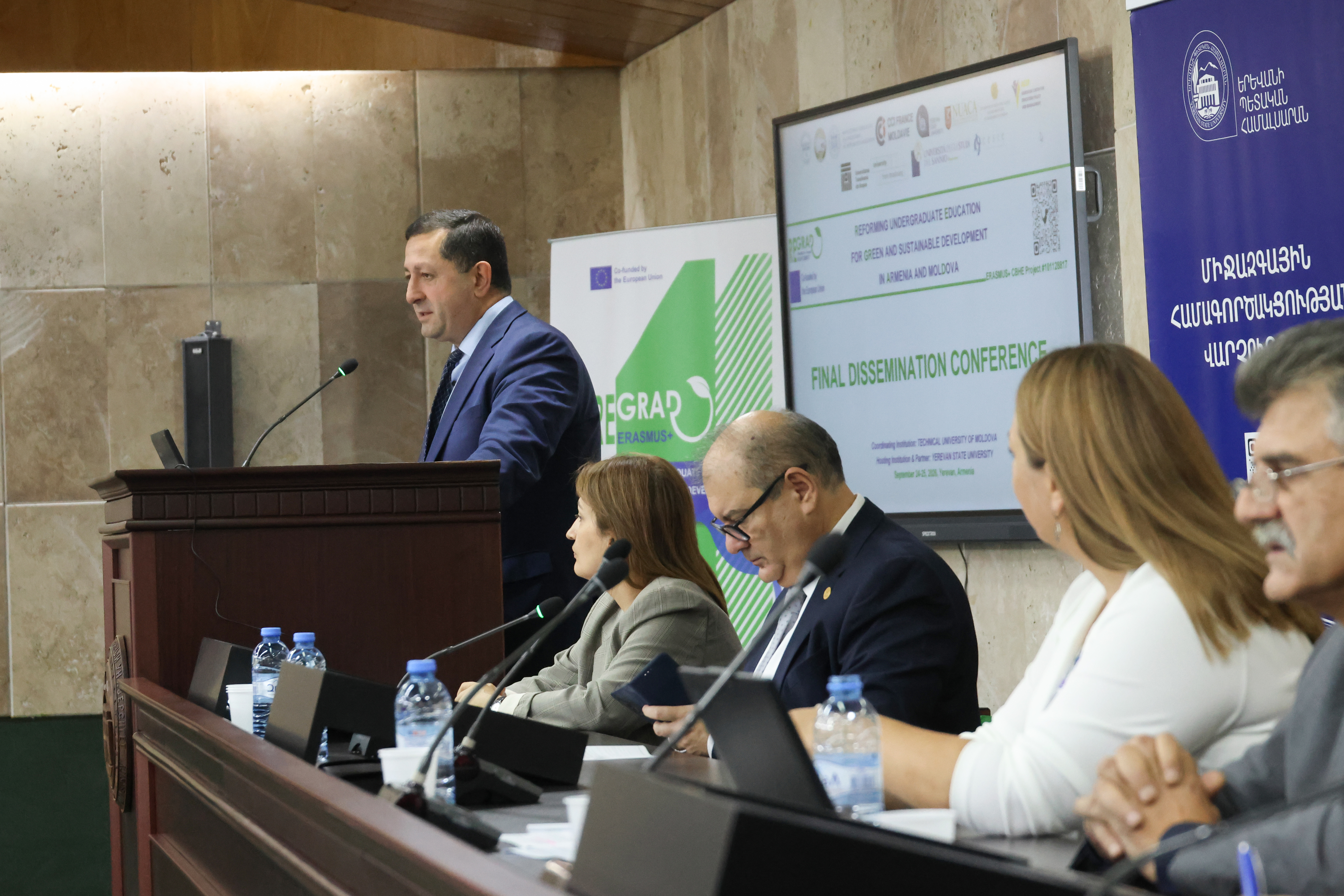
In his address, YSU Rector Hovhannes Hovhannisyan noted that the project has helped advance the reform and modernization of bachelor's degree programs by aligning them with sustainable development priorities and the requirements of inclusive, digital and green education.
"I am confident that the conference will serve as an important platform for presenting the project's key achievements, including revised bachelor's degree programs, the introduction of new teaching and learning approaches, and capacity development for academic staff at partner universities," he said.
Partners reflect on project
Eduard Monaico, Vice-Rector for Research and Innovation at the Technical University of Moldova, who joined the event remotely, stressed that the project is part of a broader process of European integration and institutional modernization for the Technical University of Moldova.
"Such projects are important not only for their concrete results, but also for the lasting partnerships and institutional changes they create. I therefore see today's conference not only as a conclusion of the project, but also as an opportunity to build on what we have achieved together and identify new avenues for cooperation," he emphasized.
ReGrad Project Officer Paul Harris, who also joined the event remotely, reflected on the project's implementation and results.
"I have been particularly impressed by the way the methodology is applied across different academic disciplines, ranging from engineering to public administration. This interdisciplinary approach is highly valuable for disseminating the results. The involvement of the ministries and the project's structural effect on the countries' education systems are also clearly visible," he said.
Lilia Parhomenco, Head of the Public Policy and European Integration Department at Moldova's Ministry of Education and Research, joined remotely and congratulated the teams on the project's successful outcomes.
"Following reforms to funding and quality assurance mechanisms, it is now time for projects that strengthen and enhance academic programs. ReGrad has capitalized on the knowledge that exists in higher education," she noted.
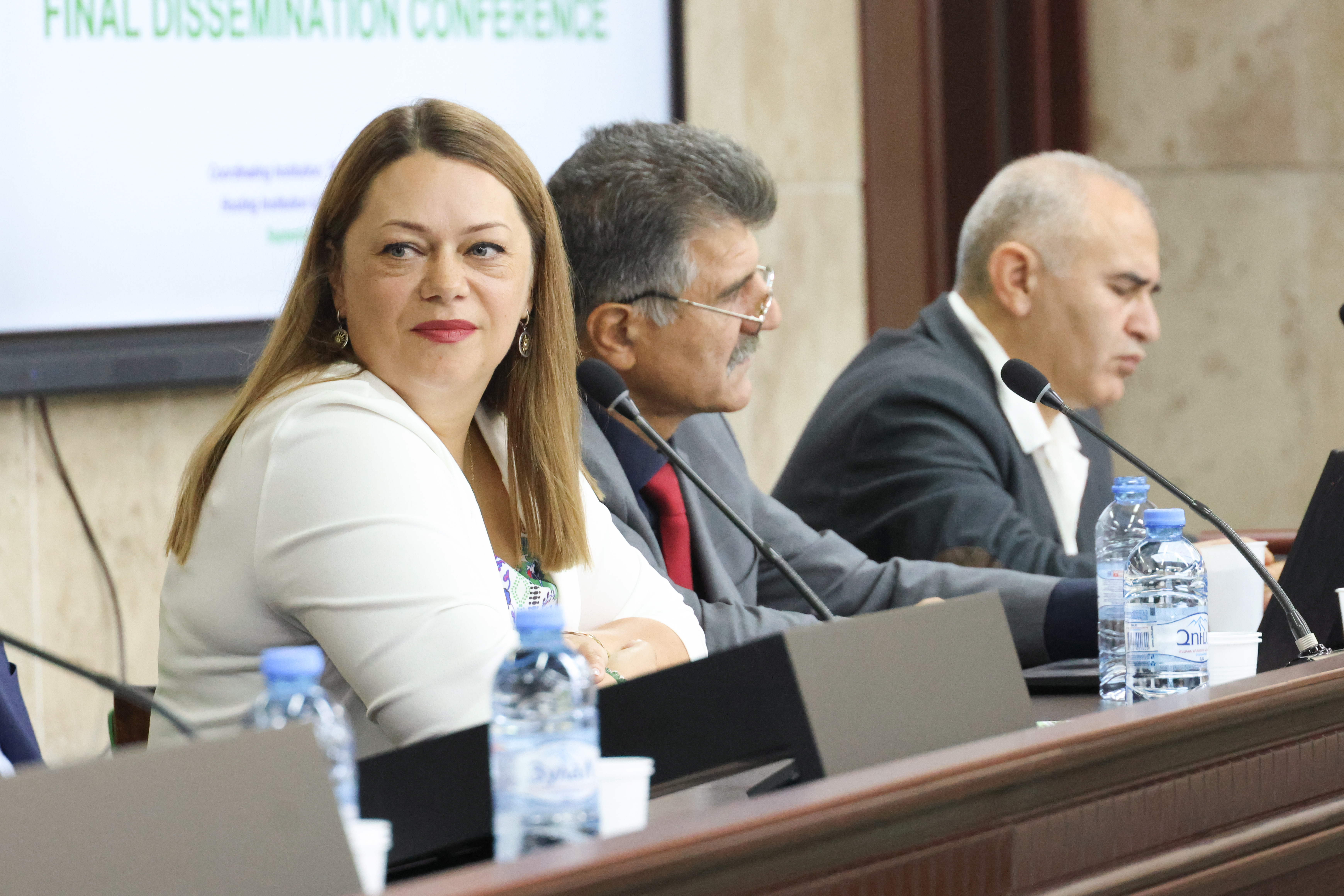
ReGrad Project Coordinator Nina Putuntean emphasized that, for her, the added value of European cooperation lies not in policies, frameworks or documents, but in people and opportunities.
"This is the real value of the project: we want to provide our students with better education and more relevant skills, strengthen links with society and the labor market, and help the new generation shape the future of our institutions and our countries," she said.
Mariana Sargsyan, Coordinator of the National Erasmus+ Office in Armenia, placed ReGrad within the broader context of the Erasmus+ program: "ReGrad is part of a larger process. Eight Erasmus+ capacity-building projects are being completed this year. As a result of the 2026 call, Armenian universities will participate in four new projects focusing on artificial intelligence, interdisciplinarity and entrepreneurship. An important question is what happens after the project ends: the sustainability of its results is key."
Varazdat Hovhannisyan, Head of the Education Development and Innovation Center at the National University of Architecture and Construction of Armenia, presented the changes implemented at the university, noting that a number of academic programs had been reformed and aligned with labor market needs.
Changes to academic programs at YSU
A number of changes were introduced to the YSU bachelor's degree programs "Biology" and "Public Policy and Management" as part of the ReGrad project.
According to Vahagn Aglyan, Head of the YSU Chair of Public Administration, the changes aim to improve the program's learning outcomes and teaching approaches. Components of sustainable development, environmental protection and digital transformation have been integrated into the educational process, while new courses reflecting current priorities in green development and digital transformation in the European Higher Education Area have also been introduced.
"In particular, three new courses have been added to the curriculum: Digital Transformation and Ecology, Environmental Risk Management, and Environmental Protection and Urban Development. At the same time, the content and teaching methods of three other courses — Comparative Public Policy and Management, Theories and Policies of Sustainable Development, and Public Policy in the EU — have been revised."
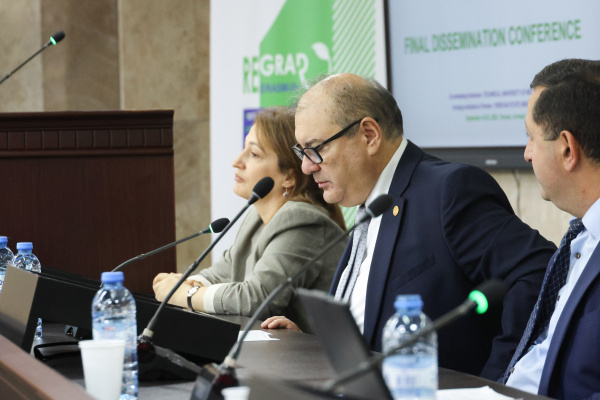
Karen Ghazaryan, Dean of the Faculty of Biology, noted that three new courses have been introduced into the "Biology" bachelor's degree program: Environmental Protection and the Concept of Sustainable Development, Ecology and the Concept of Sustainable Development, and Hydroecology and Sustainable Use of Water Resources. The content of the courses Ecotoxicology, Environmental Monitoring, and Biotechnology has also been improved.
According to Alexander Markarov, Head of the YSU International Cooperation Office, the ReGrad project is also expanding opportunities for international cooperation. In this context, he referred to the Horizon Europe project being implemented with the Technical University of Moldova, as well as ongoing negotiations with the University of Strasbourg on hosting students at YSU in 2028 for studies in journalism.