September 29, 2026 | 16:30
Education
Competitions
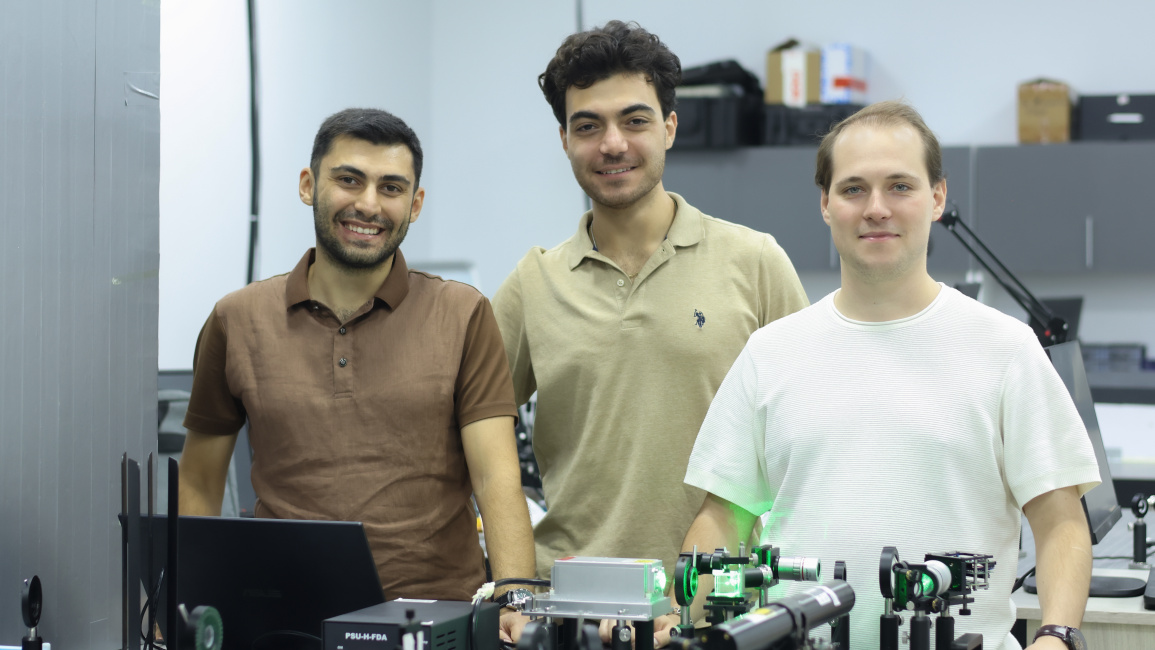
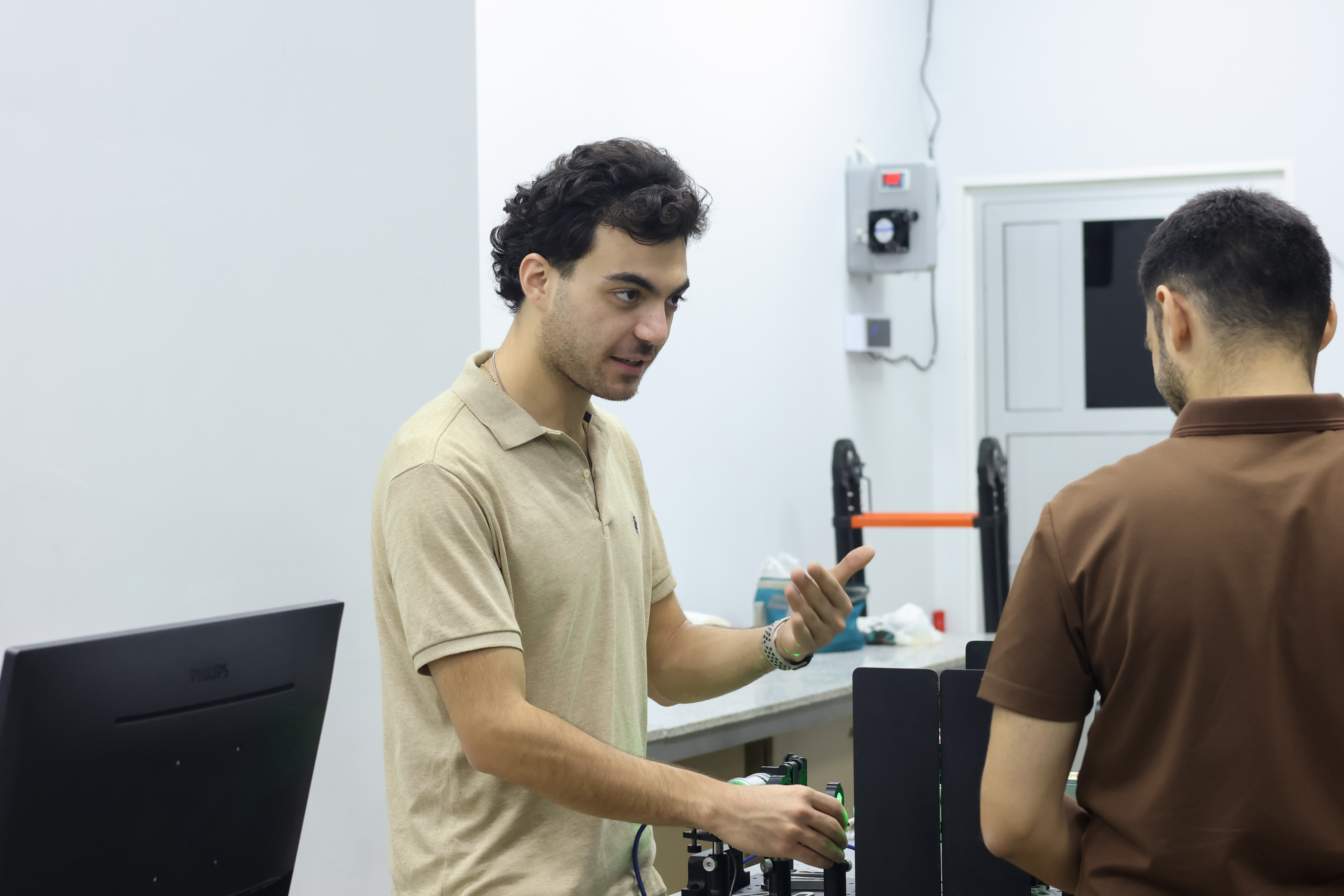
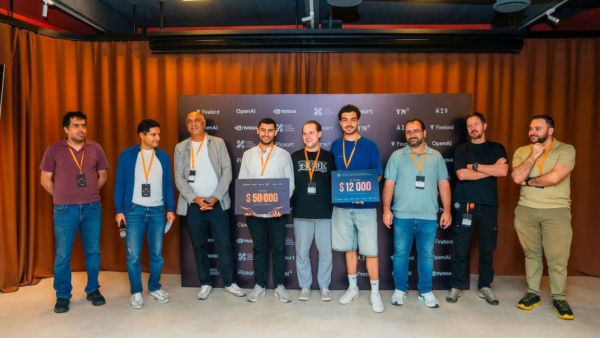
At the Firebird AI international hackathon, the YSU Laboratory of Photonics and Artificial Intelligence team received a $50,000 cash prize and a $12,000 OpenAI usage package. In addition, the team will receive advanced equipment from NVIDIA to support further research. The winning project was developed by Aram Sargsyan, a PhD student at the YSU Institute of Physics and a researcher at the Laboratory of Photonics and Artificial Intelligence, together with laboratory researchers Nikita Marinin and Narek Meloyan.
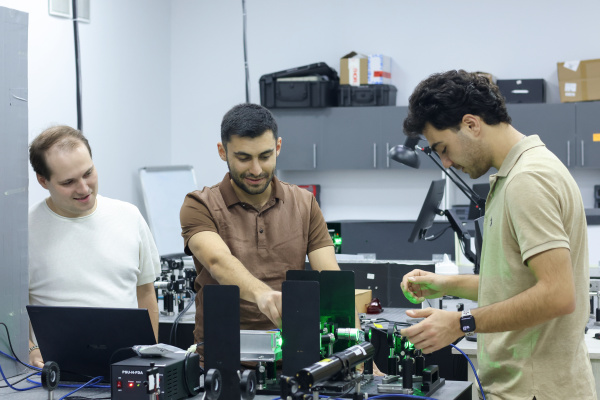
Aram worked on optical system calculations and the integration of AI solutions and presented the project results to the jury in the final stage of the competition.
Narek was responsible for developing the software architecture and environment and providing the tools needed for the AI system to operate, making it possible to automate the research process.
Nikita contributed his expertise in experiments with liquid crystals and in the development of optical and computational systems.
According to the team, more than 210 teams applied to participate in the hackathon, with around 20 selected for the next stage. Participants were given 24 hours to develop technological prototypes addressing real-world problems using artificial intelligence tools, including OpenAI Codex. At the end of the allotted time, the teams presented and demonstrated their projects, which the jury evaluated before selecting three winning teams.
The project demonstrates a new way of applying AI in scientific research: the system not only analyzes data but also interacts directly with the physical laboratory environment and experimental equipment.
"AI Integrated Labs": autonomous research ecosystem
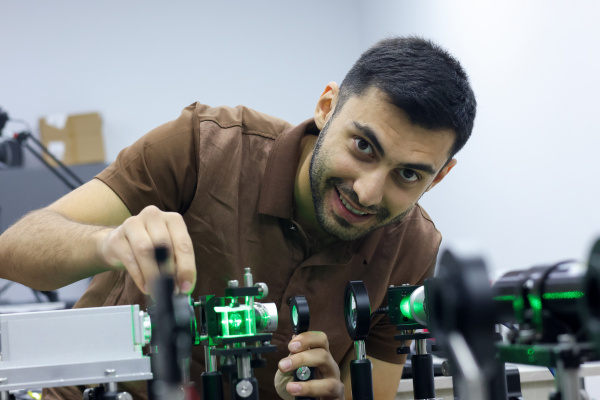
During the competition, the team presented the "AI Integrated Labs" project, an autonomous system that integrates a laboratory's physical and optical experimental equipment, such as cameras, lenses and other devices, with the OpenAI technology platform and similar environments.
"Our main idea was for artificial intelligence not only to analyze scientific data but also to work directly with real laboratory equipment and independently decide what experiments to conduct next. Within 24 hours, we were able to turn that idea into a working system," Aram says.
The system addresses one of the challenges in scientific research: the time-consuming setup, synchronization and safe operation of equipment. Artificial intelligence not only analyzes data but also directly controls physical devices and the course of the research.
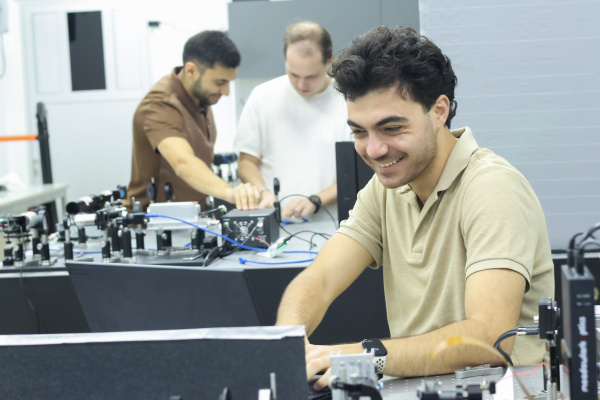
"We brought our own idea and problem to the competition, while the organizers provided us with the appropriate environment and tools. In particular, we also used OpenAI tools, which helped us speed up the workflow and further develop our solution. During the presentation, we did not simply describe the idea; we also demonstrated a working prototype, showing the jury how it operated in practice," Narek says.
300 experiments and a scientific paper in just five hours
During the 24-hour hackathon, the team not only developed the platform but also used it to solve a real scientific problem. The system was tasked with solving complex mathematical and physical problems with practical applications, ranging from optimizing GPU workloads to managing traffic congestion.
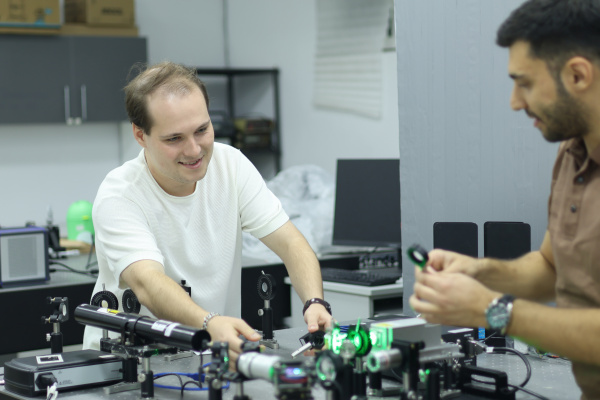
Overnight, in just five hours and without direct human intervention, the AI system conducted more than 300 physical experiments, a task that would have required months of human work.
"One of the most difficult parts was connecting the artificial intelligence system to real physical equipment. As a result, the system was able to control the experimental process independently and conduct more than 300 physical experiments in a single night," Nikita emphasizes.
Based on the resulting data, the AI independently produced a draft scientific paper on new methods for optimizing an optical Ising machine.
Equipment gives YSU team advantage and calling card
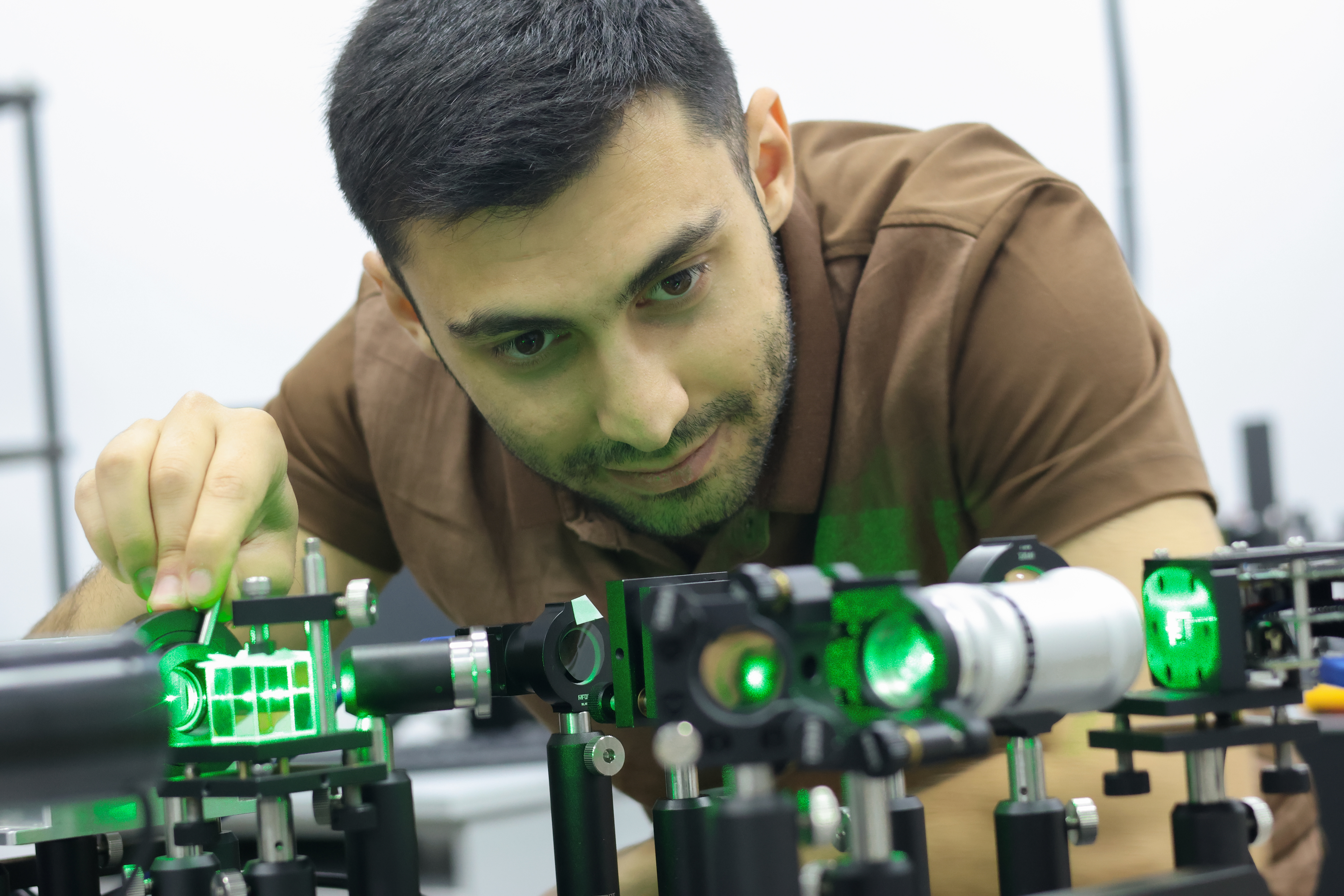
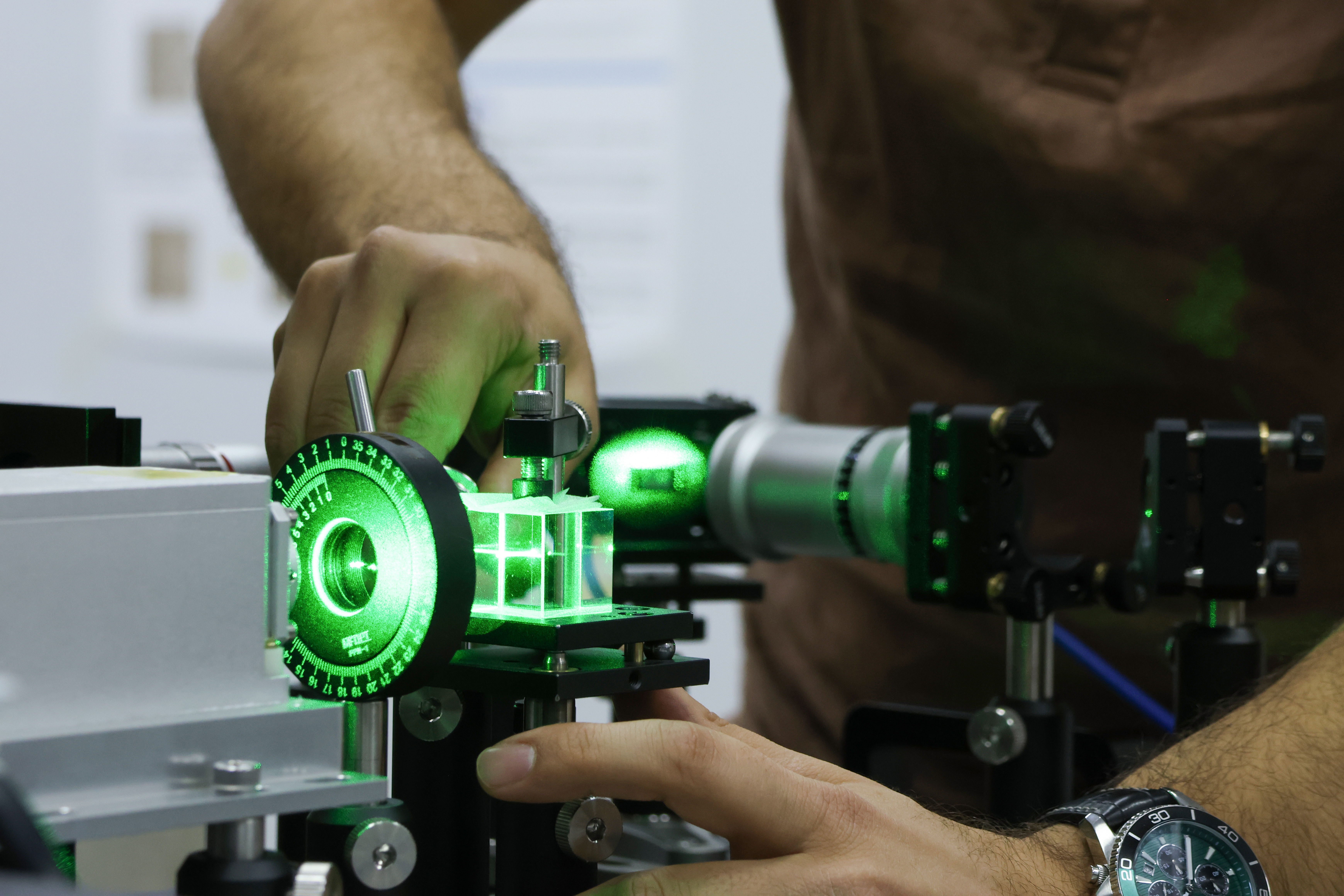
Under the competition rules, physical equipment was not required, but the hackathon organizers gave preference to projects involving Physical AI. The YSU team also brought physical equipment to the competition: an optical system comprising a micromirror array, specialized cameras, lenses and complex microcircuits. Rather than offering a purely software-based solution, the team demonstrated the real-world integration of AI and physical equipment, allowing the jury to see this integration in operation.
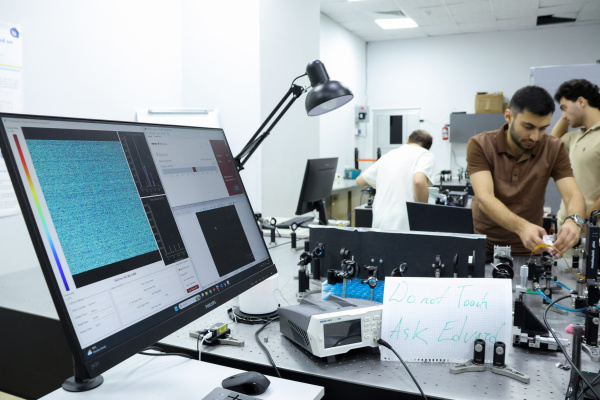
"The equipment was not mandatory, but preference was given to projects involving Physical AI — an approach that seeks to connect the physical world with artificial intelligence. We not only created this ecosystem but also demonstrated that it can operate and deliver impressive results," Aram stresses.
Humans and AI in scientific research
The YSU Laboratory of Photonics and Artificial Intelligence team plans to continue developing this line of research by expanding the use of AI in scientific research and automating experimental processes.
Asked whether AI will eventually replace researchers, the team says humans will nevertheless continue to play a central role.
"Even the best AI model could not have solved this problem without the environment we created and our domain expertise. Humans develop the idea, provide AI with the tools and the task, while AI automates the process and speeds it up many times over," Narek says.
Although the technology's initial applications are intended for research laboratories, it could later be used in industrial sectors as well.
The hackathon result marks a new opportunity for automating research processes: advanced computing systems can directly control laboratory equipment, accelerating experiments and scientific research.