Home
envelope
ՀայերենРусскийEnglish

Main Navigation (Eng)

  • Admission
    • Undergraduate admission
    • Master’s degree admission
    • Postgraduate admission
    • Foreign Students
    • Preparatory courses
    • Work Carried out with Applicants
    • YSU STEM High School
  • Education
    • Guide Book for First Year Students
    • Educational programs
    • Granting qualification of a pedagogue
    • Center for Academic Writing
    • Continuing education
    • Academic Calendar
    • Olympiad
  • Science
    • Open science
    • Conferences
    • Library
    • Grants
    • Publishing House
    • Doctoral Thesis Defence Councils
    • HRS4R
  • News and events
    • Events
    • Activities
    • News
    • Newsletter
    • Announcement
    • Photo gallery
    • Video gallery

Secondary Navigation (Eng)

  • About YSU
    • YSU Management
    • YSU Symbols
    • YSU International Cooperation
    • Quality assurance
    • YSU History Museum
    • Vacancies
    • FAQ
  • Structure
    • YSU Faculties and Educational Centers
      • Faculty of Geography and Geology
      • Faculty of Theology
      • Faculty of Oriental Studies
      • Faculty of European Languages and Communication
      • Faculty of Journalism
      • Faculty of Informatics and Applied Mathematics
      • Faculty of Law
      • Faculty of Biology
      • Faculty of Armenian Philology
      • Faculty of International Relations
      • Faculty of History
      • Institute of Physics
      • Faculty of Russian Philology
      • Faculty of Sociology
      • Faculty of Economics and Management
      • Faculty of Philosophy and Psychology
      • Faculty of Chemistry
      • Faculty of Mathematics and Mechanics
      • Pedagogy and Education Development Center
      • Center for European Studies
      • Institute of Pharmacy
      • Chair of Civil Defense
      • Chair of Physical Education and Sports
      • Information Technologies Educational and Research Center
    • Column Wrapper
      • YSU STEM High School
      • YSU Ijevan Branch
    • Scientific Centers and Laboratories
      • Institute for Humanities Research
      • Research Institute of Biology
      • Institute for Armenian Studies
      • Center for Mathematical and Applied Research
      • Research Center for Chemistry
      • Research Center for the Institute of Pharmacy
      • Research Laboratory of Applied Sociology
      • Research Institute of Physics
    • Scientific and Educational Centers
      • Scientific and Educational Center for Control and Monitoring of the Quality of Medicines
      • American Studies Center
      • Legal Clinic
      • Research Center-Library of Greek Studies
      • Russian Center
      • Center for Russian Studies
      • Distance Learning Laboratory of Sociology
    • Column Wrapper
      • Banner
    • Administrative Divisions of YSU
      • Academic Secretary
      • Center for Doctoral Education
      • General Division
      • YSU History Museum
      • Department of Energy System Operation
      • Financial Analysis Department
      • Human Resources Department
      • Center for Admissions and Affairs with Applicants
      • Vehicle Fleet
      • Business Incubator
      • Byurakan Industrial Practice Base
      • Medical Center
      • Science Policy Department
      • Procurement Planning Department
      • Dilijan Sports and Health Center
      • YSU Archive
      • Publishing House
      • Legal Service
      • Marketing Department
      • International Cooperation Office
      • Tsaghkadzor training and production base
      • Cultural Center
      • Fire Safety Service
      • Alumni and Career Center
      • Hankavan Industrial Practice Base
      • Accounting Department
      • Center for Quality Assurance
      • Department for Special Affairs
      • Guest House
      • Student Dormitory
      • Educational-Methodological Department
      • Marie and Sarkis Izmirlian Library
      • Center for Strategic Planning
      • Rectorate
      • Rector's Office
      • Department of Territory Improvement and Landscape Design
      • Information Technology Department
      • Department of Organization and Control of Economic Activities
  • Structure
  • Alumni and Career
    • Alumni Community
    • Career Center
    • Friends of YSU
  • Student life
    • YSU Student Scientific Society
    • YSU Student Council
    • Art and Culture
ՀայերենРусскийEnglish
envelope

Main Navigation (Eng)

  • Admission
    • Undergraduate admission
    • Master’s degree admission
    • Postgraduate admission
    • Foreign Students
    • Preparatory courses
    • Work Carried out with Applicants
    • YSU STEM High School
  • Education
    • Guide Book for First Year Students
    • Educational programs
    • Granting qualification of a pedagogue
    • Center for Academic Writing
    • Continuing education
    • Academic Calendar
    • Olympiad
  • Science
    • Open science
    • Conferences
    • Library
    • Grants
    • Publishing House
    • Doctoral Thesis Defence Councils
    • HRS4R
  • News and events
    • Events
    • Activities
    • News
    • Newsletter
    • Announcement
    • Photo gallery
    • Video gallery

Secondary Navigation (Eng)

  • About YSU
    • YSU Management
    • YSU Symbols
    • YSU International Cooperation
    • Quality assurance
    • YSU History Museum
    • Vacancies
    • FAQ
  • Structure
    • YSU Faculties and Educational Centers
      • Faculty of Geography and Geology
      • Faculty of Theology
      • Faculty of Oriental Studies
      • Faculty of European Languages and Communication
      • Faculty of Journalism
      • Faculty of Informatics and Applied Mathematics
      • Faculty of Law
      • Faculty of Biology
      • Faculty of Armenian Philology
      • Faculty of International Relations
      • Faculty of History
      • Institute of Physics
      • Faculty of Russian Philology
      • Faculty of Sociology
      • Faculty of Economics and Management
      • Faculty of Philosophy and Psychology
      • Faculty of Chemistry
      • Faculty of Mathematics and Mechanics
      • Pedagogy and Education Development Center
      • Center for European Studies
      • Institute of Pharmacy
      • Chair of Civil Defense
      • Chair of Physical Education and Sports
      • Information Technologies Educational and Research Center
    • Column Wrapper
      • YSU STEM High School
      • YSU Ijevan Branch
    • Scientific Centers and Laboratories
      • Institute for Humanities Research
      • Research Institute of Biology
      • Institute for Armenian Studies
      • Center for Mathematical and Applied Research
      • Research Center for Chemistry
      • Research Center for the Institute of Pharmacy
      • Research Laboratory of Applied Sociology
      • Research Institute of Physics
    • Scientific and Educational Centers
      • Scientific and Educational Center for Control and Monitoring of the Quality of Medicines
      • American Studies Center
      • Legal Clinic
      • Research Center-Library of Greek Studies
      • Russian Center
      • Center for Russian Studies
      • Distance Learning Laboratory of Sociology
    • Column Wrapper
      • Banner
    • Administrative Divisions of YSU
      • Academic Secretary
      • Center for Doctoral Education
      • General Division
      • YSU History Museum
      • Department of Energy System Operation
      • Financial Analysis Department
      • Human Resources Department
      • Center for Admissions and Affairs with Applicants
      • Vehicle Fleet
      • Business Incubator
      • Byurakan Industrial Practice Base
      • Medical Center
      • Science Policy Department
      • Procurement Planning Department
      • Dilijan Sports and Health Center
      • YSU Archive
      • Publishing House
      • Legal Service
      • Marketing Department
      • International Cooperation Office
      • Tsaghkadzor training and production base
      • Cultural Center
      • Fire Safety Service
      • Alumni and Career Center
      • Hankavan Industrial Practice Base
      • Accounting Department
      • Center for Quality Assurance
      • Department for Special Affairs
      • Guest House
      • Student Dormitory
      • Educational-Methodological Department
      • Marie and Sarkis Izmirlian Library
      • Center for Strategic Planning
      • Rectorate
      • Rector's Office
      • Department of Territory Improvement and Landscape Design
      • Information Technology Department
      • Department of Organization and Control of Economic Activities
  • Structure
  • Alumni and Career
    • Alumni Community
    • Career Center
    • Friends of YSU
  • Student life
    • YSU Student Scientific Society
    • YSU Student Council
    • Art and Culture
  1. Main
  2. News
  3. Iranian historian Ali Kalirad on Armenia, Iran and shared history
November 11, 2026 | 11:28
Science
International cooperation

Iranian historian Ali Kalirad on Armenia, Iran and shared history

The sound of the duduk, an Armenian church or a newspaper printed in Armenian can open a window into a people's history. For Iranian historian and professor Ali Kalirad, encounters like these sparked an early curiosity about Armenia and the Caucasus, which eventually developed into an area of academic research.

Ali Kalirad, Head of the Research Center of the National Library and Archives of Iran, delivered a series of lectures at the YSU Faculty of Oriental Studies. We spoke with him about his academic interests, the historical role of Iran's Armenian community, the Armenian-language press, and the historical ties linking the peoples of the region.

- Mr. Kalirad, how did your interest in history begin, and what drew you specifically to Armenia and the Caucasus? 

- My interest took shape during my childhood and teenage years. It is difficult to point to one specific reason; sometimes the most diverse encounters can spark an interest.  

I remember being drawn to the sound of the duduk. I wondered where the instrument came from and what its history was. Iran has a large Armenian community, and during my teenage years, passing by an Armenian church or seeing a newspaper printed in Armenian made me want to learn more about Armenian culture and language.

I was also interested in the cultures of other peoples in the region. Initially, I studied Armenia's history independently. Later, my interests broadened, and I began conducting academic research.

- Why has the Caucasus been important to Iran, and how is the region's history intertwined with Iran's past?

- For Iranians, the Caucasus has never been a foreign region. During my school years, I had classmates with the surname "Yerevani." Even encounters like these are reminders of the historical ties between Iran and the Caucasus.

The Caucasus has been of geopolitical and economic importance to Iran since ancient times. The peoples of Iran and the Caucasus have also developed strong cultural ties.

Our shared history shows how closely the destinies of countries in the region have been intertwined. Studying these connections is also essential to understanding the present.

- What are the main challenges in studying Armenian-Iranian history today, and how can the archives of the two countries contribute to this work?
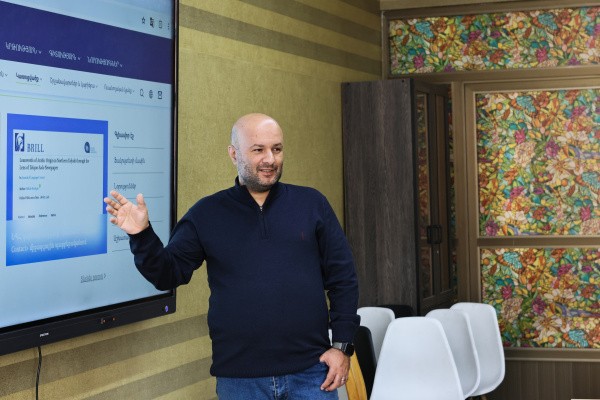
- There is still much work to be done in identifying and studying sources related to our shared history. Armenian researchers need to explore materials preserved in Iran much more, while Iranian researchers should explore the information available in Armenian archives and written sources. Relying exclusively on sources from one country can make it difficult to gain a comprehensive understanding of historical events and the ties between peoples. 

My academic interests primarily concern modern and contemporary history. Armenian-language newspapers and journals published in Iran are also particularly important sources for studying this period. However, Armenian sources are equally valuable for research into earlier periods of Iranian history.

Materials preserved in different languages and in different countries can complement one another, helping us develop a more comprehensive understanding of the past.

- Why is it particularly important to study the Armenian-language press published in Iran and the Caucasus?

- The Armenian-language press is an important yet still insufficiently studied source. This includes periodicals published both in Iran and the Caucasus.

Armenians have played a significant role in Iran's intellectual and public life throughout the country's modern history. However, the contributions of Armenian thinkers have received relatively little scholarly attention.  

One challenge is that many Iranian researchers have limited access to Armenian-language materials and are unfamiliar with them. Due to language barriers, the information preserved in these publications remains outside the scope of academic research. 

An important area of cooperation between Armenian and Iranian scholars should therefore be the study of the legacy of Armenian thinkers and political and public figures. This requires Armenian researchers to engage with Persian-language sources and Iranian scholars to work with Armenian-language materials.

- Have you ever come across an archival document that changed your understanding of a particular period in Iranian or Armenian history?

- It is difficult to single out one document. I have been particularly interested in Iranian written sources on World War I, including materials on events that took place in Anatolia and the Caucasus.

Reading these sources has helped me more deeply understand how interconnected the destinies of the peoples of our region are. A war or catastrophe in one part of the region can also affect other peoples. Therefore, it is important to study both the history of individual countries and the ties between them.

As a historian, I consider studying the region's shared historical heritage essential. It can provide a basis for dialogue and mutual understanding. History also encompasses tragedies and crises, and studying them helps us understand the past and consider how to build a better future.

- What advice would you give young people beginning to study Iranian history and Armenian-Iranian relations?

- They should be prepared for a long journey. Historical research requires sustained effort and a willingness to reconsider one's own ideas and approaches. When new sources or documents emerge, we must also be ready to revise our previous views.  

It is important to recognize that studying Iranian history offers insight into a significant part of the region's broader history. This is particularly relevant for those seeking to understand the historical ties between the Caucasus and neighboring peoples. 

Albina Khanzratyan

Latest News

ԵՊՀ-ում քննարկվել են ՅՈՒՆԻՍԵՖ-ի հետ համագործակցության ընդլայնման հեռանկարները

11.11.2026

Iranian historian Ali Kalirad on Armenia, Iran and shared history

11.11.2026

Nature's pharmacological potential covered in Professor Ara Kirakosyan's lecture at YSU

10.11.2026
Show All

Announcement

Erasmus+ International Credit Mobility: University of L'Aquila, Italy

11.10.2026 - 11.23.2026

Erasmus+ International Credit Mobility: University of Hradec Kralove, Czechia

11.10.2026 - 11.23.2026

Erasmus+ International Credit Mobility: University of Ostrava, Czechia

11.10.2026 - 11.23.2026
Show All

Արագ հասանելիություն

  • Intranet
  • E-learning
  • Mulberry
  • Online applications
  • Phone book
  • Registrar
  • Documentation

Footer(ENG)

  • Main pages
    • Admission
    • Education
    • Science
    • News
  • Information
    • Frequently asked Questions
    • Vacancies
    • Search for educational programs
    • For the applicants
    • For the students
  • About YSU
    • YSU management
    • YSU symbols
© Yerevan state university 2026
Address: Republic of Armenia, Yerevan, 0025, 1 Alex Manoogian (+37460) 710000 info@ysu.am