Home
envelope
ՀայերենРусскийEnglish

Main Navigation (Eng)

  • Admission
    • Undergraduate admission
    • Master’s degree admission
    • Postgraduate admission
    • Foreign Students
    • Preparatory courses
    • Work Carried out with Applicants
    • YSU STEM High School
  • Education
    • Guide Book for First Year Students
    • Educational programs
    • Granting qualification of a pedagogue
    • Center for Academic Writing
    • Continuing education
    • Academic Calendar
  • Science
    • Open science
    • Conferences
    • Library
    • Grants
    • Publishing House
    • Doctoral Thesis Defence Councils
    • HRS4R
  • News and events
    • Events
    • Activities
    • News
    • Newsletter
    • Announcement
    • Photo gallery
    • Video gallery

Secondary Navigation (Eng)

  • About YSU
    • YSU Management
    • YSU Symbols
    • YSU International Cooperation
    • Quality assurance
    • YSU History Museum
    • Vacancies
    • FAQ
  • Structure
    • YSU Faculties and Educational Centers
      • Faculty of Geography and Geology
      • Faculty of Theology
      • Faculty of Oriental Studies
      • Faculty of European Languages and Communication
      • Faculty of Journalism
      • Faculty of Informatics and Applied Mathematics
      • Faculty of Law
      • Faculty of Biology
      • Faculty of Armenian Philology
      • Faculty of International Relations
      • Faculty of History
      • Institute of Physics
      • Faculty of Russian Philology
      • Faculty of Sociology
      • Faculty of Economics and Management
      • Faculty of Philosophy and Psychology
      • Faculty of Chemistry
      • Faculty of Mathematics and Mechanics
      • Pedagogy and Education Development Center
      • Center for European Studies
      • Institute of Pharmacy
      • Information Technologies Educational and Research Center
      • Chair of Civil Defense
      • Chair of Physical Education and Sports
    • Column Wrapper
      • YSU STEM High School
      • YSU Ijevan Branch
    • Scientific Centers and Laboratories
      • American Studies Center
      • Psychology Research Center
      • Research Laboratory of Applied Sociology
      • Center for Mathematical and Applied Research
      • Institute for Armenian Studies
      • Institute for Social and Humanitarian Studies
      • Research Center for Chemistry
      • Research Institute of Biology
      • Research Institute of Physics
      • Research Center for the Institute of Pharmacy
    • Scientific and Educational Centers
      • Observatory
      • Scientific and Educational Center for Control and Monitoring of the Quality of Medicines
      • Specialized cabinet-laboratory for the Design of Very Large Integrated Circuits (Synopsis)
      • Legal Clinic
      • Center for Applied Psychology
      • Research Center-Library of Greek Studies
      • Innovation Center for Microbial Biotechnology and Biofuels
      • Russian Center
      • Center for Russian Studies
      • Distance Learning Laboratory of Sociology
    • Column Wrapper
      • Banner
    • Administrative Divisions of YSU
      • Academic Secretary
      • Center for Doctoral Education
      • General Division
      • YSU History Museum
      • Department of Energy System Operation
      • Financial Analysis Department
      • Human Resources Department
      • Center for Admissions and Affairs with Applicants
      • Vehicle Fleet
      • Business Incubator
      • Byurakan Industrial Practice Base
      • Medical Center
      • Science Policy Department
      • Procurement Planning Department
      • Dilijan Sports and Health Center
      • YSU Archive
      • Publishing House
      • Legal Service
      • Marketing Department
      • International Cooperation Office
      • Tsaghkadzor training and production base
      • Cultural Center
      • Fire Safety Service
      • Alumni and Career Center
      • Hankavan Industrial Practice Base
      • Accounting Department
      • Center for Quality Assurance
      • Department for Special Affairs
      • Guest House
      • Student Dormitory
      • Educational-Methodological Department
      • Marie and Sarkis Izmirlian Library
      • Center for Strategic Planning
      • Rectorate
      • Rector's Office
      • Department of Territory Improvement and Landscape Design
      • Information Technology Department
      • Department of Organization and Control of Economic Activities
  • Structure
  • Alumni and Career
    • Alumni Community
    • Career Center
    • Friends of YSU
  • Student life
    • YSU Student Scientific Society
    • YSU Student Council
    • Art and Culture
ՀայերենРусскийEnglish
envelope

Main Navigation (Eng)

  • Admission
    • Undergraduate admission
    • Master’s degree admission
    • Postgraduate admission
    • Foreign Students
    • Preparatory courses
    • Work Carried out with Applicants
    • YSU STEM High School
  • Education
    • Guide Book for First Year Students
    • Educational programs
    • Granting qualification of a pedagogue
    • Center for Academic Writing
    • Continuing education
    • Academic Calendar
  • Science
    • Open science
    • Conferences
    • Library
    • Grants
    • Publishing House
    • Doctoral Thesis Defence Councils
    • HRS4R
  • News and events
    • Events
    • Activities
    • News
    • Newsletter
    • Announcement
    • Photo gallery
    • Video gallery

Secondary Navigation (Eng)

  • About YSU
    • YSU Management
    • YSU Symbols
    • YSU International Cooperation
    • Quality assurance
    • YSU History Museum
    • Vacancies
    • FAQ
  • Structure
    • YSU Faculties and Educational Centers
      • Faculty of Geography and Geology
      • Faculty of Theology
      • Faculty of Oriental Studies
      • Faculty of European Languages and Communication
      • Faculty of Journalism
      • Faculty of Informatics and Applied Mathematics
      • Faculty of Law
      • Faculty of Biology
      • Faculty of Armenian Philology
      • Faculty of International Relations
      • Faculty of History
      • Institute of Physics
      • Faculty of Russian Philology
      • Faculty of Sociology
      • Faculty of Economics and Management
      • Faculty of Philosophy and Psychology
      • Faculty of Chemistry
      • Faculty of Mathematics and Mechanics
      • Pedagogy and Education Development Center
      • Center for European Studies
      • Institute of Pharmacy
      • Information Technologies Educational and Research Center
      • Chair of Civil Defense
      • Chair of Physical Education and Sports
    • Column Wrapper
      • YSU STEM High School
      • YSU Ijevan Branch
    • Scientific Centers and Laboratories
      • American Studies Center
      • Psychology Research Center
      • Research Laboratory of Applied Sociology
      • Center for Mathematical and Applied Research
      • Institute for Armenian Studies
      • Institute for Social and Humanitarian Studies
      • Research Center for Chemistry
      • Research Institute of Biology
      • Research Institute of Physics
      • Research Center for the Institute of Pharmacy
    • Scientific and Educational Centers
      • Observatory
      • Scientific and Educational Center for Control and Monitoring of the Quality of Medicines
      • Specialized cabinet-laboratory for the Design of Very Large Integrated Circuits (Synopsis)
      • Legal Clinic
      • Center for Applied Psychology
      • Research Center-Library of Greek Studies
      • Innovation Center for Microbial Biotechnology and Biofuels
      • Russian Center
      • Center for Russian Studies
      • Distance Learning Laboratory of Sociology
    • Column Wrapper
      • Banner
    • Administrative Divisions of YSU
      • Academic Secretary
      • Center for Doctoral Education
      • General Division
      • YSU History Museum
      • Department of Energy System Operation
      • Financial Analysis Department
      • Human Resources Department
      • Center for Admissions and Affairs with Applicants
      • Vehicle Fleet
      • Business Incubator
      • Byurakan Industrial Practice Base
      • Medical Center
      • Science Policy Department
      • Procurement Planning Department
      • Dilijan Sports and Health Center
      • YSU Archive
      • Publishing House
      • Legal Service
      • Marketing Department
      • International Cooperation Office
      • Tsaghkadzor training and production base
      • Cultural Center
      • Fire Safety Service
      • Alumni and Career Center
      • Hankavan Industrial Practice Base
      • Accounting Department
      • Center for Quality Assurance
      • Department for Special Affairs
      • Guest House
      • Student Dormitory
      • Educational-Methodological Department
      • Marie and Sarkis Izmirlian Library
      • Center for Strategic Planning
      • Rectorate
      • Rector's Office
      • Department of Territory Improvement and Landscape Design
      • Information Technology Department
      • Department of Organization and Control of Economic Activities
  • Structure
  • Alumni and Career
    • Alumni Community
    • Career Center
    • Friends of YSU
  • Student life
    • YSU Student Scientific Society
    • YSU Student Council
    • Art and Culture
  1. Main
  2. News
  3. YSU's supercomputer to solve major scientific challenges
December 25, 2025 | 12:31
Partners
Education
YSU's supercomputer to solve major scientific challenges

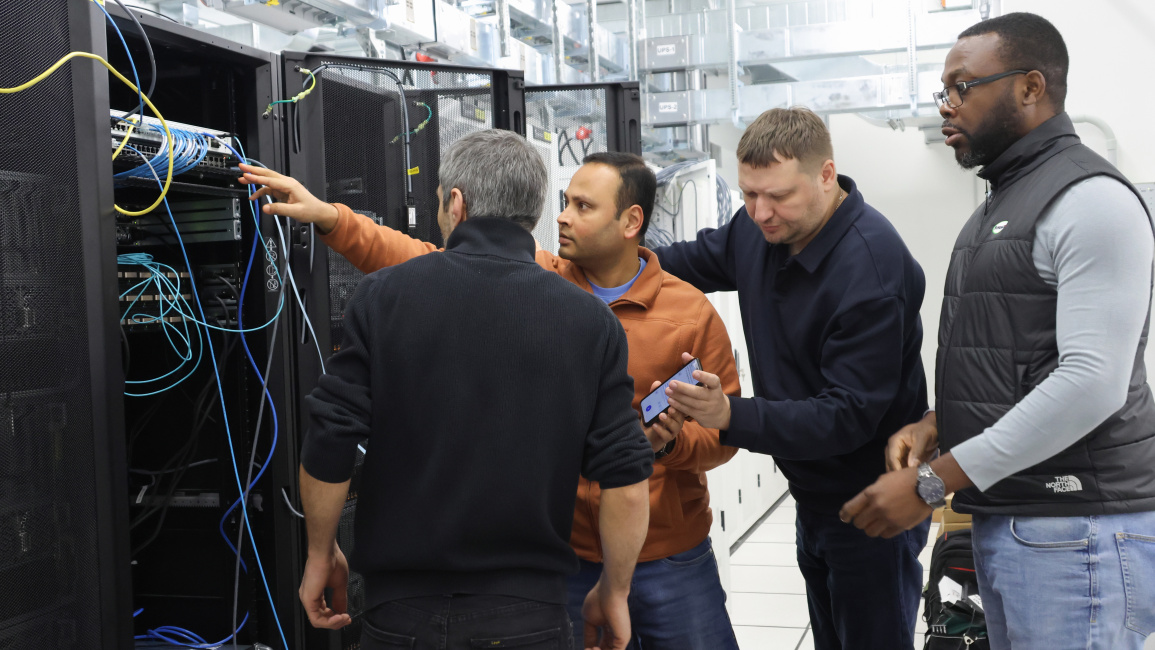
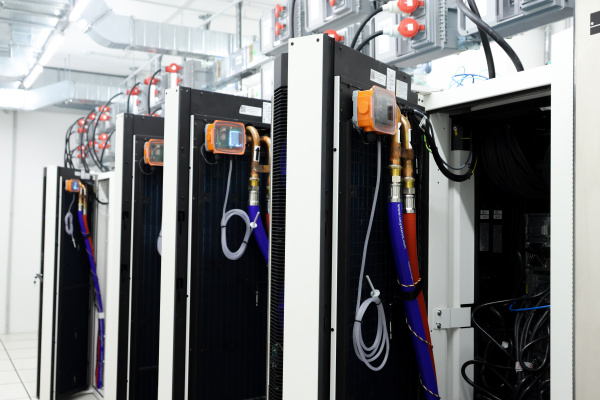
In the rapidly evolving era of high-performance computing, Armenia is taking a significant step forward in the development of science and technology. A new supercomputer, acquired with funding from the Armenian government and equipped with 64 NVIDIA H100 computing cards, has been installed at Yerevan State University and is expected to substantially enhance both research and applied capabilities. The work on establishing the data processing center is nearing completion, and the supercomputer has already begun its trial phase, including stress-testing procedures. We discussed the significance of this initiative, its expected outcomes, and future plans with YSU Vice-Rector for Scientific Affairs Rafayel Barkhudaryan.

After nearly two years of preparatory and organizational work, the installation of the supercomputer has been completed. This powerful computational infrastructure is intended to support the development of national capabilities in high-performance computing and artificial intelligence, fostering scientific research, promoting innovative projects, and modernizing educational processes. The initiative also aims to expand collaboration among universities, as well as between the public and private sectors, contributing to the technological advancement of the Republic of Armenia. 

– Mr. Barkhudaryan, the work on establishing the data processing center and installing the supercomputer has been completed. What stage is the supercomputer's launch currently at, and what technical processes are being carried out before it becomes fully operational?
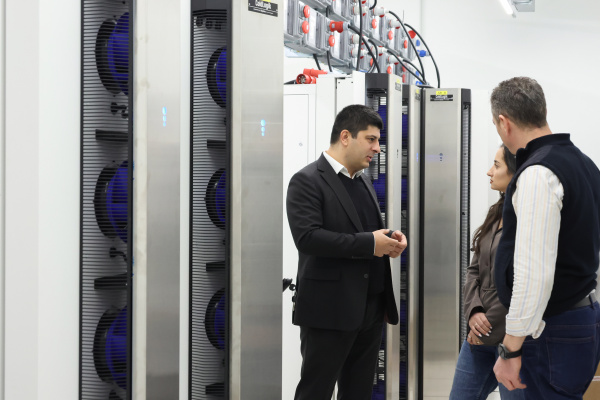
– The physical infrastructure of the data processing center is fully prepared, and the supercomputer has already been installed. At present, software configuration is underway. Just as with a standard computer, launching a supercomputer requires a suitable environment, including space, cooling and security systems, stable electricity supply, and other technical solutions. All of this infrastructure has been created and tested. Installation of the supercomputer has been completed, and work is now continuing to install and configure the software required for use by scientific teams.

Before the supercomputer enters full operation, preliminary tests have been conducted under artificial load conditions. These tests checked the efficiency of the cooling systems, the stability of the electricity supply, and security measures, to identify and prevent potential problems at an early stage. As a result, the entire process is approaching completion, and the supercomputer will soon become fully operational. 

– What problems can the supercomputer solve, and who will have access to it?

– The supercomputer offers an unprecedented level of computational power for Armenia. It will allow carrying out extremely large-scale and complex calculations that were previously technically impossible in the country. In particular, in currently operating systems, including the "Aznavour" supercomputer located in the Engineering City, the primary computing units are CPUs. In contrast, the new supercomputer installed at Yerevan State University is built around GPUs.
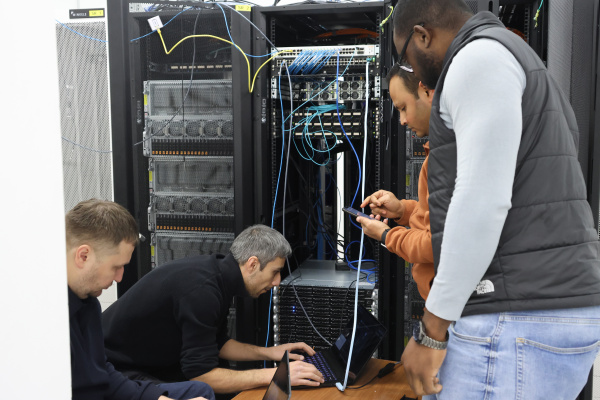
At the center, computing systems consisting of approximately 80 GPUs of different generations will be formed, with 64 functioning as a single unified supercomputer. The remaining eight systems are NVIDIA DGX H100 and DGX A100 units, previously acquired under programs of the Ministry of Education, Science, Culture and Sports of Armenia, which will serve as smaller, standalone supercomputers for solving various scientific and applied problems.

The primary users of the supercomputer will be research groups working in machine learning and artificial intelligence. It is particularly well-suited for projects involving large neural networks and language models, which require substantial computational resources. The supercomputer is intended for training large-scale models or fine-tuning existing AI models for specific scientific and applied tasks. 

In addition to these primary target users, the supercomputer's resources will also be available to scientific teams in related fields, particularly researchers in computational physics and materials science, who also have significant computing needs. 
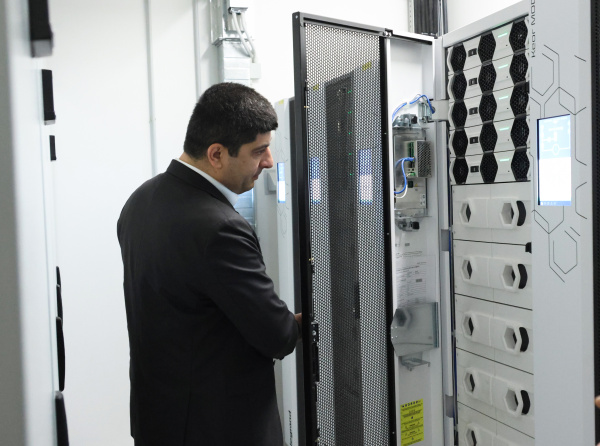
Scientific teams in Armenia will be able to use the supercomputer either free of charge or for a nominal fee, based on priority, as the government is willing to cover the main operational and maintenance costs. Discussions also revolved around partial access for private companies; in such cases, usage would be fee-based (details will be clarified). Priority for private companies will be given to projects conducted in collaboration with the scientific community. Funds generated will be used to offset the system's operational and maintenance costs. Overall, the supercomputer is primarily intended for scientific research groups. 

– Are there already specific research programs or projects ready to use the supercomputer's computational power? 

– Yes, there are. In particular, two research groups at Yerevan State University are already working in relevant areas. One group focuses on applying large language models to the design and discovery of new molecules, as well as the development of neural networks for radio signal processing. The second group is centered on drone control, developing artificial intelligence models that allow drones to operate based on text-based instructions. Both groups have already achieved significant progress, and the supercomputer will enable even more efficient computation for these projects. The second group has also made some advances in developing neural networks for satellite image analysis. 
In addition, numerous language models already exist worldwide that, thanks to open-source access and available data, can be retrained and adapted to local problems. Several research groups at Yerevan State University are working on such tasks—retraining open-source models on their own datasets to achieve new and more effective solutions. 

– Mr. Barkhudaryan, what are the main challenges in operating such a system today? Are YSU specialists able to run it independently, or is additional training or external expertise required?

– Until now, we have never had access to computing resources of this scale, and their availability presents a tremendous opportunity for research groups. Fully using the supercomputer requires learning, understanding, testing, and correcting errors—progressing step by step through each experiment.

To develop the necessary skills, we collaborate with leading international companies with relevant expertise. Familiarity with their experience allows YSU researchers to quickly integrate best practices. In addition, active training programs and internationally significant events are held, providing university scientists with new skills and experience, which are directly applied here to ensure efficient use of the supercomputer. Equally important is self-directed learning—the process of experimenting independently, making mistakes, and gaining experience from them.
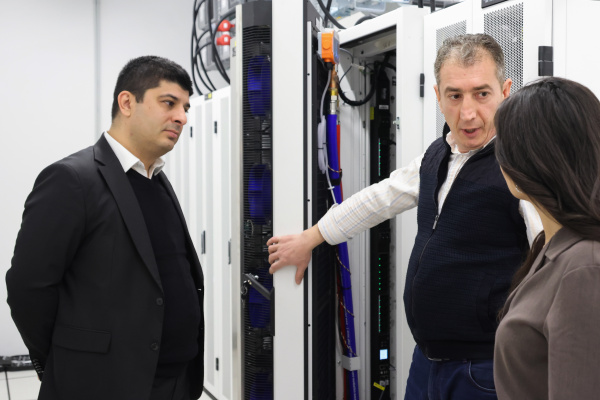
Thus, to fully exploit the supercomputer's capabilities, we combine self-education, international expertise, and structured training.

– What impact will the supercomputer’s launch have on Yerevan State University's educational process, and how will students be engaged in this process?

– The supercomputer opens up limitless opportunities for educational programs. Of course, full access for all students is not feasible, but we will work to involve them as much as possible in the process. This will allow them to become familiar with large-scale computational resources early on, which will be highly valuable in the future—both in scientific research and in the private sector, including large companies. 

– In your view, what significance will the supercomputer have for the development of Armenia's scientific community? What can we expect in 3–5 years?

– It is important to emphasize the effective use of such systems. This provides not only our research groups but also the Information Technology Department with hands-on experience working with modern server systems—learning how to maintain, manage, and efficiently use a supercomputer. Leveraging its capacities requires highly skilled administrators and IT specialists to ensure the equipment operates smoothly and securely. 
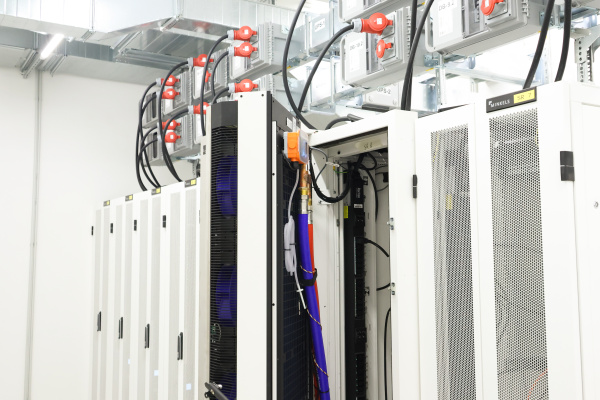
Yerevan State University has much to contribute in this area, and our work should yield results of the highest scientific caliber. The supercomputer will not only advance research but also promote the development of the university's information infrastructure and technological capabilities in the years to come.

I expect both interest and the number of research groups in this field to grow. Our colleagues in the Faculties of Biology and Chemistry have already expressed interest, indicating their willingness to propose joint projects using such computational infrastructure. This initiative aims not only to advance artificial intelligence but also to solve concrete scientific problems, including those in biology, computational chemistry, and certain branches of physics.


Sona Shahverdyan
ShareFacebookTelegram

Latest News

Professor Anahit Balabekyan awarded YSU Gold Medal

25.12.2025

YSU's supercomputer to solve major scientific challenges

25.12.2025

YSU SSS summarizes activities of 1st semester of 2025–2026 academic year

24.12.2025
Show All

Announcement

Երկարացվել է Միջազգային գերազանցության կրթաթոշակային ծրագրի հայտադիմումների ընդունման վերջնաժամկետը

12.24.2025 - 12.31.2025

«Էրազմուս+» ծրագրի միջազգային կրեդիտային շարժունություն. Մեսսինայի համալսարան, Իտալիա

12.23.2025 - 01.13.2026

Opportunity to Visit the Jimmy and Rosalynn Carter School for Peace and Conflict Resolution

12.22.2025 - 01.04.2026
Show All

Quick access

  • Intranet
  • E-learning
  • Mulberry
  • Online applications
  • Phone book
  • Registrar
  • Documentation

Footer(ENG)

  • Main pages
    • Admission
    • Education
    • Science
    • News
  • Information
    • Frequently asked Questions
    • Vacancies
    • Search for educational programs
    • For the applicants
    • For the students
  • About YSU
    • YSU management
    • YSU symbols
© Yerevan state university 2025
Address: Republic of Armenia, Yerevan, 0025, 1 Alex Manoogian (+37460) 710000 info@ysu.am