February 02, 2026 | 11:30
Science
Research
Competitions
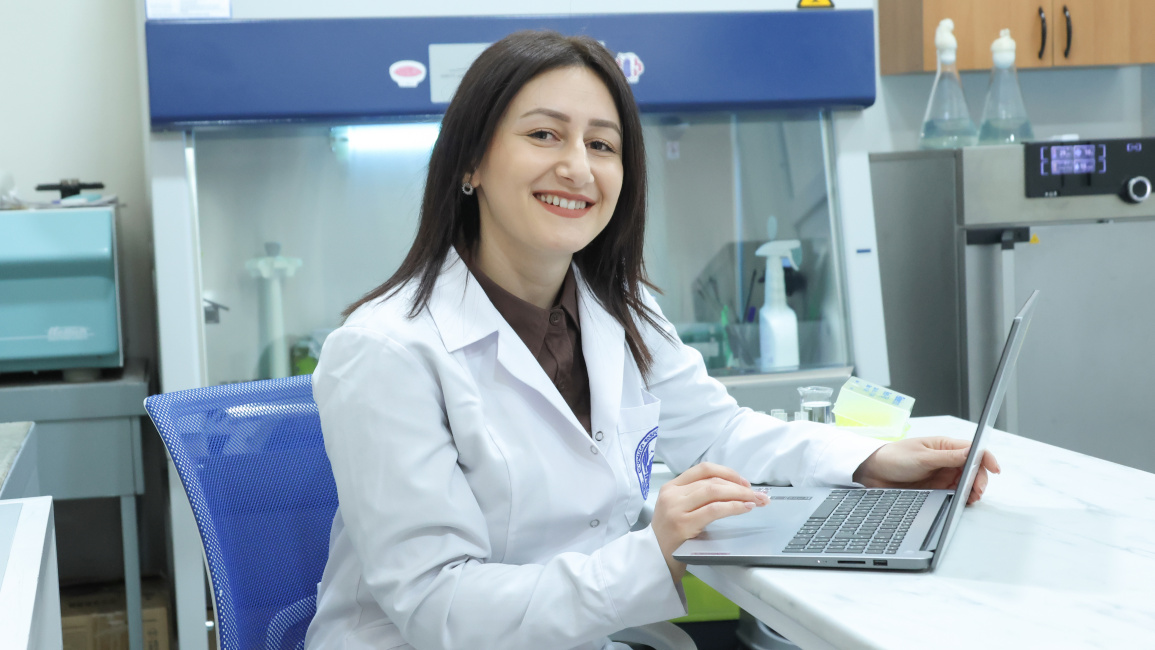
Rima Avetisyan, a junior researcher in the Group for Biochemical Conversion of Organic Waste and Microbiological Production at the YSU Faculty of Biology, has received funding for her research project titled "Response Mechanisms of Bacteria of the Genus Cupriavidus under Abiotic Environmental Stresses: The Role of Hydrogenases and Key Bioenergetic Enzymes". The project was selected within the framework of the "Research Support Program for PhD Students and Young Candidates – 2025" competition, organized by the Higher Education and Science Committee of the Ministry of Education, Science, Culture, and Sports of the Republic of Armenia.
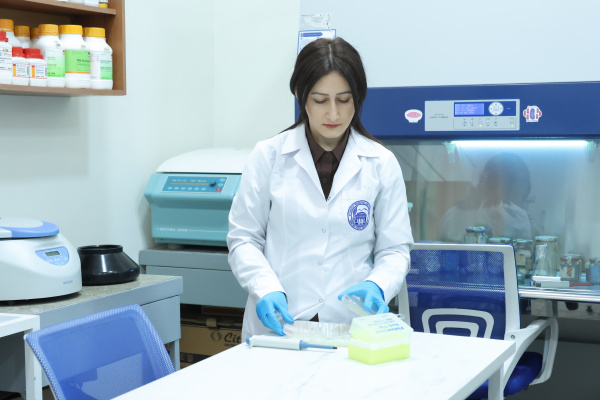
Within the scope of the research, oxygen limitation, osmotic stress, acidic and alkaline pH, as well as millimeter-wave and X-ray irradiation are being studied, with the aim of revealing the biochemical and bioenergetic mechanisms of bacterial stress responses.
The YSU PhD student notes that she chose this topic driven by an interest in understanding how soil bacteria respond to osmotic stress and other abiotic stresses under unfavorable environmental conditions.
"My work aims to create various stress conditions for bacteria and to investigate which response mechanisms they activate in such situations. Working with bacteria is not new to me, and this gives me confidence when exploring new research topics," emphasizes the YSU researcher.
The research objects selected are Cupriavidus necator H16 and Cupriavidus metallidurans CH34, which are facultative chemolithoautotrophic soil bacteria and are regarded as thoroughly studied model organisms.
"These bacteria are non-pathogenic, have been extensively studied, and possess oxygen-tolerant hydrogenase enzymes, which makes them suitable model organisms," adds Rima Avetisyan.
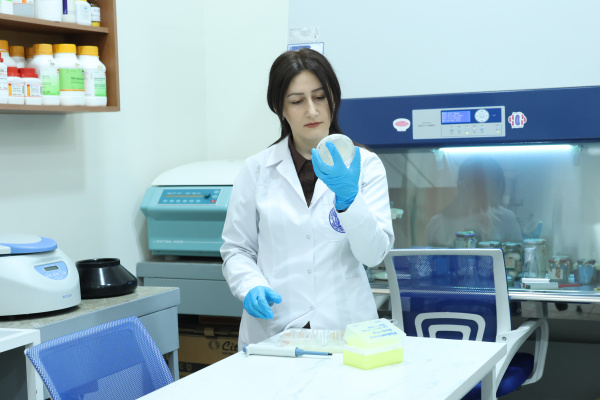
The results obtained will make it possible to identify new mechanisms of stress response, as well as to understand the specific features of the functioning of the respiratory chain of C. necator H16 and C. metallidurans CH34 under different stress conditions.
"This topic is entirely new both worldwide and in Armenia. It has both fundamental and applied significance. The research has only just begun, and it is still too early to speak about results; however, experimental studies are already underway," she notes.
The research topic was selected jointly by the researcher and her scientific supervisor. The scientific supervisor of the project is Anna Poladyan, Head of the Chair of Biochemistry and Microbiology at YSU.
"I have been working with my scientific supervisor, Anna Poladyan, since my bachelor's studies, and it can be said that I already have substantial experience in the field of working with bacteria," says Rima Avetisyan.