August 11, 2026 | 14:00
Science
International cooperation
Graduates
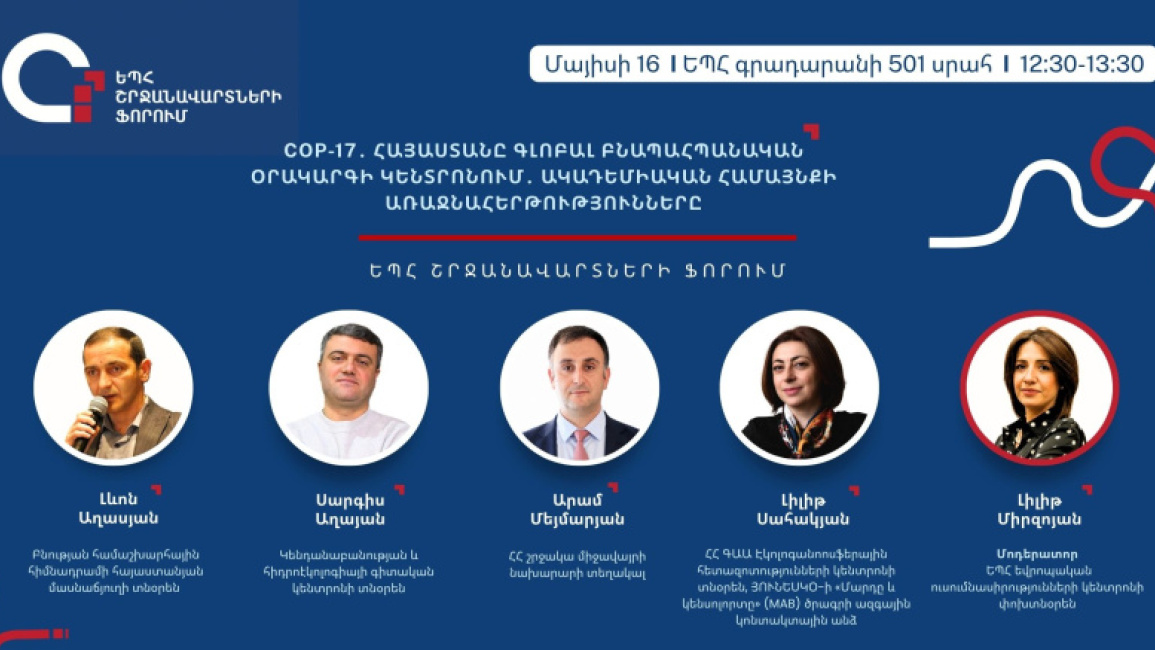
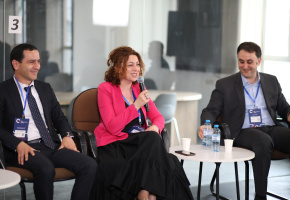
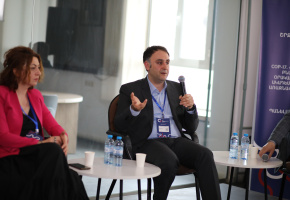
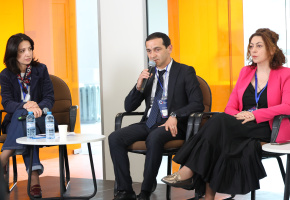
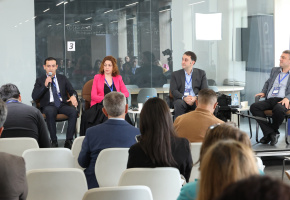
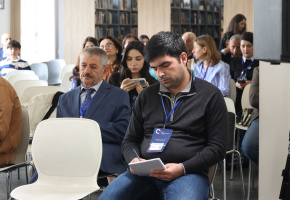
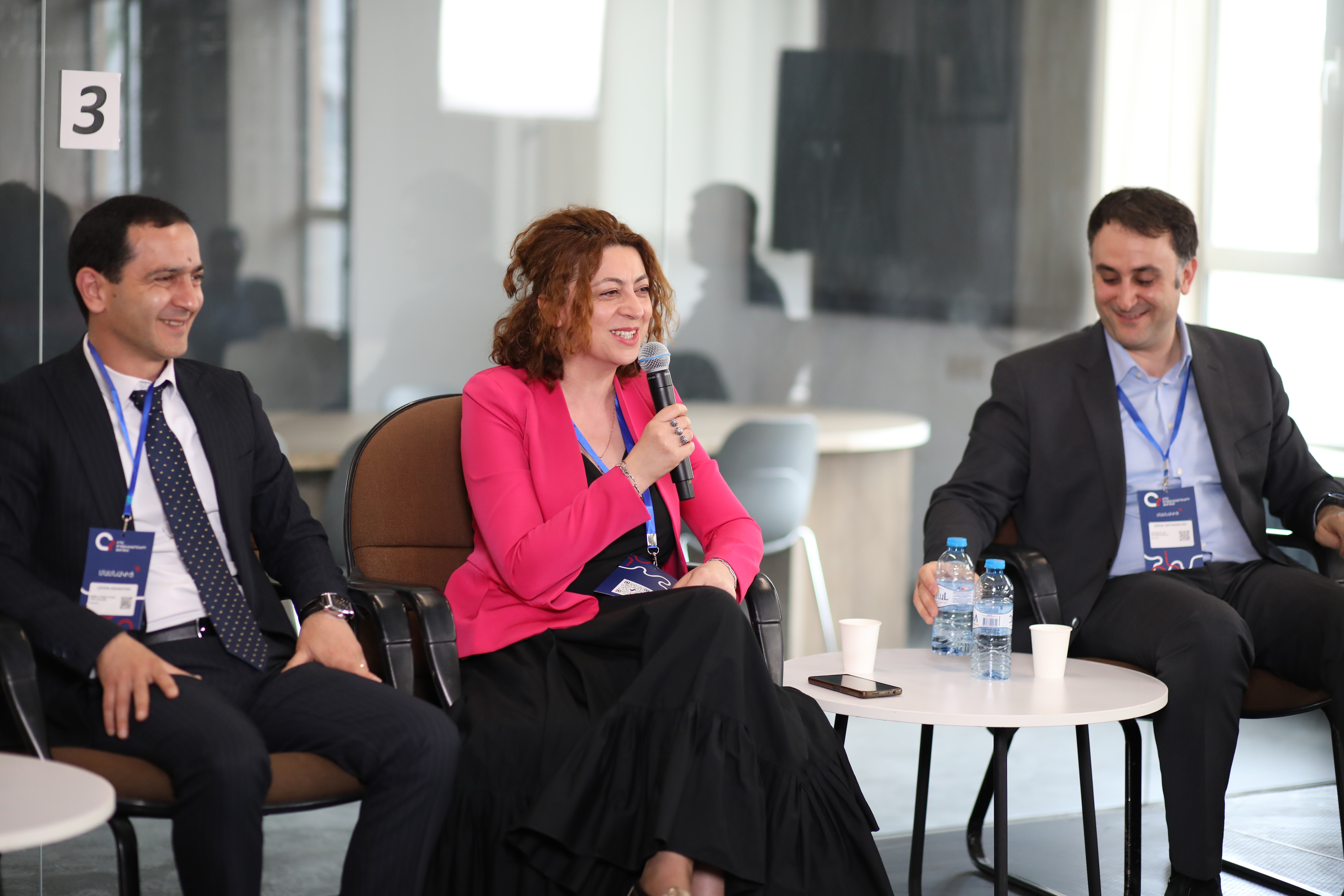
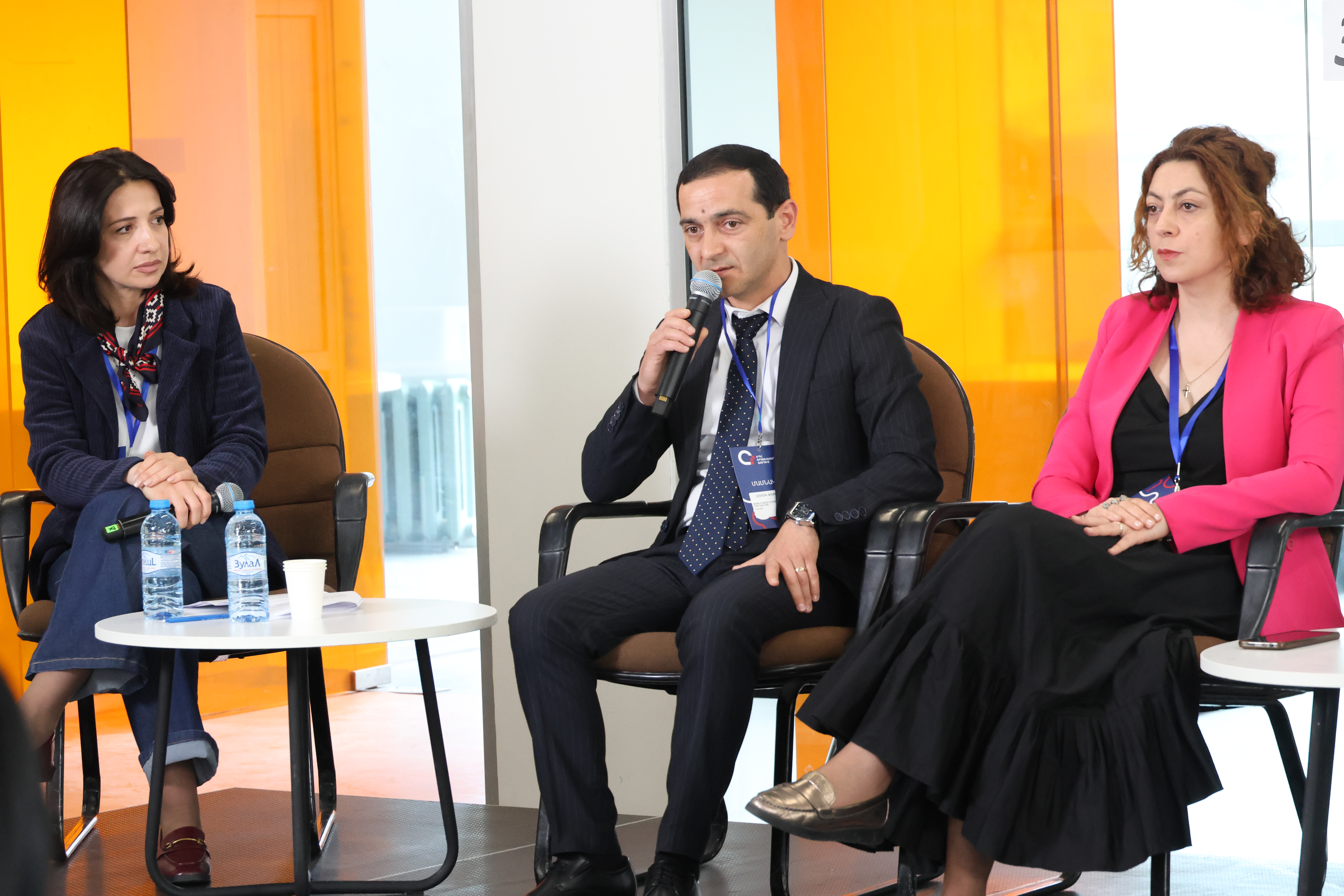
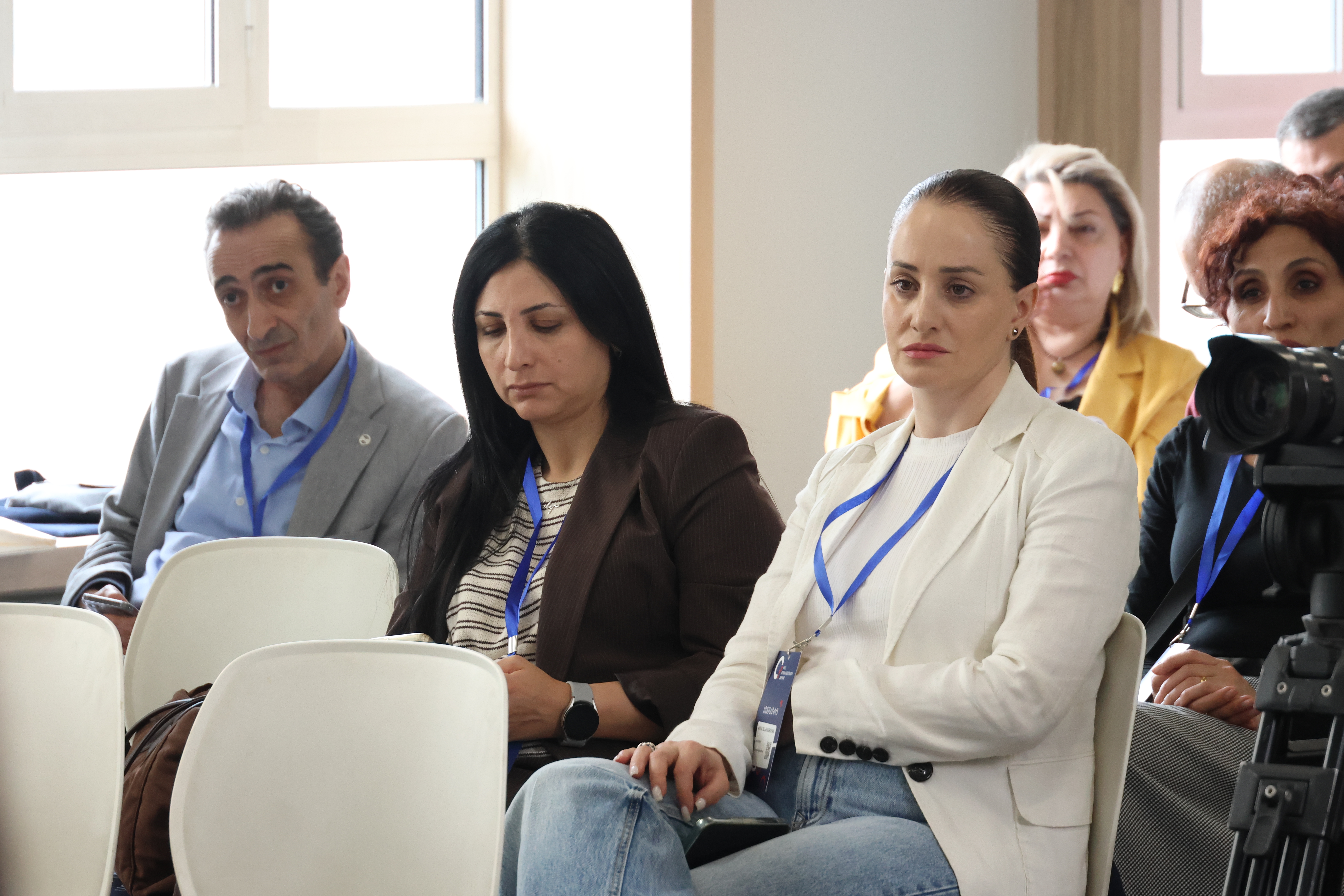
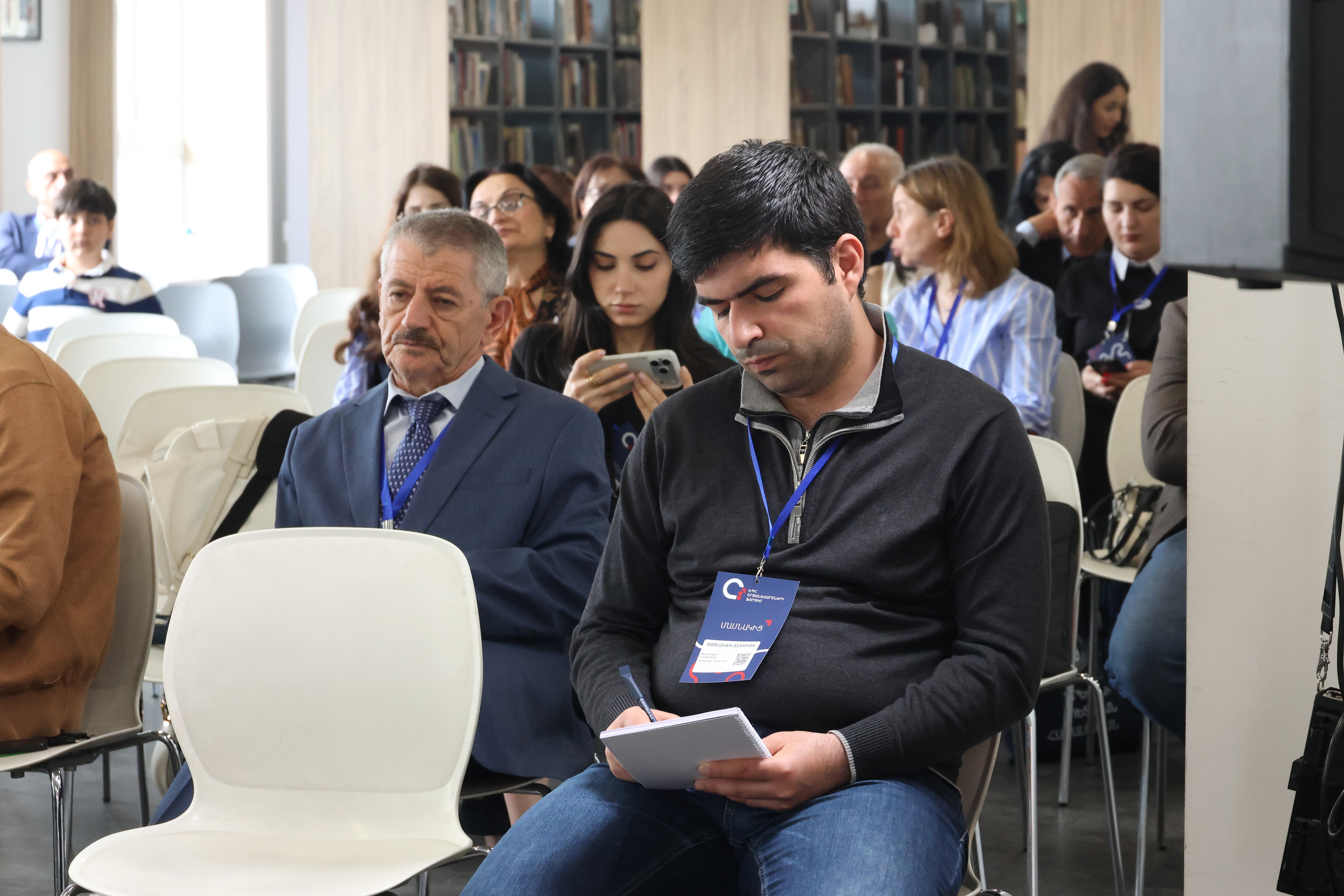
A panel discussion on "COP17: Armenia at the Center of the Global Environmental Agenda — Priorities for the Academic Community" was held at the YSU Sarkis and Marie Izmirlian Library as part of the YSU Alumni Forum.
Among the participants at the discussion were Aram Meymaryan, Deputy Minister of Environment of Armenia; Levon Aghasyan, Director of WWF Armenia; Sargis Aghayan, Director of the Scientific Center of Zoology and Hydroecology; and Lilit Sahakyan, Director of the Center for Ecological-Noosphere Studies of the National Academy of Sciences of Armenia and National Focal Point for UNESCO's Man and the Biosphere (MAB) Program. The discussion was moderated by Lilit Mirzoyan, Deputy Director of the YSU Center for European Studies.
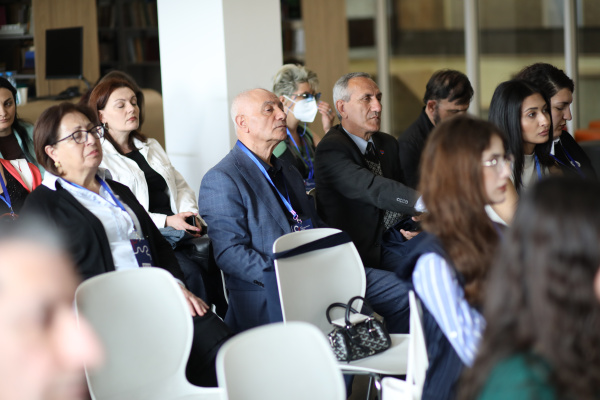
The discussion aimed to explore the role YSU's academic community can play in shaping environmental policy, developing innovative ecosystems and advancing the green agenda. The topic is particularly relevant for Armenia in view of the global COP17 conference on biodiversity conservation, which will be held in Yerevan from 19 to 30 October this year. The conference will bring together specialists from countries around the world to discuss challenges related to biodiversity conservation and priority actions planned through 2030.
Against this backdrop, the panel addressed a number of key questions: what COP17 means for Armenia and the international community, what roles the state, the academic community and other stakeholders can assume, and how universities can contribute through their scientific and expert capacity.
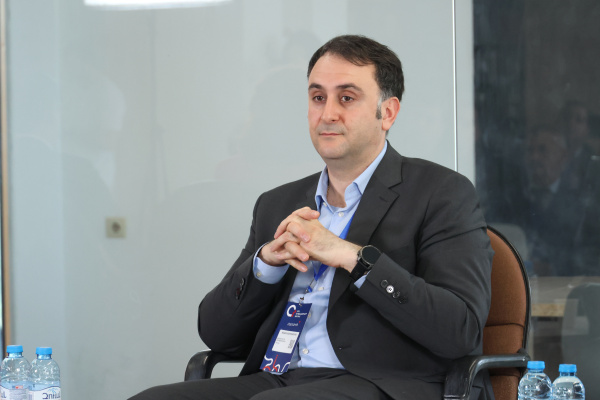
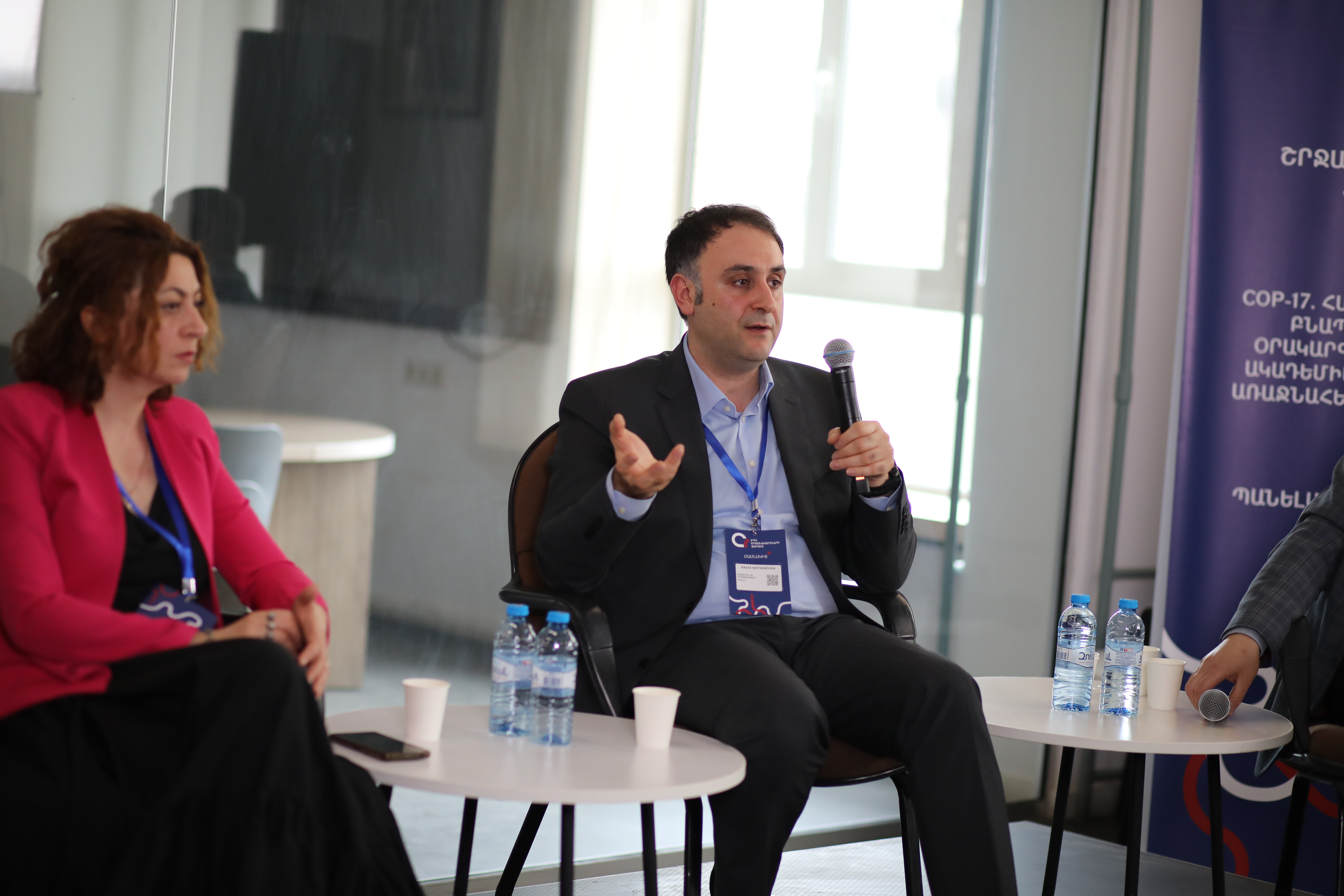
Deputy Minister of Environment Aram Meymaryan spoke about the relationship between public policy and science, stressing that effective environmental policy cannot be developed without a scientific foundation.
"Without a scientific basis, any environmental policy would amount to little more than empty talk; science is the foundation of any policymaking process. We mainly work on a project basis, through funding and grants, and when a problem arises, we refer it to the relevant institute. The academic community is our first point of contact, and we have always maintained strong cooperation and communication with it," he said.
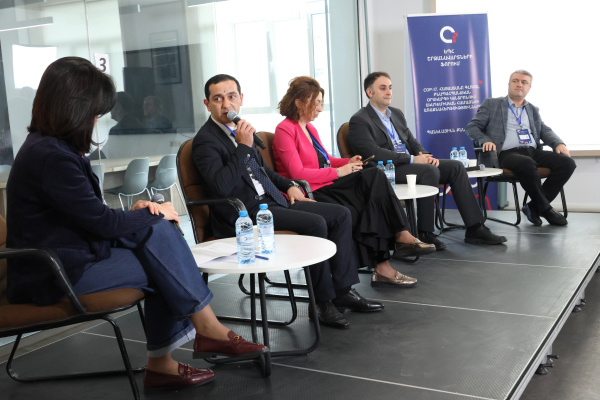
Levon Aghasyan, Director of WWF Armenia, shared his views on international cooperation and the role of science. He stressed that the COP17 agenda is built around 23 key biodiversity conservation targets, most of which are based on scientific research and data.
"We also cooperate with the academic community, and it should be noted that the overall biodiversity strategy is linked to 23 key targets, most of which are closely related to science. The World Wide Fund for Nature supports the implementation of numerous projects that are likewise based on data provided by the academic community and on the issues it raises, such as drinking water, biodiversity, climate change and others," he added.
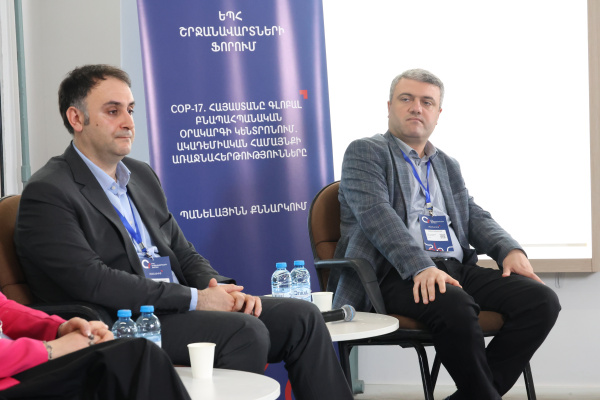
The discussion also addressed opportunities for developing research institutions. Sargis Aghayan, Director of the Scientific Center of Zoology and Hydroecology, noted that the Ministry of Environment has carried out extensive preparatory work for COP17, while research institutions are actively involved in developing programs related to the conference.
"We also need to diversify our funding streams, increase our research staff, grow and develop, and in this respect COP17 is the best platform for expanding our capacity," he said.
The importance of cooperation between science, public institutions and different sectors was also emphasized by discussion moderator Lilit Mirzoyan, Deputy Director of the YSU Center for European Studies. She noted that environmental and climate-related challenges are not confined to the work of a single government body.
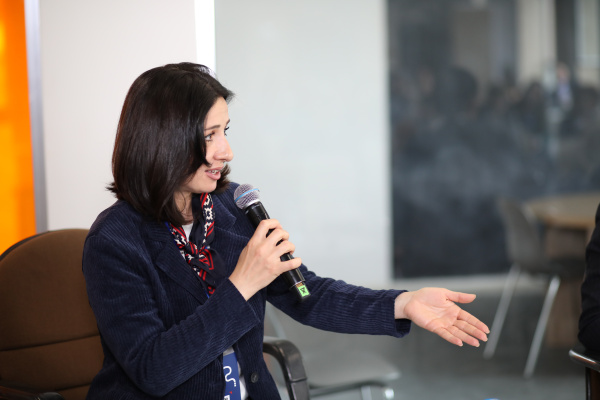
"By deepening scientific ties with different institutions, we will achieve more effective cooperation and help people understand that these issues do not concern only the Ministry of Environment," she said.
Lilit Sahakyan, Director of the Center for Ecological-Noosphere Studies of the National Academy of Sciences of Armenia and National Focal Point for UNESCO's Man and the Biosphere (MAB) Program, also addressed institutional challenges within the research system. She noted that scientists' involvement in addressing public-sector needs is often constrained by systemic problems.
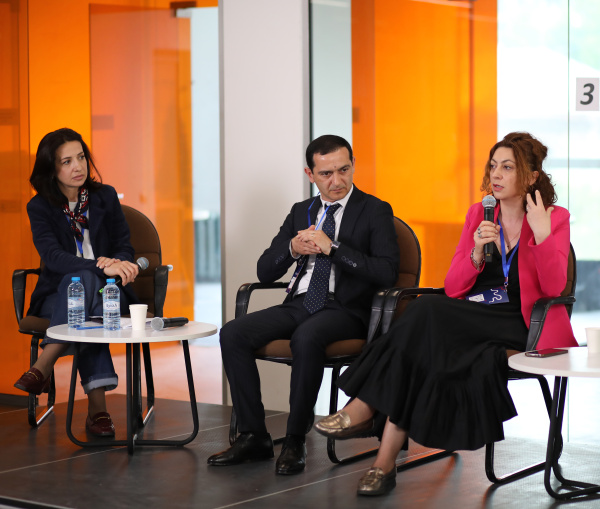
"We have many institutional problems, which we partly address through targeted programs. We have various programs in cooperation with the Ministry of Economy, we work with the Ministry of Internal Affairs, and we try to fill existing gaps. However, these efforts do not produce the desired outcomes because we often fail to share relevant information," she said, expressing hope that COP17 would provide a platform for addressing these shortcomings and identifying existing problems.
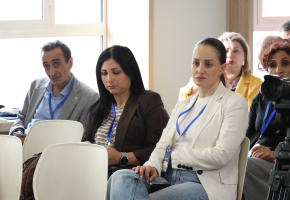
At the end of the panel discussion, participants had the opportunity to ask the speakers questions and discuss the issues raised and possible solutions.
In the participants' view, COP17 represents a unique opportunity for Armenia not only to expand the country's participation and role in the international environmental agenda, but also to make more effective use of its scientific capacity in public policy and sustainable development processes.
For more, watch the video.