October 08, 2026 | 10:49
Education
Student
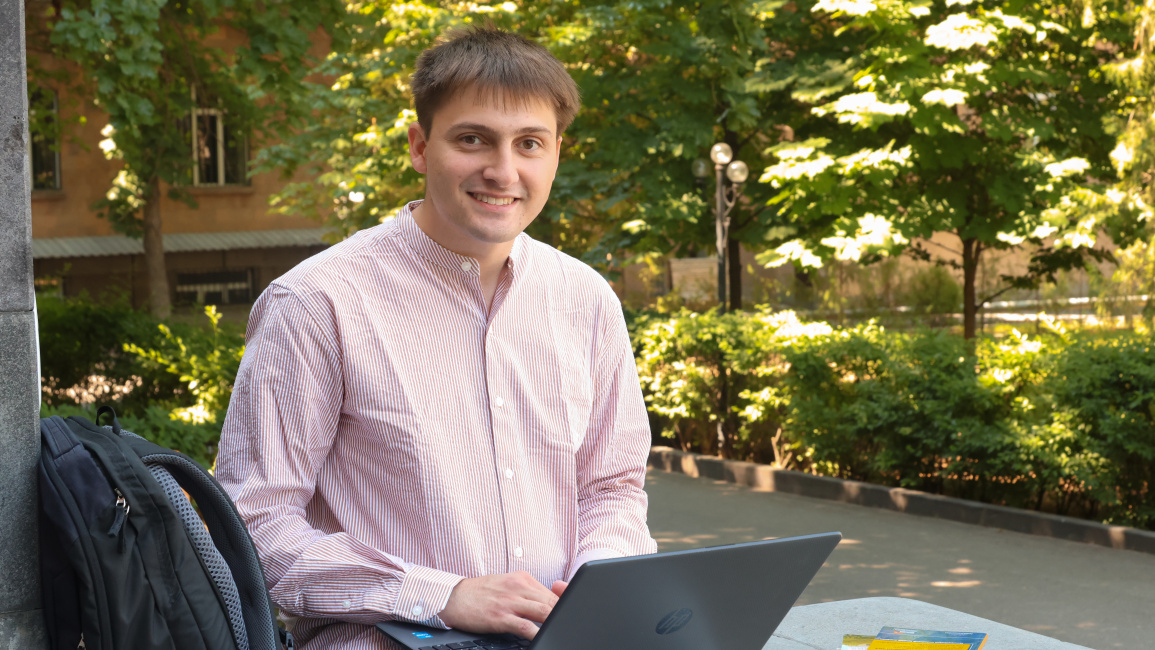
"When I learned that my home university had an exchange partnership with YSU, I had no doubts. I wanted to come to Armenia and continue my studies here," he says.
Maximilian studied at the YSU Faculty of European Languages and Communication. Guided by his interests, he chose courses in linguistics, focusing on psycholinguistics and trends in the development of the German language, as well as courses in history.
Although he had visited Armenia before, student life offered him an opportunity to discover the country from an entirely different perspective. One of his most striking discoveries was the panoramic view of Yerevan with Mount Ararat in the background.
"I had seen Mount Ararat before, but when I first saw it as part of Yerevan's panorama, it was a completely different feeling," he recalls.
Several aspects of everyday life at YSU also surprised him, including the relatively small number of male students at the faculty. However, the most significant difference he noticed in the academic environment was the relationship between lecturers and students.
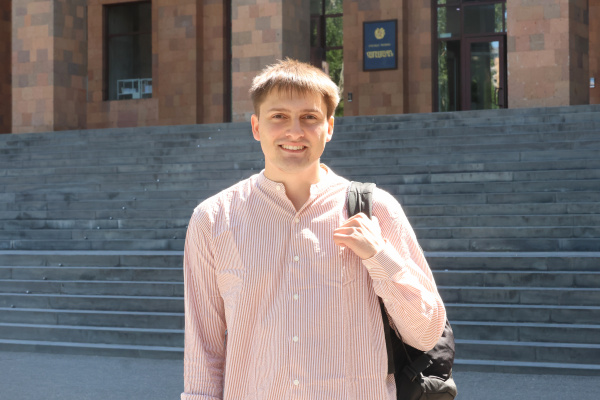
"In Germany, communication with lecturers is more formal. You usually send an email and wait for a response. Here, it is normal to have your lecturers' phone numbers and be able to contact them very quickly," he explains.
According to Maximilian, the grading system, the organization of examination periods and the procedures for submitting written assignments also differ. At YSU, students often have to submit printed copies of their work, whereas in Germany, almost everything is handled online.
The months he spent in Armenia changed Maximilian's perspective not only on language, culture and history but also on his own country and culture.
"Here, I had the opportunity to see what it means to study German as a non-native speaker. It helped me appreciate both my field of study and my own culture in a new way," he says.
During his stay in Armenia, he tried a variety of dishes, including lahmajo, khashlama, kerusus and khachapuri. His favorite, however, is lahmajo.
Asked to describe Armenia in a single sentence, he says: "An ancient Christian country amid the vast expanse of the Caucasus Mountains, with an exceptionally strong national identity."
One of his most memorable experiences in Armenia was taking part in the torchlight march to Tsitsernakaberd.
"I joined representatives of the Faculty of History in the torchlight march commemorating the victims of the Armenian Genocide. It was a very important and emotional experience for me," he recalls, emphasizing that living and studying abroad can transform a person's worldview.
He believes that every nation is a distinct world shaped by its language, culture and religion. Living in Armenia helped him better understand the importance of preserving national identity and respecting the diversity of peoples.
Asked what he will take away from his semester in Armenia, Maximilian offers a brief but meaningful answer: "I will carry Armenia in my heart."