Applied Linguistics
 Master's programme
About the program
Programme Description
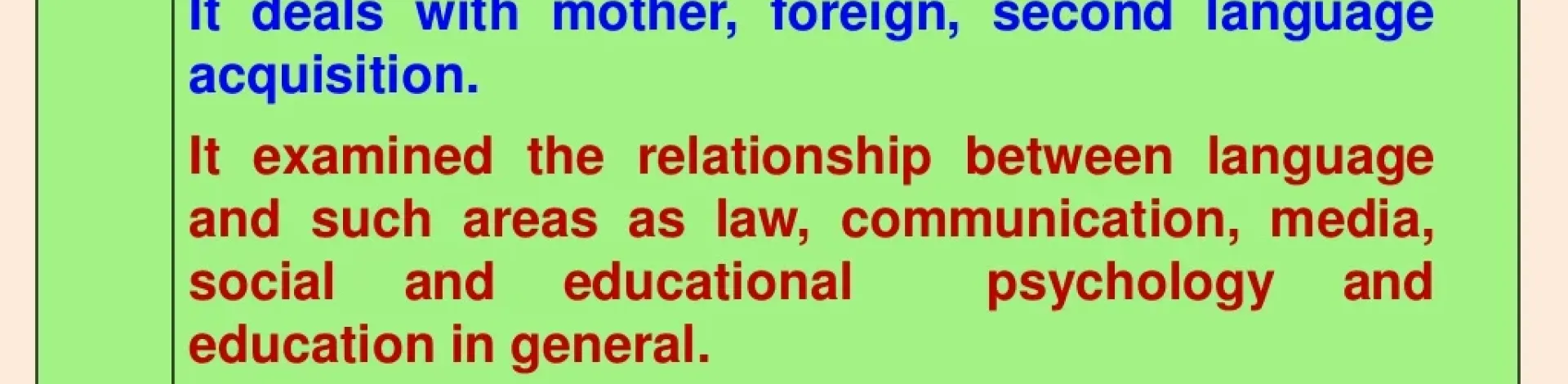
Applied Linguistics (English) (full-time, 1.5 years, speciality code 31100, qualification awarded: Master of Linguistics) is an interdisciplinary field of linguistics that addresses a range of issues related to contemporary linguistic theory and practice and provides graduates with opportunities to pursue careers across a broad and diverse range of applied fields. The programme is delivered over three semesters.
Admission Requirements
Admission is based on an oral entrance examination conducted in accordance with a pre-established examination syllabus. The syllabus is available in the Admission section.
Programme Objectives
The programme aims to prepare highly qualified specialists with advanced, specialised knowledge and competencies enabling them to pursue professional and research activities in the field.
More specifically, the programme is designed to:
provide advanced training in Applied Linguistics;
develop a comprehensive theoretical understanding of contemporary approaches, challenges and methods in language teaching, enabling students to understand, interpret and critically analyse them;
strengthen students’ critical thinking and their ability to integrate and evaluate theory and practice;
equip students with the knowledge and competencies required to teach English and undertake other professional activities across a diverse range of social and professional contexts.
Programme Advantages
The Applied Linguistics (English) Master’s programme offers a number of distinctive advantages that enhance its graduates’ competitiveness in the labour market. Its modules are aligned with international standards and incorporate compulsory research, practical and applied components.
The programme is delivered by specialists with extensive theoretical and practical experience, ensuring a strong practical orientation and providing students with opportunities to undertake relevant professional internships.
The introduction of an Applied Linguistics programme within Armenia’s higher education system represents a significant advantage, with Yerevan State University being the first institution in the country to offer such a programme. The programme’s particular emphasis on developing applied linguistic competencies in English is therefore one of its key competitive strengths. Its implementation places particular importance on contemporary theoretical and practical approaches to the study of linguistic, language-related and communication materials.
All assessments, including both midterm and final examinations, incorporate a research and practical component. Pass/fail assessments, midterm examinations and final examinations are conducted using contemporary, internationally recognised methods for evaluating theoretical knowledge and practical competencies. The qualification is awarded to students who meet high professional standards, enabling graduates to establish strong professional positions in relevant areas of the labour market and, in turn, contribute to maintaining the reputation and standing of Yerevan State University.
A distinctive feature of the programme is also the specific orientation of its Master’s thesis requirements. In addition to a substantive research component, the thesis must have clear practical relevance and an applied orientation. It should reflect the knowledge and experience acquired by the student during their professional internship and may serve as a practical resource in their subsequent professional career.
No comparable Applied Linguistics programme is currently offered within Armenia’s higher education system, making Yerevan State University the first institution in the country to offer such a programme. The Applied Linguistics (English) programme was developed with due consideration of relevant programme frameworks, standards and benchmarks used by leading universities in the United States and Europe in this field.
Career Opportunities
Graduates will be equipped to conduct research related to applied communication in collaboration with partners in Armenia and abroad and to pursue professional careers in Armenian and international organisations, educational institutions, online and print editorial teams, research institutions and private companies.
The programme maintains active cooperation with institutions and organisations in which graduates may pursue employment, including schools, universities and academic institutions, local and international organisations, language centres, advertising agencies, official and independent media organisations and their online platforms, relevant departments of television and radio broadcasters—including public, private, digital, satellite and cable broadcasters—and international news agencies.
Potential employers and professional partners include Armenpress, ArmInfo, Noyan Tapan, Arka, Ayb-Fe, Mediamax, Armedia, and other organisations operating in relevant fields.