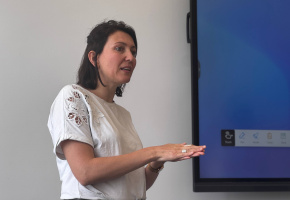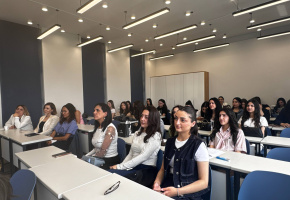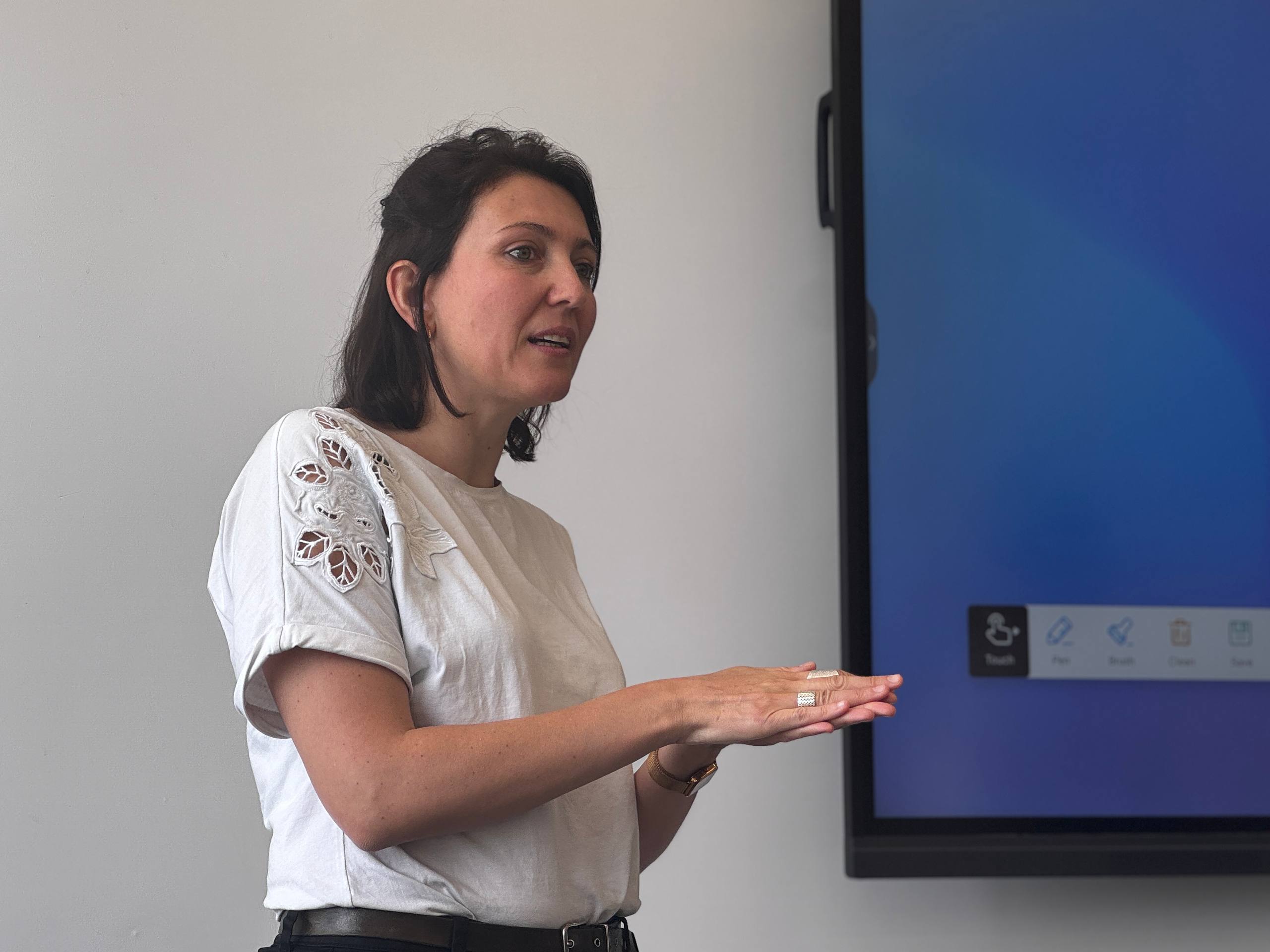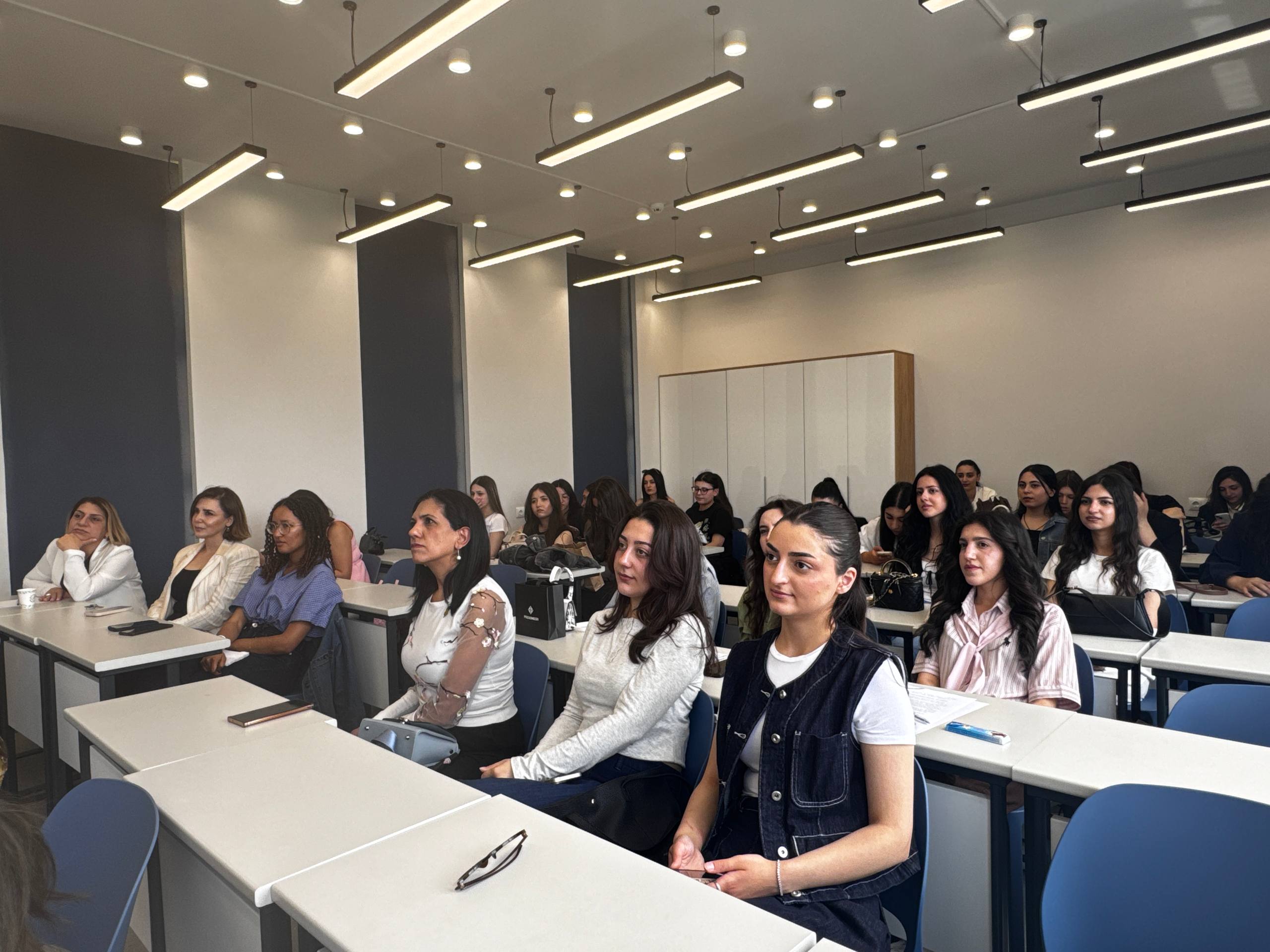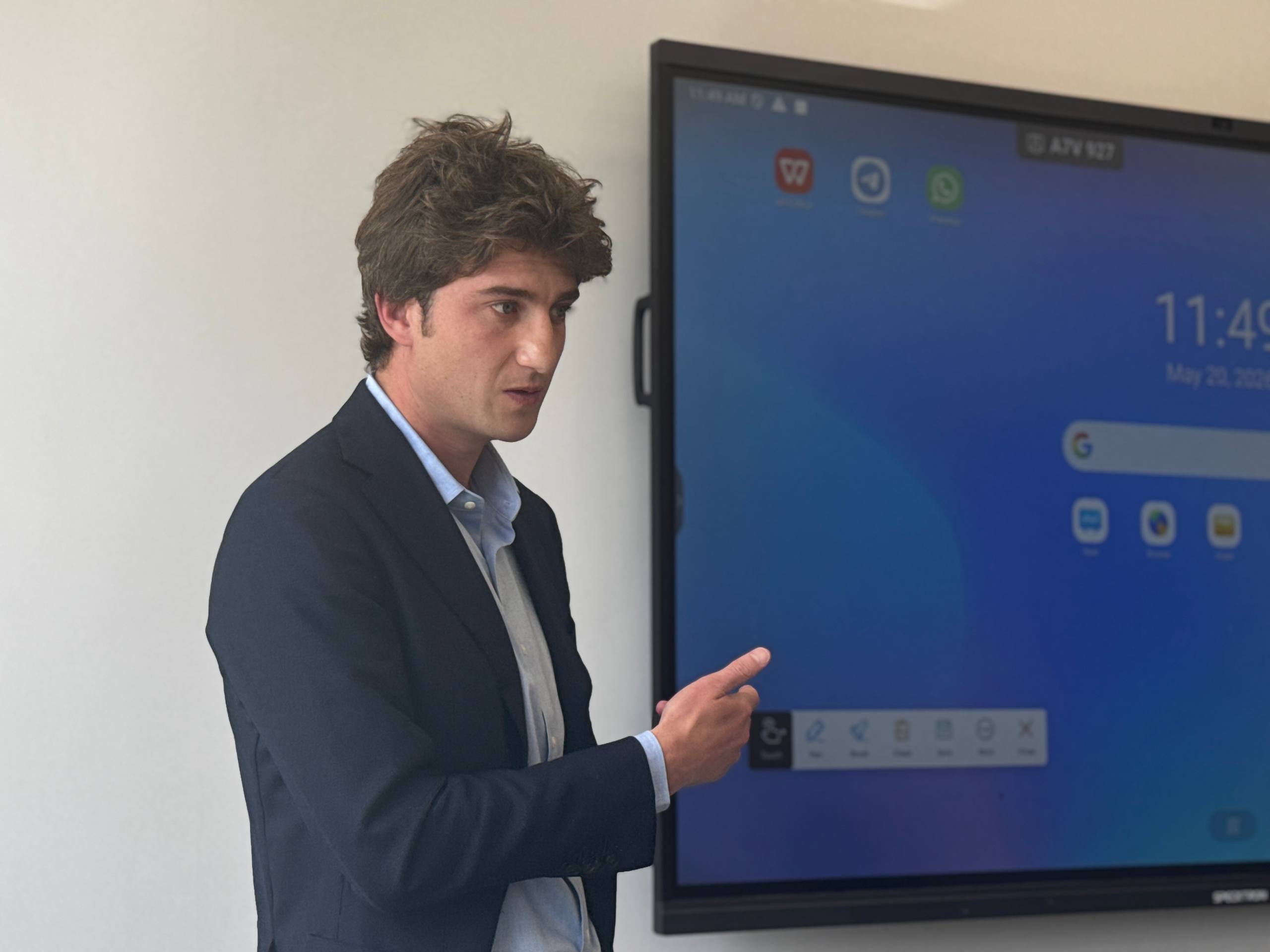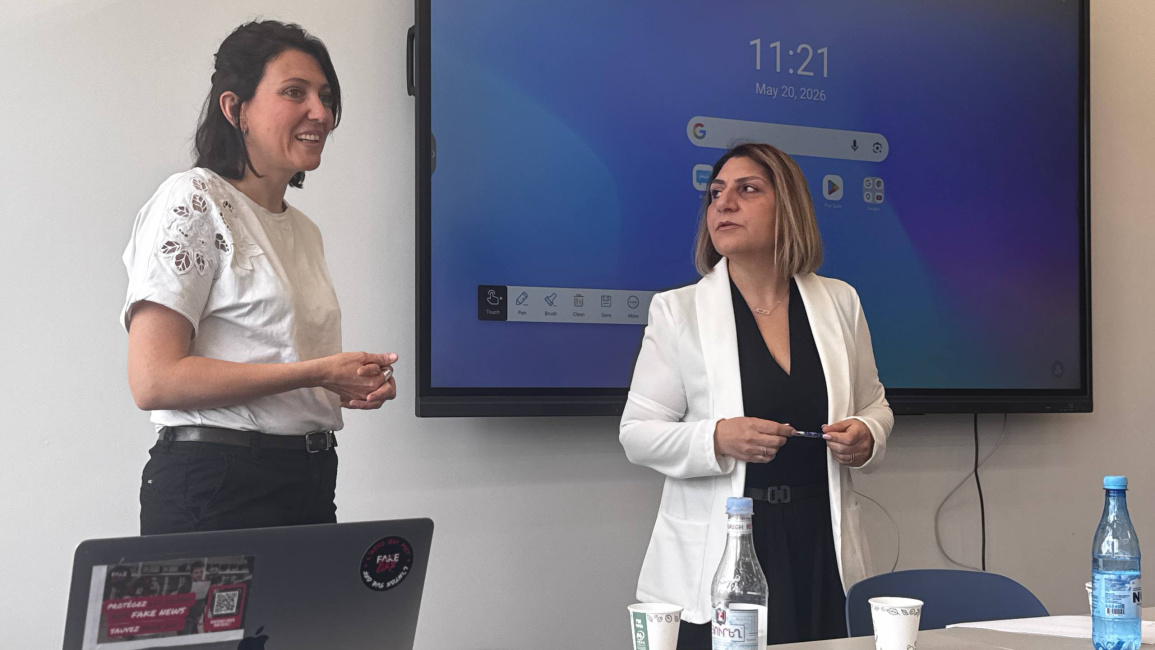
The YSU Faculty of Journalism hosted a lecture on disinformation, media literacy, and information warfare, organized by the Embassy of France in Armenia.
During the lecture, speakers presented their research on the impact of disinformation on electoral processes and public trust in democratic systems. They noted that disinformation does not always directly change people's political choices; however, it can foster distrust in democratic institutions and create perceptions that electoral processes are controlled or manipulated. It was further noted that in modern conflicts, information has become a tool no less influential than military operations.
One of the key sections of the lecture addressed the algorithmic structure of social media and digital platforms. It was emphasized that information flows are often shaped not by the importance of facts, but by the logic of maximizing user attention and engagement.
Speaker Camille Lafrance also touched upon trust issues between journalism and the public, stressing that the fight against disinformation cannot rely solely on technological restrictions. She underlined the need to develop a critical approach to information, as in the digital environment every user is simultaneously both a consumer and a distributor of information.
At the conclusion of the meeting, participants discussed the role of media, education, and public institutions in ensuring information security. The speakers emphasized that media literacy is one of the most important skills of modern society, as it helps individuals navigate an information-saturated environment and reduce the impact of manipulation.
The lecture attracted significant interest among students and faculty, leading to an active discussion on how disinformation shapes contemporary social and political processes and what role media literacy plays in preserving democratic culture.