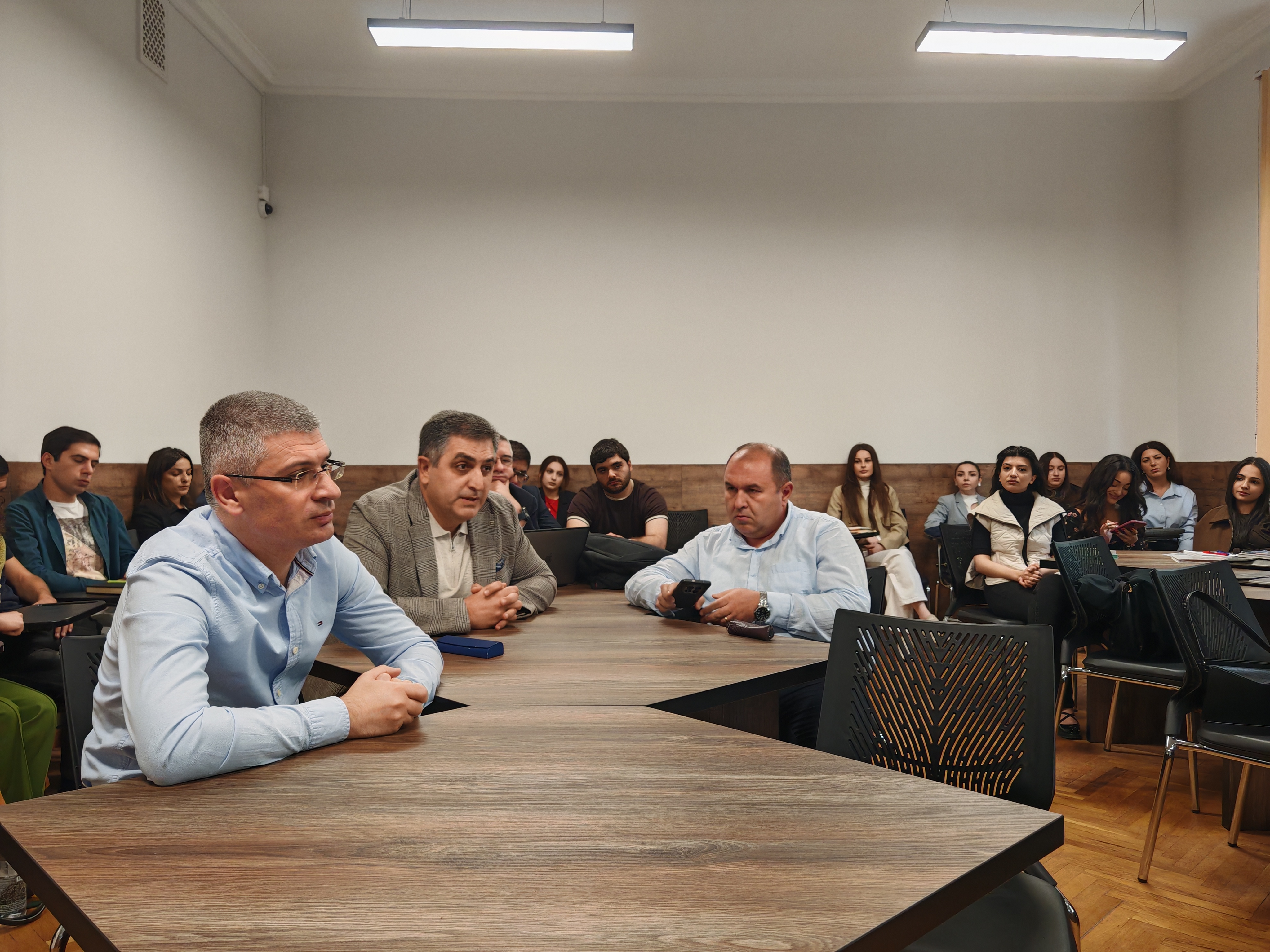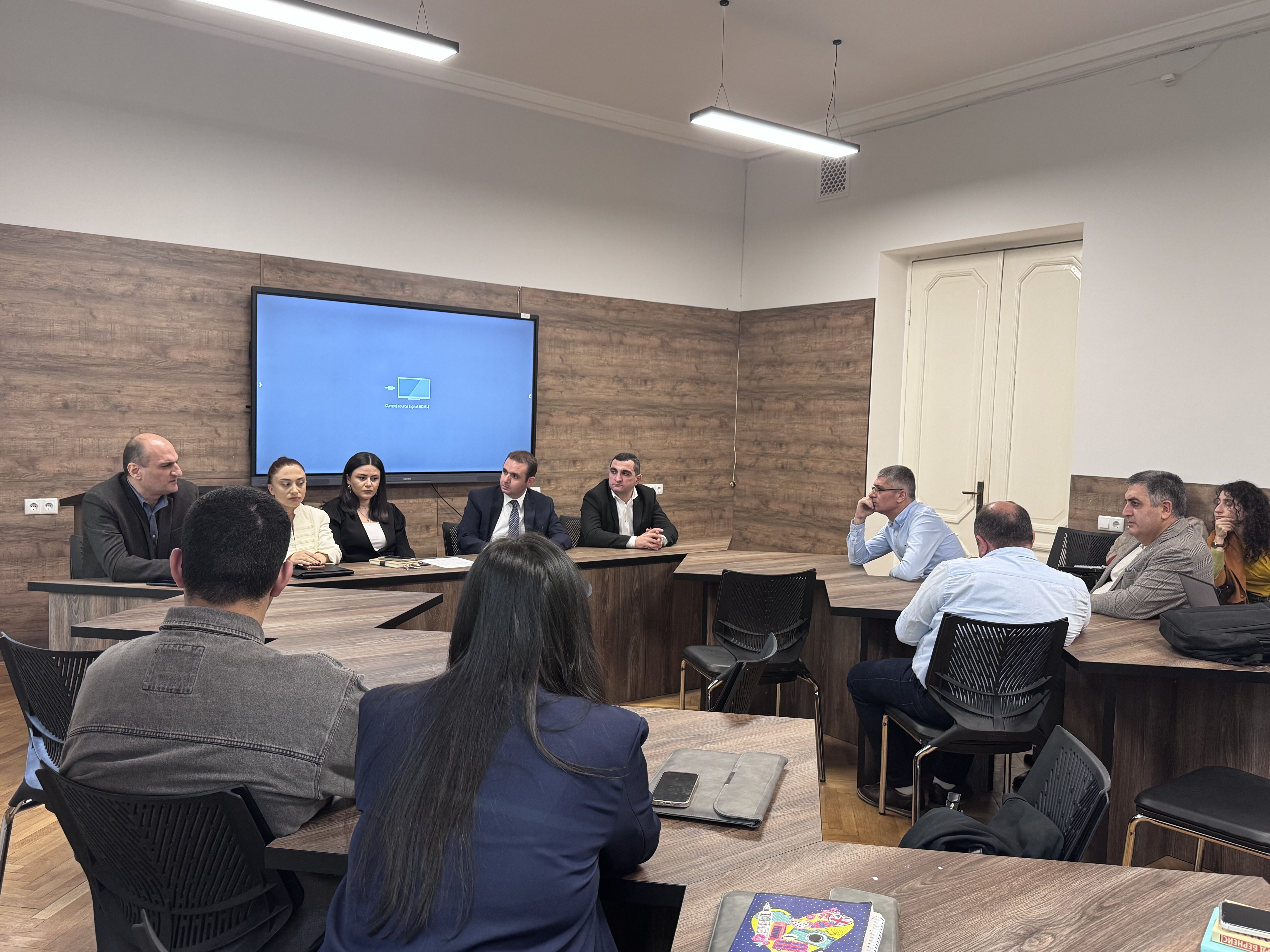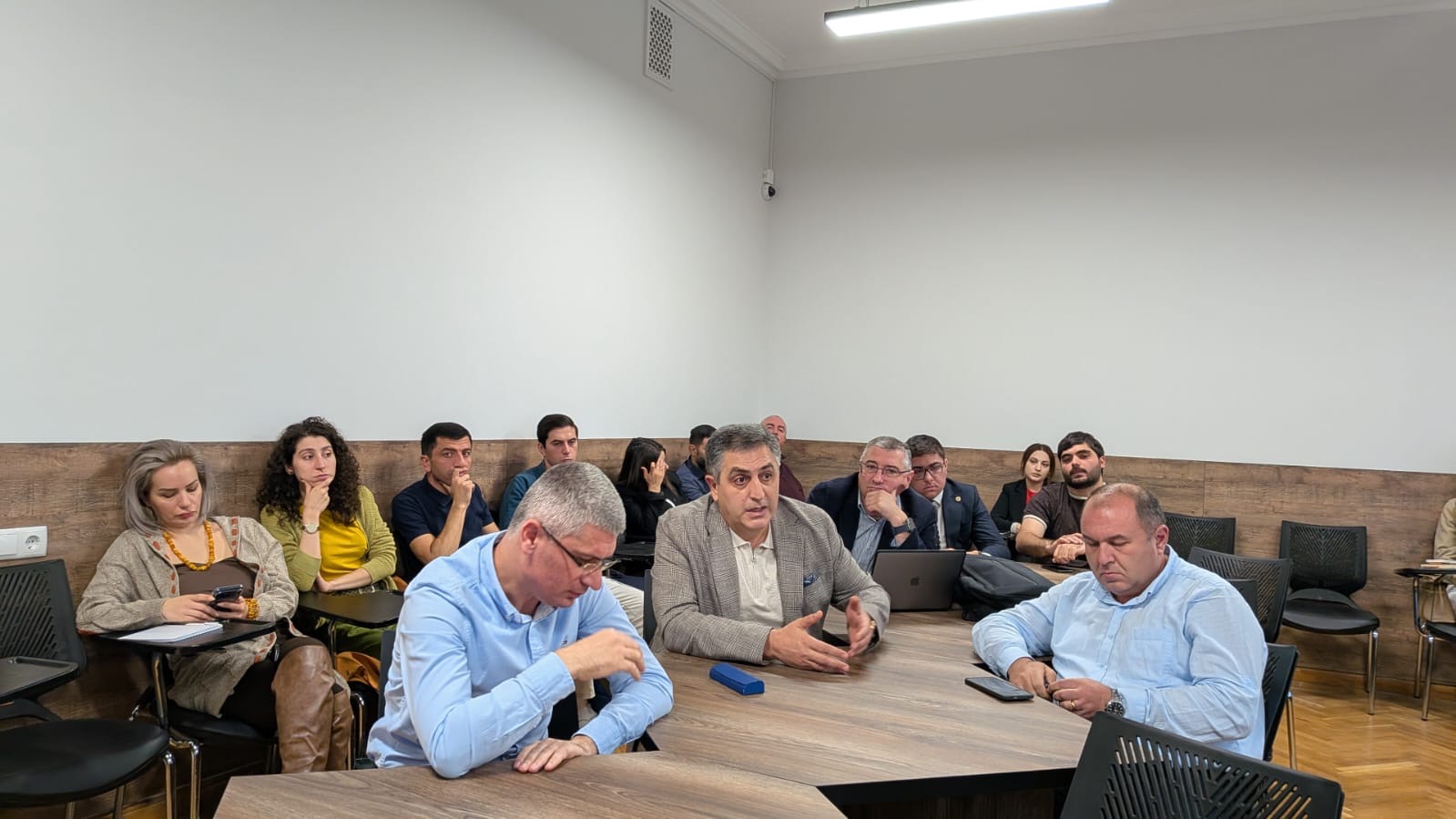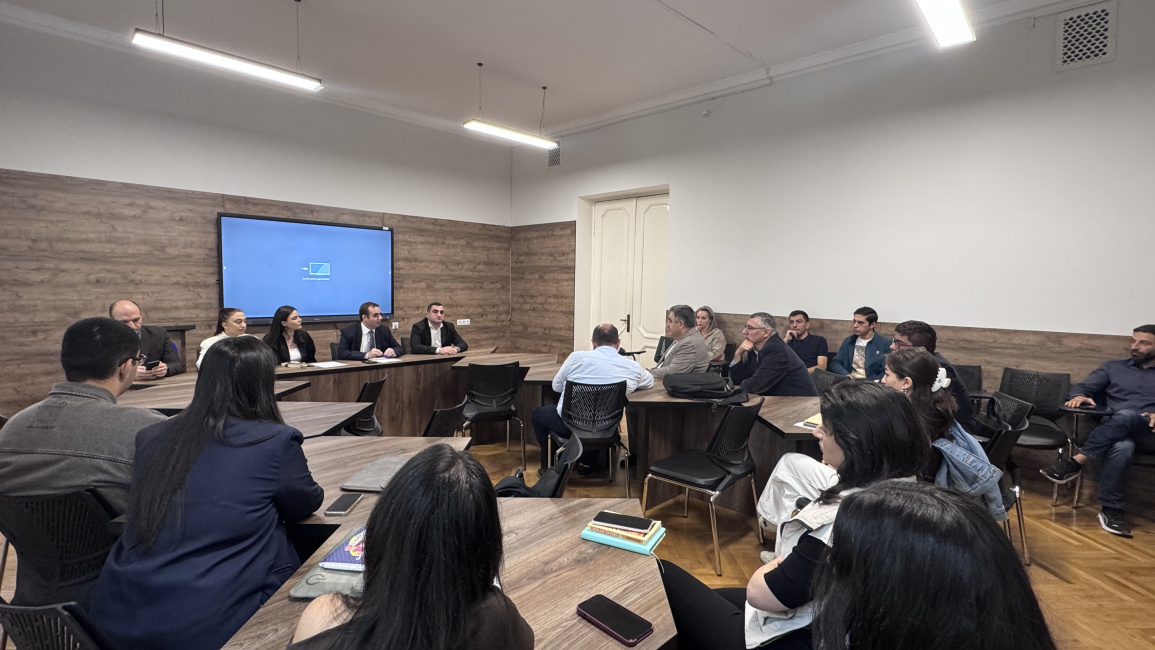
The YSU Faculty of International Relations hosted a panel discussion on the key provisions of the Doctrine of Economic and Institutional Transformation of Armenia, approved by the Armenian government on January 8, 2026.
The discussion featured presentations by members of the Chair of Public Administration: Narine Asryan, Assistant Professor, PhD in Political Science; Ashot Mardoyan, Associate Professor, PhD in Economics; and Narine Petrosyan, PhD in Economics. The discussion covered Armenia's economic situation, policy priorities, institutional mechanisms, and systems for planning, monitoring and evaluating the implementation of the doctrine.
In her presentation, Narine Asryan addressed the quality and sustainability of economic growth, structural modernization and improvements in public administration efficiency. Particular emphasis was placed on balanced regional development, reducing inequalities in economic opportunities and ensuring that the benefits of growth reach all segments of society. Economic development, she stressed, should be viewed in terms of improving human well-being.
Ashot Mardoyan highlighted indicators of economic activity, inflation, investment, foreign trade and public finances, linking them to the country's long-term stability and the well-being of its population. He also examined institutional mechanisms for translating the doctrine's objectives into practical policies, the division of responsibilities among government bodies and interagency cooperation.

Narine Petrosyan discussed how strategic objectives could be translated into measurable indicators and how implementation timelines and responsible parties could be defined. She emphasized the need for monitoring procedures that would make it possible to assess the actual impact of measures taken, identify deviations and make necessary adjustments, while ensuring transparency and accountability.
During the discussion, participants raised questions about prospects for agricultural development, human capital, balanced regional development and ways to improve the country's competitiveness. Methods for measuring public perceptions and using public opinion research to improve policymaking attracted particular interest. The discussion also addressed the role of education as a key prerequisite for economic progress, particularly the need to align the education system with labor market demands and develop professional skills.
Participants also examined the Government Program for 2026–2031 as the main instrument for translating the doctrine's strategic principles and long-term objectives into practical priorities and concrete measures. They emphasized the importance of maintaining a consistent link between the doctrine's vision and the government program through measurable indicators and ongoing monitoring and evaluation.
In concluding the discussion, participants agreed that the doctrine provides a strategic foundation for Armenia's economic and institutional development. The meeting highlighted the importance of improving the quality of economic growth, developing agriculture and human capital, promoting balanced regional development and strengthening the effectiveness of public administration.