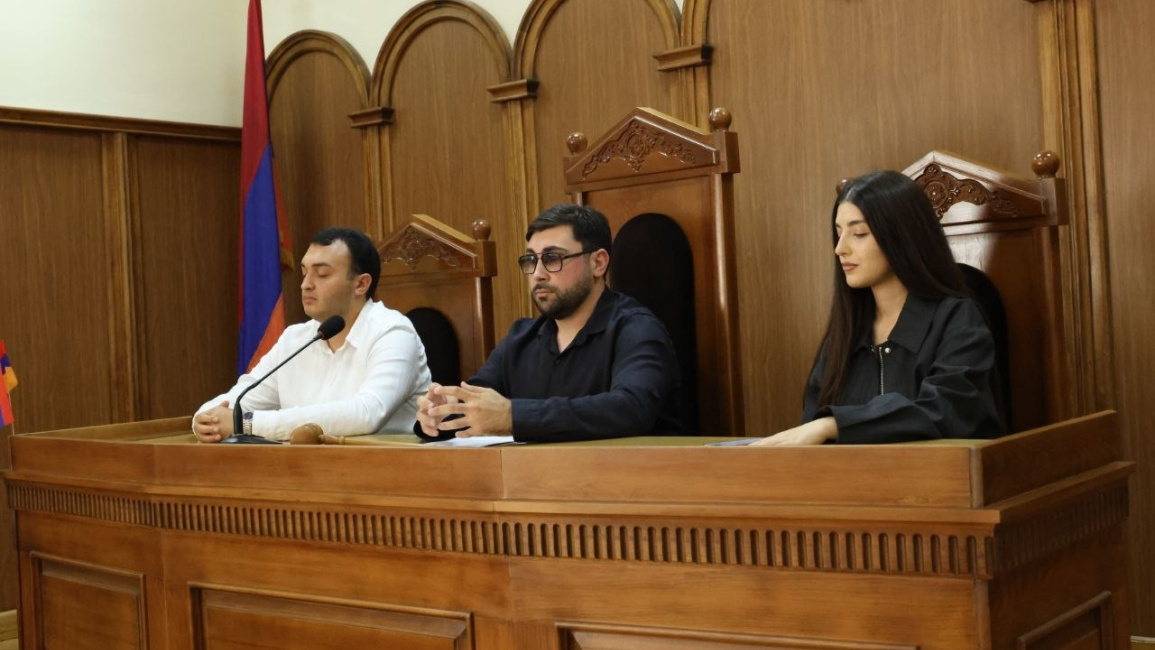
On October 9, the A. Iskoyan Center for Environmental Law at the YSU Faculty of Law held an educational moot court titled "Biodiversity Conservation before the International Court of Justice." Organized ahead of the 17th meeting of the Conference of the Parties to the Convention on Biological Diversity (COP17), to be held in Armenia, the event aimed to foster discussion of pressing biodiversity conservation issues and develop students' professional and practical skills.
The event was attended by YSU faculty members and students, as well as representatives of the Armenian Ministry of Environment.
Ashot Petrosyan, Deputy Dean of the YSU Faculty of Law, and Karen Khachatryan, a representative of the Armenian Ministry of Environment, welcomed the participants. Both highlighted the importance of such initiatives in strengthening students' professional training and outlined the mission, role and significance of COP17.
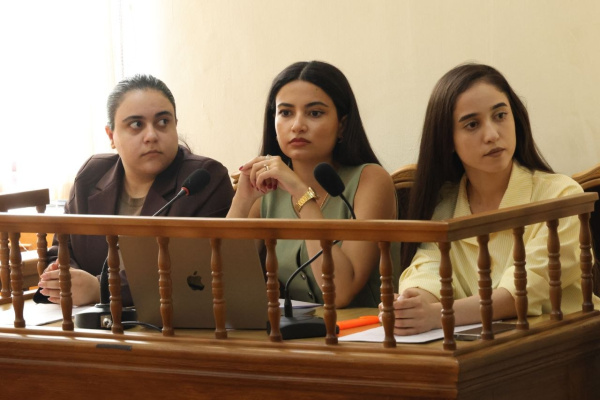
The moot court centered on an international environmental dispute between two hypothetical states over the transboundary consequences of a program to restore and reintroduce brown bears as part of biodiversity conservation efforts. Master's students from the YSU Faculty of Law took on the roles of state representatives, judges and experts, examining interconnected issues of biodiversity conservation, the prevention of transboundary environmental harm, environmental impact assessment and state responsibility under international law.
Representatives of the two hypothetical states presented and defended opposing legal positions before the mock International Court of Justice, drawing on international treaties, principles of international environmental law, and international judicial and arbitral practice. They presented legal arguments, responded to questions from the court and challenged each other's arguments, demonstrating their advocacy skills in an international legal dispute.
Particular attention was paid to the work of the judges. The students serving in these roles demonstrated a high level of professional competence, showing their ability to manage proceedings, ask the parties substantive and legally grounded questions, and compare and evaluate the arguments presented.
The moot court concluded with the mock International Court of Justice's judgment. The court partially upheld the claims of one of the hypothetical states, addressing obligations under Articles 2–6 of the Convention on Environmental Impact Assessment in a Transboundary Context (Espoo Convention).
The delivery of the judgment was one of the key components of the exercise, allowing students to demonstrate not only their ability to present and defend legal positions but also their skills in drafting judicial decisions, developing legal reasoning and making decisions.
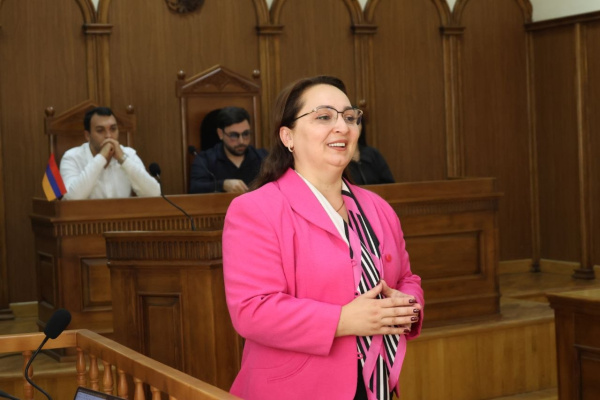
Summing up the event, Olympia Geghamyan, Head of the A. Iskoyan Center for Environmental Law at the YSU Faculty of Law, highlighted the value of such initiatives, noting that they develop students' skills in legal argumentation and counterargument, as well as gain a more comprehensive understanding of the issues under discussion.
According to Geghamyan, the initiative, organized ahead of COP17, aimed to encourage greater professional dialogue on legal issues surrounding biodiversity conservation while emphasizing the importance of practical methods in teaching international environmental law.