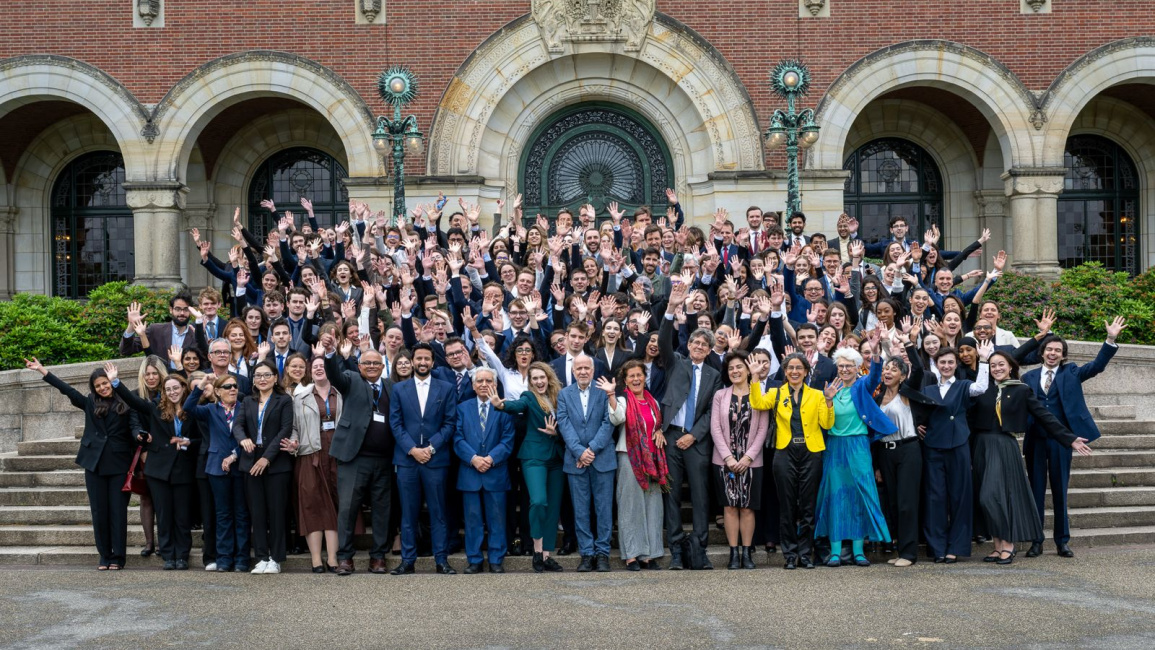
A team from Yerevan State University participated in the prestigious Telders International Law Moot Court Competition, organized by Leiden University.
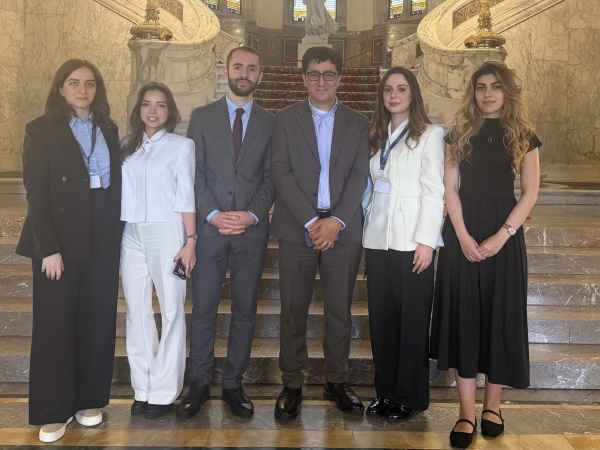
This marked the second consecutive year that YSU has taken part in this renowned international law moot court competition, which brings together teams from universities across Europe. The competition provides students with a unique opportunity to develop and demonstrate their knowledge of international law, while challenging their creativity, analytical abilities, and advocacy skills through written and oral pleadings.
The YSU team was composed of four students from the International Courts and Arbitration LL.M. Program (ICA) - Erik Manukyan, Lilit Paytyan, Svetlana Simonyan and Silva Vardazaryan, - and was coached by the Program's co-founders, Yeghishe Kirakosyan and Kristin Khanazadyan.
This year's case concerned advisory proceedings before the International Court of Justice and addressed complex issues relating to the immunity of international organizations, racial discrimination under international human rights instruments, including the International Convention on the Elimination of All Forms of Racial Discrimination and the International Covenant on Civil and Political Rights.
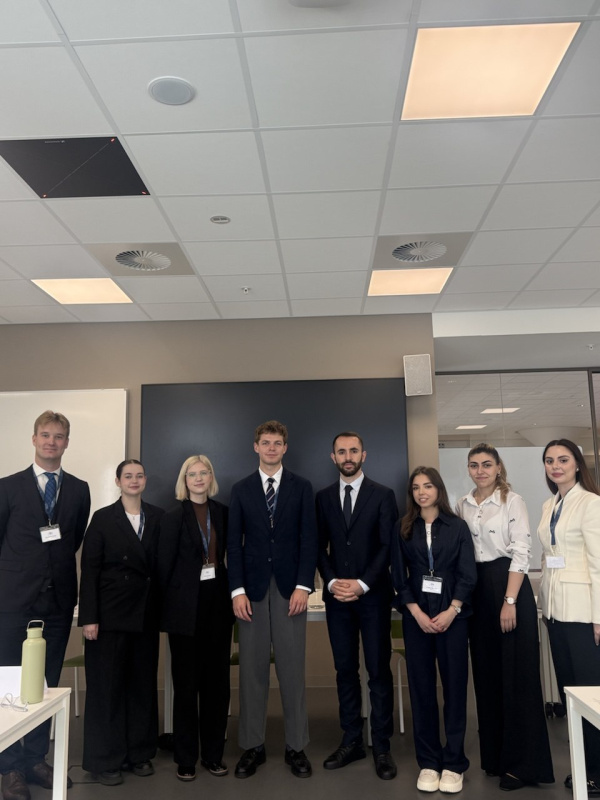
The competition consisted of both written and oral rounds. The team's written memorials were positively received by members of the International Board of Review (IBOR), who noted, among other comments: "The team showed a good knowledge of the main legal framework.", "You have put together a competent memorial with real strengths in Issues I and III. You clearly understand what Gravenwald's best arguments are." The oral rounds took place in The Hague – in the City of International Law. The team's oral pleadings were evaluated by distinguished practitioners and academics in the field of international law.
During the competition, the YSU team presented its arguments alongside teams from universities in Estonia, Germany, the United Kingdom, and Italy. The team also had the privilege of presenting before the author of this year's moot court case and received encouraging feedback from the judging panels. Among the comments received were: "Very good knowledge of ICJ case law; able to cite specific facts and rulings. Very good mastery of the speech.", "Excellent concessions and examples." At the same time, the judges provided valuable recommendations for further improvement.
The team returned from The Hague with valuable experience, practical advocacy skills, and renewed motivation to apply the lessons learned in future moot court competitions and real-life legal proceedings.