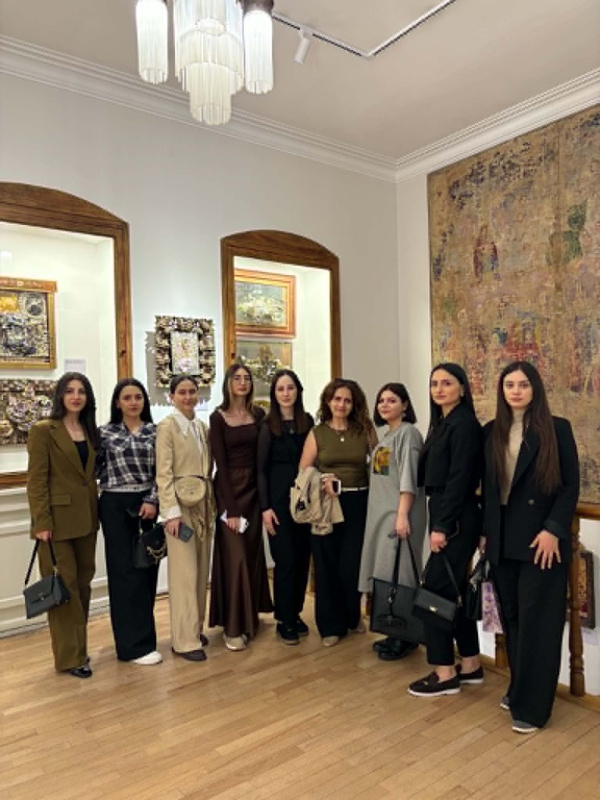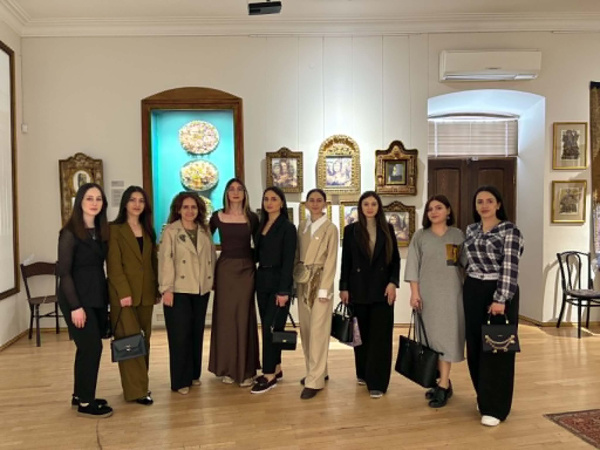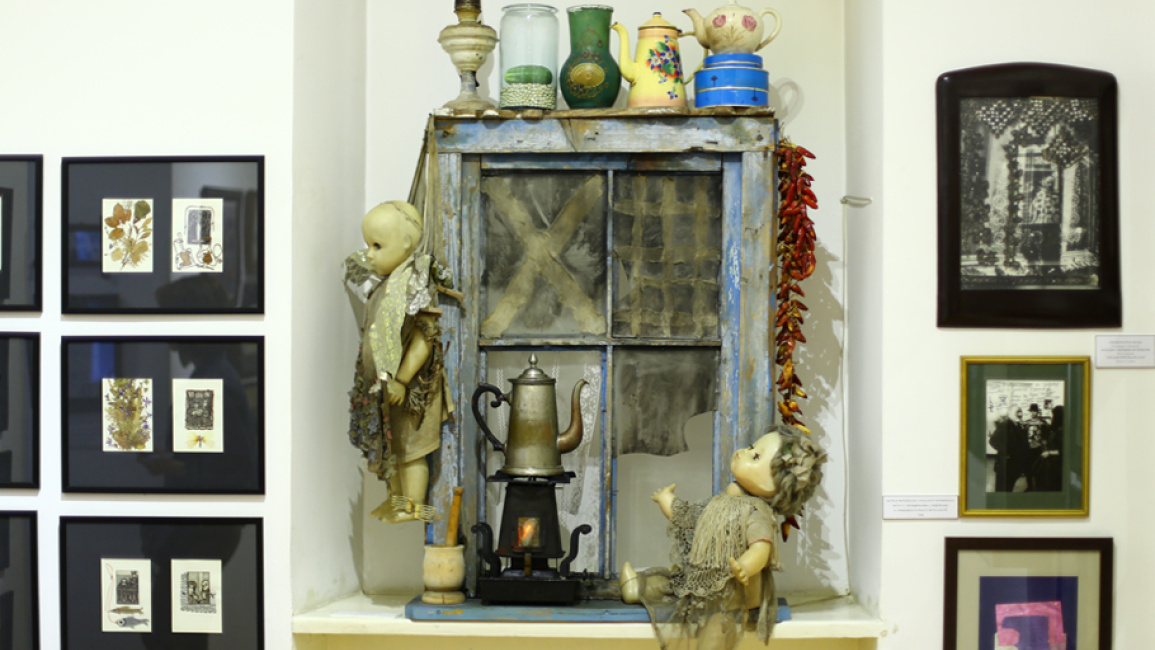
On May 12, students of the "Armenian Literature" master's program at the YSU Faculty of Armenian Philology, accompanied by Associate Professor, PhD in Philology Nvard Vardanyan, visited the Sergey Parajanov House-Museum.
"He did not like repetitions or rehearsals. Everything was born spontaneously, without deep, painstaking efforts, from the heart. It was right here that he screamed, laughed, and cried…"
— Gary Kuntsev, "Once Upon a Time There Was Parajanov"
Within the framework of the Folklore and Literature course, the visit provided students with an opportunity to become acquainted with the life, artistic legacy, and aesthetic worldview of Sergey Parajanov, aiming to explore the folkloric layers and symbolic imagery reflected in his work.
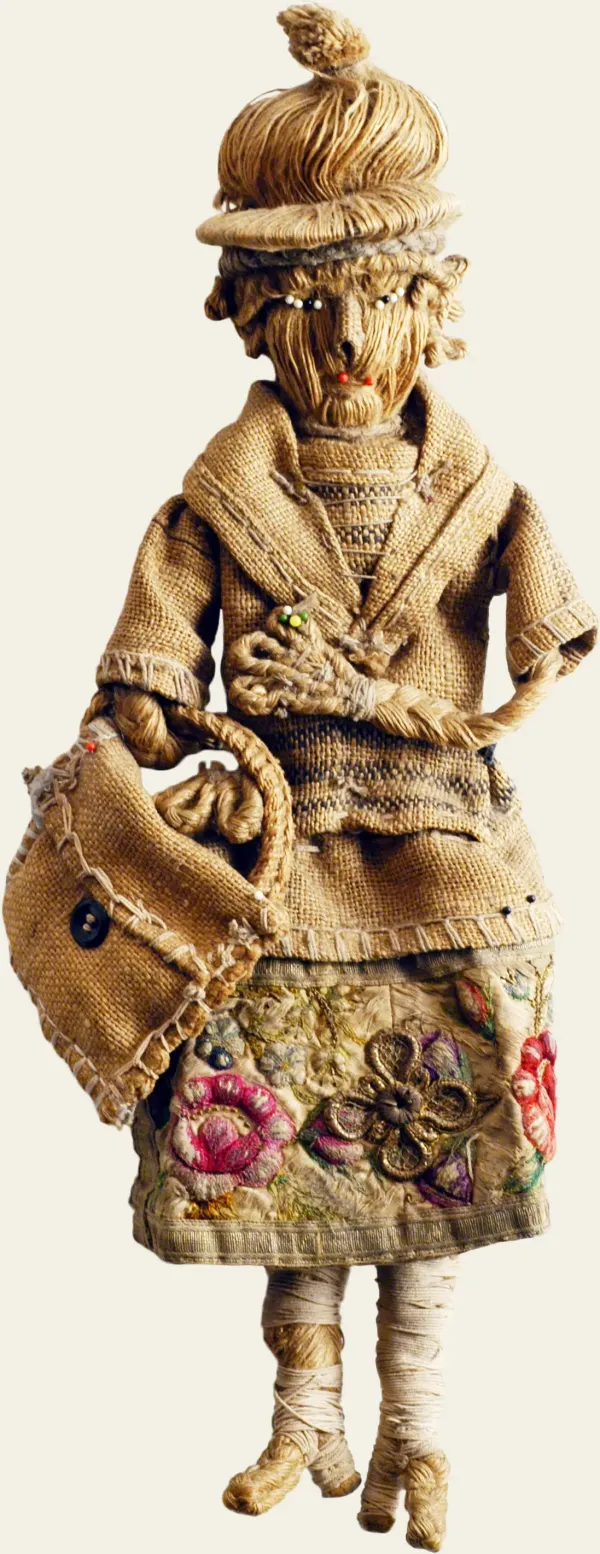
One of the greatest artists of all time, Parajanov frequently drew upon motifs from Armenian, Georgian, Ukrainian, and Oriental folklore. His films feature prominent ritual imagery, national costumes, folk songs, and mythological symbols. He was not merely a film director; Parajanov also created collages, dolls, assemblages, and unique installations. His studio resembled a creative labyrinth, where every object was transformed into art, simultaneously revealing the boundless depths of his inner world and imagination, and intertwining reality with fantasy.
During the discussions, special attention was paid to the distinctive synthesis of national culture, imaginative representations, and elements of folk art in Parajanov's works. Students noted that his cinematic language was shaped not only by aesthetic innovation but also by a profound understanding of folk memory and tradition.
The visit served as an important opportunity to reinterpret theoretical knowledge within a living cultural environment and to examine the influence of Armenian folklore in various manifestations of contemporary art.
Few facts about Parajanov
The 100th anniversary of Sergey Parajanov's birth was included in UNESCO's calendar of anniversaries of eminent personalities and important events for 2024–2025.
During his imprisonment in the Gulag, Parajanov was forced to sew sacks. From leftover scraps of fabric, he created dolls, one of which depicted Egyptian pharaoh Tutankhamun.
Although numerous prominent artists, writers, and directors appealed for his release, he was freed only four years later, following the intervention of French surrealist Louis Aragon.