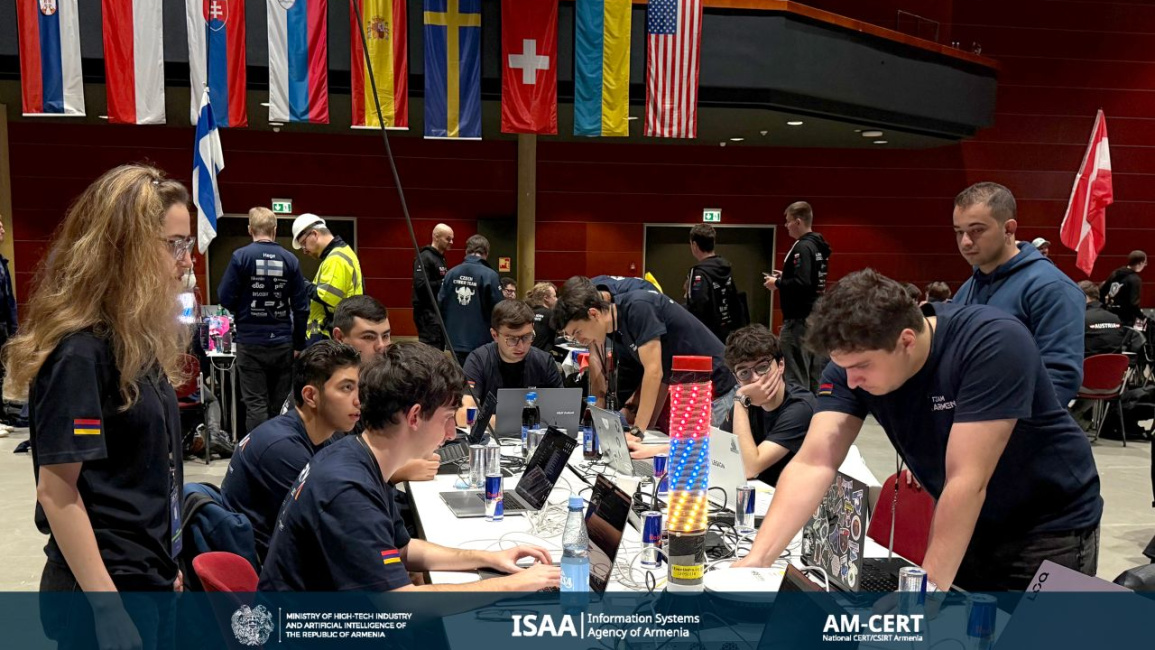
Sandro Hakobyan, a student at the YSU Information Technologies Educational and Research Center (ITERC), represented Armenia as a member of the national team at the European Cybersecurity Challenge (ECSC 2026), an international competition for young cybersecurity professionals. The event aims to showcase young professionals' potential on the international stage, foster cooperation, and facilitate the exchange of knowledge and experience. Sandro believes that the university environment and his studies at ITERC provide an academic foundation for developing the general engineering and technical mindset that supports further professional growth.
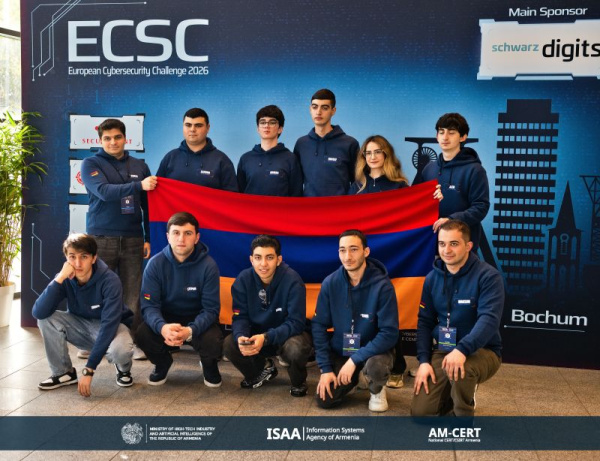
The competition was held October 12-16 in Bochum, Germany, bringing together more than 400 young people from 42 countries and giving them an opportunity to demonstrate their knowledge and practical skills in cybersecurity.
Armenia participated with a 10-member national team, led by Sandro Hakobyan, a second-year student in YSU ITERC's "Information Systems Management" master's program. Before joining the national team, he took part in the qualifying rounds of Armenia's National Student Cyber Exercise, where he became a member of Team ByteForce, which finished second, earning him the opportunity to join the national team.
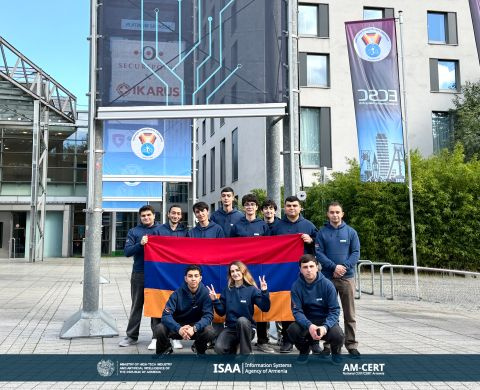
The European Cybersecurity Challenge (ECSC) is an annual international competition for young cybersecurity professionals, held with the support of the European Union Agency for Cybersecurity (ENISA). The competition aims to identify and nurture young talent, promote the exchange of professional knowledge, and foster international cooperation.
The competition features challenges across various areas of cybersecurity, including web security, cryptography, digital forensics, reverse engineering, and vulnerability identification. Through practical tasks, participants apply their knowledge and develop problem-solving, analytical thinking, and teamwork skills.
Below is an interview with Sandro Hakobyan about the competition and his professional field.
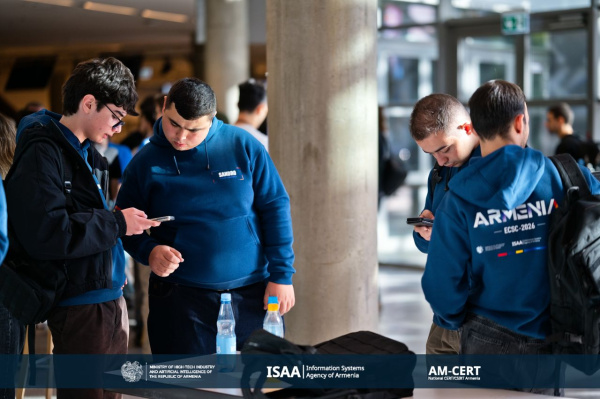
- How did your interest in cybersecurity begin, and what motivated you to participate in Armenia's National Student Cyber Exercise?
- From an early age, I was deeply interested in understanding how different systems actually work, starting with their underlying foundations. This curiosity led me to explore the systems' internal logic more deeply and, over time, to identify their strengths and weaknesses. This naturally led me to choose cybersecurity. My main motivation for participating in the national cyber exercise was to test the knowledge I had accumulated in a practical environment and take on the challenge of competing with the country's top students.
- How did the national qualifying competition go? What kinds of tasks did you have to solve, and how did it feel to be part of the team that finished second?
- The qualifying round focused primarily on defensive cybersecurity (defense, threat hunting, incident investigation). Our task was to examine the system in detail, understand exactly what had happened during the incident, and accurately reconstruct the timeline. Until then, I had mostly worked in offensive cybersecurity, so this was an excellent opportunity to delve into the intricacies of the defensive side as well. Finishing second and earning a place on the national team was very exciting. It was rewarding to see that systematic and level-headed work could produce such tangible results.
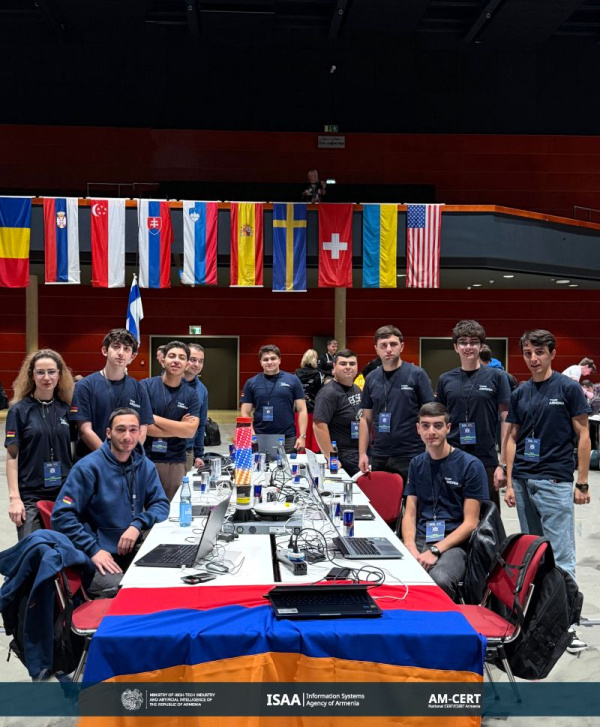
- How did you prepare for the international competition ECSC 2026? What work did you do as part of Armenia's national team?
- The preparation period was quite intensive and demanding. Since this was Armenia's first participation in a cybersecurity event of this scale and caliber, many aspects were naturally unpredictable. Our work focused primarily on team coordination and developing strategies for various possible scenarios. The experience was invaluable. It clearly showed us areas we still needed to work on, both as individuals and as a team, and areas future Armenian teams competing in the event should focus on. I am confident that, thanks to the experience we have gained, Armenia will achieve much better results next time.
- You were the captain of Armenia's national team. What responsibilities did that role entail? How did you organize the team's work during the competition, and what challenges did you face in that position?
- Being captain was primarily a psychological responsibility. There were many challenges amid the pressure of the competition; however, the most important thing was to keep the team's spirit and motivation strong, regardless of how difficult the tasks seemed at any given moment. My responsibility was to ensure that each participant remained focused and performed to the best of their ability, while we worked together as a cohesive unit.
- Can you share your overall impression of ECSC 2026? Which competition tasks did you find the most challenging or interesting?
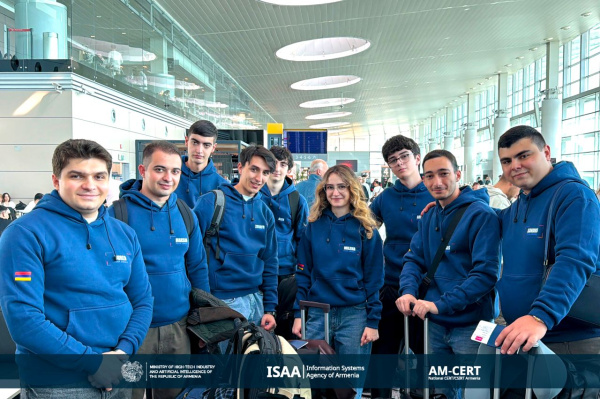
- I was very impressed by the level and diversity of the challenges. The tasks in different stages of the competition featuring hardware particularly stood out as both interesting and challenging. They required more than standard theoretical or software-based approaches; they also demanded an in-depth understanding of hardware-level systems and practical adaptability, making these challenges especially unique.
- To what extent did the knowledge and skills you acquired at ITERC help you during the competition? Was there any particular knowledge or experience that proved especially useful during the competition?
- The university environment and my studies at ITERC primarily provide an academic foundation for developing a general engineering and technical mindset. A basic understanding of software systems and their architecture is essential when facing a technical challenge, as it helps approach information more systematically.
- What new experience, knowledge, or professional connections did you gain through this competition? What advice would you give students who want to pursue a career in cybersecurity?
- Through the competition, we made many new friends from different countries and encountered innovative technical challenges. One of the most important takeaways was realizing that, in competitions at this level, individual expertise is not enough; teamwork, internal cohesion, and the proper distribution of roles are equally important.
My advice to students interested in the field is not to rely solely on theoretical material. It is important to regularly participate in practical exercises and CTF competitions, develop a deeper understanding of how systems work at a fundamental level, and never be afraid of complex challenges. Perseverance and consistent practice are essential prerequisites for success in this profession.
Sandro Hakobyan's participation in ECSC 2026 marks an important experience in his professional development. YSU's ITERC congratulates the student on representing Armenia on an international stage as a member of its national team and wishes him continued success and further professional achievements.