Today, artificial intelligence (AI) not only provides access to processed information but also plays an important role in sharing knowledge about different cultures and promoting intercultural communication. But how well does AI understand and accurately represent the values, traditions and ways of thinking across cultures? These questions are at the heart of an international research project titled "Cultural Differences and Similarities in AI-Generated Content: Cross-Cultural Study."
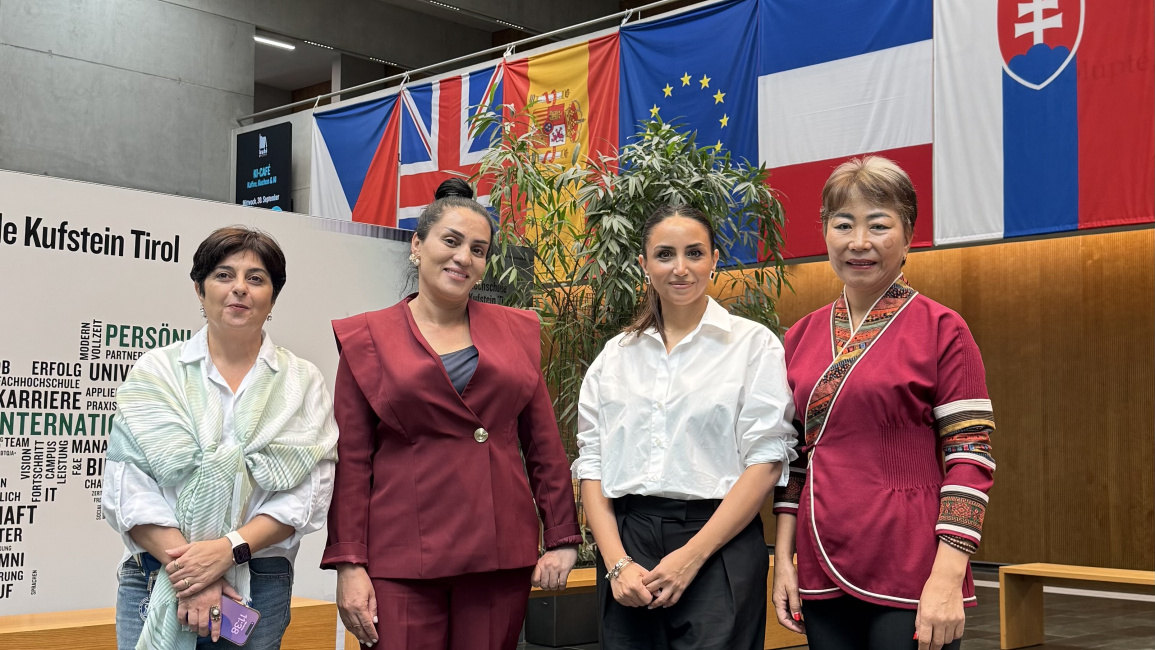
Initiated by FH Kufstein Tirol University of Applied Sciences in Austria, the project brings together representatives from Armenia, Tajikistan, Mongolia and Austria. Armenia is represented by Anoush Ayunts, Associate Professor at YSU's English Chair of Cross-Cultural Communication, and Emma Nemishalyan, a lecturer at the same chair.
We spoke with Anoush Ayunts about the research objectives, the project's progress, its expected outcomes and the relationship between artificial intelligence and intercultural communication.
- What was the aim of this research project? What were its main objectives and areas of focus, and what questions were you seeking to answer?
- The primary aim of our research project is to examine how culturally literate artificial intelligence is — in other words, how well it can recognize, understand and accurately represent the cultural values, norms, ways of thinking and behavioral patterns of different peoples.
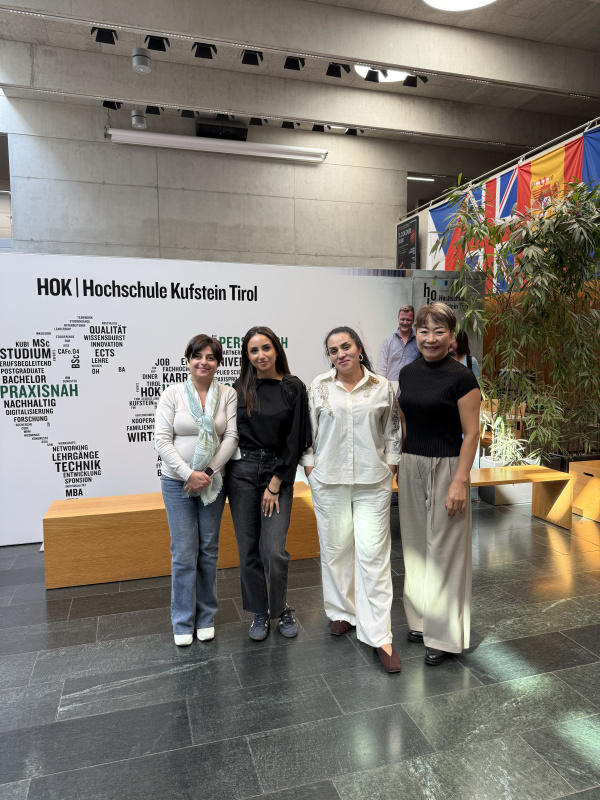
FH Kufstein Tirol University of Applied Sciences in Austria initiated the project as part of a grant-funded program titled "Cultural Differences and Similarities in AI-Generated Content: Cross-Cultural Study."
Our research draws on Hofstede's six cultural dimensions as its theoretical and methodological framework: power distance, individualism versus collectivism, masculinity versus femininity, uncertainty avoidance, long-term versus short-term orientation, and indulgence versus restraint.
Our main objective was to develop a repository of AI prompts based on these six dimensions to assess how AI interprets phenomena characteristic of different cultures.
We are seeking to answer the following questions: Can artificial intelligence distinguish between cultural characteristics? How accurately do its responses reflect the actual values and norms of different societies? And can it avoid cultural stereotypes and generalizations?
- Who participated in the project, and what outcomes do you expect?
- The project has an international scope, with seven participants representing Armenia, Tajikistan, Mongolia and Austria.
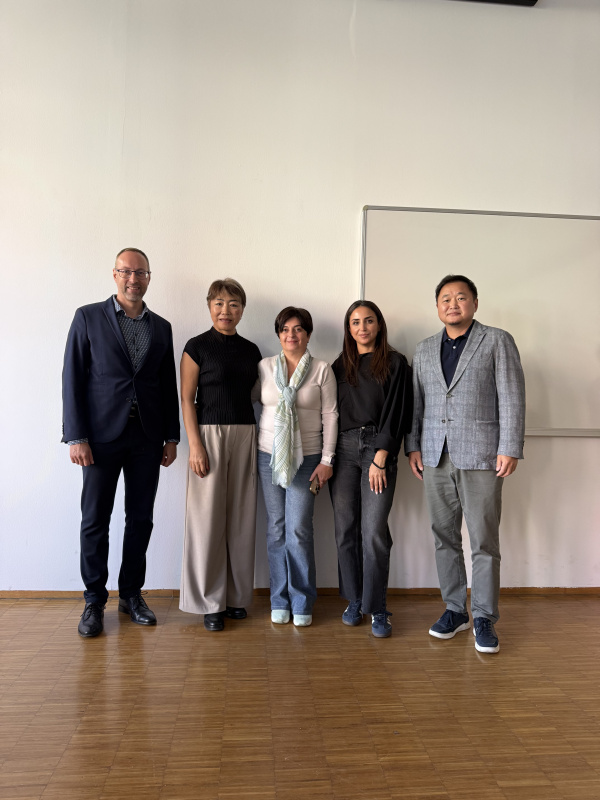
My colleague Emma Nemishalyan, a lecturer and Associate Professor at YSU's English Chair of Cross-Cultural Communication, and I represent Armenia in the project.
Our first major achievement as an international team was to develop a repository of AI prompts based on Hofstede's six cultural dimensions.
The next stage involves students in data collection and analysis. First-year master's students from YSU's English Chair of Cross-Cultural Communication have already begun collecting data.
The final results are expected in July 2027.
Our ultimate goal is to determine how accurately AI represents different cultures and where its limitations lie.
- How are you conducting the research? Have participants compared AI-generated content about different cultures, and if so, what interesting patterns have emerged?
- The research is being conducted in several stages. In the first stage, representatives from Armenia, Tajikistan, Mongolia and Austria worked together to develop a repository of AI prompts based on Hofstede's six cultural dimensions.
In the second stage, we will use these prompts to generate content with AI and then examine how that content represents the values and behavioral patterns characteristic of different cultures.
What makes this research particularly interesting is that it goes beyond simply comparing descriptions of different cultures. We also aim to determine whether AI can accurately interpret cultural contexts, recognize the nuances of cultural values and avoid making generalized judgments about different societies.
Since we are still collecting and analyzing data, it is too early to identify any definitive patterns. However, this comparative analysis should help us identify where AI responses accurately reflect the characteristics of different cultures and where discrepancies or contradictions arise.
- What have you discovered during the research? What cultural similarities and differences have you observed in AI-generated content?
- We are still collecting data, so we cannot yet report any conclusive scientific findings.
However, what sets our research apart is that we aim to assess not only how well AI presents cultural facts but also how deeply it understands cultures.
What I find particularly interesting about this research is that it will allow us to compare different cultures while also assessing AI's ability to understand and represent them.
- In your view, how accurately can artificial intelligence represent the cultures, values and identities of different peoples? Does it primarily help bring cultures closer together, or does it sometimes widen the differences between them?
- I believe artificial intelligence has great potential to advance intercultural communication and promote mutual understanding among people from different cultures. It provides quick access to information about different cultures, traditions, values and social norms.
The key point, however, is that cultural literacy goes beyond knowing facts about a culture. It also requires an understanding of its historical and social context and underlying values.
AI can sometimes accurately represent the general characteristics of a culture while overlooking its nuances or reproducing stereotypes. For example, a generalized description of a society may fail to reflect generational, regional or individual differences within that society.
I therefore believe that artificial intelligence can both bring cultures closer together and, in some cases, deepen misunderstandings between them.
It all depends on the reliability and comprehensiveness of the data AI uses to generate its responses and on how critically users evaluate the information they receive.
This is precisely why our research matters: We want to understand how culturally literate AI is and to what extent we can trust it as a tool for intercultural communication.
- What have you gained from participating in this research? What new knowledge, skills or professional competencies have you acquired?
- This project has been particularly valuable to me professionally because it allows me to combine my two main areas of interest: intercultural communication and the application of artificial intelligence in education and research.
First, working with an international team allowed me to learn about the approaches taken by specialists in different countries and bring together different perspectives on culture.
Second, I explored in greater depth how Hofstede's cultural dimensions can be applied not only to human communication but also to the analysis and evaluation of AI-generated content.
I particularly value the involvement of students. The master's students are not only contributing to data collection but also gaining firsthand experience in an international research project and developing their research, analytical and digital literacy skills.
I believe this project also has significant educational value. Today, future professionals need more than the ability to use artificial intelligence. They must also understand its limitations, assess the reliability of the content it generates and recognize cultural biases.
One of my most valuable takeaways from this project is that, far from losing its importance in the age of artificial intelligence, intercultural communication is becoming increasingly relevant and in demand.