Home
envelope
ՀայերենРусскийEnglish

Main Navigation (Eng)

  • Admission
    • Undergraduate admission
    • Master’s degree admission
    • Postgraduate admission
    • Foreign Students
    • Preparatory courses
    • Work Carried out with Applicants
    • YSU STEM High School
  • Education
    • Guide Book for First Year Students
    • Educational programs
    • Granting qualification of a pedagogue
    • Center for Academic Writing
    • Continuing education
    • Academic Calendar
    • Olympiad
  • Science
    • Open science
    • Conferences
    • Library
    • Grants
    • Publishing House
    • Doctoral Thesis Defence Councils
    • HRS4R
  • News and events
    • Events
    • Activities
    • News
    • Newsletter
    • Announcement
    • Photo gallery
    • Video gallery

Secondary Navigation (Eng)

  • About YSU
    • YSU Management
    • YSU Symbols
    • YSU International Cooperation
    • Quality assurance
    • YSU History Museum
    • Vacancies
    • FAQ
  • Structure
    • YSU Faculties and Educational Centers
      • Faculty of Geography and Geology
      • Faculty of Theology
      • Faculty of Oriental Studies
      • Faculty of European Languages and Communication
      • Faculty of Journalism
      • Faculty of Informatics and Applied Mathematics
      • Faculty of Law
      • Faculty of Biology
      • Faculty of Armenian Philology
      • Faculty of International Relations
      • Faculty of History
      • Institute of Physics
      • Faculty of Russian Philology
      • Faculty of Sociology
      • Faculty of Economics and Management
      • Faculty of Philosophy and Psychology
      • Faculty of Chemistry
      • Faculty of Mathematics and Mechanics
      • Pedagogy and Education Development Center
      • Center for European Studies
      • Institute of Pharmacy
      • Chair of Civil Defense
      • Chair of Physical Education and Sports
      • Information Technologies Educational and Research Center
    • Column Wrapper
      • YSU STEM High School
      • YSU Ijevan Branch
    • Scientific Centers and Laboratories
      • American Studies Center
      • Psychology Research Center
      • Research Laboratory of Applied Sociology
      • Center for Mathematical and Applied Research
      • Institute for Armenian Studies
      • Research Center for Chemistry
      • Research Institute of Biology
      • Research Institute of Physics
      • Research Center for the Institute of Pharmacy
    • Scientific and Educational Centers
      • Scientific and Educational Center for Control and Monitoring of the Quality of Medicines
      • Legal Clinic
      • Research Center-Library of Greek Studies
      • Russian Center
      • Center for Russian Studies
      • Distance Learning Laboratory of Sociology
    • Column Wrapper
      • Banner
    • Administrative Divisions of YSU
      • Academic Secretary
      • Center for Doctoral Education
      • General Division
      • YSU History Museum
      • Department of Energy System Operation
      • Financial Analysis Department
      • Human Resources Department
      • Center for Admissions and Affairs with Applicants
      • Vehicle Fleet
      • Business Incubator
      • Byurakan Industrial Practice Base
      • Medical Center
      • Science Policy Department
      • Procurement Planning Department
      • Dilijan Sports and Health Center
      • YSU Archive
      • Publishing House
      • Legal Service
      • Marketing Department
      • International Cooperation Office
      • Tsaghkadzor training and production base
      • Cultural Center
      • Fire Safety Service
      • Alumni and Career Center
      • Hankavan Industrial Practice Base
      • Accounting Department
      • Center for Quality Assurance
      • Department for Special Affairs
      • Guest House
      • Student Dormitory
      • Educational-Methodological Department
      • Marie and Sarkis Izmirlian Library
      • Center for Strategic Planning
      • Rectorate
      • Rector's Office
      • Department of Territory Improvement and Landscape Design
      • Information Technology Department
      • Department of Organization and Control of Economic Activities
  • Structure
  • Alumni and Career
    • Alumni Community
    • Career Center
    • Friends of YSU
  • Student life
    • YSU Student Scientific Society
    • YSU Student Council
    • Art and Culture
ՀայերենРусскийEnglish
envelope

Main Navigation (Eng)

  • Admission
    • Undergraduate admission
    • Master’s degree admission
    • Postgraduate admission
    • Foreign Students
    • Preparatory courses
    • Work Carried out with Applicants
    • YSU STEM High School
  • Education
    • Guide Book for First Year Students
    • Educational programs
    • Granting qualification of a pedagogue
    • Center for Academic Writing
    • Continuing education
    • Academic Calendar
    • Olympiad
  • Science
    • Open science
    • Conferences
    • Library
    • Grants
    • Publishing House
    • Doctoral Thesis Defence Councils
    • HRS4R
  • News and events
    • Events
    • Activities
    • News
    • Newsletter
    • Announcement
    • Photo gallery
    • Video gallery

Secondary Navigation (Eng)

  • About YSU
    • YSU Management
    • YSU Symbols
    • YSU International Cooperation
    • Quality assurance
    • YSU History Museum
    • Vacancies
    • FAQ
  • Structure
    • YSU Faculties and Educational Centers
      • Faculty of Geography and Geology
      • Faculty of Theology
      • Faculty of Oriental Studies
      • Faculty of European Languages and Communication
      • Faculty of Journalism
      • Faculty of Informatics and Applied Mathematics
      • Faculty of Law
      • Faculty of Biology
      • Faculty of Armenian Philology
      • Faculty of International Relations
      • Faculty of History
      • Institute of Physics
      • Faculty of Russian Philology
      • Faculty of Sociology
      • Faculty of Economics and Management
      • Faculty of Philosophy and Psychology
      • Faculty of Chemistry
      • Faculty of Mathematics and Mechanics
      • Pedagogy and Education Development Center
      • Center for European Studies
      • Institute of Pharmacy
      • Chair of Civil Defense
      • Chair of Physical Education and Sports
      • Information Technologies Educational and Research Center
    • Column Wrapper
      • YSU STEM High School
      • YSU Ijevan Branch
    • Scientific Centers and Laboratories
      • American Studies Center
      • Psychology Research Center
      • Research Laboratory of Applied Sociology
      • Center for Mathematical and Applied Research
      • Institute for Armenian Studies
      • Research Center for Chemistry
      • Research Institute of Biology
      • Research Institute of Physics
      • Research Center for the Institute of Pharmacy
    • Scientific and Educational Centers
      • Scientific and Educational Center for Control and Monitoring of the Quality of Medicines
      • Legal Clinic
      • Research Center-Library of Greek Studies
      • Russian Center
      • Center for Russian Studies
      • Distance Learning Laboratory of Sociology
    • Column Wrapper
      • Banner
    • Administrative Divisions of YSU
      • Academic Secretary
      • Center for Doctoral Education
      • General Division
      • YSU History Museum
      • Department of Energy System Operation
      • Financial Analysis Department
      • Human Resources Department
      • Center for Admissions and Affairs with Applicants
      • Vehicle Fleet
      • Business Incubator
      • Byurakan Industrial Practice Base
      • Medical Center
      • Science Policy Department
      • Procurement Planning Department
      • Dilijan Sports and Health Center
      • YSU Archive
      • Publishing House
      • Legal Service
      • Marketing Department
      • International Cooperation Office
      • Tsaghkadzor training and production base
      • Cultural Center
      • Fire Safety Service
      • Alumni and Career Center
      • Hankavan Industrial Practice Base
      • Accounting Department
      • Center for Quality Assurance
      • Department for Special Affairs
      • Guest House
      • Student Dormitory
      • Educational-Methodological Department
      • Marie and Sarkis Izmirlian Library
      • Center for Strategic Planning
      • Rectorate
      • Rector's Office
      • Department of Territory Improvement and Landscape Design
      • Information Technology Department
      • Department of Organization and Control of Economic Activities
  • Structure
  • Alumni and Career
    • Alumni Community
    • Career Center
    • Friends of YSU
  • Student life
    • YSU Student Scientific Society
    • YSU Student Council
    • Art and Culture
  1. Main
  2. News
  3. How to measure university performance and improve education quality: KPI4HE project results presented at YSU
November 02, 2026 | 16:00
Science
Education
International cooperation
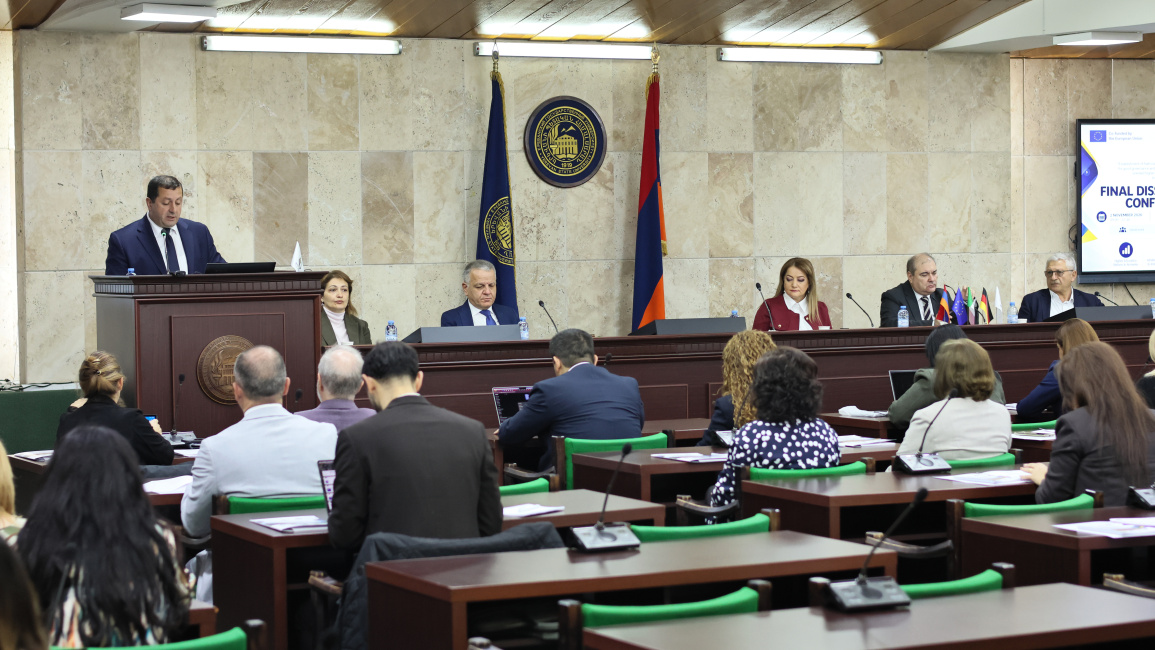
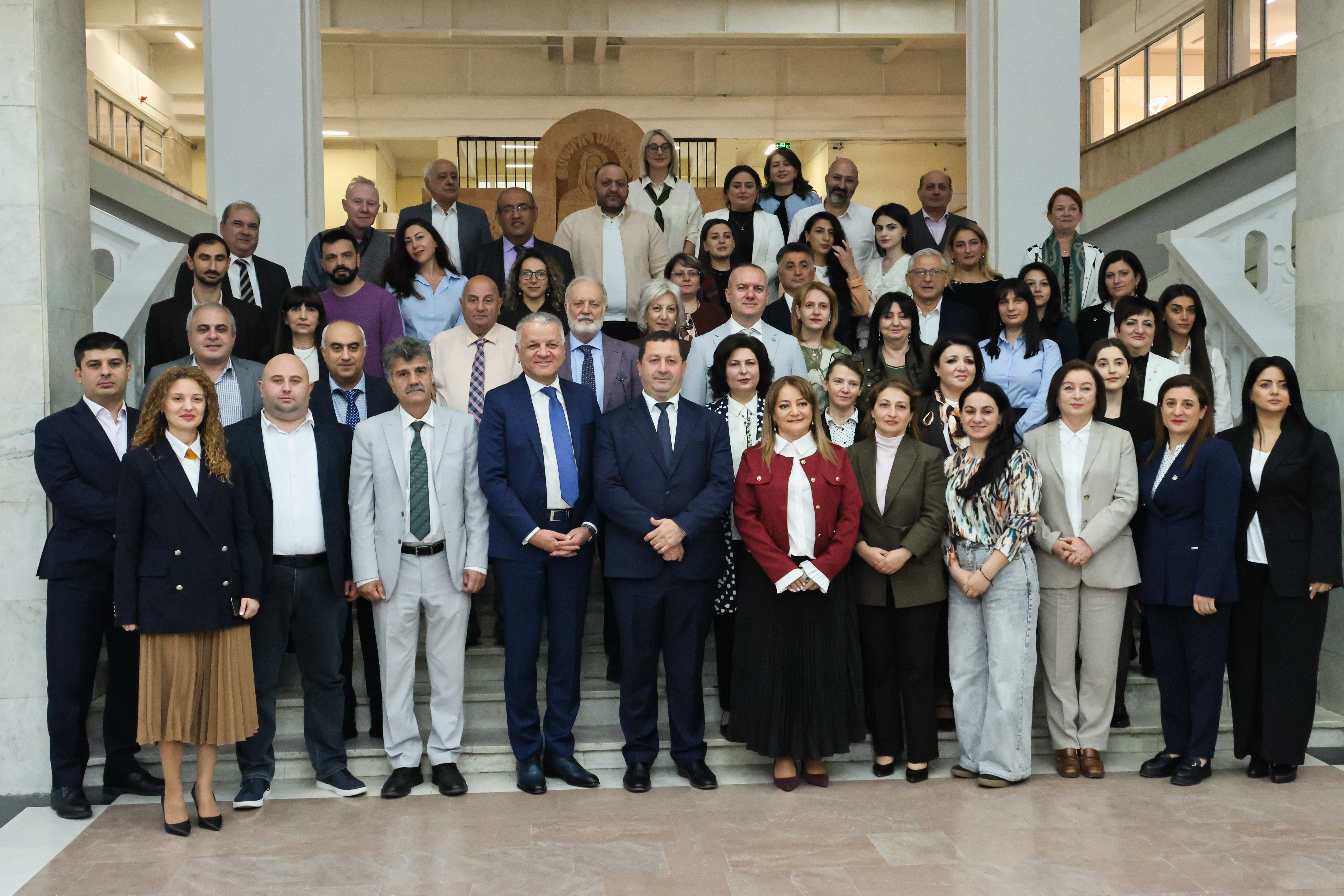
How to measure university performance and improve education quality: KPI4HE project results presented at YSU

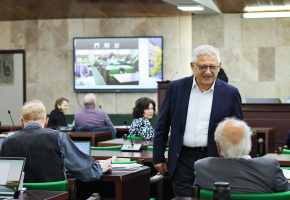
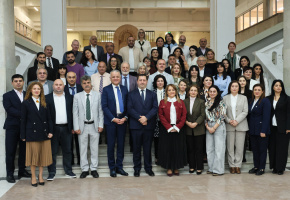
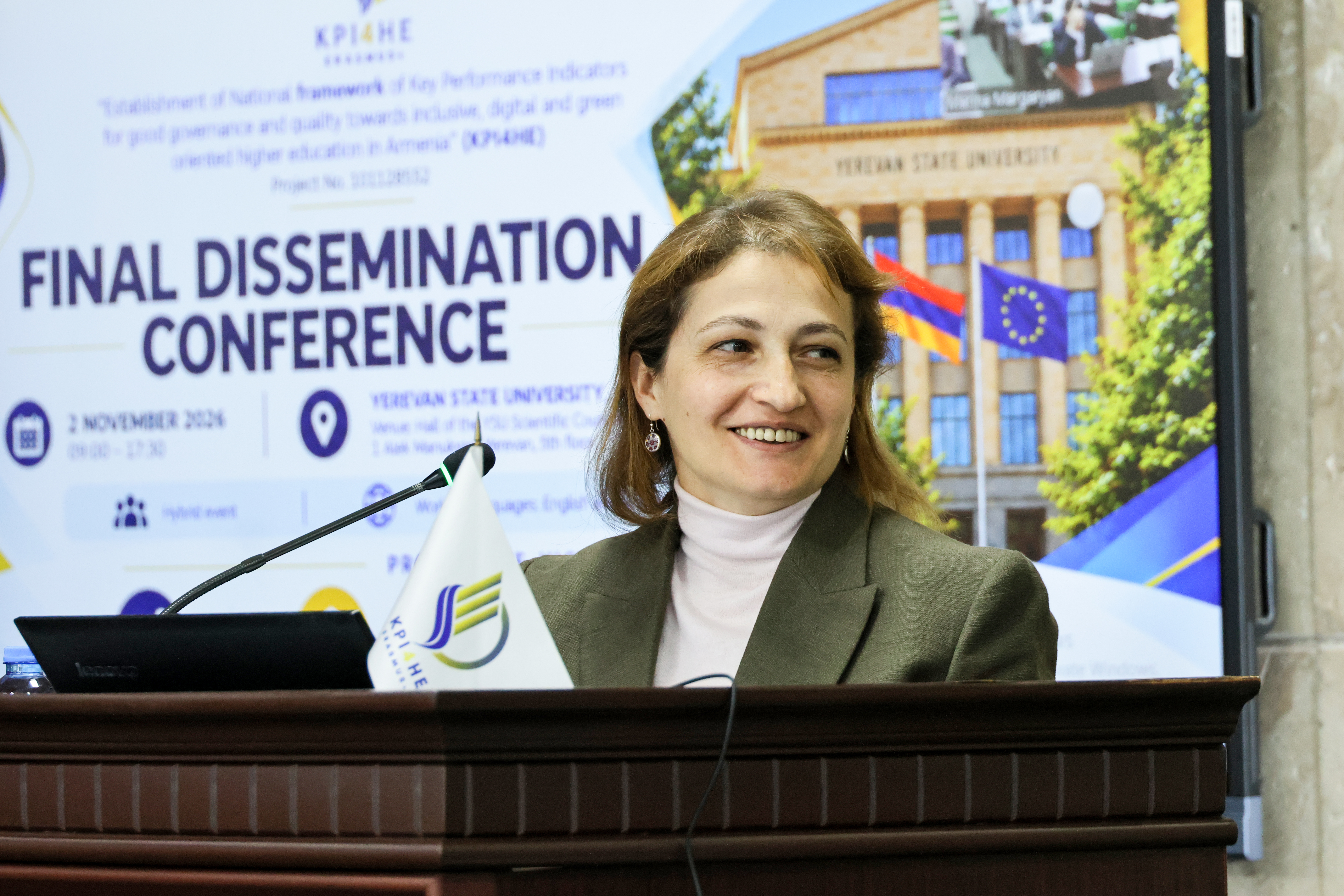
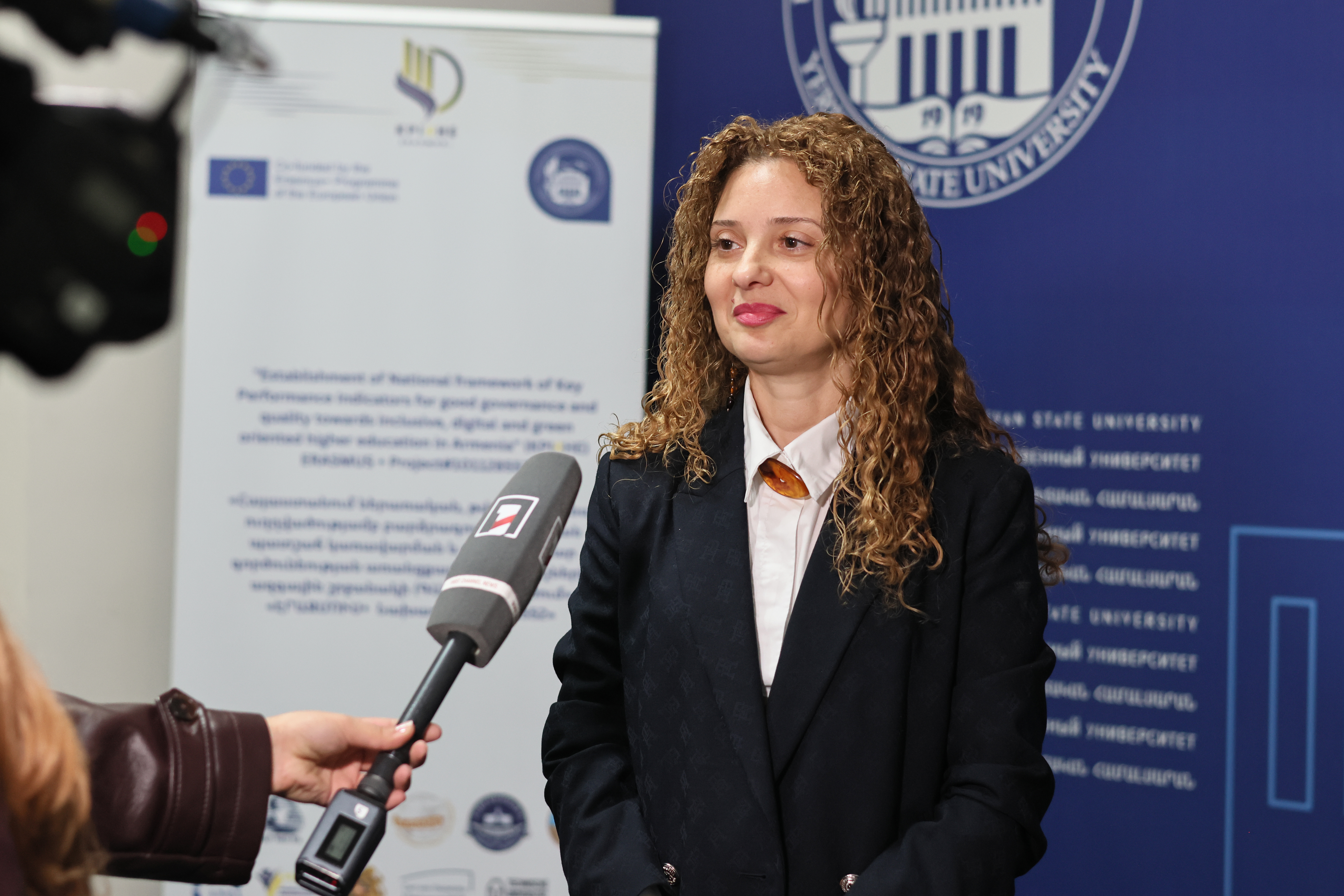
Common indicators for assessing the performance of Armenian universities, data-driven decision-making, new strategic planning tools and opportunities to improve education quality were among the topics addressed at an international conference at Yerevan State University (YSU). The conference presented the results of the YSU-coordinated KPI4HE project and explored prospects for their application. The project could play an important role in shaping new approaches to higher education governance in Armenia.

YSU hosted the final dissemination conference of the project "Establishment of National Framework of Key Performance Indicators for Good Governance and Quality towards Inclusive, Digital and Green Oriented Higher Education in Armenia" (KPI4HE), implemented under the European Union's Erasmus+ program.

The central premise of the project is that university development should be based not only on setting strategic goals but also on measuring, analyzing and evaluating the results of their implementation.

Welcoming conference participants, YSU Rector Hovhannes Hovhannisyan emphasized that effective university governance in a rapidly changing world requires decisions based on reliable data and measurable performance indicators.
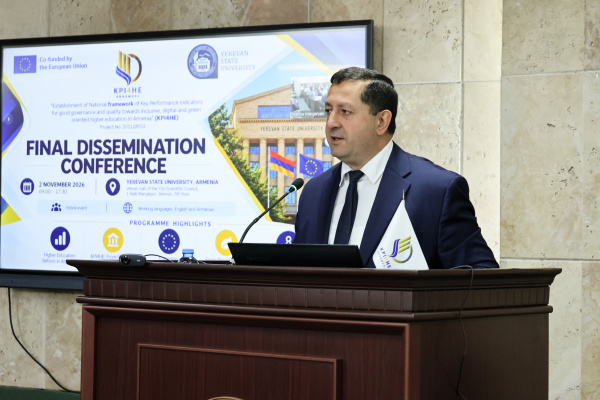
According to the rector, the KPI4HE project provides an important opportunity to develop new approaches to governance, strategic planning and quality assurance in Armenia's higher education system.

He noted that coordinating the project, which brings together 12 partners, had been both a responsibility for YSU and an opportunity to strengthen cooperation between Armenian and European institutions.

"The real value of the project lies in the sustainable use of its results. The next important step is to ensure that the National Framework of Key Performance Indicators and the tools developed continue to guide university strategies, improve decision-making and contribute to the long-term development of higher education in Armenia," Hovhannisyan stressed.

The rector also addressed the potential application of the indicators in new university funding mechanisms, highlighting the link between governance effectiveness and funding.

Vassilis Maragos, Ambassador and Head of the EU Delegation to Armenia, discussed the significance of the project in the context of Armenia-EU cooperation and the development of a higher education system aligned with European standards.

He emphasized that developing common standards and assessment tools will not only improve higher education governance but also strengthen trust between institutions.

The ambassador highlighted the importance of joint efforts by Armenian and European partners, noting that the project's results should continue to be applied beyond its official completion.

What will the National Framework of Key Performance Indicators change?

One of the conference's central topics was the development of Armenia's National Framework of Key Performance Indicators for Higher Education (NF-KPI).

Lilit Mkrtchyan, Acting Chair of Armenia's Higher Education and Science Committee, outlined the main directions of higher education reform, emphasizing that assessing how well modern universities perform requires specific measurable outcomes and data analysis. 

She explained that the draft national framework developed under the KPI4HE project envisages assessing university performance across six main areas: training qualified professionals; national and international engagement; research, development and innovation; equal opportunities; learning environment and quality; and governance, leadership and operational efficiency.

This approach makes it possible to assess university performance as an interconnected system, considering not only educational outcomes but also research capacity, international cooperation, inclusiveness and governance effectiveness.

For example, analyzing graduate employment rates can reveal how well academic programs meet labor market demands. The proportion of digitalized courses can help assess a university's progress in digital development, while analyzing energy consumption data can provide insights into the efficiency of resource management.

Mkrtchyan also highlighted the importance of linking the national framework of indicators to future mechanisms for institutional funding of universities. At the same time, she stressed the need to consider the specific characteristics of universities with different missions and academic specializations when assessing their performance.

According to Mkrtchyan, key next steps include agreeing on indicator definitions and calculation methods, identifying data sources, building staff capacity, and piloting the approaches.

"Measure what matters; use the results to achieve real improvements," Mkrtchyan said, summarising the fundamental principle of data-driven governance.

From data collection to new culture of governance

The conference paid particular attention to how performance indicators could become tools for universities' day-to-day management and quality assurance.
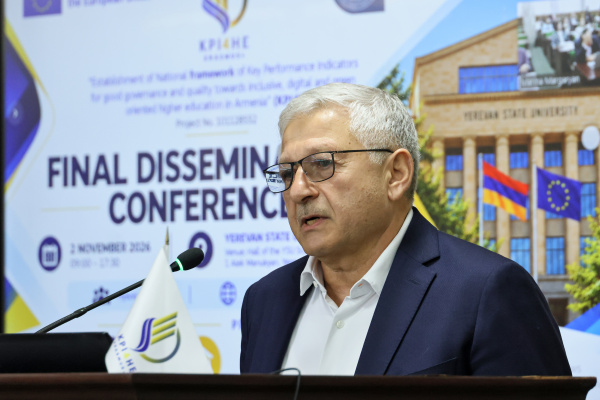
Ruben Topchyan, Director of the National Center for Professional Education Quality Assurance, emphasized that the approaches being developed under the project can contribute to establishing a new culture of quality assessment in Armenia.

According to Topchyan, the application of indicators requires not only the availability of data but also appropriate measurement methodologies and interpretation. The same indicator may have different implications depending on the characteristics of an academic program and its specific context.

Topchyan noted that data-driven assessment should complement accreditation, self-evaluation and expert assessment mechanisms, and ensure more informed decision-making.

Mariana Sargsyan, Coordinator of the National Erasmus+ Office in Armenia, also highlighted the project's multifaceted impact, emphasizing that it brings together institutional development, national priorities and European cooperation.

In her assessment, one of KPI4HE's distinguishing features is its simultaneous focus on three important areas of higher education: inclusiveness, digital transformation and the green transition.

Ensuring continued use of project results

The work carried out under KPI4HE focuses not only on developing a national framework of indicators but also on strengthening universities' institutional research and strategic planning capacities.

The project envisages training specialists, developing mechanisms for data collection and analysis, establishing a dedicated digital platform, and improving university performance assessment and accreditation criteria.

These tools will enable universities to assess their performance more effectively, identify development priorities and make data-driven management decisions.

The project is coordinated by YSU in cooperation with Armenian and European partners, including the University of Oldenburg and TU Dresden in Germany and the University of Genoa in Italy.

Conference participants stressed the importance of ensuring that the approaches and tools developed under the project continue to be applied after its completion, contributing to greater efficiency, competitiveness and quality across Armenia's higher education system.

The principal outcome of KPI4HE should be reflected not only in the introduction of new indicators and assessment mechanisms but also in the practical changes they bring about within universities, from improving academic programs to managing resources more efficiently.

  • Download
  • Download
  • Download
  • Download
  • Download
  • Download
  • Download
  • Download
  • Download
    ShareFacebookTelegram

    Latest News

    «Որակյալ լրագրությամբ զբաղվելն այսօր գնալով ավելի դժվար է դառնում». ԵՊՀ հրավիրյալ պրոֆեսոր Քրիստիան Բանկով

    03.11.2026

    How to measure university performance and improve education quality: KPI4HE project results presented at YSU

    02.11.2026

    Մեկ դար անց՝ Զապել Եսայանի գաղափարից դեպի նրա հիշատակը հավերժացնող արձան․ ԵՊՀ-ում ամփոփվել է մրցույթը

    02.11.2026
    Show All

    Announcement

    Cooperation with the University of Koblenz, Germany

    11.02.2026 - 11.11.2026

    ՅՈՒՆԵՍԿՕ–Ալ Ֆոզանի երիտասարդ գիտնականների միջազգային մրցանակի թեկնածուների առաջադրման հայտերի ընդունելություն

    10.29.2026 - 11.30.2026

    «Էրազմուս+» ծրագրի միջազգային կրեդիտային շարժունություն. Բոլոնիայի համալսարան, Իտալիա

    10.29.2026 - 11.11.2026
    Show All

    Արագ հասանելիություն

    • Intranet
    • E-learning
    • Mulberry
    • Online applications
    • Phone book
    • Registrar
    • Documentation

    Footer(ENG)

    • Main pages
      • Admission
      • Education
      • Science
      • News
    • Information
      • Frequently asked Questions
      • Vacancies
      • Search for educational programs
      • For the applicants
      • For the students
    • About YSU
      • YSU management
      • YSU symbols
    © Yerevan state university 2026
    Address: Republic of Armenia, Yerevan, 0025, 1 Alex Manoogian (+37460) 710000 info@ysu.am