November 16, 2026 | 14:25
Education
International cooperation
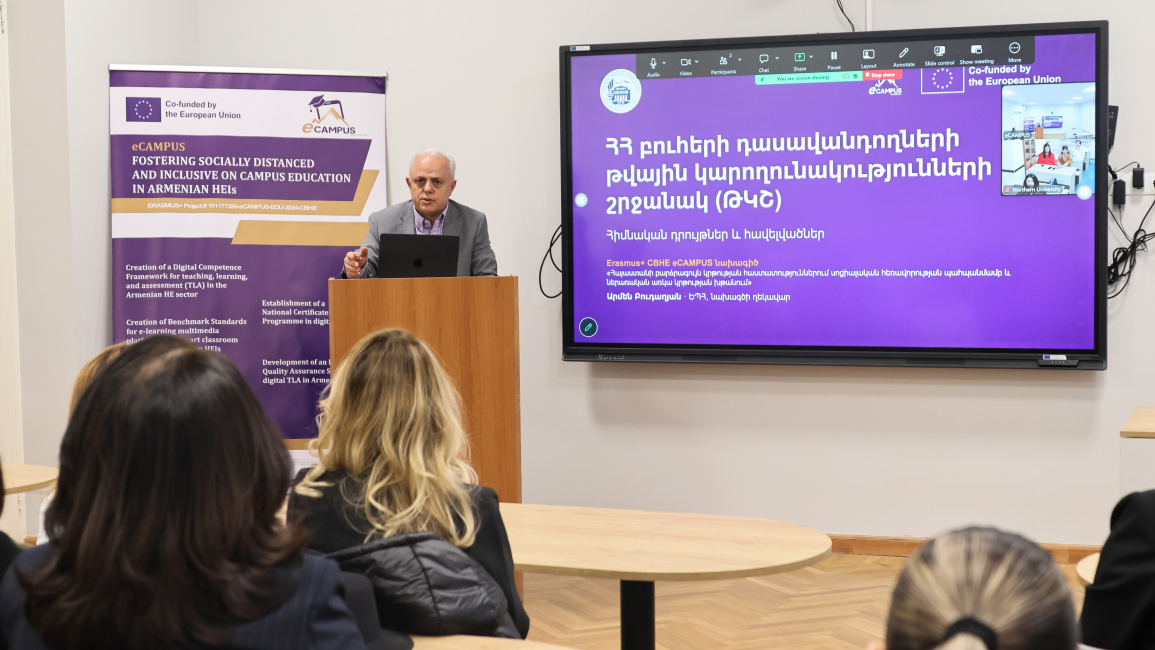
The event focused on DigiComArm, a digital competence framework developed for university faculty across Armenia's higher education system. The framework aims to support educators' professional development and the effective integration of digital technologies, including artificial intelligence (AI) tools, into teaching and learning.
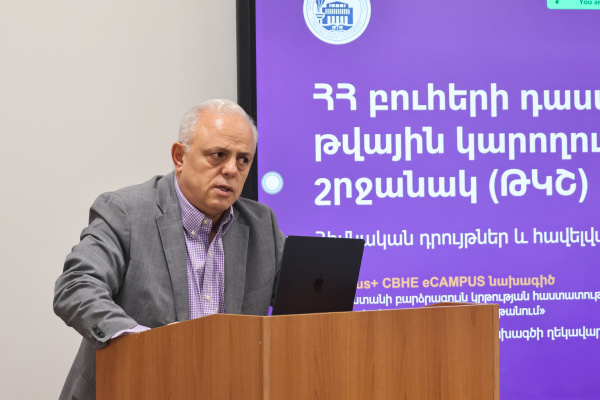
Armen Budaghyan, eCAMPUS Project Coordinator and Director of the YSU Quality Assurance Center, delivered the keynote presentation. He outlined the framework's objectives, structure, potential applications and prospects for implementation across the higher education system.
According to Budaghyan, the framework is one of the project's key achievements, providing a unified approach to assessing, developing and eventually certifying university faculty members' digital competencies.
The project also covers professional collaboration and development, the creation and use of digital educational resources, the organization of teaching and learning, assessment and feedback, along with the enhancement of student engagement and the expansion of educational opportunities. It also envisages three levels of competence development: beginner, practitioner and expert.
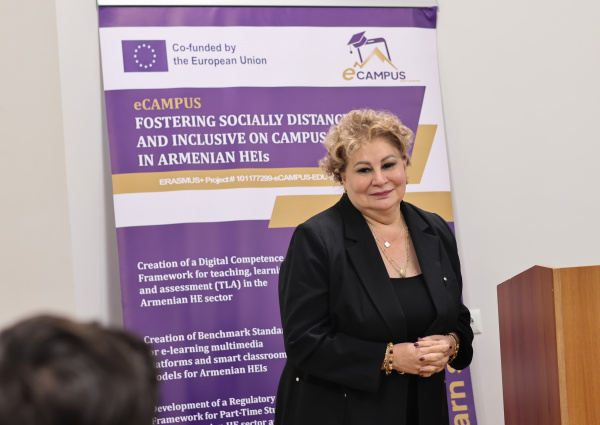
Mari Santurjyan, Deputy Director of the YSU Quality Assurance Center, emphasized the eCAMPUS project's significance in advancing digital and inclusive education at Armenian universities.
She noted that the new learning environment and technological capabilities established through the project are intended to modernize teaching and learning processes. In particular, innovative classroom solutions allow students to participate in classes both in person and remotely, ensuring access to education and continuity of learning under different circumstances. This represents an important step toward a more flexible, accessible and student-centered education system.
"Today, we have an opportunity to show faculty members and students what we have achieved and how much progress we have made over the past two years. One of our major achievements is that the digital competence framework for university faculty has already been approved by the Minister of Education, Science, Culture and Sport of the Republic of Armenia and is expected to be implemented at all universities in Armenia," she emphasized.

DigiComArm is structured around five main competence areas and 14 key competencies. It is designed to serve as a practical guide enabling faculty members to assess their own competencies, identify areas for development and systematically improve their skills in using digital technologies and AI tools.
Speakers also addressed the potential applications of emerging technologies and their role in improving productive education, personalizing learning and increasing student engagement.
The presentations demonstrated that artificial intelligence is more than a technological innovation in higher education. It is gradually becoming an important component of teaching methods, assessment practices and approaches to student engagement. However, to use it effectively, faculty members need appropriate training, professional judgment and a responsible approach.

The information session reviewed the main areas of work carried out under the eCAMPUS project while emphasizing the need for their continued application. During the question-and-answer session and closing remarks, participants had an opportunity to revisit the topics presented and discuss next steps.
The results of this phase of the project are significant not only for upgrading technological infrastructure at individual universities but also for fostering a new educational culture across the higher education system. Effectively integrating digital tools, responsibly using artificial intelligence and developing inclusive learning environments will help shape modern university education that responds to students' needs.