June 13, 2025 | 16:27
Research
Publications and scientific journals
Culture

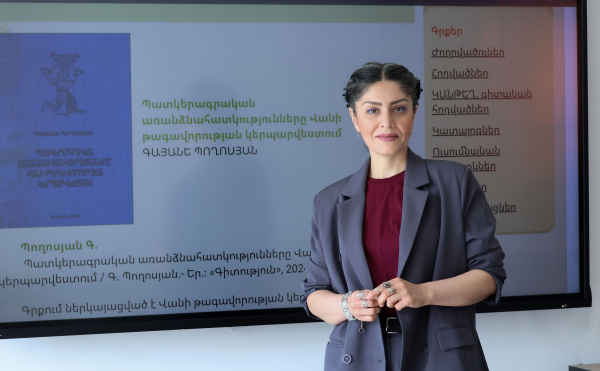
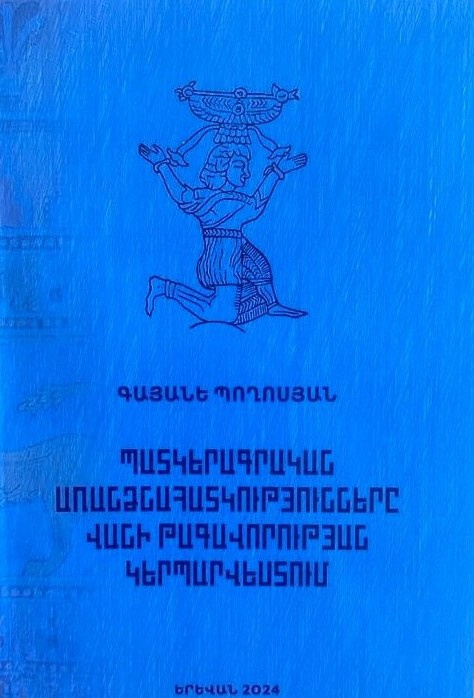
Gayane Poghosyan, a lecturer at the Faculty of History, authored the monograph "Iconographic Features in the Fine Art of the Van Kingdom", which examines the connections between the Van Kingdom and other ancient cultures, as well as the common elements found in their cultic iconographic systems.
– Ms. Poghosyan, what were the key iconographic features found in the fine art of the Van Kingdom?
– In the monograph "Iconographic Features in the Fine Art of the Van Kingdom", the aim was to conduct a comparative analysis of the interrelations between the Kingdom of Van (Urartu, 9th–6th centuries BCE) and other ancient cultures within the context of Near Eastern and West Asian religious, mythological, and cultural developments. The research focuses on commonalities in religious iconography, the origins of specific motifs, and their underlying ideological foundations.
For this purpose, we selected examples from Urartian fine art and decorative-applied arts that are distinguished by their artistic qualities and shaped by religious–mythological conceptions. In analyzing these motifs, written sources and linguistic parallels from the Armenian Highlands and neighboring cultures were also taken into account.
A significant scholarly contribution of the study is the interpretation of the symbolic descriptions of certain rituals in the fine art of the Van Kingdom, achieved by correlating cuneiform sources with iconographic narratives. The research attempts to present traditional iconographic motifs as generalized and simplified models of Urartian mythological and religious concepts. Various artistic examples demonstrate the simultaneous use of both canonical and popular, freely interpreted forms.
– Were these icons transmitted from the pre-Urartian period?
–The examination of various examples of Urartian art suggests that, alongside the influences of neighboring cultures of the period, the fine art of the Kingdom of Van also incorporated iconographic elements derived from the ancient cultural foundations of the Armenian Highlands, adapted to align with Urartian worldviews and the established iconography.
– Which depictions relate to Christianity?
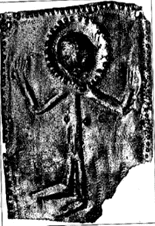
– In Urartian metalwork, certain cultic objects exhibit a pronounced emphasis on sacred figures. This is particularly evident in frontal depictions of figures and the halos on deities' heads. This iconographic approach may be considered a possible prototype of Christian icon painting, indicating a tendency toward iconographic continuity.
– Which objects served as the basis for your study?
– The research focused primarily on examples of Urartian art that contain cultic or religious artistic compositions, including belts, seals, weapons, and similar objects.
– What new discoveries has your research led to?
– It can be said that this monograph is perhaps the first art-historical study in Armenian to address iconographic and symbolic issues in fine art. Although many prominent scholars have published major works on Urartian art, the topic has generally been examined by historians and archaeologists.
As one noteworthy result of the study, the analysis of helmets bearing the lightning symbol associated with the so-called storm god Teisheba led to an interpretation that diverges from prevailing scholarly views. The key issue concerns why these helmets—bearing cuneiform inscriptions dedicated to the supreme god Khaldi—should be attributed to the symbolic attributes of the storm god Teisheba.
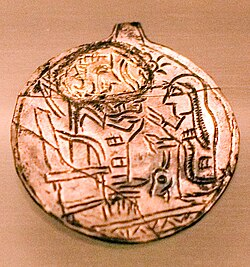
Furthermore, through the examination of ritual motifs in Urartian seals, an attempt was made to reconstruct the depicted rituals and their probable symbolic significance.
The study of fish-shaped figurines from the Urartian city of Teishebaini (Red Hill) aimed to establish a connection between the iconographic and symbolic features of dragon-stones in the Armenian Highlands and the later iconography of fish-shaped deities. It is worth noting that in the pre-Urartian period, the words for "fish" and "dragon" had the same meaning in the linguistic worldview of the Armenian Highlands, and in the Kingdom of Urartu the deity Ziukuni of Van was depicted in the form of a fish.
– Are you continuing research on this topic?
– Research on Urartian art and iconography is continuing, as the subject has not yet been fully resolved. The findings are regularly presented at academic conferences and published in scholarly articles and other publications.