January 12, 2026 | 12:18
Education
Student
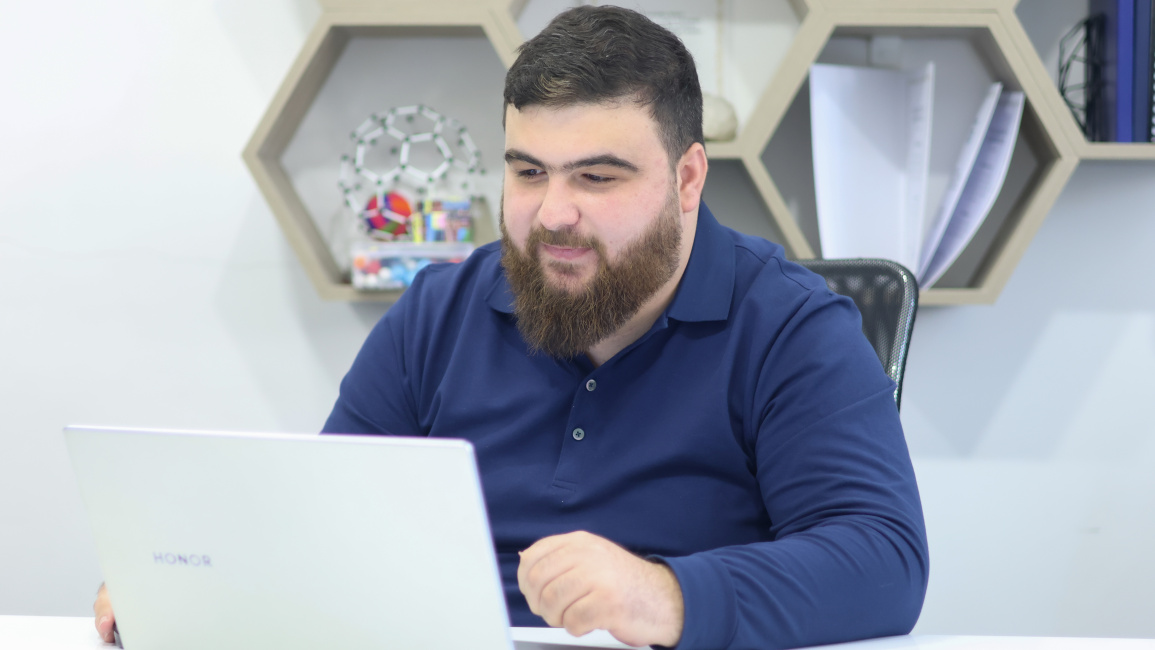
"The topic of my research is significant because the demand for battery-powered devices is growing rapidly worldwide. Currently, lithium-ion batteries are widely used, but their primary raw material—lithium—has become expensive and a limited strategic resource. In addition, lithium-ion batteries have safety concerns (they can overheat and catch fire), and their recycling technologies are not yet fully developed," explains the researcher, highlighting the relevance of his work.
According to Mikayel, sodium-ion batteries offer a solution to these challenges because sodium is an abundant and inexpensive element. However, the larger ionic radius of sodium limits the range of materials that can be effectively used in such systems.
"Many structures that work well with lithium become unstable or ineffective when used with sodium. These challenges define both the relevance and the main objectives of my research," he adds.
– Mikayel, why are organic solid materials effective for battery technologies?
– Many materials work successfully in lithium-ion batteries, but they are not suitable for sodium-ion systems. Therefore, it is necessary to discover or design new materials that meet the requirements of sodium-ion batteries. Organic materials are like 'bricks' that can form various crystalline structures, optimizing sodium transport, stability, and energy performance.
– What is the innovative value of your research?
– Our research aims to develop a method that allows for the rapid and accurate evaluation of whether a particular organic material has sufficient stability for use in batteries.
– Are you collaborating with foreign partners? What stage is your research at?
– Absolutely. We are actively collaborating with international partners, particularly Professor Moyses Araujo, who leads the Computational Materials Science research area at Karlstad University and is considered a leading expert in the field. The research is currently in an active phase. We already have several interesting findings, which we plan to publish soon in a scientific article.
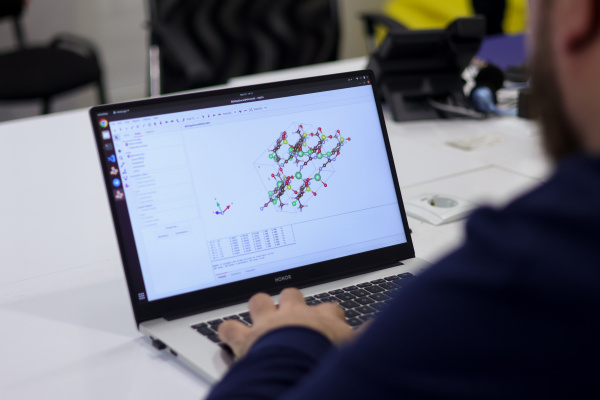
– How applicable will the findings of this project be in the future? What new opportunities could this research create for the field?
– The results could serve as a foundation for designing new organic cathode materials. If our approach proves effective, it will significantly accelerate the discovery of new materials by reducing the need for lengthy and costly experimental work. This will pave the way for safe, inexpensive, and widely used sodium-ion batteries.
– What outcomes do you expect from your research?
– By the end of the study, we aim to develop a methodology that can predict the structural stability of organic cathode materials and sodium transport. Additionally, we expect to propose several promising new materials that could serve as the basis for further experimental research.
– Do your research results have commercial potential?
– Yes, particularly if the developed method makes it possible to quickly study a large number of organic compounds. This could attract industrial groups working in battery technology, as it would reduce the time and cost of finding new materials.
– In your opinion, what role do such support programs play for young scientists?
– These programs are extremely important for young scientists, as they allow them to fully focus their time on research. Additionally, programs like this help develop essential skills, from planning research to managing financial resources and organizing processes.
Mikayel emphasizes that materials science is an interdisciplinary field requiring knowledge and skills from physics, chemistry, and related areas. His professional path began with the "Chemistry" bachelor's program, followed by the "Materials Science" master's program, and gradually led him toward physics, which deepened and complemented his knowledge.
"What attracts me most is the diversity of opportunities in this field. Materials science is still a 'young' science, and many fundamental questions remain unanswered," notes the YSU researcher. He adds that new ideas emerge from following the latest developments in the field, studying the work of colleagues worldwide, and engaging in active team discussions. For him, the primary sources of inspiration are the results obtained and the continuous process of solving new scientific challenges.
When asked how he overcomes difficulties during research, Mikayel explains that challenges are mainly related to limited computational resources. He notes that the conditions are improving, particularly with the new supercomputer being launched at YSU, which will significantly facilitate his work.
In conclusion, Mikayel states that his main goal is to successfully complete his research and earn a doctoral degree. In the future, he plans to continue conducting innovative, high-quality scientific studies, contributing to the sustainable and ongoing development of the field.