January 31, 2026 | 10:46
Society
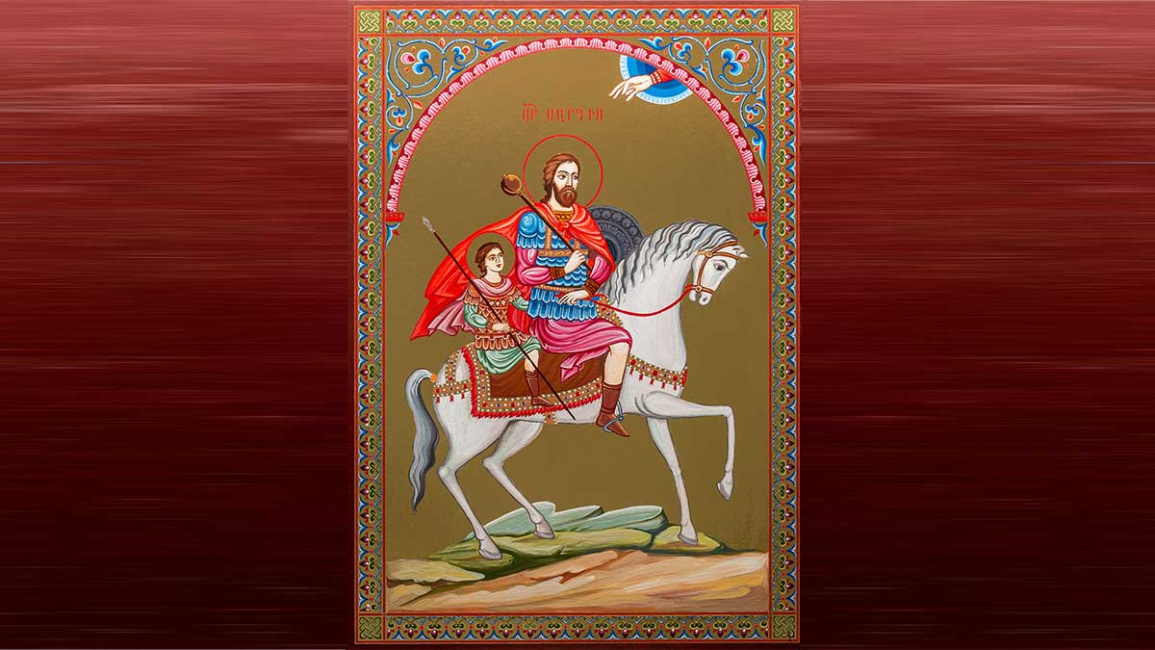
Saint Sarkis is a legendary figure belonging to the ranks of pan-Christian saints. As early as the 5th century, in the church calendar edited by Hovhannes Mandakuni, the Feast of Saint Sarkis was fixed on the Saturday of the Fast of the Catechumens. According to Roman hagiography, the saint's memorial day, celebrated as the feast of a Caesarean saint, fell on February 24, whereas the Greeks commemorate it on January 20. Notably, the veneration of Saint Sarkis the Warrior was also widespread among neighboring peoples, including Persians, Kurds, and Yezidis.
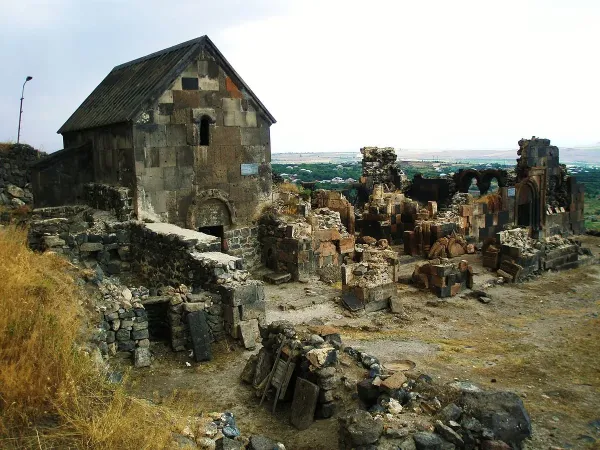
In the Armenian Highlands, approximately 220 sanctuaries have been built in the name of Saint Sarkis—monasteries, churches, and chapels—and his name has been given to fortresses, villages, mountains, rivers, springs, districts, hills, winter pastures, and hermitages.
By origin Greek, Saint Sarkis lived in the 4th century in Cappadocia, in the district of Caesarea of Gamirk. He is described as a devout and compassionate Christian, wise and gifted, and well known to judges and rulers. He was a military man who commanded a unit of soldiers and served in the royal army of Cappadocia by imperial appointment. As a strategist of the Roman army, and fully aware of the suffering and torture that awaited him, Saint Sarkis fearlessly preached the Holy Gospel wherever he went. He destroyed pagan shrines and temples, built churches, aided the poor and the needy, and worked to spread Christianity. He generously used his own resources to help the people, willingly gave alms, defended the weak and the oppressed, and preached the Christian faith to the soldiers under his command. Though a strong and courageous military commander, he did not impose his authority through force, but sought to treat his soldiers—and even his enemies—with humility and compassion.
Saint Sarkis was a fearless and righteous warrior who aided the poor and the innocent and punished the wicked. The thunder of his white horse's hooves shook the world, and when he brandished his spear, blizzards and storms arose. People believed that the saint power over winds, storms, snow, hail, and lightning. Riding through the mountains, he was believed to aid travelers in distress.
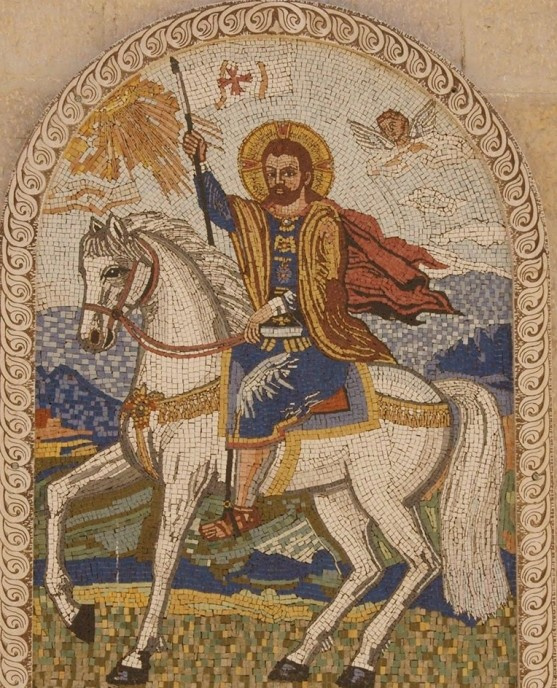
According to legend, in the year 363, Saint Sarkis was martyred for his Christian faith together with his son, Martiros, and fourteen companions. At the place of martyrdom, near the city of Daghman, before being beheaded, Saint Sarkis prayed to God that all prayers offered in his name might be fulfilled.
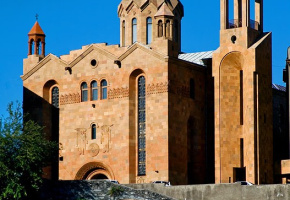
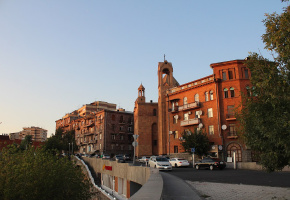
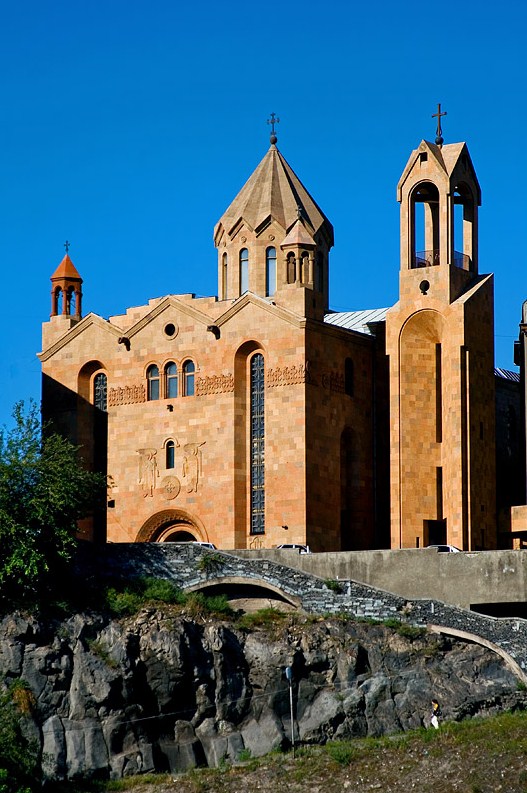
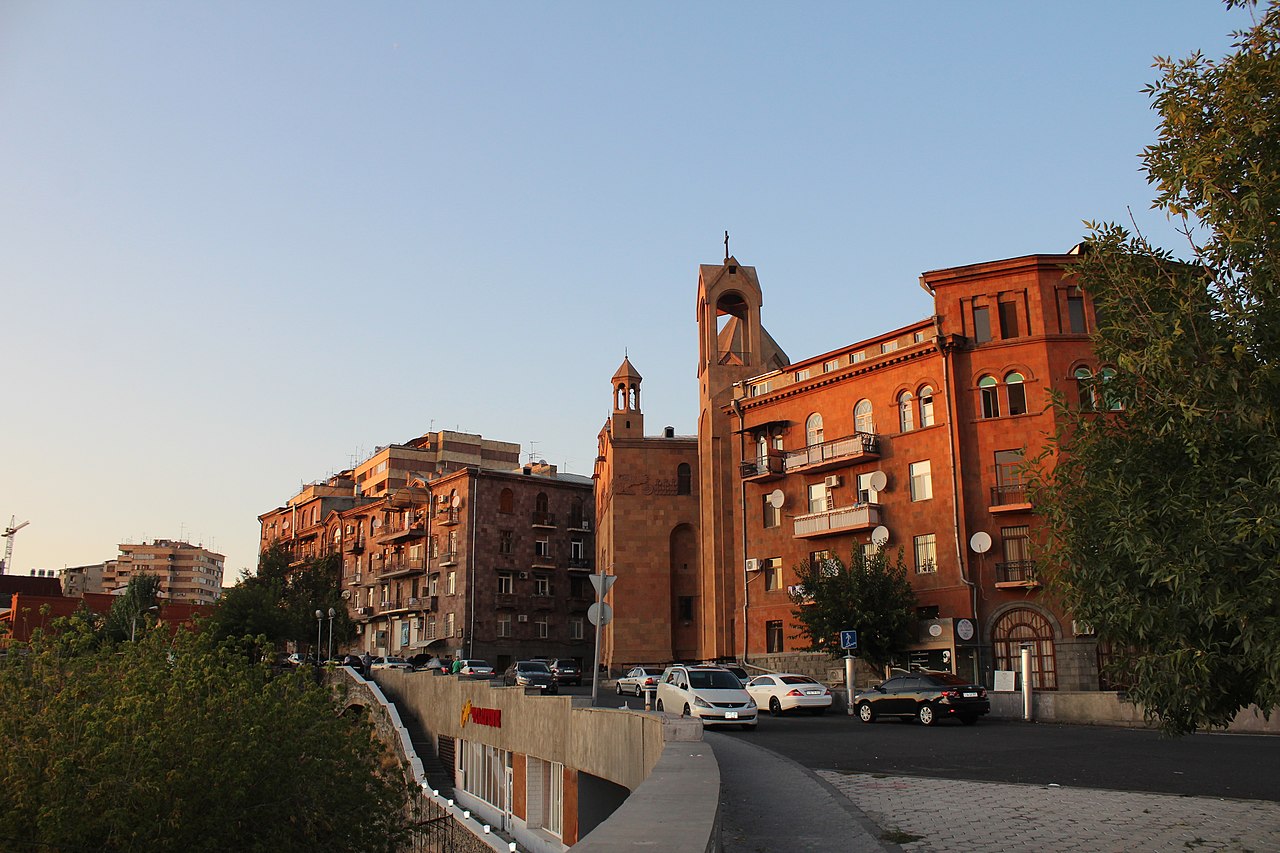
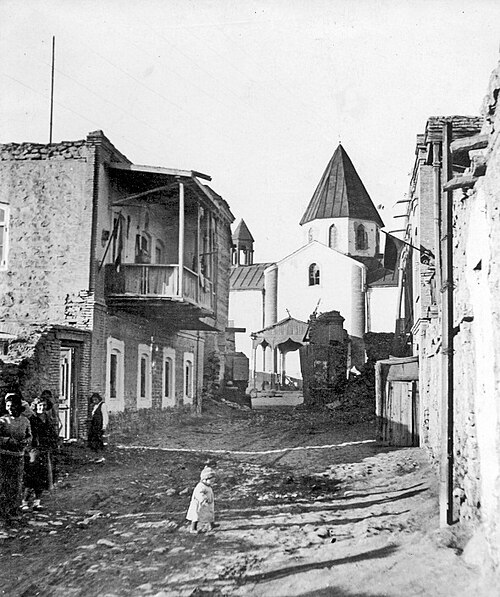
Believers secretly buried the bodies of the saint and the other martyrs in the city of Hamian. From there, Mesrop Mashtots transferred the saint's relics to Armenia, to Karbi (near Ashtarak), where he founded a monastery. Later, portions of the relics were placed in a cross and, after being enshrined on the summit of Gag Hill, the Church of Saint Sarkis was built.
The commemoration of Saint Sarkis—also known as the Day of the Blessing of Youth—is one of the most beloved feasts among Armenians.
One of the most widespread traditions associated with the saint is his role as the patron of young lovers and families. Accordingly, on the night preceding the Feast of Saint Sarkis, young people would eat a piece of salty bread in the hope of seeing a dream, believing that the person who gave them water in the dream would be their future spouse. If the cup of water in the dream was made of gold, the future husband was believed to be wealthy; if of silver, of moderate means; if of copper or clay, poor. The amount of water was also significant: a full cup foretold a long life together, a half-filled cup indicated half a lifetime, and very little water signified only a few years.
The salty bread was usually baked by mothers of large and happy families. In some localities, on the morning of the feast, girls would gather at one home, tell each other their dreams, share their joy, exchange good wishes for the fulfillment of the dreams, and then partake of the day's dish known as "snake sour" soup. It was prepared from lentils, cracked wheat, and flour, and cooked in sour water.
It was also customary to place roasted grain (pokhindz) on the rooftop or balcony and wait for Saint Sarkis to leave the imprint of his horse's horseshoe there. Great fortune was believed to await the person whose plate of sprinkled flour or roasted grain the saint passed through.
Another belief connected with determining one's fate held that in the morning, young men and women would climb onto rooftops, place pieces of khashil or bread wrapped in lavash, and observe carefully. The direction in which birds carried the food was believed to indicate the direction from which the future spouse would come. If the birds pecked at the crumbs on the spot, it was considered a sign that the person would never marry.
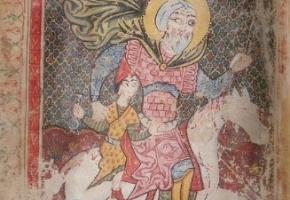
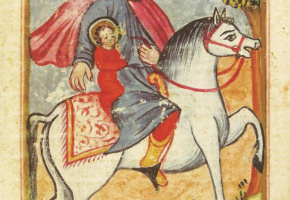
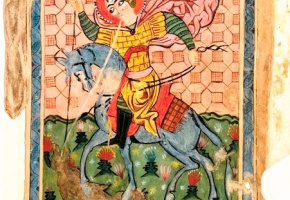
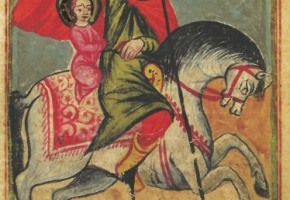
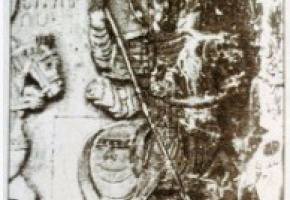
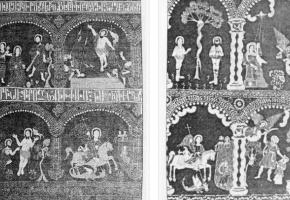
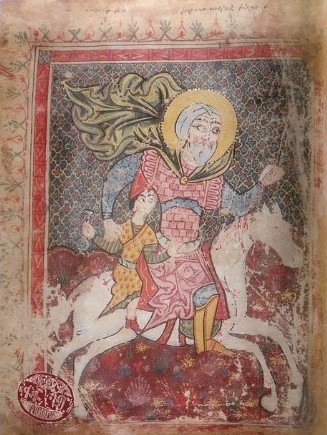
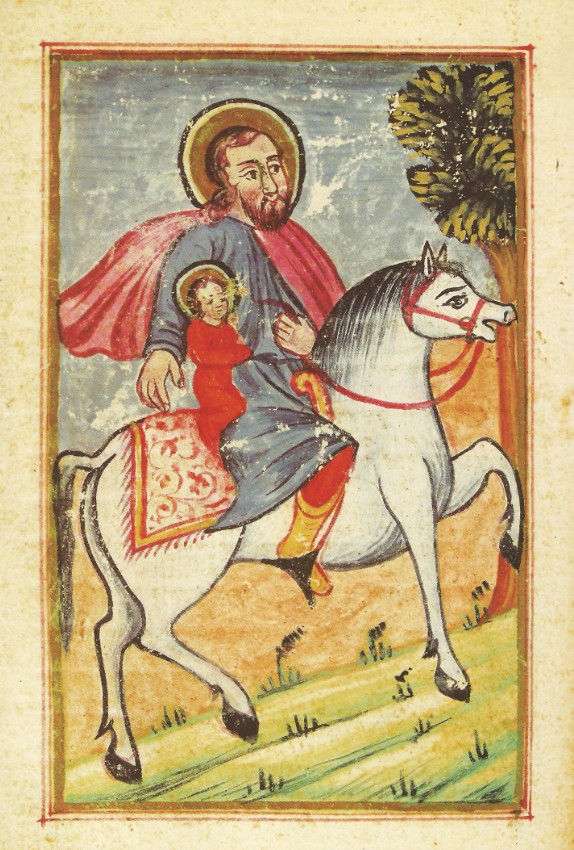
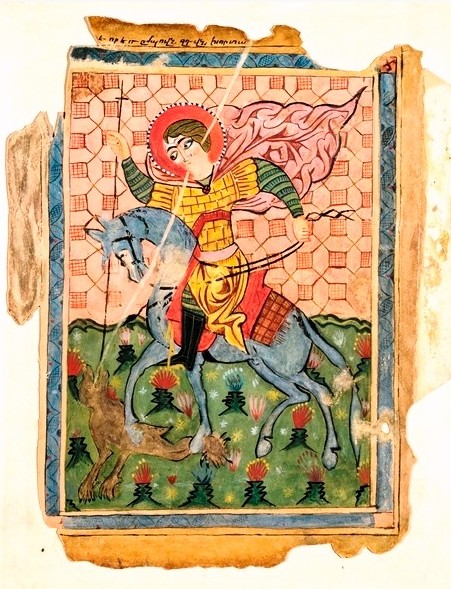
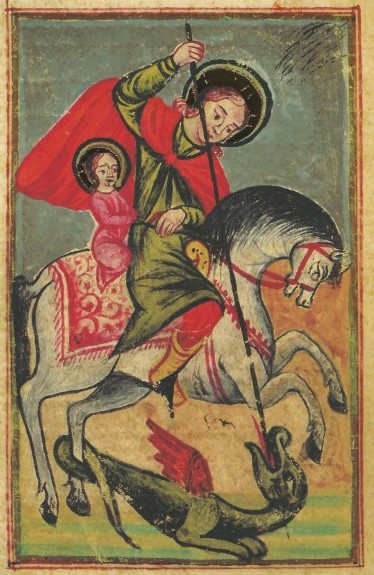
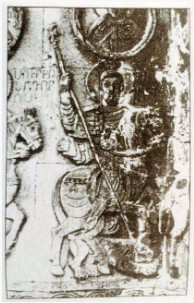
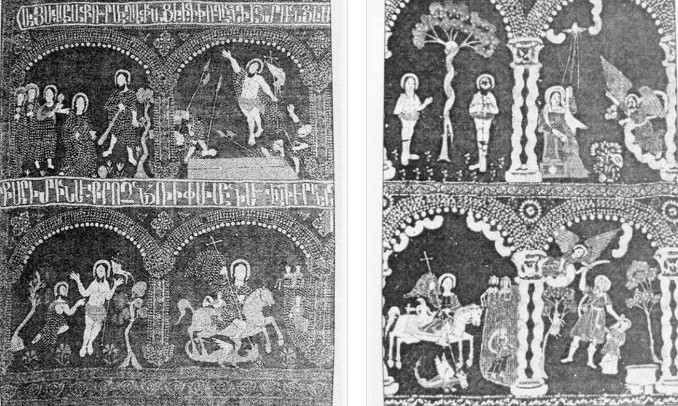
According to Armenian iconography, Saint Sarkis is depicted acting together with his son Martiros, a detail absent from foreign-language sources. He is often portrayed spearing a dragon or another animal, with or without his son.
"Swiftly coming Saint Sarkis, be our refuge and helper."
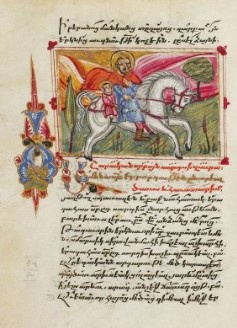
Saint Sarkis the Warrior is known as "swift helper," "intercessor," "bestower of grace," and "granter of wishes". According to the testimony of Kirakos Gandzaketsi, he is also the patron of the distressed, the unjustly imprisoned, and captives. For this reason, Saint Sarkis is also called "deliverer of captives" and "swift liberator". In folk prayers from New Nakhichevan, the following prayer is recorded:
"O Saint Sarkis, you have arrived!
At night I spoke and went outside,
I saw a mighty saint,
I spoke, I wept, and fell at his feet, saying:
'Holy Father, what is your name?'
'My name is Saint Sarkis,
The name of my son is Saint Martiros.
My horse walks upon the clouds,
Over the boundless sea.
Go and tell the captives,
They shall be freed and see the sun.'"
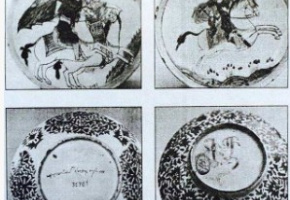
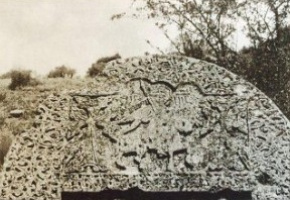
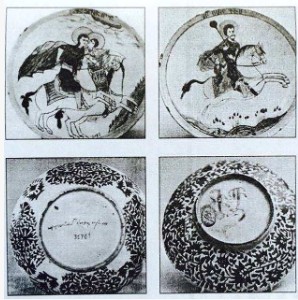
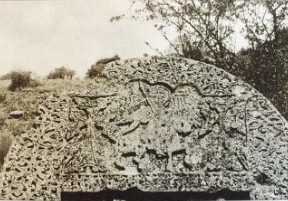
The figure of Saint Sarkis occupies a prominent place in nearly all branches of Armenian medieval art. His images appear in wall paintings, miniatures, sculptures, khachkars, even in the ornaments of church curtains and on the surfaces of ceramics. All this attests to the fact that Saint Sarkis the Warrior acquired the significance of a national Armenian saint.
Compiled from various sources