February 03, 2026 | 11:21
Education
International cooperation
Student
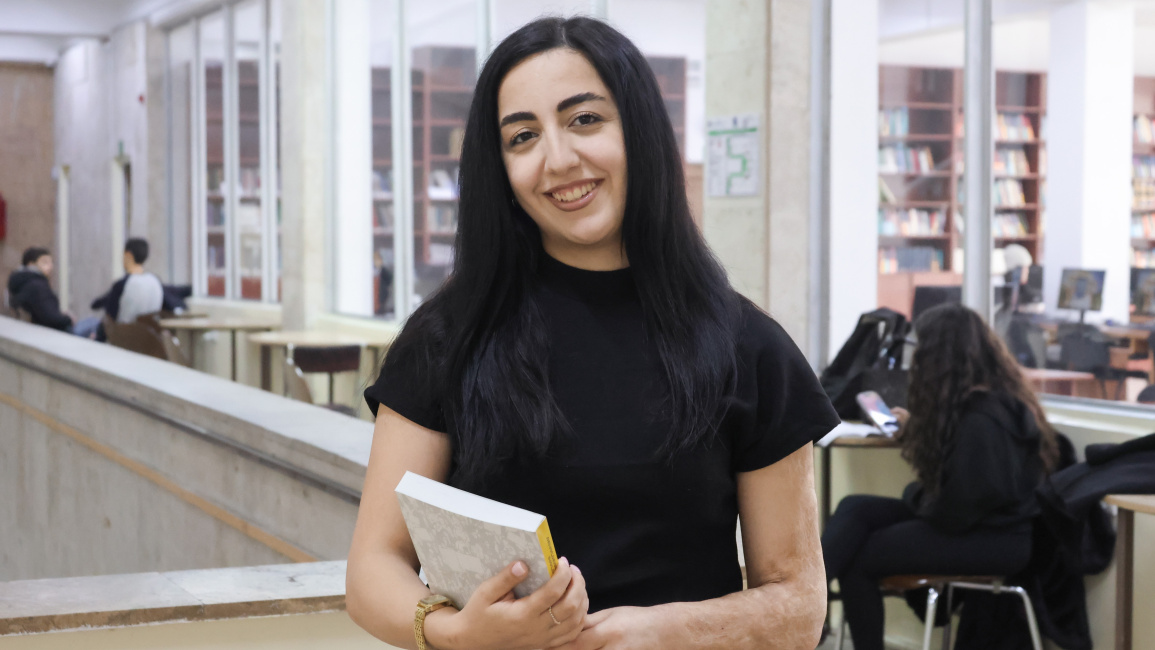
Lia is confident that her opportunity to continue her education abroad was primarily the result of her strong desire, while her high academic performance helped make it possible.
"While studying literature abroad, I had the opportunity to become familiar with different ways of perceiving and interpreting the same literary work. This contributed to a deeper analysis of literary texts and a more comprehensive understanding," Lia explains. She also emphasizes that the courses she studied allowed her to further strengthen her knowledge of Czech, which, as a Slavic language, is of particular professional importance to her.
Speaking about learning Czech, Lia notes: "It was important that among the elective courses offered at the faculty in my third year there was also Czech. After choosing and studying it, my desire to learn Czech in a native-speaker environment grew even stronger."
At Palacký University, Lia was especially impressed by the opportunity to choose courses and to independently design and adjust her own timetable to a certain extent. She expresses hope that similar opportunities will be made available to YSU students in the future as well.
Comparing the teaching approaches at Yerevan State University and Palacký University, Lia remarks: "At Palacký University, lecturers demonstrated a very warm and supportive attitude and were ready to help with any issue, even expressing willingness to assist with matters related to final theses. From this perspective, I did not feel a noticeable difference between lecturers at Yerevan State University and those abroad."
Reflecting on her experience of studying in a multicultural environment, she highlights that it provided an opportunity to gain a deeper understanding of other cultures through direct communication.
"Through interaction, I became familiar with the traditions, culture, and worldview of people from other countries. At the initial stage, cultural differences seemed unusual and somewhat strange, but through continued communication I came to see them from a different perspective," the YSU student notes.
Lia formed friendships with students from the Czech Republic, Latvia, Spain, Italy, and other countries, and she continues to stay in touch with them online.
Within the framework of her graduation thesis, Lia is researching how empathy is expressed in the Russian language. She plans to further deepen her knowledge of Czech in the future and to continue her professional education. In particular, she is interested in pursuing a career as a lecturer or translator.
It is noteworthy that although Yerevan State University has maintained long-standing cooperation with various European universities within the Erasmus+ program, and students from different faculties regularly go abroad to study, this opportunity has been offered to students of the Faculty of Russian Philology for the first time.
Dean of the YSU Faculty of Russian Philology Diana Gazarova notes that it was quite difficult to find educational programs at European universities that aligned closely with the faculty's curricula.
"Students faced difficulties in accumulating the professionally required credits. At the Faculty of Russian Philology, Russian studies are taught in Russian, whereas foreign universities do not offer a sufficient number of courses delivered in Russian and focused on Russian studies," she explains.
As a result of continuous monitoring, Palacký University was selected, as it offers an appropriate educational program which, according to Diana Gazarova, is substantive and closely aligned with the curriculum of the Faculty of Russian Philology.
"We identified pathways for cooperation with Palacký University: first, our Czech colleagues visited the YSU Faculty of Russian Philology to deliver lectures; subsequently, I delivered lectures at Palacký University; and our students studied there for one semester. This cooperation can be considered successful, as a second group of our students will travel to the Czech Republic in the spring. I would also like to note that this semester we are expecting students from the Czech Republic who will study at our faculty," Diana Gazarova emphasizes.
At the Faculty of Russian Philology, students study Czech along with other Slavic languages. Diana Gazarova points out that, from this perspective as well, the educational programs at Palacký University were well aligned with those of the Faculty of Russian Philology.