Home
envelope
ՀայերենРусскийEnglish

Main Navigation (Eng)

  • Admission
    • Undergraduate admission
    • Master’s degree admission
    • Postgraduate admission
    • Foreign Students
    • Preparatory courses
    • Work Carried out with Applicants
    • YSU STEM High School
  • Education
    • Guide Book for First Year Students
    • Educational programs
    • Granting qualification of a pedagogue
    • Center for Academic Writing
    • Continuing education
    • Academic Calendar
    • Olympiad
  • Science
    • Open science
    • Conferences
    • Library
    • Grants
    • Publishing House
    • Doctoral Thesis Defence Councils
    • HRS4R
  • News and events
    • Events
    • Activities
    • News
    • Newsletter
    • Announcement
    • Photo gallery
    • Video gallery

Secondary Navigation (Eng)

  • About YSU
    • YSU Management
    • YSU Symbols
    • YSU International Cooperation
    • Quality assurance
    • YSU History Museum
    • Vacancies
    • FAQ
  • Structure
    • YSU Faculties and Educational Centers
      • Faculty of Geography and Geology
      • Faculty of Theology
      • Faculty of Oriental Studies
      • Faculty of European Languages and Communication
      • Faculty of Journalism
      • Faculty of Informatics and Applied Mathematics
      • Faculty of Law
      • Faculty of Biology
      • Faculty of Armenian Philology
      • Faculty of International Relations
      • Faculty of History
      • Institute of Physics
      • Faculty of Russian Philology
      • Faculty of Sociology
      • Faculty of Economics and Management
      • Faculty of Philosophy and Psychology
      • Faculty of Chemistry
      • Faculty of Mathematics and Mechanics
      • Pedagogy and Education Development Center
      • Center for European Studies
      • Institute of Pharmacy
      • Information Technologies Educational and Research Center
      • Chair of Civil Defense
      • Chair of Physical Education and Sports
    • Column Wrapper
      • YSU STEM High School
      • YSU Ijevan Branch
    • Scientific Centers and Laboratories
      • American Studies Center
      • Psychology Research Center
      • Research Laboratory of Applied Sociology
      • Center for Mathematical and Applied Research
      • Institute for Armenian Studies
      • Institute for Social and Humanitarian Studies
      • Research Center for Chemistry
      • Research Institute of Biology
      • Research Institute of Physics
      • Research Center for the Institute of Pharmacy
    • Scientific and Educational Centers
      • Observatory
      • Scientific and Educational Center for Control and Monitoring of the Quality of Medicines
      • Specialized cabinet-laboratory for the Design of Very Large Integrated Circuits (Synopsis)
      • Legal Clinic
      • Center for Applied Psychology
      • Research Center-Library of Greek Studies
      • Innovation Center for Microbial Biotechnology and Biofuels
      • Russian Center
      • Center for Russian Studies
      • Distance Learning Laboratory of Sociology
    • Column Wrapper
      • Banner
    • Administrative Divisions of YSU
      • Academic Secretary
      • Center for Doctoral Education
      • General Division
      • YSU History Museum
      • Department of Energy System Operation
      • Financial Analysis Department
      • Human Resources Department
      • Center for Admissions and Affairs with Applicants
      • Vehicle Fleet
      • Business Incubator
      • Byurakan Industrial Practice Base
      • Medical Center
      • Science Policy Department
      • Procurement Planning Department
      • Dilijan Sports and Health Center
      • YSU Archive
      • Publishing House
      • Legal Service
      • Marketing Department
      • International Cooperation Office
      • Tsaghkadzor training and production base
      • Cultural Center
      • Fire Safety Service
      • Alumni and Career Center
      • Hankavan Industrial Practice Base
      • Accounting Department
      • Center for Quality Assurance
      • Department for Special Affairs
      • Guest House
      • Student Dormitory
      • Educational-Methodological Department
      • Marie and Sarkis Izmirlian Library
      • Center for Strategic Planning
      • Rectorate
      • Rector's Office
      • Department of Territory Improvement and Landscape Design
      • Information Technology Department
      • Department of Organization and Control of Economic Activities
  • Structure
  • Alumni and Career
    • Alumni Community
    • Career Center
    • Friends of YSU
  • Student life
    • YSU Student Scientific Society
    • YSU Student Council
    • Art and Culture
ՀայերենРусскийEnglish
envelope

Main Navigation (Eng)

  • Admission
    • Undergraduate admission
    • Master’s degree admission
    • Postgraduate admission
    • Foreign Students
    • Preparatory courses
    • Work Carried out with Applicants
    • YSU STEM High School
  • Education
    • Guide Book for First Year Students
    • Educational programs
    • Granting qualification of a pedagogue
    • Center for Academic Writing
    • Continuing education
    • Academic Calendar
    • Olympiad
  • Science
    • Open science
    • Conferences
    • Library
    • Grants
    • Publishing House
    • Doctoral Thesis Defence Councils
    • HRS4R
  • News and events
    • Events
    • Activities
    • News
    • Newsletter
    • Announcement
    • Photo gallery
    • Video gallery

Secondary Navigation (Eng)

  • About YSU
    • YSU Management
    • YSU Symbols
    • YSU International Cooperation
    • Quality assurance
    • YSU History Museum
    • Vacancies
    • FAQ
  • Structure
    • YSU Faculties and Educational Centers
      • Faculty of Geography and Geology
      • Faculty of Theology
      • Faculty of Oriental Studies
      • Faculty of European Languages and Communication
      • Faculty of Journalism
      • Faculty of Informatics and Applied Mathematics
      • Faculty of Law
      • Faculty of Biology
      • Faculty of Armenian Philology
      • Faculty of International Relations
      • Faculty of History
      • Institute of Physics
      • Faculty of Russian Philology
      • Faculty of Sociology
      • Faculty of Economics and Management
      • Faculty of Philosophy and Psychology
      • Faculty of Chemistry
      • Faculty of Mathematics and Mechanics
      • Pedagogy and Education Development Center
      • Center for European Studies
      • Institute of Pharmacy
      • Information Technologies Educational and Research Center
      • Chair of Civil Defense
      • Chair of Physical Education and Sports
    • Column Wrapper
      • YSU STEM High School
      • YSU Ijevan Branch
    • Scientific Centers and Laboratories
      • American Studies Center
      • Psychology Research Center
      • Research Laboratory of Applied Sociology
      • Center for Mathematical and Applied Research
      • Institute for Armenian Studies
      • Institute for Social and Humanitarian Studies
      • Research Center for Chemistry
      • Research Institute of Biology
      • Research Institute of Physics
      • Research Center for the Institute of Pharmacy
    • Scientific and Educational Centers
      • Observatory
      • Scientific and Educational Center for Control and Monitoring of the Quality of Medicines
      • Specialized cabinet-laboratory for the Design of Very Large Integrated Circuits (Synopsis)
      • Legal Clinic
      • Center for Applied Psychology
      • Research Center-Library of Greek Studies
      • Innovation Center for Microbial Biotechnology and Biofuels
      • Russian Center
      • Center for Russian Studies
      • Distance Learning Laboratory of Sociology
    • Column Wrapper
      • Banner
    • Administrative Divisions of YSU
      • Academic Secretary
      • Center for Doctoral Education
      • General Division
      • YSU History Museum
      • Department of Energy System Operation
      • Financial Analysis Department
      • Human Resources Department
      • Center for Admissions and Affairs with Applicants
      • Vehicle Fleet
      • Business Incubator
      • Byurakan Industrial Practice Base
      • Medical Center
      • Science Policy Department
      • Procurement Planning Department
      • Dilijan Sports and Health Center
      • YSU Archive
      • Publishing House
      • Legal Service
      • Marketing Department
      • International Cooperation Office
      • Tsaghkadzor training and production base
      • Cultural Center
      • Fire Safety Service
      • Alumni and Career Center
      • Hankavan Industrial Practice Base
      • Accounting Department
      • Center for Quality Assurance
      • Department for Special Affairs
      • Guest House
      • Student Dormitory
      • Educational-Methodological Department
      • Marie and Sarkis Izmirlian Library
      • Center for Strategic Planning
      • Rectorate
      • Rector's Office
      • Department of Territory Improvement and Landscape Design
      • Information Technology Department
      • Department of Organization and Control of Economic Activities
  • Structure
  • Alumni and Career
    • Alumni Community
    • Career Center
    • Friends of YSU
  • Student life
    • YSU Student Scientific Society
    • YSU Student Council
    • Art and Culture
  1. Main
  2. News
  3. "AI is changing the rules": interview with NVIDIA Vice President Rev Lebaredian
April 27, 2026 | 11:00
Science
Society

"AI is changing the rules": interview with NVIDIA Vice President Rev Lebaredian

"Artificial intelligence is going to change everything," said Rev Lebaredian, Vice President at NVIDIA and keynote speaker at the AI Conf 2026, in an interview with us. He noted that no sector is untouched by AI, and that its impact will extend across all industries without exception.

Artificial intelligence is no longer a promise of the future; it is already one of the most powerful forces of the present, transforming the economy, science, and nearly every sphere of human activity. In this context, AI Conf 2026 served as an important platform for discussing Armenia's place in this rapidly evolving world and the role it can play.

As the conference's keynote speaker, Rev Lebaredian—one of the leading experts in artificial intelligence—outlined both global technological trends and the distinct opportunities emerging for Armenia. 

In an interview with us, he discussed how AI is reshaping the "rules of the game," why this moment can be seen as a "reset" opportunity for smaller countries, and what Armenia's universities and government bodies must do to produce world-class talent.

 – Mr. Lebaredian, let's begin with the major technological event itself. How do you assess AI Conf 2026 and what impact could it have on the development of Armenia's AI ecosystem?  

– The number of registered participants shows that this is a truly significant event for Armenia. The idea of viewing artificial intelligence as a foundational technology capable of driving national development is not new. It dates back to 2019, when Prime Minister Nikol Pashinyan visited NVIDIA and met with its CEO, Jensen Huang. When asked what Armenia should do to develop its high-tech sector, he advised building an AI supercomputer—essentially following the same path he used to develop his own team.

This idea, conceived years ago, is now becoming a reality in Armenia—and in some cases faster than in many other countries. This is one of the rare situations where we have a genuine advantage, and that potential was clearly visible at the conference.

– Which sectors do you think AI will transform most rapidly in the coming years, particularly in terms of people's lives and traditional professions?

– In reality, artificial intelligence is going to change everything. If we take a step back and consider what AI actually is, it is essentially a way for us to "manufacture intelligence." And which sector does not require intelligence? There is none. Every field depends on it—and it is never sufficient; we always need more. 
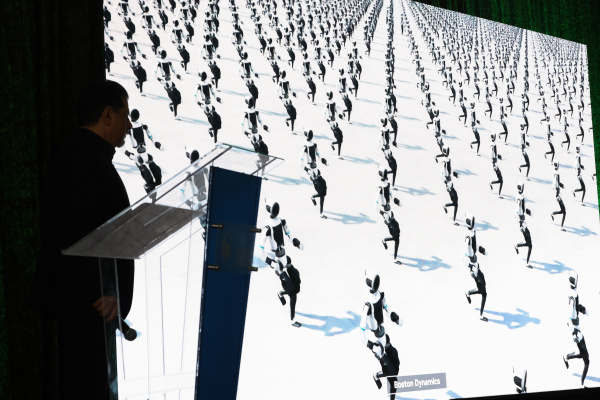
Today, as it becomes possible to "manufacture" intelligence—to generate knowledge faster and at greater scale—all sectors will inevitably be transformed. This transformation has already begun and will continue to deepen worldwide. 

For Armenia, one particularly important aspect of this process is that every time a disruptive technology emerges, there is a "reset moment." At that point, all countries stand on equal footing, as no one yet fully understands how to use it. This means that even smaller countries, such as Armenia, have a real opportunity to move quickly and even outpace others. 

It is also significant that key resources for AI development, such as GPUs (graphics processing units), are already being built up in large volumes in Armenia. This creates the capacity not only use intelligence, but also to "manufacture" it, developing new applications that can generate value and be exported. By the end of the year, Armenia is expected to have more GPUs than any European country—not just per capita, but in absolute terms—placing it among the top four or five countries in the world.

On talent, the situation is also favorable. Because the technology is new, there are very few experienced specialists worldwide—everyone is learning at the same time. This creates another equal starting point, where everything depends on whether we choose to seize the opportunity.

 This is why it is important that such discussions take place in universities, so students understand they are on equal footing with peers anywhere in the world—and in some cases may even have an advantage by gaining earlier access to these technologies.

– Yerevan State University now operates a supercomputer, an unprecedented step for Armenia. What opportunities does this create for the country's AI and research sectors?

– Today, a supercomputer is a primary tool of computer science. This is exactly the idea that Jensen Huang presented to Armenia's prime minister back in 2019. In the past, serious research could still be conducted on a laptop by designing and testing complex algorithms. That is no longer the case. Artificial intelligence has become the leading field of computer science, and its core instrument is an AI supercomputer.

Researchers worldwide are constrained by a constant shortage of computing power. Demand for larger and more powerful systems is continuous, and no one ever has enough resources. This trend became clear a decade ago. At leading institutions such as MIT, Stanford, and the University of Toronto—where the foundations of deep learning were developed—many researchers left academia for companies like NVIDIA and Google simply to access sufficient computing resources. 

This is similar to other sciences: materials science requires a microscope, astrophysics a telescope, and particle physics a linear accelerator. In the same way, modern computer science—especially AI—requires a supercomputer. Without it, full-scale research is nearly impossible. That is why I have long advocated for such infrastructure in Armenia.

Now that it has become possible, through state funding, to have a supercomputer at the university and make it available to researchers, its demand is already evident. Immediately after its launch, the system has been running at full capacity.

– Mr. Lebaredian, many are interested in what factors most influence the recruitment of AI talent at NVIDIA's Yerevan office, and what steps Armenian universities and the government should take so that the NVIDIA Yerevan office can attract more specialists.

– For NVIDIA, the most important factor is access to high-level talent. The foundation of such talent is built in universities. It is within universities that advanced research takes place, and those involved in such research later become the professionals the company hires. They are also the ones who go on to establish new companies based on their ideas. NVIDIA closely follows these processes—collaborating with such researchers, supporting them, and in some cases even acquiring their work.  

In education, the focus should be computer engineering and computer science. These fields form the foundation, while artificial intelligence is a modern expression of computer science. For the company, proficiency in any specific programming language is not the key factor; what matters more is deep, fundamental knowledge of computer science.
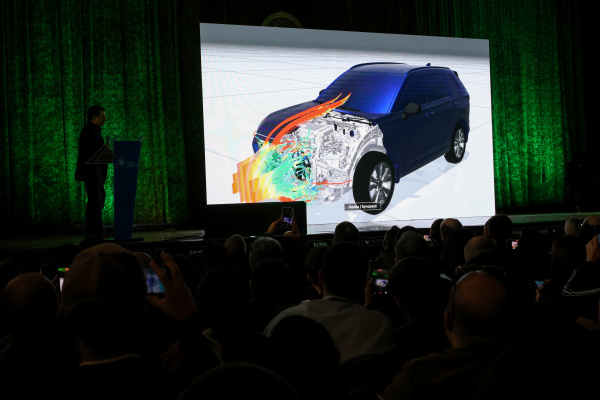
Universities play a central role in this process. They should not only teach programming or computer usage but also foster cutting-edge research that pushes the boundaries of the field. Only then can they produce specialists who are valuable to the world's leading technology companies.

Most importantly, advanced scientific research must be carried out. It is not enough for people to learn how to use computers or write code; they must engage in frontier, innovative research that is valuable to NVIDIA. NVIDIA is one of the world's largest and most advanced computing companies. The best computer scientists globally aspire to work there. Armenia must aim to produce scientists of that level.


Earlier, Yerevan State University hosted AI Conf Armenia 2026, which saw an unprecedented level of participation, bringing together around 3,000 attendees.

In his keynote speech, "AI Agents and the Economy of Tokens," Rev Lebaredian outlined several key ideas:

  • Today, no one in the world fully knows how to use AI, which creates equal opportunities for both Armenia and the United States.

  • Once the announced 50,000 GPUs are deployed by the end of the year, Armenia could rank among the world's top five countries by GPU capacity.

  • The first tranche of 6,000 GPUs will become available to researchers within the next month. 

  • The only chance for Armenia to exist and develop is to use our natural resource—human brains. The human brain is our strength, our opportunity. We are important to the world, we are not just a small country that asks other countries to help and support us. We need to develop our brains in order to become part of the world.

  • I believe in Armenia, I believe in our potential and our minds. I believe in our diligence, I believe that we care about people, that we hold strong values, and that we can be useful to the world. I think you see all of this as well.


Sona Shahverdyan
ShareFacebookTelegram

Latest News

«Ընկերությունները պետք է դիվերսիֆիկացնեն իրենց մատակարարումները». Դիդիե Բորովսկի

28.04.2026

«ԵՊՀ-ն բացառիկ հնարավորություն է ընձեռում ուսումնասիրելու բազմազան լանդշաֆտներ, որոնք արժեքավոր են մեր հետազոտական աշխատանքի...

28.04.2026

YSU journal Translation Studies: Theory and Practice receives Q3 ranking and indexed in Web of Science

28.04.2026
Show All

Announcement

Invitation to Online Conference: American Research Institute of the South Caucasus

09.17.2026 - 09.19.2026

Invitation to Participate in International Conference "Armenia: Crossroads of Centuries and Worlds"

06.18.2026 - 06.19.2026

Call for Teacher Training Applications

05.06.2026 - 05.08.2026
Show All

Արագ հասանելիություն

  • Intranet
  • E-learning
  • Mulberry
  • Online applications
  • Phone book
  • Registrar
  • Documentation

Footer(ENG)

  • Main pages
    • Admission
    • Education
    • Science
    • News
  • Information
    • Frequently asked Questions
    • Vacancies
    • Search for educational programs
    • For the applicants
    • For the students
  • About YSU
    • YSU management
    • YSU symbols
© Yerevan state university 2026
Address: Republic of Armenia, Yerevan, 0025, 1 Alex Manoogian (+37460) 710000 info@ysu.am