June 09, 2026 | 14:30
Science
Education
International cooperation
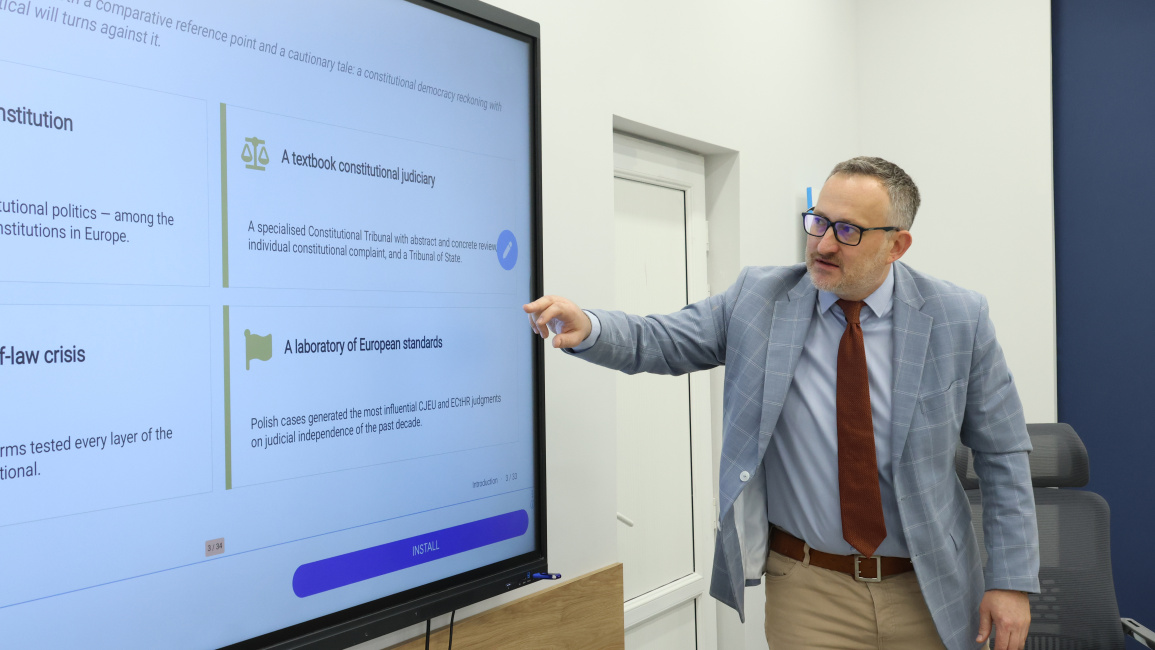
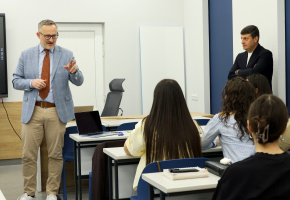
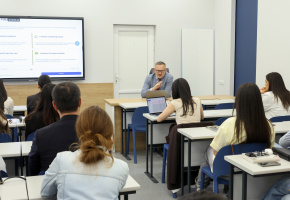
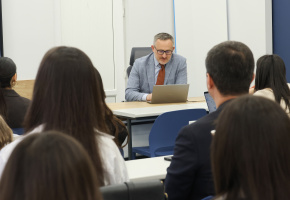
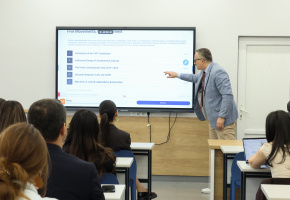
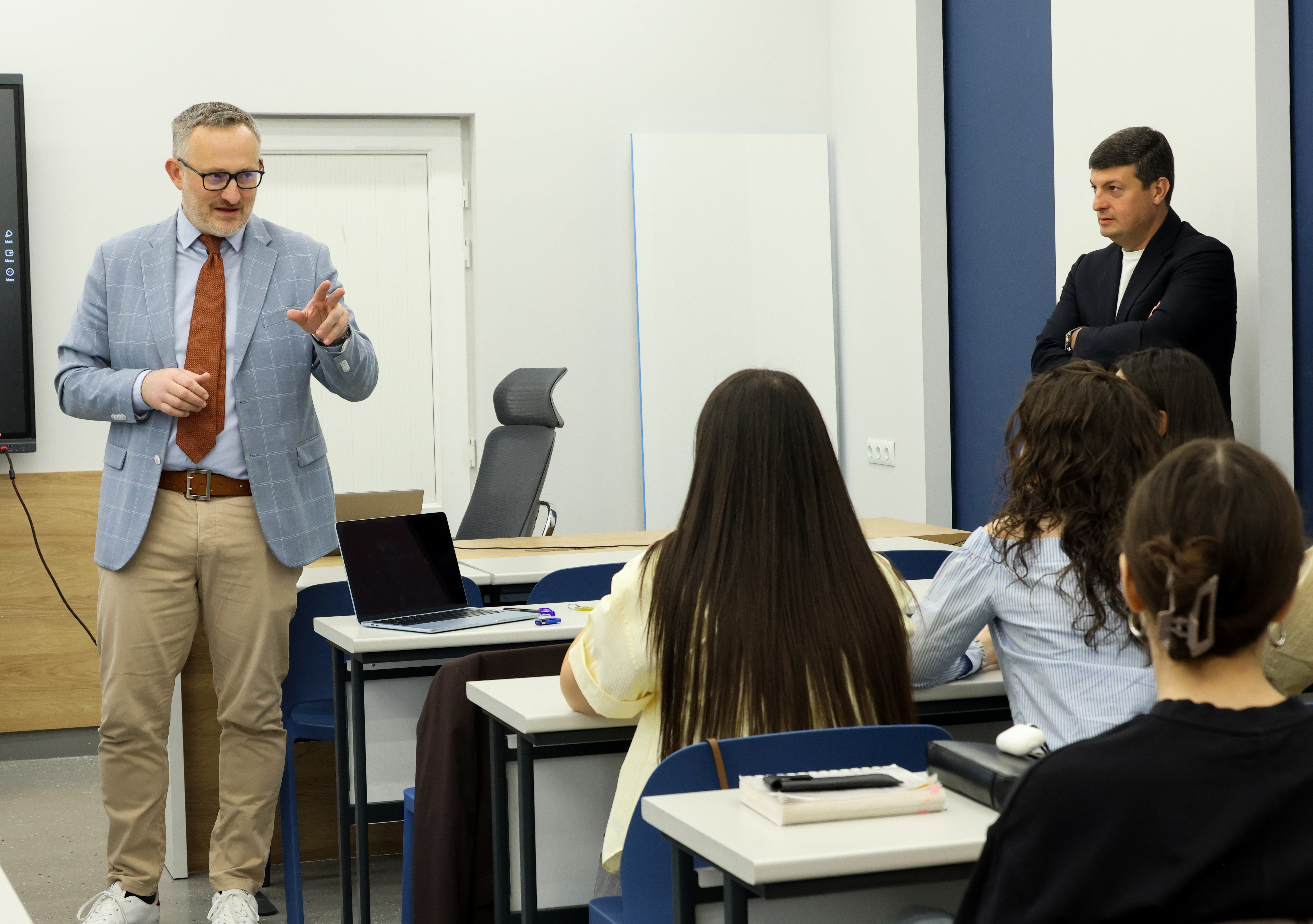
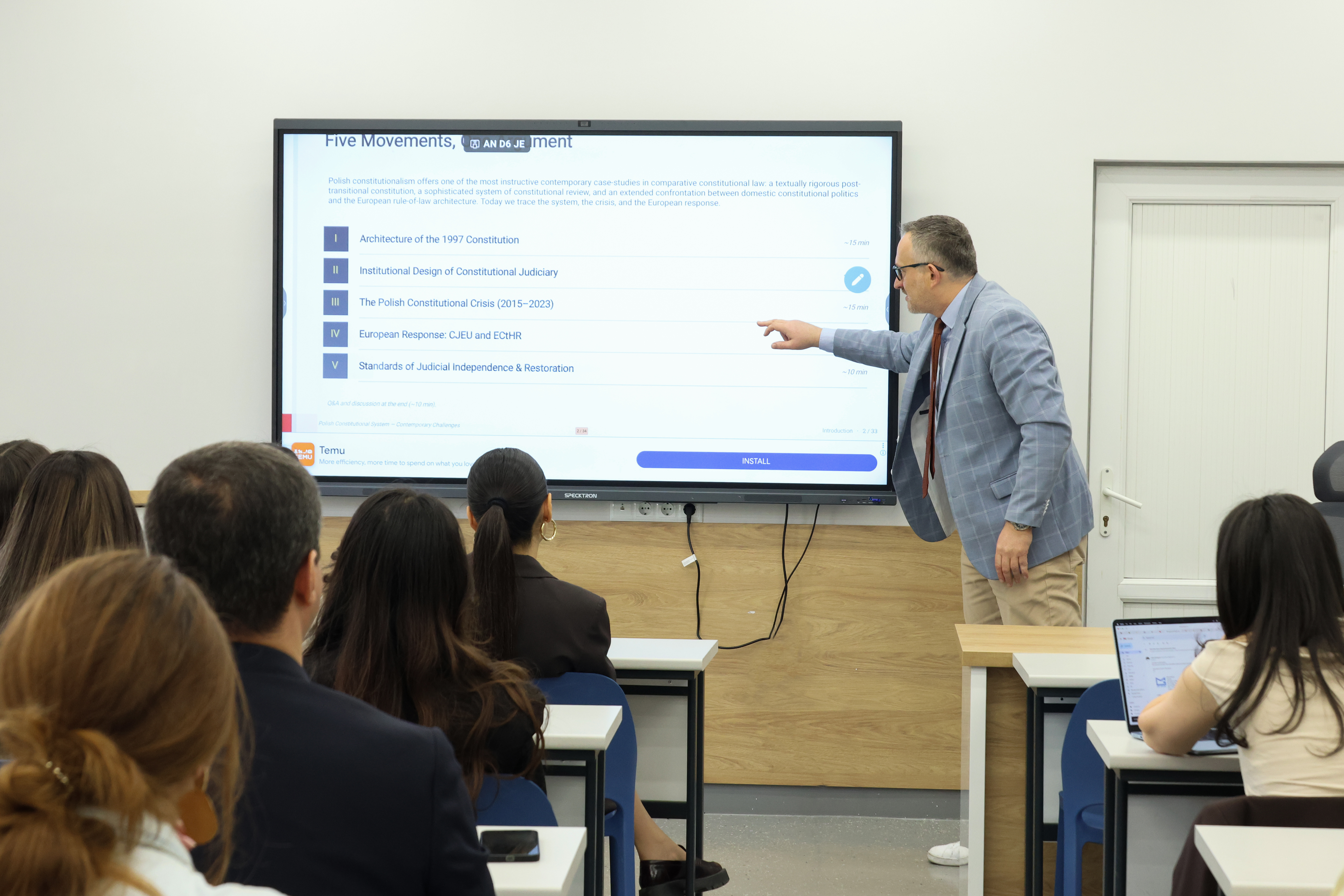
Under the Erasmus+ program, the YSU Faculty of Law hosted Andrzej Jackiewicz. During his visit, he delivered lectures for students on Poland's constitutional system and the distinctive features of its development.
– How do you assess the current state of cooperation between Armenia and Poland in higher education?
– I will answer this question using the example of cooperation between the University of Białystok and Yerevan State University, which I believe is strong and comprehensive.
First, I should note that this is my second visit to Armenia. My first visit was private, so this is my first official visit. My colleagues, however, visit Yerevan State University every year and are therefore more experienced in this regard. Cooperation between the two universities is quite strong, as evidenced by regular reciprocal visits, joint projects, and the exchange of academic experience.
– What role do universities play in the process of internationalization?
– I can answer this question using the example of my own university. The University of Białystok strongly supports internationalization and encourages educational and research visits by its staff. Whenever opportunities arise, they are always utilized. When funding is allocated for internationalization, we make full use of it. We are very open to cooperation not only in Armenia but throughout Europe and, indeed, around the world. I believe Poles are very open-minded and constantly seek new opportunities.
– What impressions have you gained of Armenian students and academic life after visiting Yerevan State University?
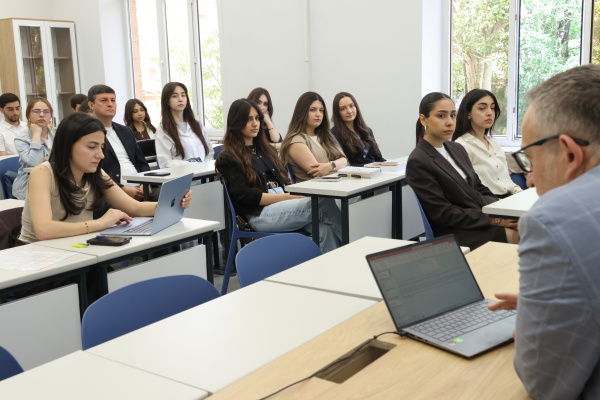
– During my lectures, the students showed great interest in everything I discussed. They followed the presentations attentively and listened carefully to my remarks. When I asked questions, they responded actively and tried to understand exactly what I was asking. As a result, the lectures were highly interactive.
What impressed me most was their genuine engagement. Sometimes during lectures, especially in Poland, students look at their phones or think about other things. Here, however, I felt that they were truly interested. It was gratifying to see people listening so attentively to what I had to say.
– What can students see or learn at the University of Białystok through mobility programs?
– The University of Białystok is the largest higher education institution in our region, offering specializations in the social sciences and humanities. Our city also has medical and technical universities, but fields such as social sciences, humanities, philology, history, law, economics, and other disciplines are represented at our university.
Our region is unique due to the surrounding forests. It is a green area inhabited by numerous national minorities. Belarusians, Lithuanians, and Tatars live in the region. We also have a large Orthodox Christian community. While the Catholic Church predominates in Poland, our region has a significant Orthodox population. As a result, our cultural environment is particularly interesting.
Incidentally, our university is relatively young. It was established in 1997. Before that, the University of Białystok operated as a branch of the University of Warsaw. In 1997, it became an autonomous and independent institution. Perhaps that is why we are so open, constantly seeking new opportunities and partners and expanding our network of friendships. We are always pleased to welcome lecturers and students from countries around the world.
– What would you highlight about Armenia? Was there anything you particularly liked, disliked, or found surprising?
– I believe Armenia has two "faces." One is Yerevan, which, in my view, is a European city. In some respects, it reminds me of the Balkans, and I see certain similarities.
On the other hand, everything changes once you leave Yerevan. There are villages, monasteries, and ancient roads. Everything is completely different. I remember that during my previous visit to Armenia, I visited many monasteries. At one monastery, the guide said, "This is a tenth-century monastery; we will not go inside. It is simply a tenth-century structure. We are going to see a fourth-century monument."
That remains one of my most memorable impressions. Armenia has an ancient history, and that history is visible everywhere. One monastery, one ancient church, one fortress, and then, ten kilometers away, another monument just as old—or even older. From a tourism perspective, I believe Armenia has not yet been fully discovered in Poland.
– What can you say about Armenia's academic sector?
– I believe Armenian science requires greater internationalization. This includes conferences, academic mobility, participation in Scopus and Web of Science, publications abroad, and more active indexing of national academic journals in international scientific databases. All of these elements are interconnected and reinforce one another. Of course, none of this can be achieved within a single year; it is a process that requires time.