June 15, 2026 | 14:26
Science
Education
International cooperation
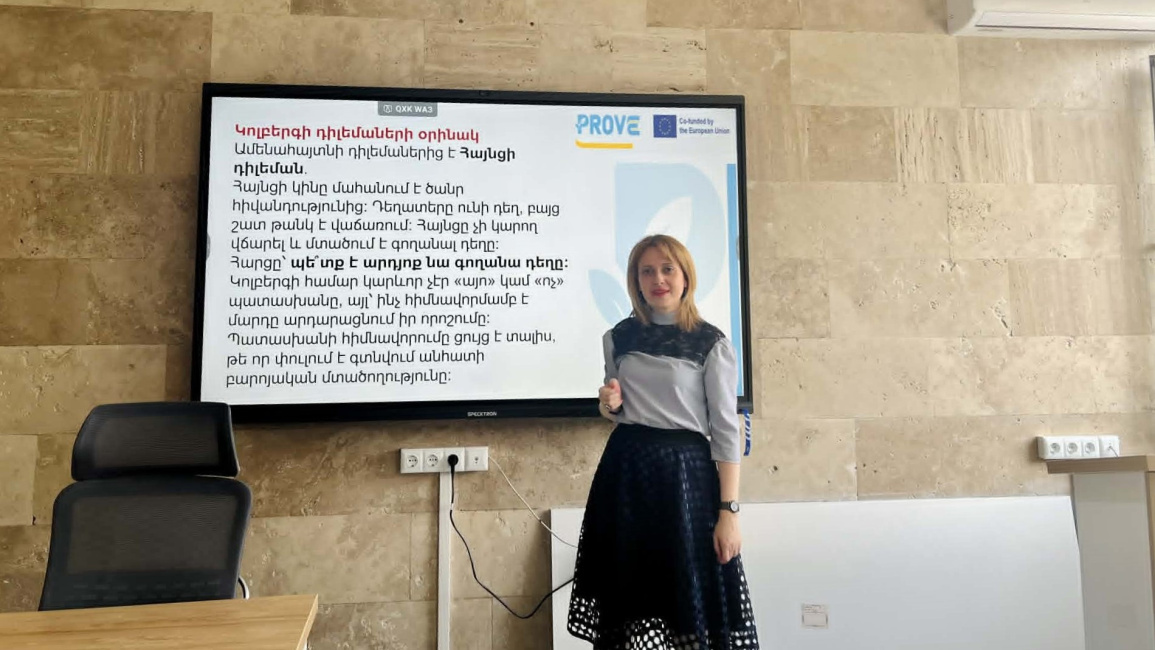
The course focused on the VAKE (Values and Knowledge Education) methodology, which integrates knowledge acquisition with values education and contributes to the development of students' critical thinking, moral reasoning, and evidence-based decision-making skills.
During the training, Marine Yaghubyan presented the theoretical foundations of the VAKE model in the contemporary educational environment, its guiding principles, and its potential applications in higher education. She outlined the methodology's core concepts, emphasizing that education should not only transmit knowledge but also contribute to the formation of an individual's value system and the development of social responsibility and civic awareness.
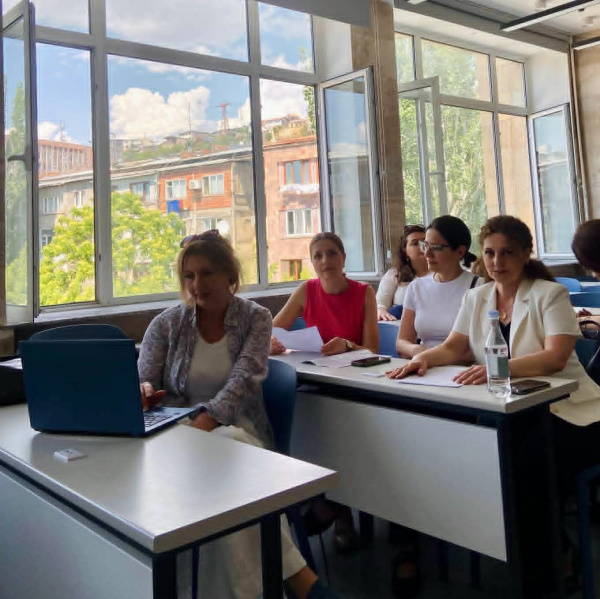
Participants were introduced to the stages of the VAKE method and the sequence of its practical implementation. Particular attention was given to the use of "dilemma stories," through which students are confronted with real or hypothetical moral issues and engaged in discussion. They then collect and analyze relevant information, compare different perspectives, formulate well-reasoned positions, and present their conclusions.
An important component of the training was the discussion of the role of critical thinking development and moral orientation in the process of acquiring scientific knowledge. It was emphasized that, in the context of contemporary higher education, students should be able not only to master professional knowledge but also to assess its social, cultural, and ethical implications.
The training also featured examples drawn from teaching practices across various disciplines, demonstrating how the VAKE methodology can be incorporated into the educational process to encourage active student participation, collaborative learning, and a culture of informed discussion. Through practical assignments and group discussions, participants had the opportunity to develop approaches for applying the method in their own courses.
At the conclusion of the training, participants noted that the approaches presented could serve as an effective tool not only for deepening students' knowledge but also for fostering their values-based, civic, and professional competencies. The course marked an important step toward enhancing educational quality and advancing values-based learning in line with the contemporary demands of higher education.