August 21, 2026 | 12:12
Education
Lifelong learning

Before the 19th century, access to education was limited in many societies and was often determined by social status. During the 19th century, however, alongside industrialization and the development of state education systems, education gradually became part of broader social and public policy.
By funding and overseeing schools, governments in different countries helped establish compulsory education systems and develop educated citizens. As a result, literacy rates also increased. In the second half of the 19th century, many countries adopted laws requiring children to attend school.
Over time, teaching methods developed and improved, national education systems took shape, and professional qualification requirements were introduced for teachers.
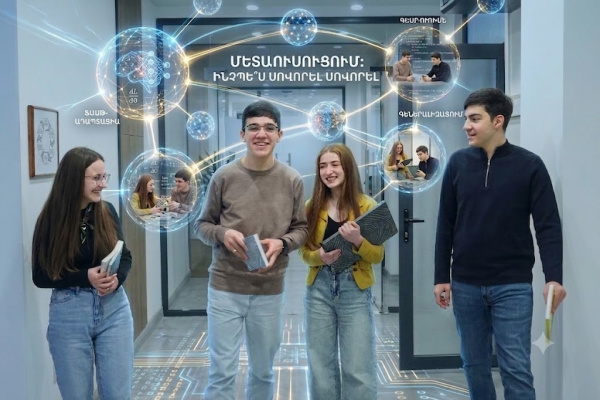
Education systems today, largely taking shape during the industrial era, do not always fully meet the demands of the rapidly changing world of the 21st century. Technological development, globalization, and climate, economic and social challenges require systemic transformation in education. Alongside knowledge and skills, creativity and innovation, critical thinking, communication and collaboration have become priorities, as have personal qualities and values such as awareness, curiosity, courage, resilience, ethics and leadership. Meta-learning - learning how to learn - is also important. It helps develop individuals who are prepared for lifelong learning, able to independently plan, monitor, and assess their own learning, and to develop a growth mindset.
To prepare future generations for an uncertain and changing world and enable them to respond as effectively as possible to present and future challenges, it is important to focus not only on what to teach, but also on how to teach it. In education aligned with 21st-century priorities, the STEM approach is particularly significant. It integrates science, technology, engineering and mathematics, helping to develop interdisciplinary thinking, problem-solving, creativity and innovative approaches.
An education system equipped to meet future challenges must be able to combine a strong academic foundation, technological opportunities and the development of human potential. In this way, general education will not only respond to a changing world but also become an environment that shapes learners by giving them not ready-made answers but the ability to search for answers and formulate new questions.