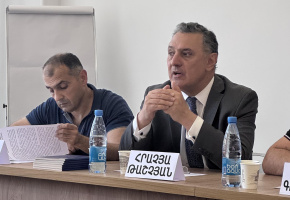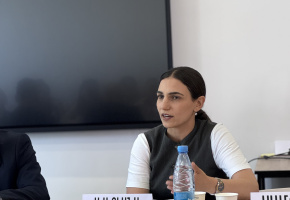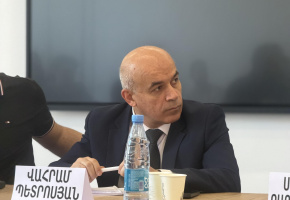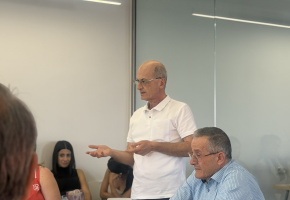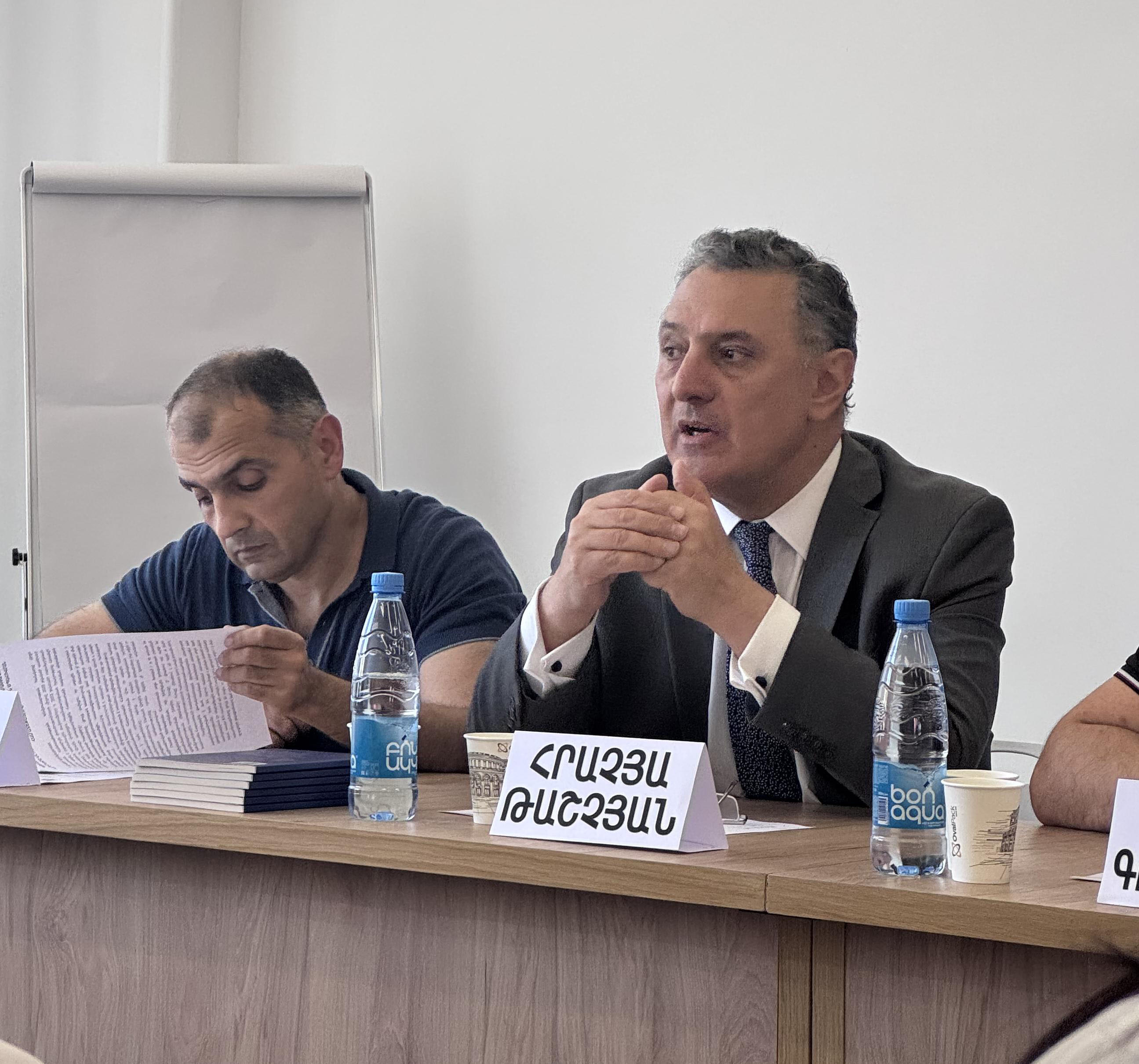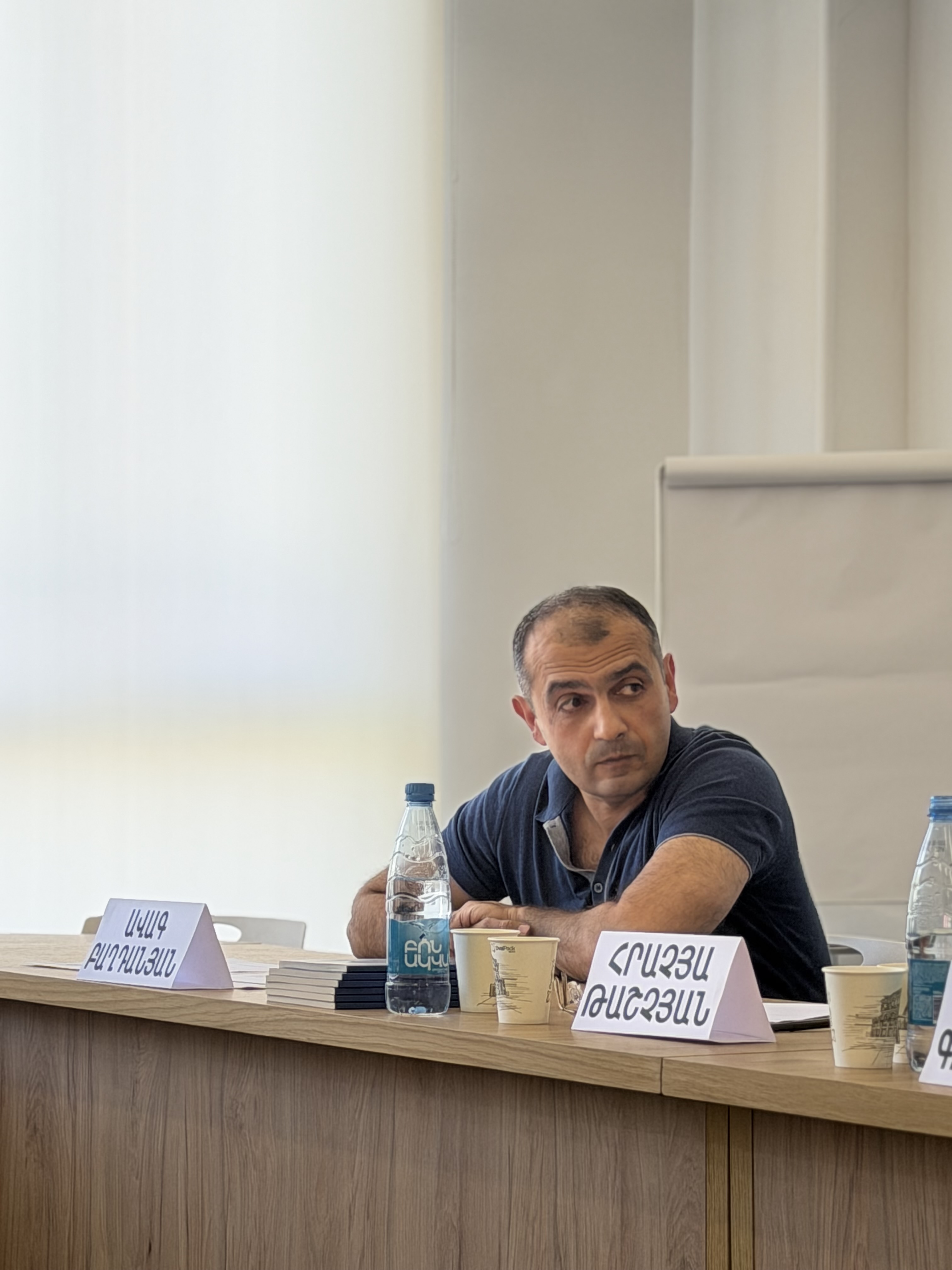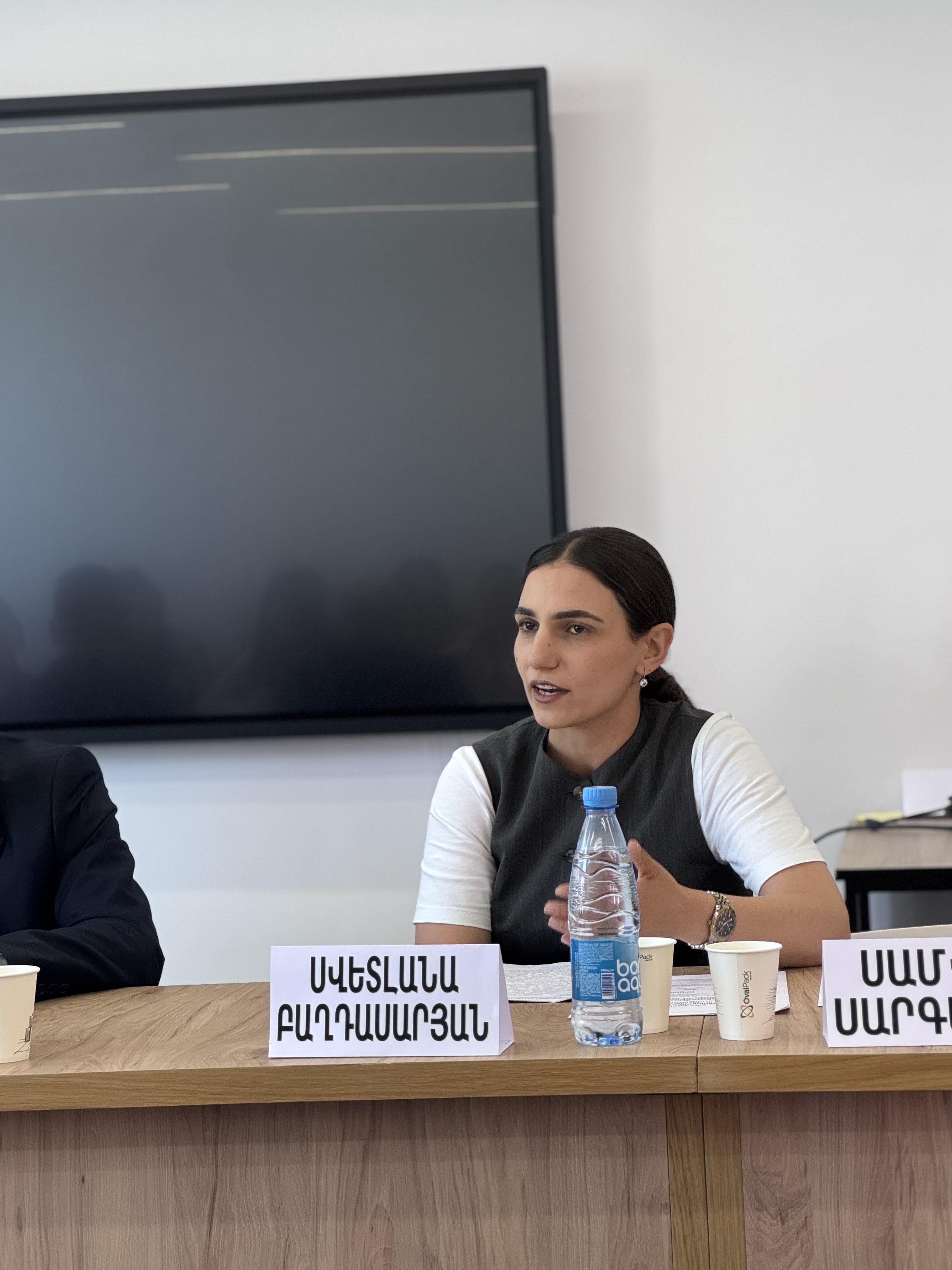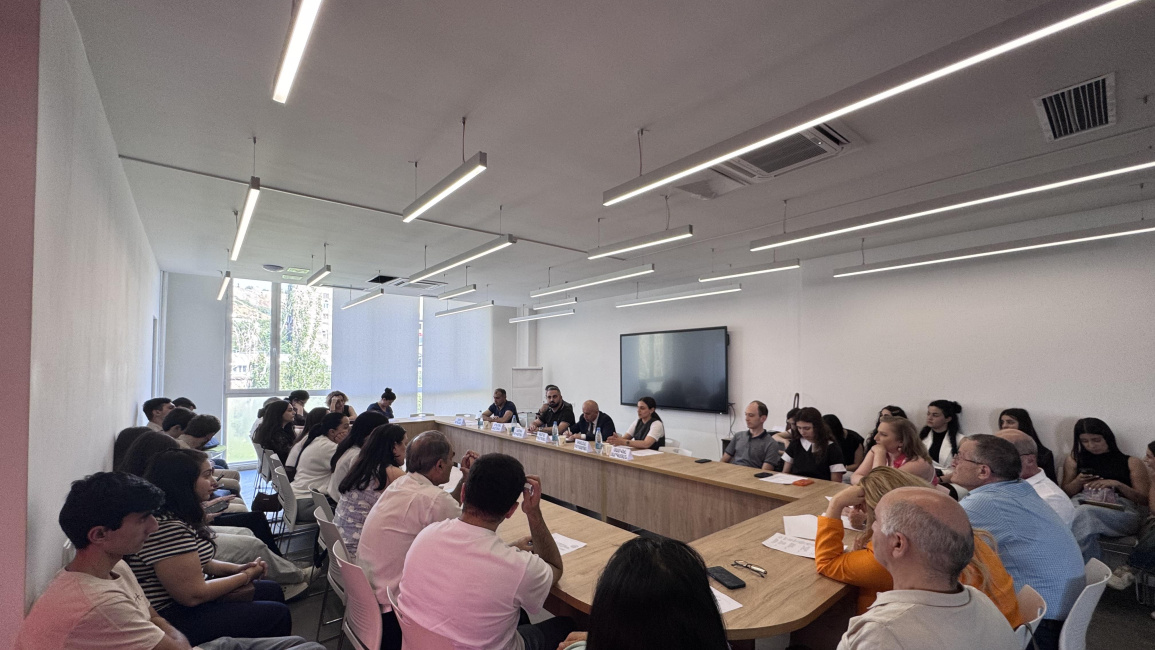
A round-table discussion on "Challenges of Rethinking Alliance Policy in the Context of Armenia's National Security" was held on June 30 at the initiative of the Department of National Security Research and Forecasting of the YSU Institute for Armenian Studies. The discussion brought together experts in the field, researchers from various subdivisions of the YSU Institute for Armenian Studies, as well as students from YSU and other scientific and educational institutions.
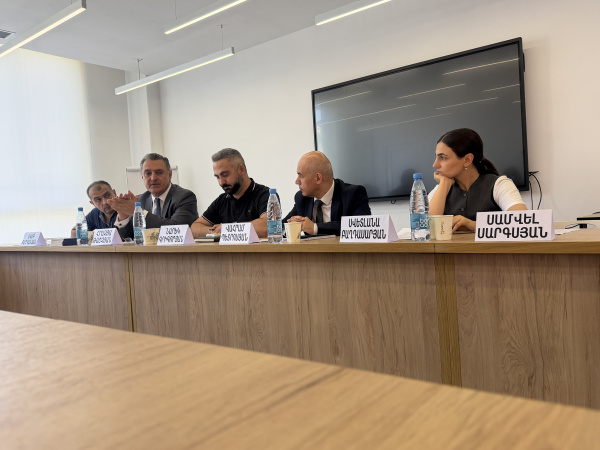
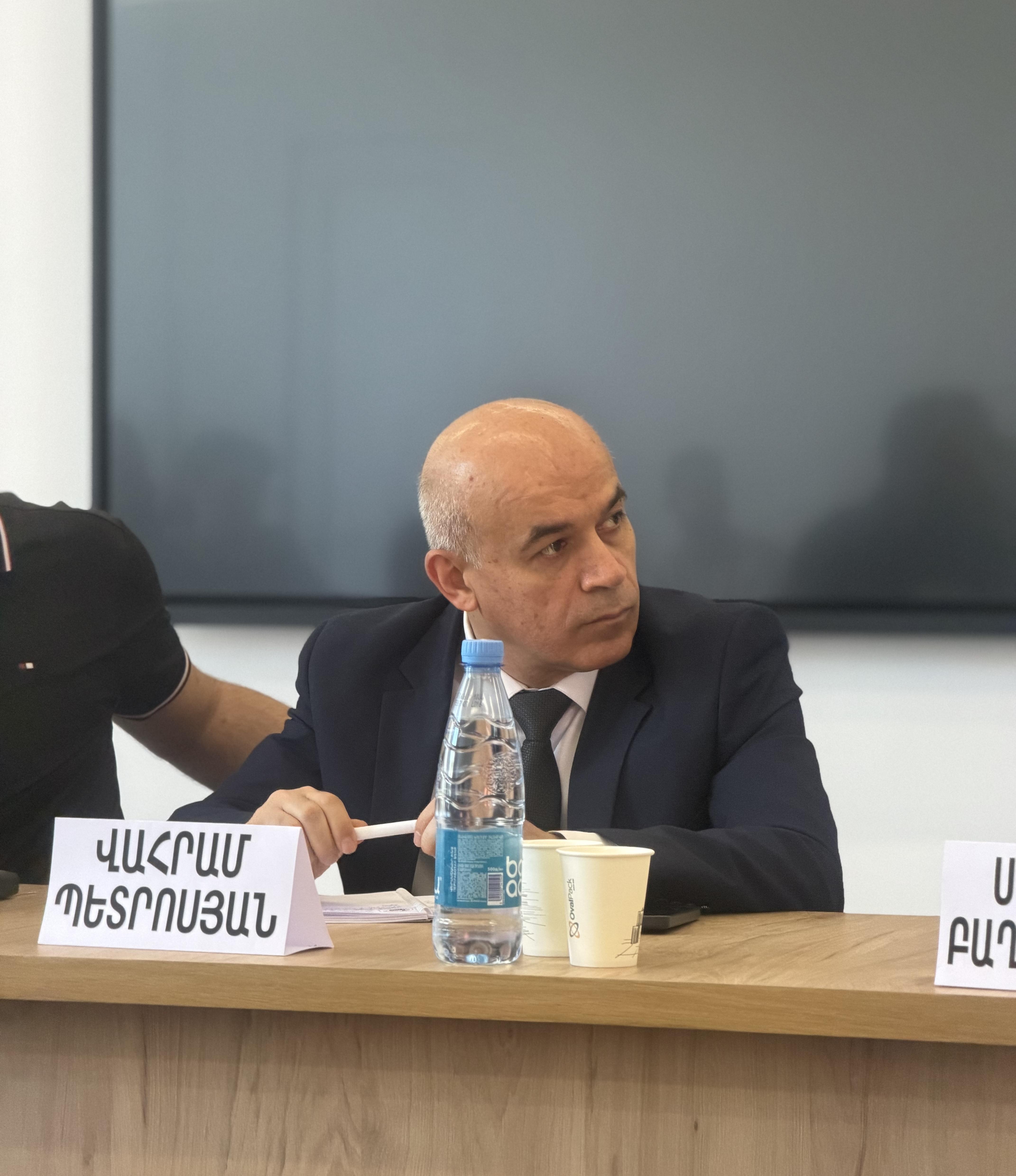
Opening remarks were delivered by Vahram Petrosyan, Director of the YSU Institute for Armenian Studies, Doctor of Historical Sciences and Associate Professor, and Narek Grigoryan, Head of the Department of National Security Research and Forecasting and moderator of the event.
During the discussion, researchers of the institute and invited speakers delivered reports. The presentations by Hrachya Tashchyan, Acting Director of the Armenian Genocide Museum-Institute Foundation of the National Academy of Sciences of Armenia; Avag Baghdanyan, staff member of the Department of National Security Research and Forecasting, Colonel, Candidate of Military Sciences and Associate Professor; and Svetlana Baghdasaryan, staff member of the Department of National Security Research and Forecasting, Candidate of Psychological Sciences and Associate Professor, were received with particular interest.
In his presentation, "Theoretical and Applied Tools for Implementing an Effective Foreign Policy of the Republic of Armenia in the Context of Transformations in Contemporary International Relations," Tashchyan addressed the opportunities, emerging risks and challenges facing Armenia amid transformations taking place in the gravitational field of military-political and economic actors and against the backdrop of regional tectonic shifts.
In his report, Colonel Avag Baghdanyan addressed the challenges of rethinking alliance policy, considering them in the context of ensuring Armenia's military security. The speaker emphasized the need to consider not only regional and extra-regional allies, but the entire security architecture. It was also stressed that alliances should be assessed not through political statements but from the perspective of resolving specific security and military-political issues.
Svetlana Baghdasaryan, staff member of the Department of National Security Research and Forecasting, Candidate of Psychological Sciences and Associate Professor, examined a number of cognitive models of psychological fears and threat perception in her report, "Psychological Features of Alliance Policy, Cognitive Models of Threat Perception and Collective Identity." The connection and interdependence between alliance stability and the unity of perceptions were also considered.
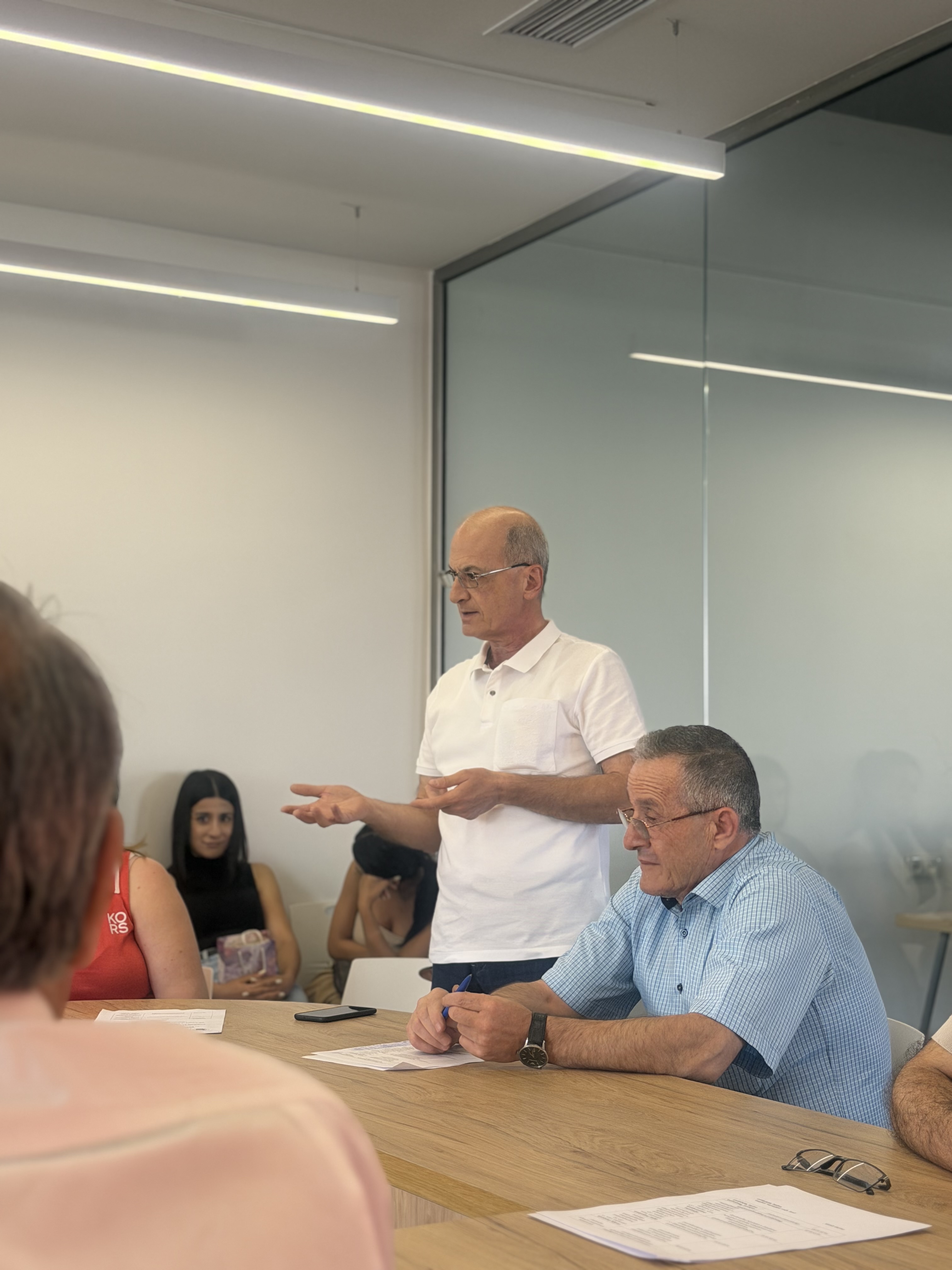
During the active professional discussion that followed the reports, the speakers and participants presented their professional observations, assessments and expert recommendations. Participants included Nelly Minasyan, Head of the IAS Department for Armenia-China and Armenia-India Relations and Strategic Cooperation; Sara Mkrtchyan, Head of the IAS Strategic Games, Scenario Analysis and Modeling Group; Ashot Yengoyan, Head of the IAS Research Department for Armenian-Russian Relations; Ashot Hayruni, Head of the IAS Department of Genocide Studies; Vardan Mkhitaryan, Head of the B. Harutyunyan Research Laboratory of Historical Geography and Cartography of Armenia; and Mushegh Ghahriyan, Head of the IAS Research Group on Armenia-Arab States and Armenia-Israel Relations.
Summing up the round-table discussion, IAS Director Vahram Petrosyan emphasized that the YSU Institute for Armenian Studies attaches special importance to holding research events in such formats as they can serve as an effective platform for professional dialogue, scientific cooperation and the public dissemination of research results.