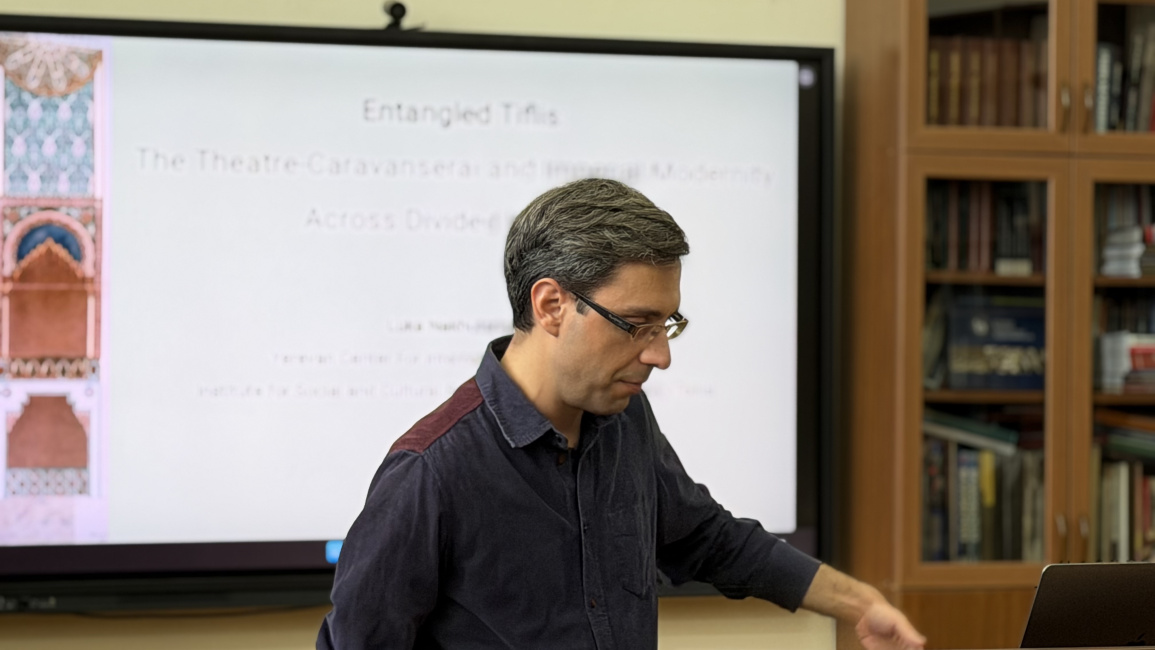
The YSU Faculty of History hosted Luka Nakhutsrishvili, PhD in Comparative Literature, cultural scholar, lecturer and researcher at Ilia State University in Tbilisi. He delivered a lecture titled "Entangled Tiflis: Theatre-Caravanserai and Imperial Modernity Between Fragmented Histories". The talk was organized within the framework of the Chair of Culturology's scientific seminar series and addressed the multicultural reality of mid-19th-century Tiflis.
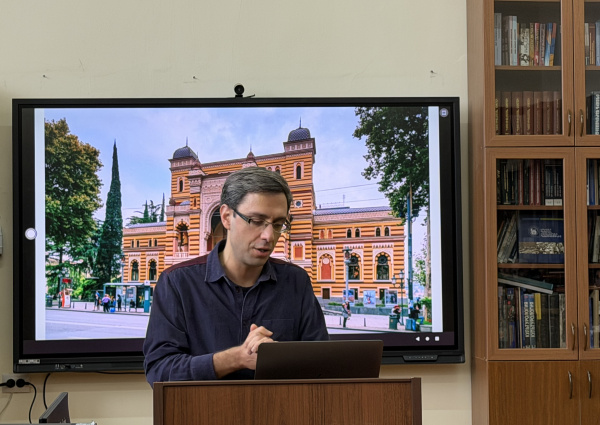
The speaker highlighted that the well-known theatre-caravanserai building in Tiflis serves as a central point for multifaceted study. In this hybrid space, art and commerce intertwined, forming an environment where various processes took place among Georgian, Armenian, Russian, and other ethnic communities influenced by imperial modernity. Built in 1846 and opened in 1851, the building—with its elegant Moorish-style hall—offered a unique setting, functioning both as a cultural and commercial hub.
Nakhutsrishvili also highlighted the fire of 1874, which destroyed the theatre hall and ended the coexistence of art and commerce in that space. After the theatre was relocated, the building remained an ordinary caravanserai. This development demonstrates how changes in the material environment can affect cultural diversity and how imperial influences shaped the complex dynamics of urban life.
According to the speaker, the past should be examined not only from narrow national or imperial perspectives but also through the broader lenses of global modernity and urban diversity.
The history of the theatre-caravanserai vividly reflects the multi-layered reality of 19th-century Tiflis, where art, commerce, and interactions among different ethnic communities created an environment marked by both coexistence and tensions. This example reminds us that a full understanding of the past requires recognizing all its layers rather than limiting interpretation to a single perspective.
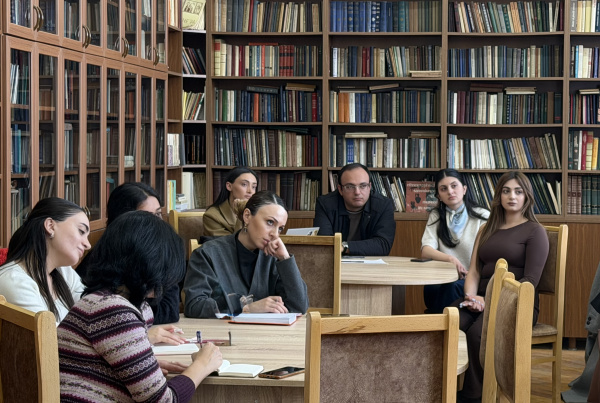
The lecture provided students with an important opportunity to become acquainted with contemporary approaches to historical research and to reassess the region's shared cultural heritage from a new perspective. It also aimed to strengthen Armenian-Georgian academic cooperation and encourage joint discussion of the complex urban history.