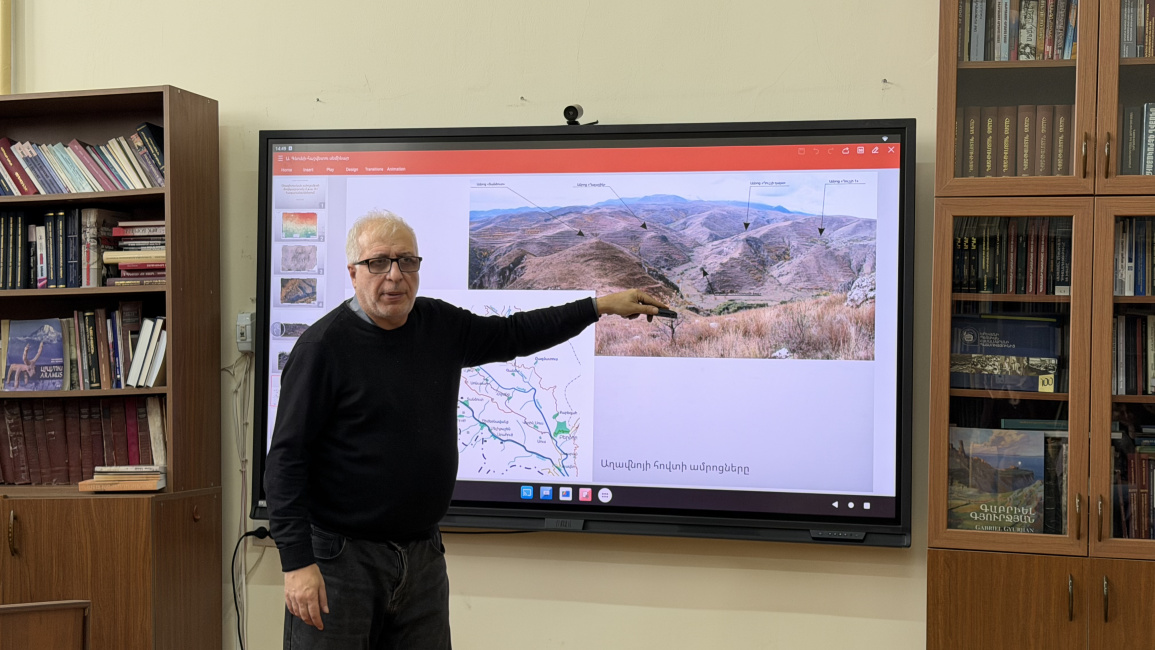
On April 8, within the framework of the annual seminar on scientific results at Yerevan State University, a seminar titled "Transformation of the Archaeological Landscape in the 2nd–1st Millennia BC" was held at the Faculty of History. Associate Professor of the Chair of Archaeology and Ethnography, PhD in History Artak Gnuni, presented the results of a research project conducted under the Higher Education and Science Committee of the RA Ministry of Education, Science, Culture and Sports program "Research in the Fields of Social Sciences, Armenian Studies, and Humanities–2024". The research is being carried out under the supervision of project leader Hayk Avetisyan.
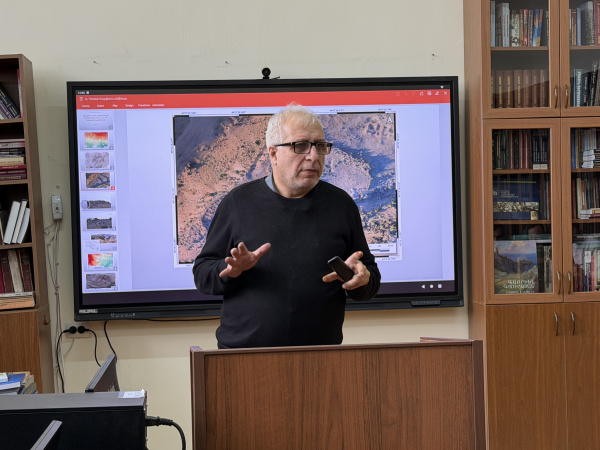
At the beginning of the 2nd–1st millennia BC, relatively stable natural–anthropogenic landscape units had formed in the northern regions of the Armenian Highlands. Gnuni emphasized that the natural environment functioned as a key factor around which all elements of the cultural landscape were shaped and transformed.
The speaker emphasized that during this period a system of regions, defined by natural boundaries, began to emerge, with a deliberately organized defensive structure. This system comprised centrally fortified settlements, their immediate hinterlands, surrounding open settlements, and networks of fortresses guarding regional borders. Taken together, these formed integrated defensive districts that served both military and administrative functions.
Turning to the economic dimension, the YSU associate professor emphasized that these defensive districts also functioned as major economic units, where ensuring economic security was a primary concern. To this end, agricultural complexes, irrigation systems, reservoirs, and strategic routes were carefully controlled. Fortified areas also played a key role in protecting communication routes leading to economic centers.
According to Gnuni, earlier fortification traditions were preserved in peripheral regions; however, Urartian influence is evident in certain elements of the material culture. These include finds with Urartian parallels, cremation burials in urns, as well as the spread of syncretic pottery, in which cultural features of Etiuni and the Kingdom of Van are combined.
The presentation of the research findings is important for the educational process, as it provides students with a practical understanding of archaeological landscapes and the structure of economic and defensive systems, while also helping them grasp their connection to broader state and cultural processes.