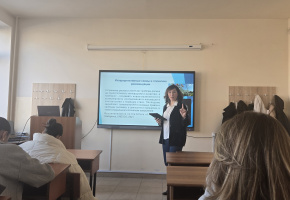
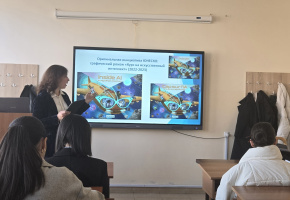
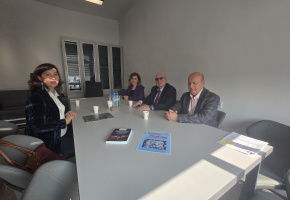
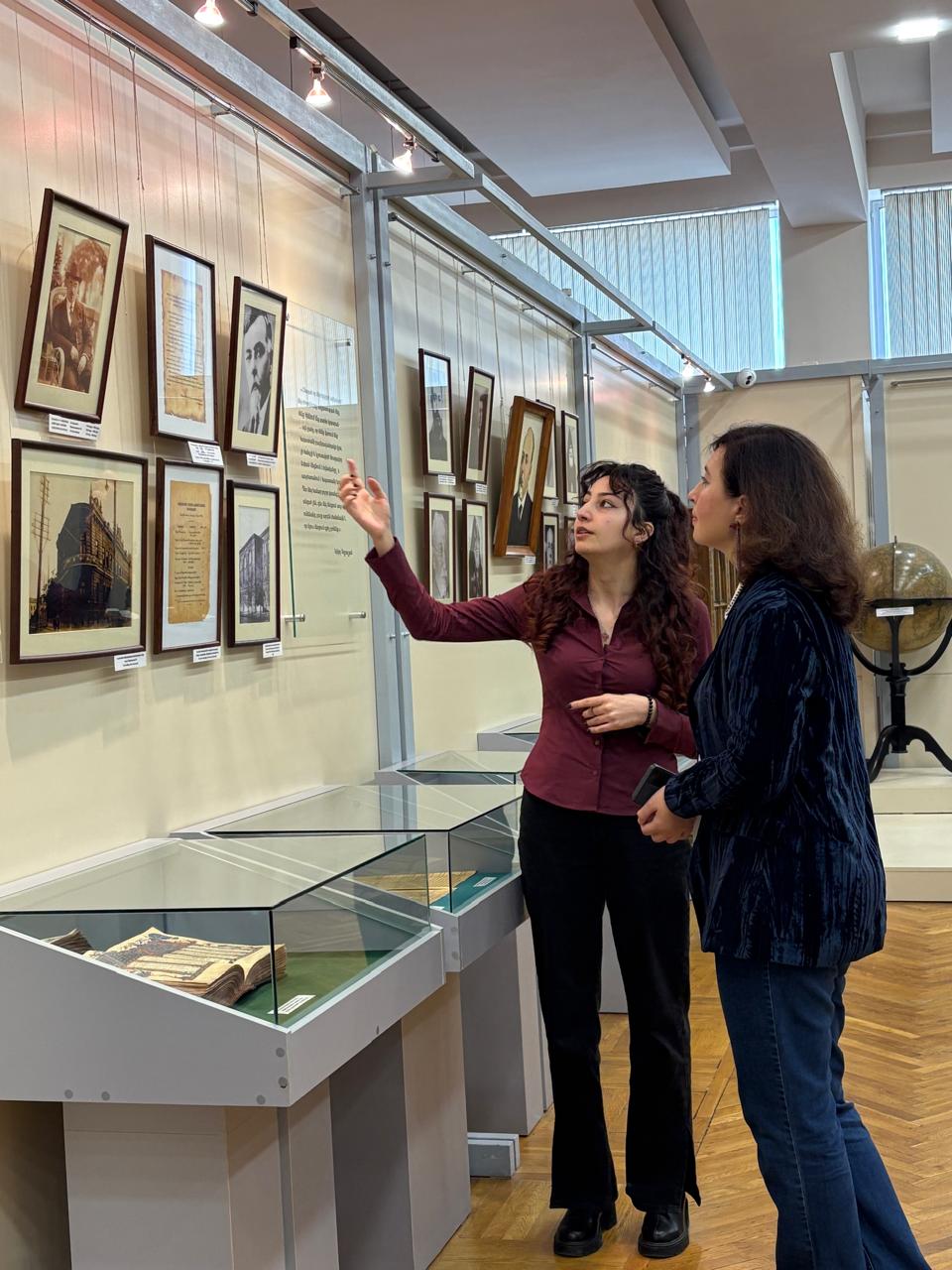
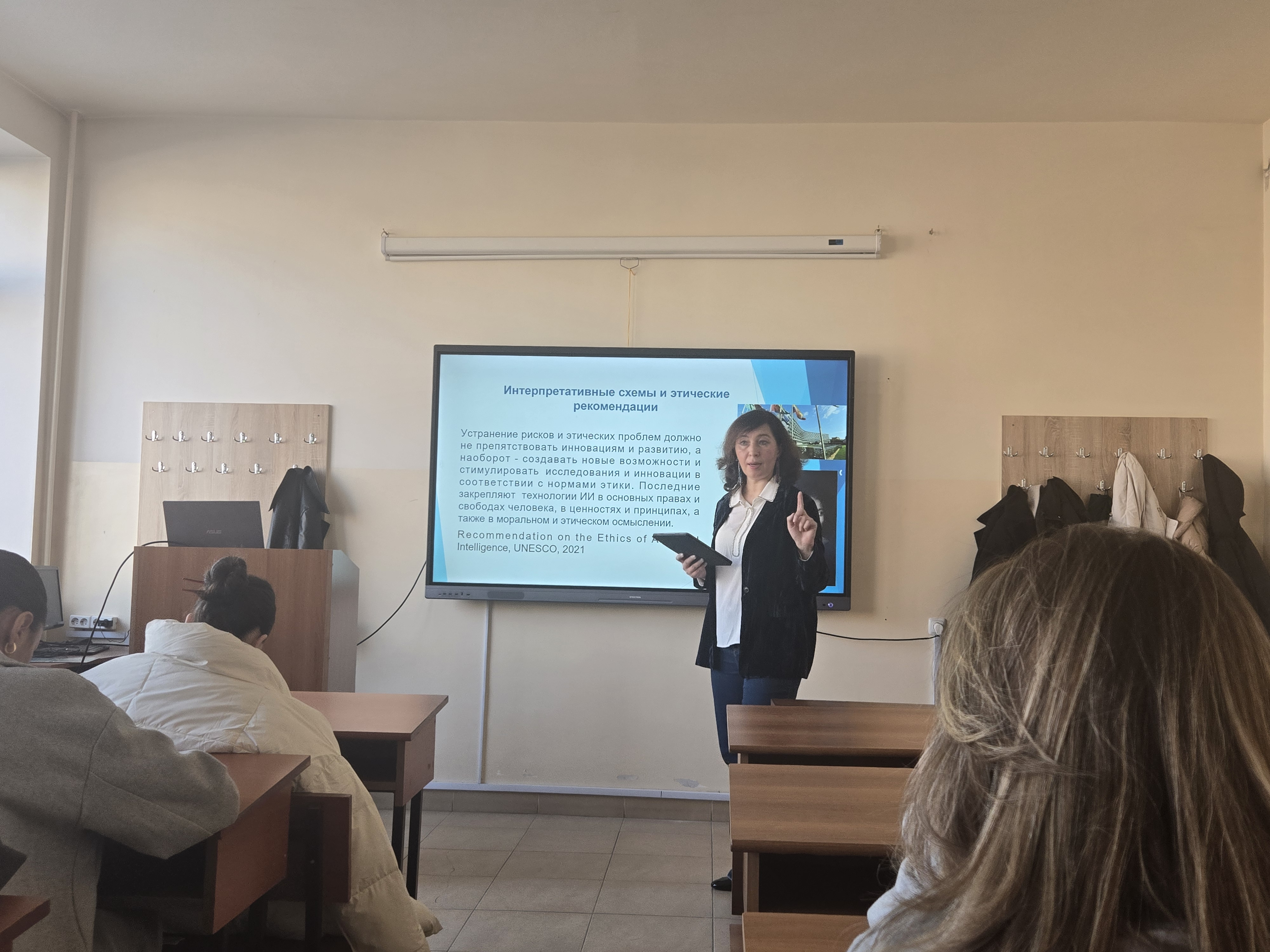
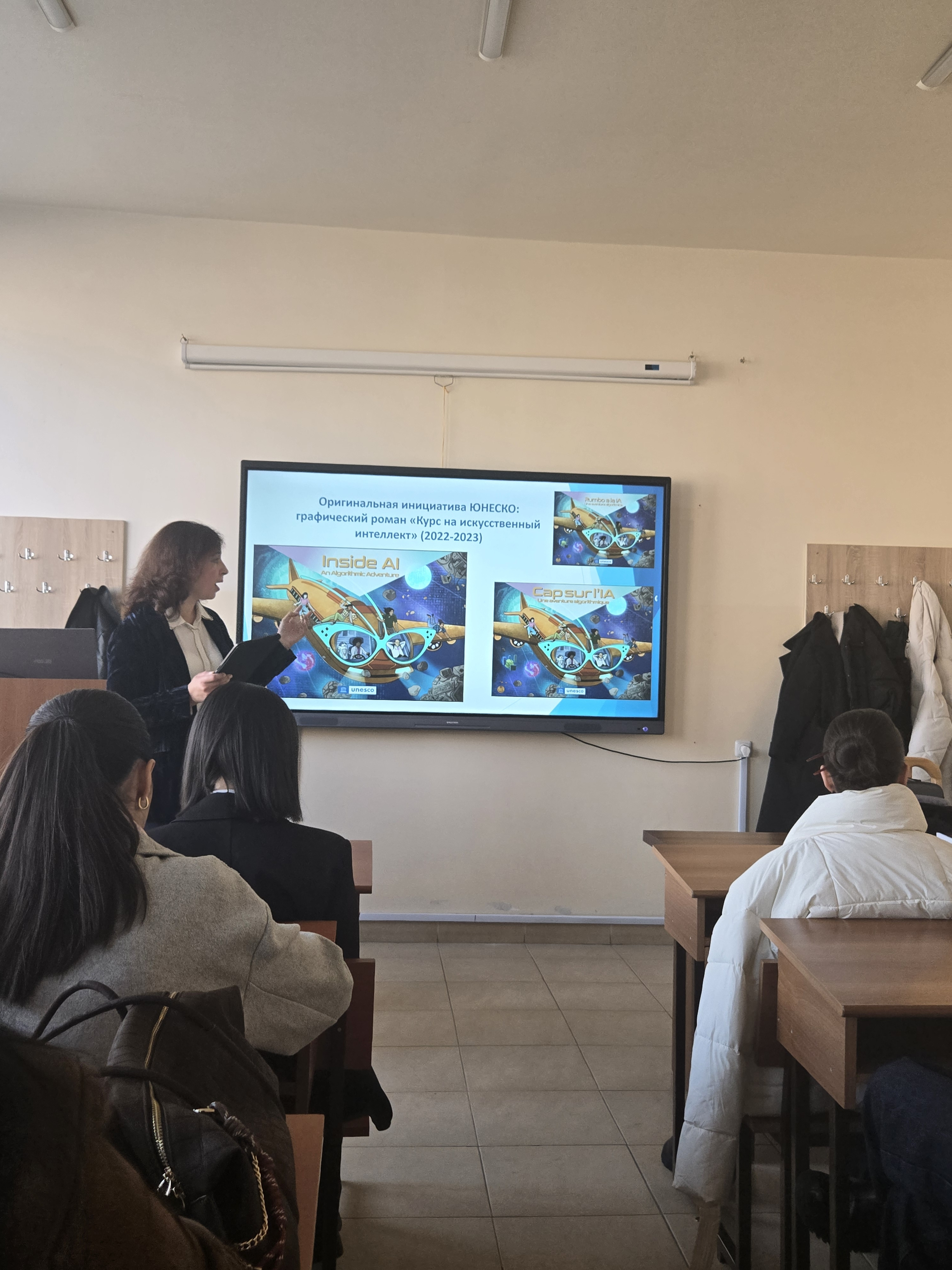
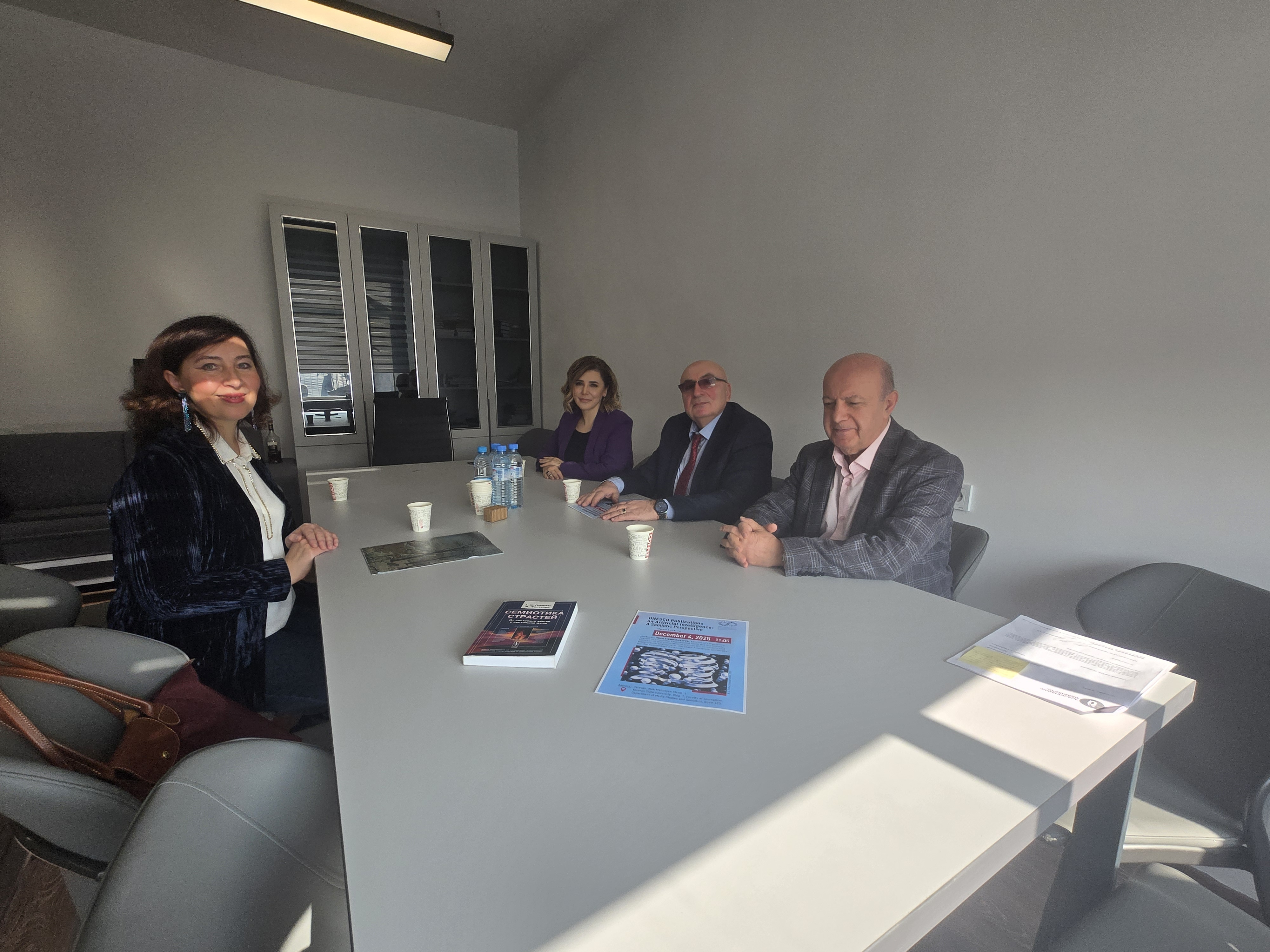
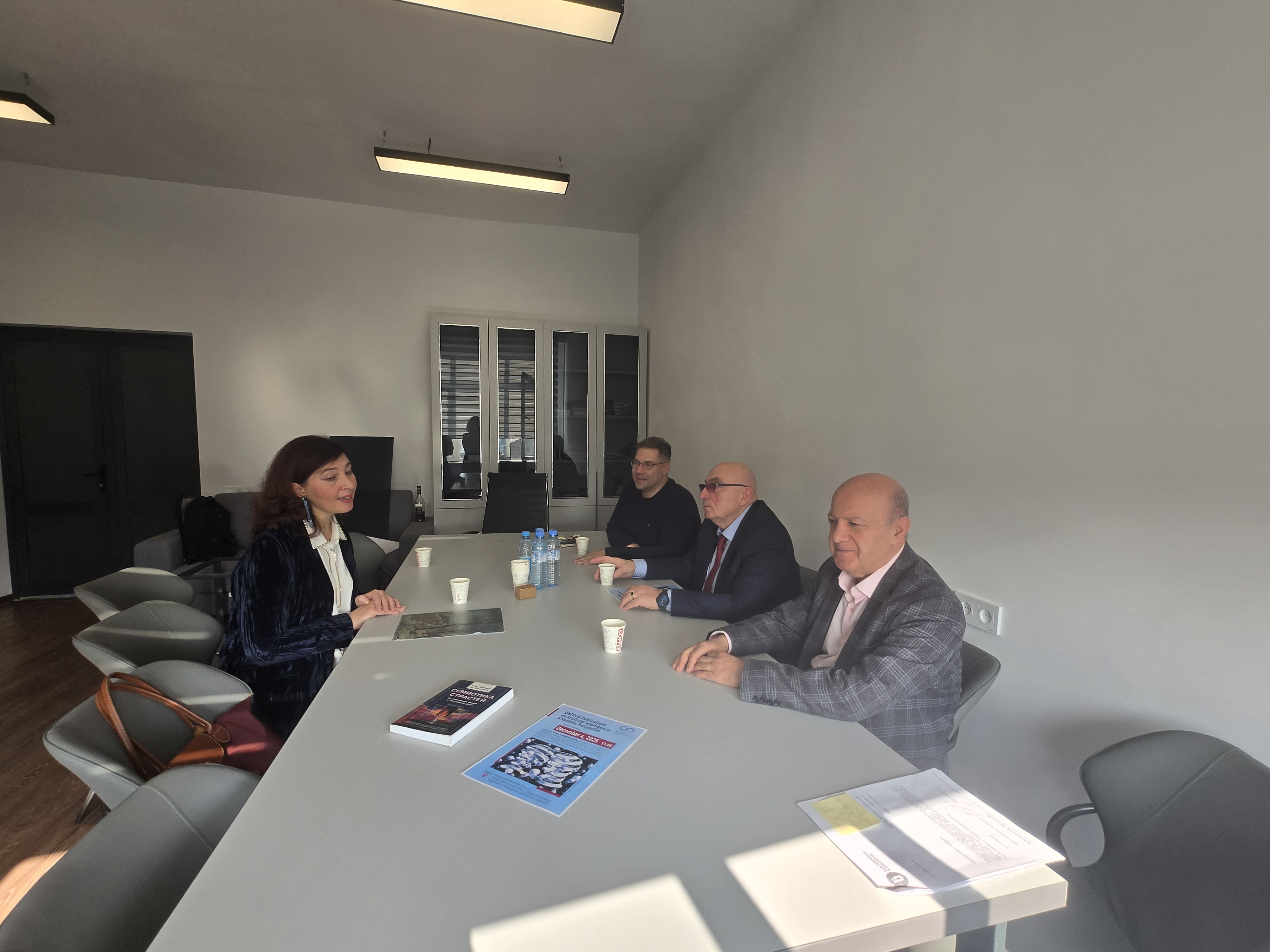
On December 4, 2025, the Chair of Media Studies and Semiotics of the YSU Faculty of Journalism hosted an open lecture titled "UNESCO Publications on Artificial Intelligence: A Semiotic Perspective" by Inna Merkoulova. The lecture focused on the analysis of UNESCO's graphic novel "Inside Artificial Intelligence: An Algorithmic Adventure" (UNESCO, 2022), as well as a discussion of the humanitarian and intersemiotic aspects of UNESCO’s international normative documents.
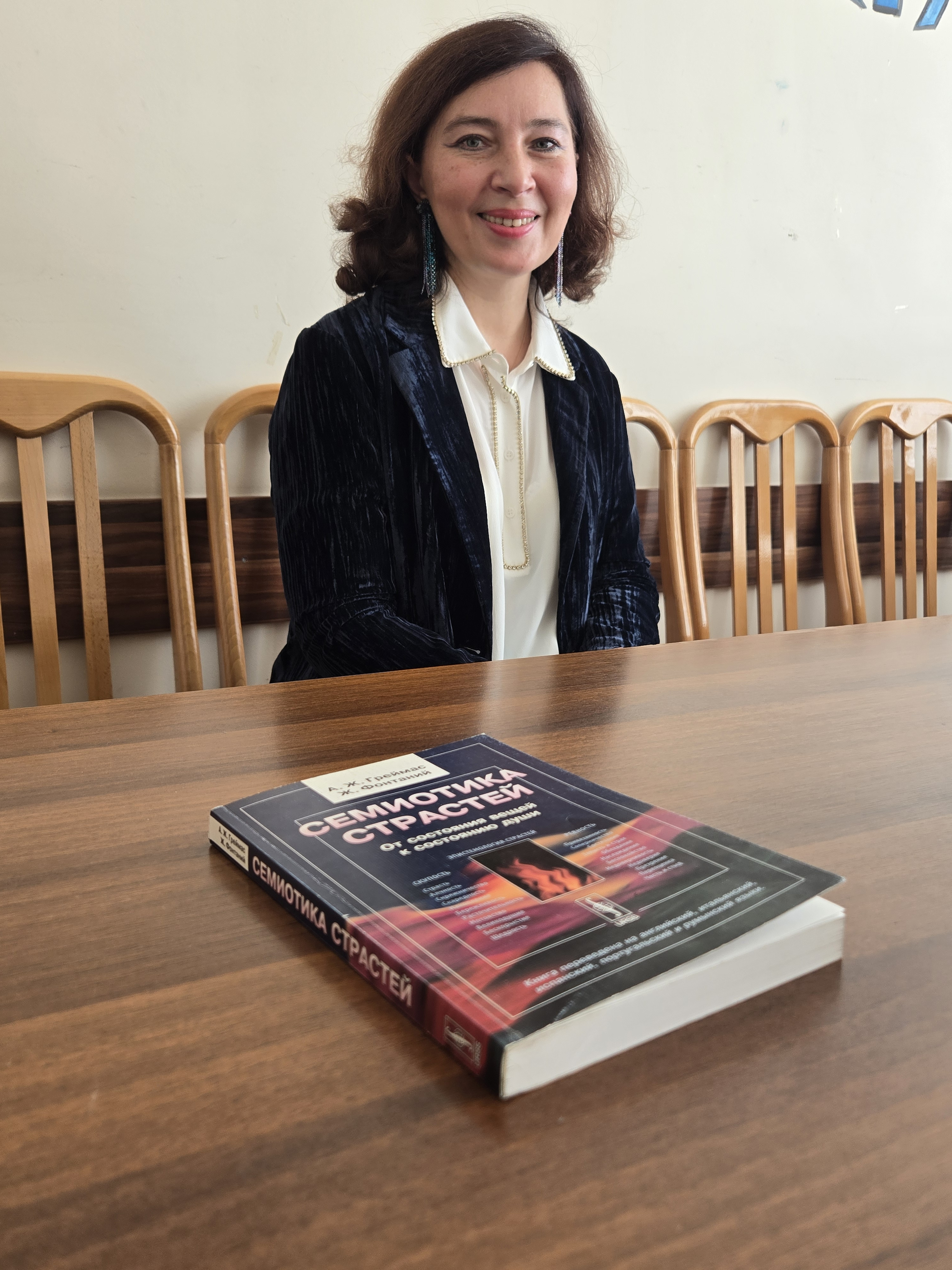
Inna Merkoulova is the Head of the International Center for Semiotics and Intercultural Dialogue at the State Academic University for the Humanities in Moscow, Doctor of Linguistics at the University of Limoges, Vice President of the Asian Semiotics International Association, and an associate researcher at the research laboratory "Meaning–Text–Informatics–History" of the University of Paris–Sorbonne.
During the lecture, special attention was paid to the issues of visual representation, interpretation, and ethical regulation of artificial intelligence in the modern media space.
Dr. Inna Merkoulova presented artificial intelligence as a cultural and semiotic phenomenon using the example of the UNESCO graphic novel "Course on Artificial Intelligence", published in 2022–2023 under the auspices of UNESCO. The novel is an innovative form of humanitarian knowledge that combines visual and linguistic narratives. The book is available in UNESCO's main languages, including English, French, Spanish, and others.
The graphic novel aims to understand the impact of artificial intelligence on human society. The text offers a semiotic response to the stereotypical fear of AI, which is interpreted as a kind of fear of the "Оther". Through iconic and verbal (symbolic) signs, the novel demonstrates the possibility of integrating artificial intelligence technologies into cultural dialogue, thereby contributing to the reduction of social anxiety and the mitigation of ideological polarization.
This open lecture for students was organized at the initiative of Doctor of Philology, Professor Tigran Simyan.