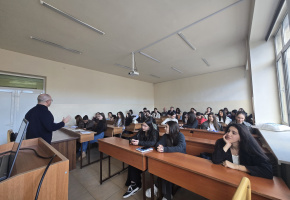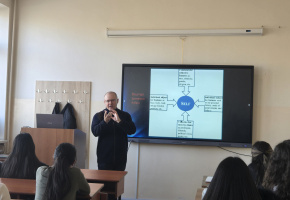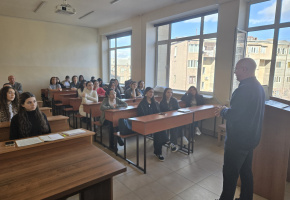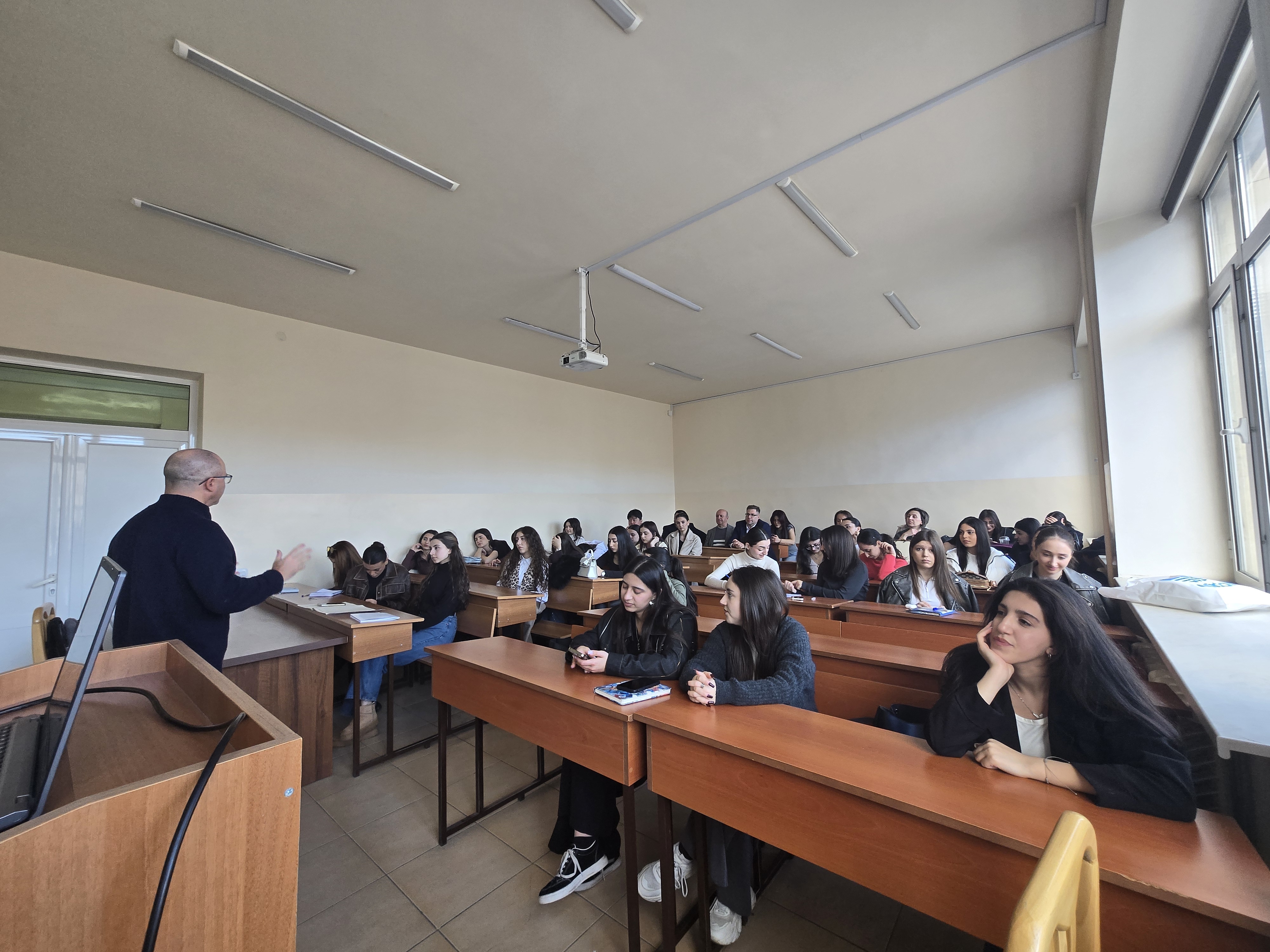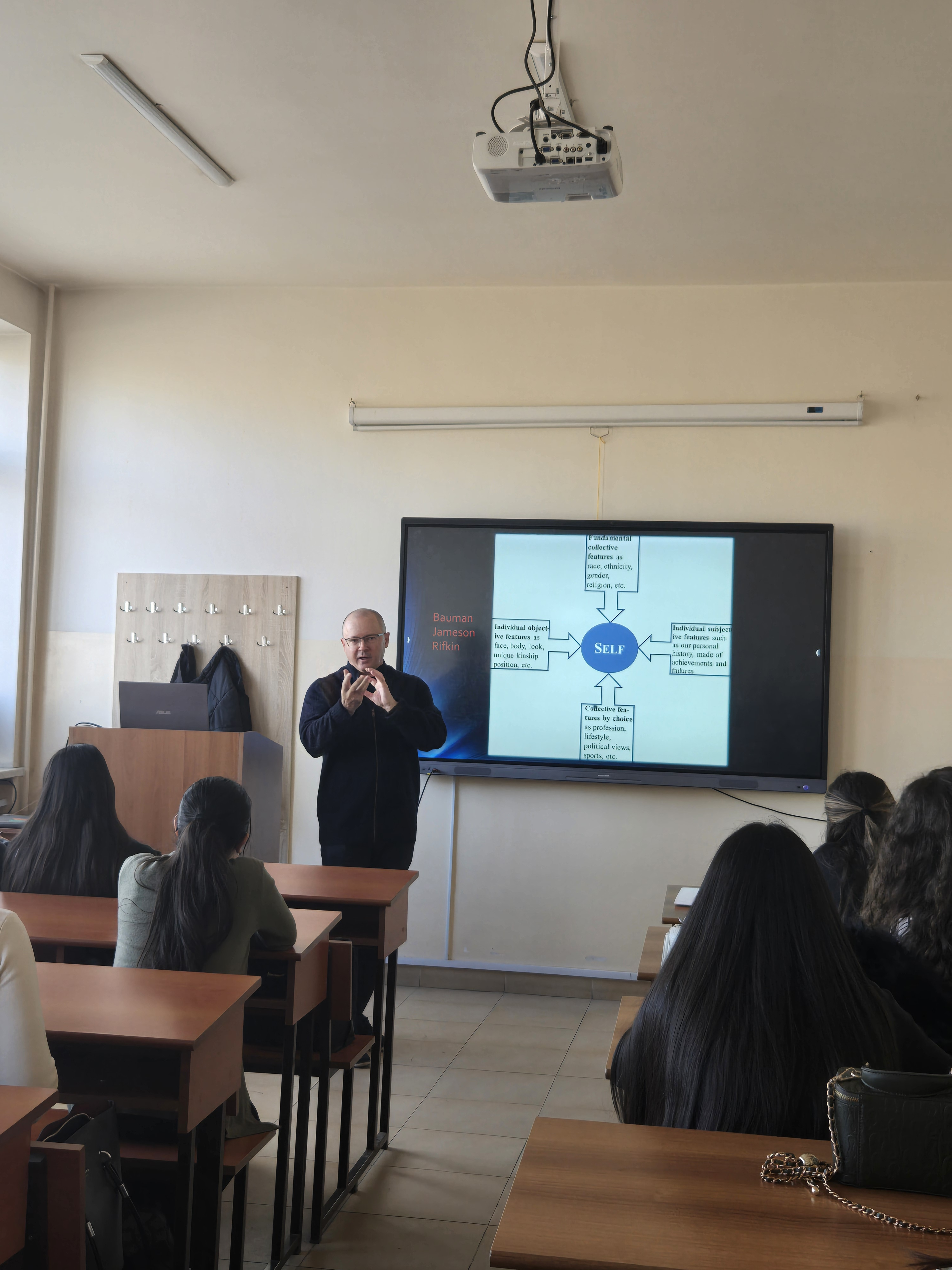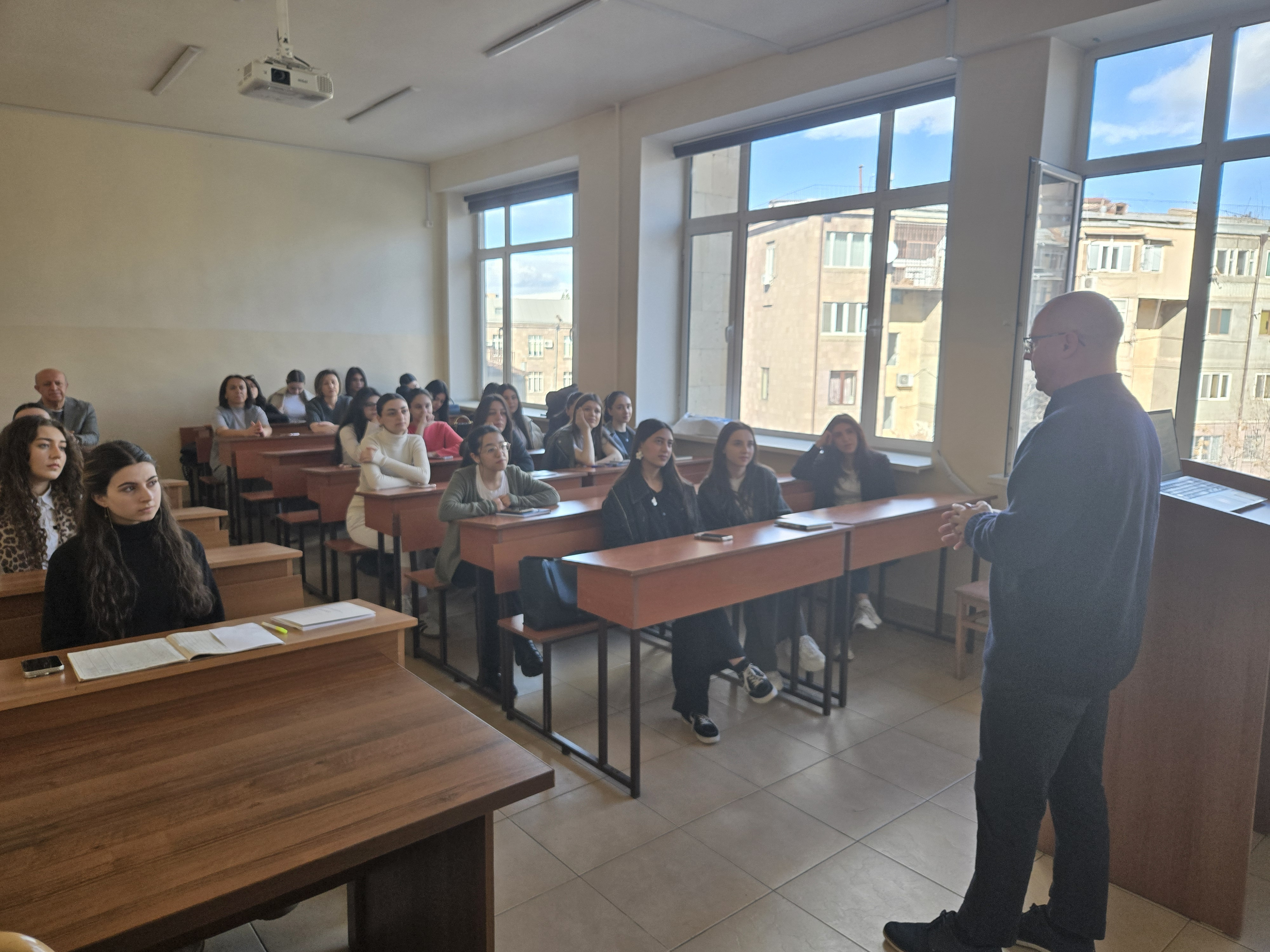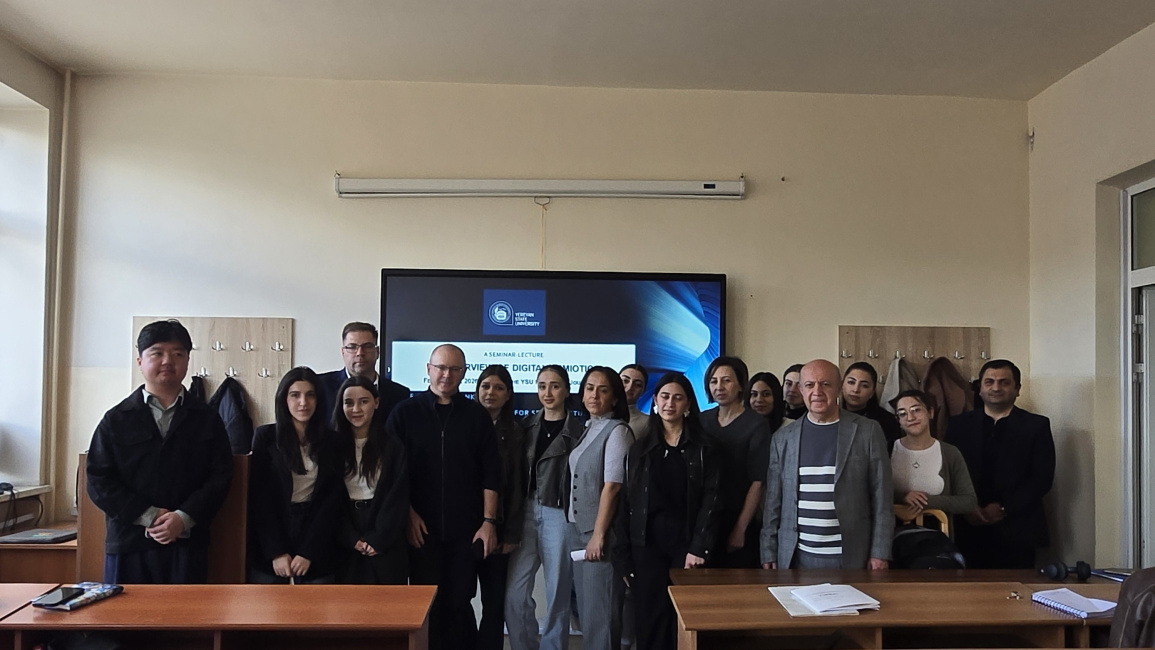
Yerevan State University hosted Professor Kristian Bankov, a former student of Umberto Eco and a leading scholar of the Bulgarian semiotic tradition. He delivered a lecture titled "Overview of Digital Semiotics", in which he addressed the challenges of digital semiotics, cultural transformation, and platform technologies.
The lecture's date proved symbolically significant in three respects. First, while Bulgarians commemorate the death of their national hero, Vasil Levski (1837–1873), on February 19, Armenia celebrates the birthday of the great Armenian poet, Hovhannes Tumanyan (1869–1923).
In recent years, this day has evolved from a cultural initiative into a nationwide tradition, marked by events in schools, universities, and other institutions. Bookstores offer discounts, and it has become customary to exchange books, turning the act of giving into a reaffirmation of reading and cultural memory.
Unaware of this tradition, Professor Bankov presented his major scholarly work, "The Digital Mind: Semiotic Explorations in Digital Culture", to colleagues from the Chair of Media Studies and Semiotics as a gesture of academic cooperation.
Third, the lecture also carried a commemorative dimension, marking ten years since the death of Umberto Eco. In his presentation, Professor Bankov outlined the key ideas of Eco, one of the most influential theorists of modern semiotics. The event became an academic discussion of digital culture and a homage to the memory of the great Italian thinker.
Professor Kristian Bankov developed as a scholar under the intellectual influence of Tsvetan Todorov and Yulia Kristeva. His lecture attracted considerable interest among faculty and students, reaffirming the importance of international academic dialogue and the relevance of semiotic research in the digital age. In his lecture, "Overview of Digital Semiotics", he examined how digital technologies transform not only culture and cognition but also identity.
Referring to Umberto Eco's distinction between traditional culture and erudition as a systematic organization of knowledge, the professor emphasized the instability of digital information and the role of platforms as environments in which reputation, recognition, and influence function as new forms of currency.
The second part of the lecture focused on media experience and immersion, exploring the tension between plausibility and the verification contract. It addressed the suspension of disbelief, special effects, and the cognitive effort involved in immersive environments.
Finally, the lecture outlined the prospects and challenges facing semiotic theory and academic teaching in the era of artificial intelligence.
Revisiting Eco's model of culture as an encyclopedia, Professor Bankov reflected on semantic relations and creativity. He concluded by raising questions about the future of semiotic theory, the transformation of academic education in the age of artificial intelligence as a "lazy machine", and the evolving role of universities in contemporary knowledge production.
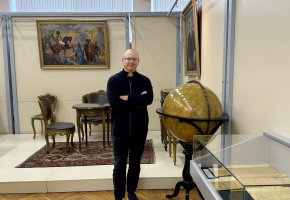
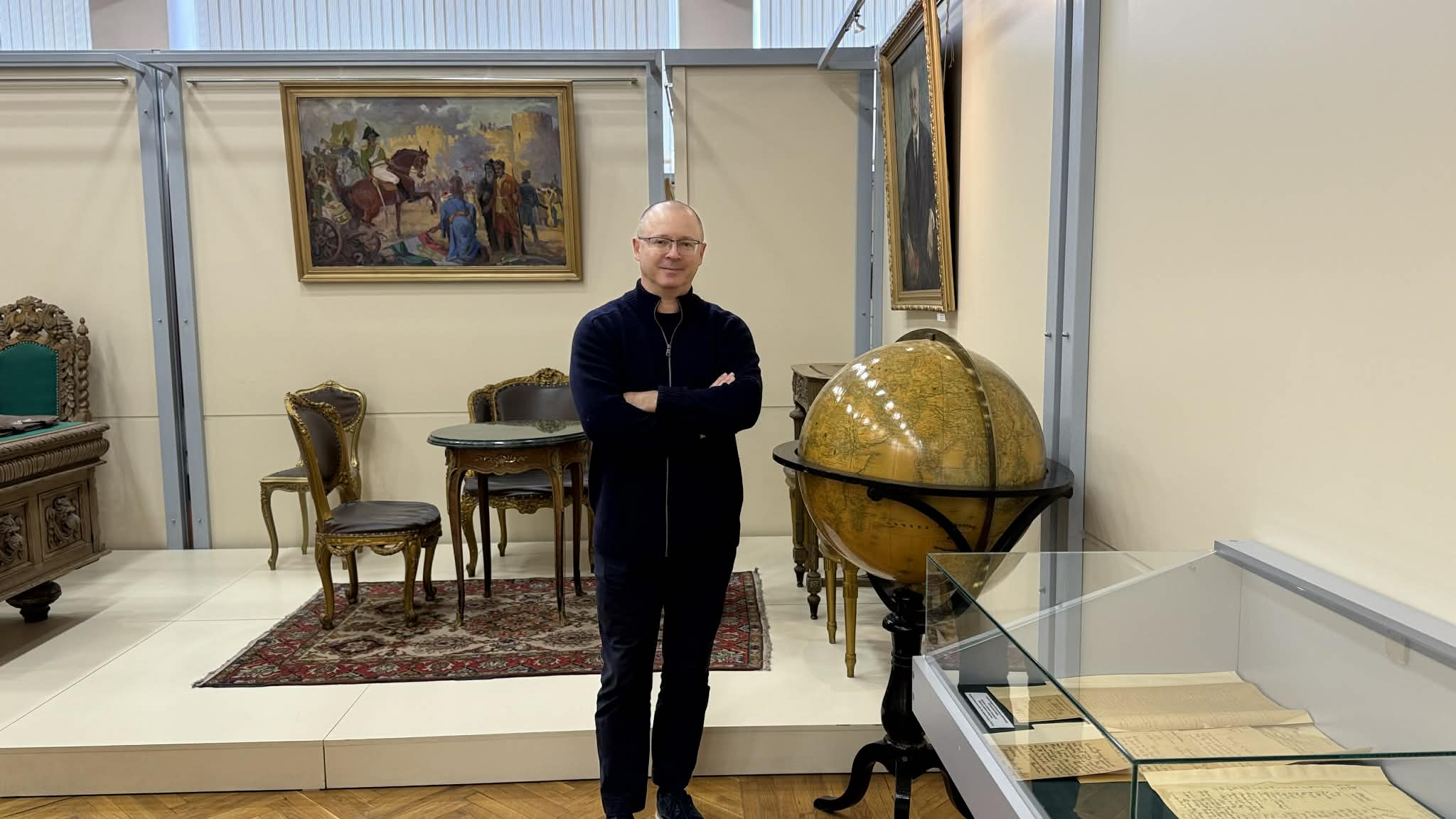
Professor Kristian Bankov also visited the YSU History Museum, where he was introduced to the history of YSU's formation.