Our professional paths often follow well-defined trajectories, yet years of experience and achievements sometimes cannot replace our deepest, most cherished dreams.
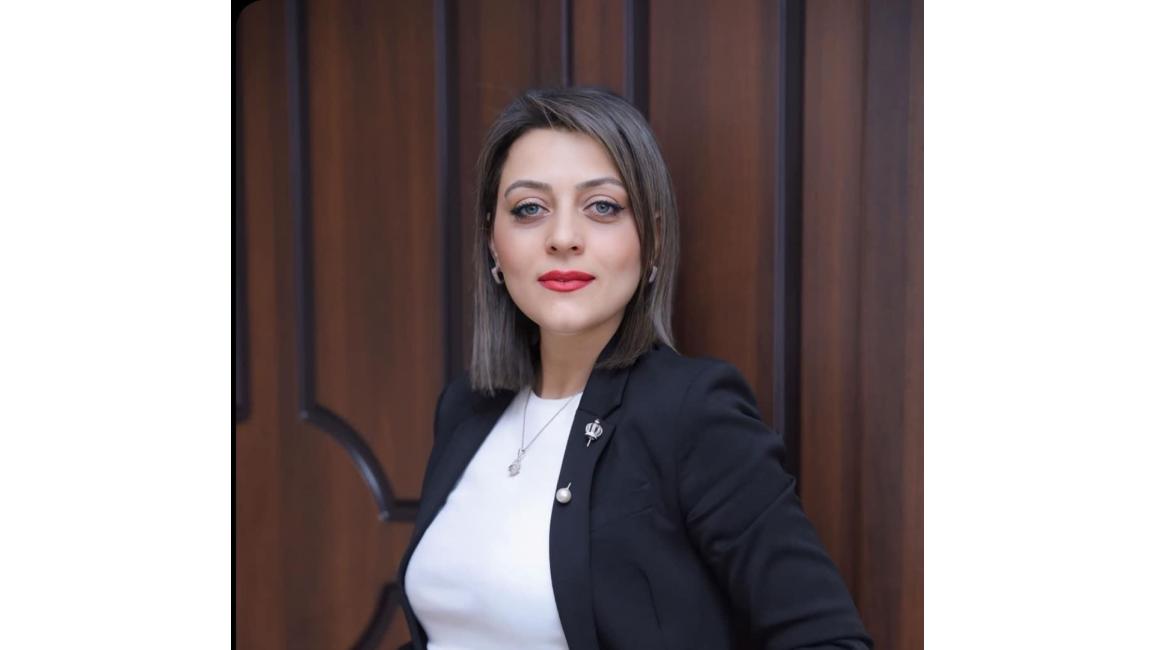
Our interviewee is Varduhi Petrosyan, Associate Professor at the Chair of Media Studies and Semiotics, YSU Faculty of Journalism, and Candidate of Philological Sciences. Years later, she returned to the student bench and is now studying at the Faculty of Law.
– Ms. Petrosyan, what was your main motivation for enrolling in the Faculty of Law at Yerevan State University?
– My primary motivation was my dream. When I first considered a profession, moving from Gyumri to Yerevan to study at the Faculty of Law was a dream for me. However, the post-earthquake hardships and my parents' reluctance to let me live away from home prevented me from pursuing law. As an alternative, I did not want to enroll in a private university, so I chose my first profession—journalism—and studied in Gyumri.
– What was the turning point that made you realize it was the right time to follow your dream?
– I participated in the SUSI program in the United States as Armenia's representative among eleven countries. At the end of the program, our coordinator, knowing about my dream, gave me a thoughtful card. After many words of encouragement and praise, it was signed: "For future judge." That gesture carried a responsibility I could not ignore. I decided: either I pursue my dream this year, or I never will.
– What is it like to be a student again, now with the experience of a lecturer?
– The experience is fascinating. I will never forget my first day entering the classroom. For a moment, students thought I was there to lecture, but with a touch of humor typical of Gyumri, I said, "Today is not that day, kids. I am one of you—ready to learn and sit at this bench with you."
– Do you find yourself evaluating or adjusting the way the material is presented during class?
– Not exactly. I do not consciously evaluate the presentation itself, but my experience and in-depth knowledge of specific fields allow me to understand the material much more objectively.
– Does your presence as a student create a "professional barrier" for your peers? How do you navigate this—do you remain a passive student or actively participate in discussions?
– I have not felt that my presence hinders anyone. On the contrary, we have interactive discussions. Initially, I found it interesting myself, when I had to give a lecture in the master's program and then continue in the same classroom as a student. My students were more excited than I was, trying to show me where my classroom was. It has been a fascinating experience.
– Has this student experience changed your attitude toward your own students? Are you more lenient or more demanding?
– I have always treated my students as my future colleagues, so I have always tried to understand them. I have never attempted to shift from the student perspective for any other reason than to understand their psychology, provide the necessary skills and knowledge, and receive feedback. Therefore, in this respect, I have not felt the need for change.
– Has studying at the Faculty of Law influenced your teaching methods in the Faculty of Journalism? If so, how?
– Every field has its particularities. Law is a complex and responsible profession, as is journalism, because the subject matter in both cases is society, and the central focus is human beings and their lives. In law, we protect individuals' rights affected by violations; in journalism, we explain these rights and the tools for their effective realization.
– Having observed the educational process in two different faculties, which key elements could Journalism borrow from Law, and vice versa?
– I am likely one of the lecturers with almost five years of experience teaching in an interdisciplinary program. Law and Journalism Faculties already collaborate successfully through the "Media and Information Law" master's program. Programs like this can promote best practices in education and provide students with specialized, high-quality professional opportunities.
– What is the irreplaceable experience of being a student that a lecturer can never fully feel, and vice versa?
– The development of information technologies gives today's students wide opportunities: access to authoritative literature, studying at different universities through international programs, and exchanging experiences. These opportunities were far less accessible during my student years.
Interview by Lilit Movsesyan