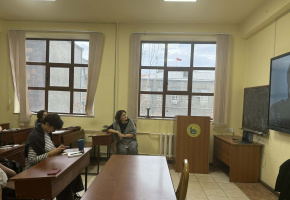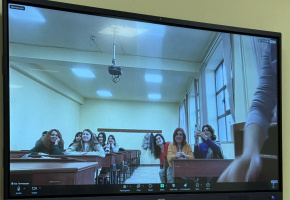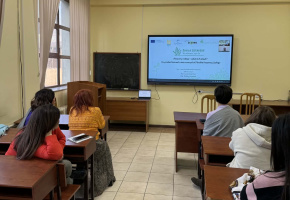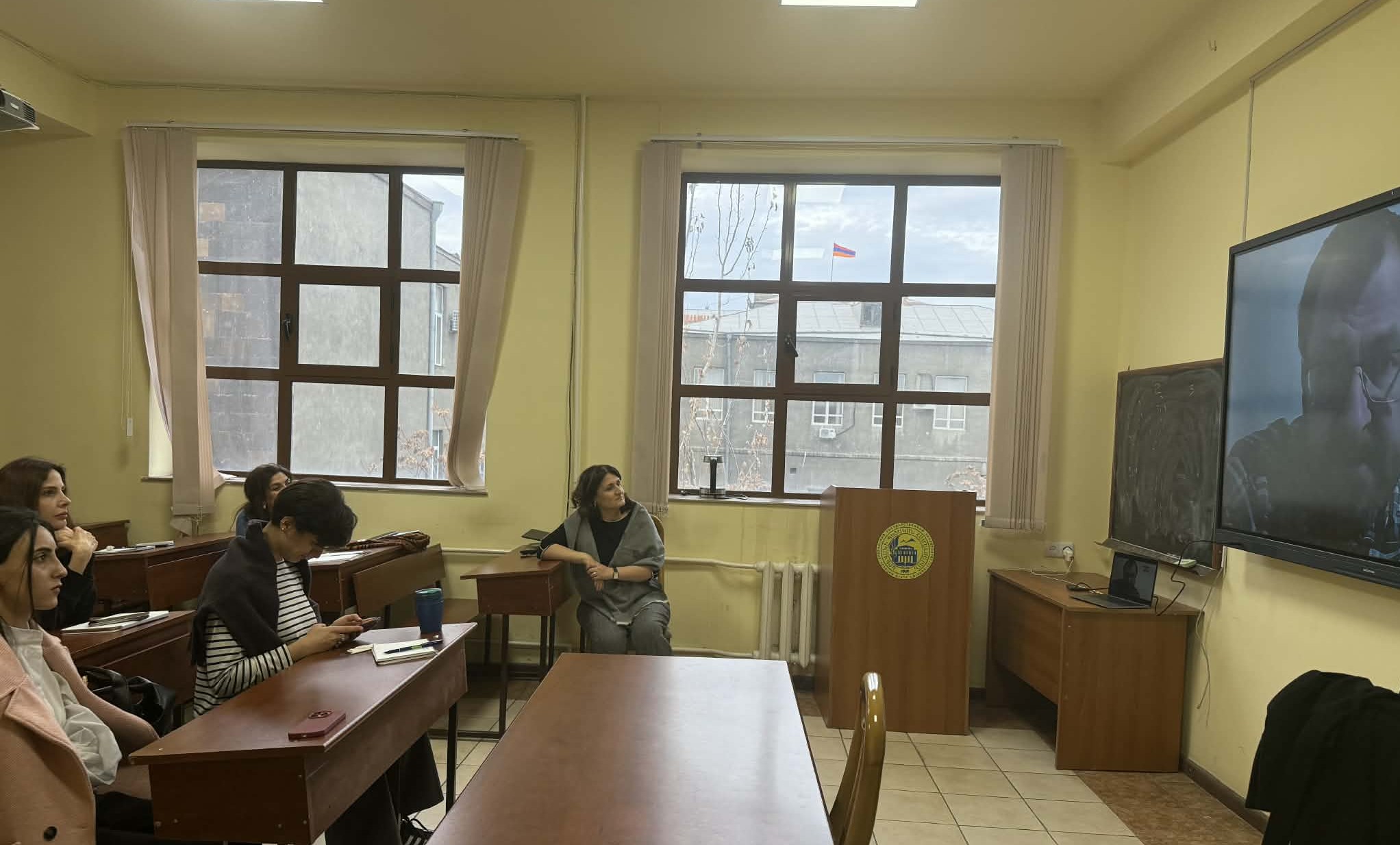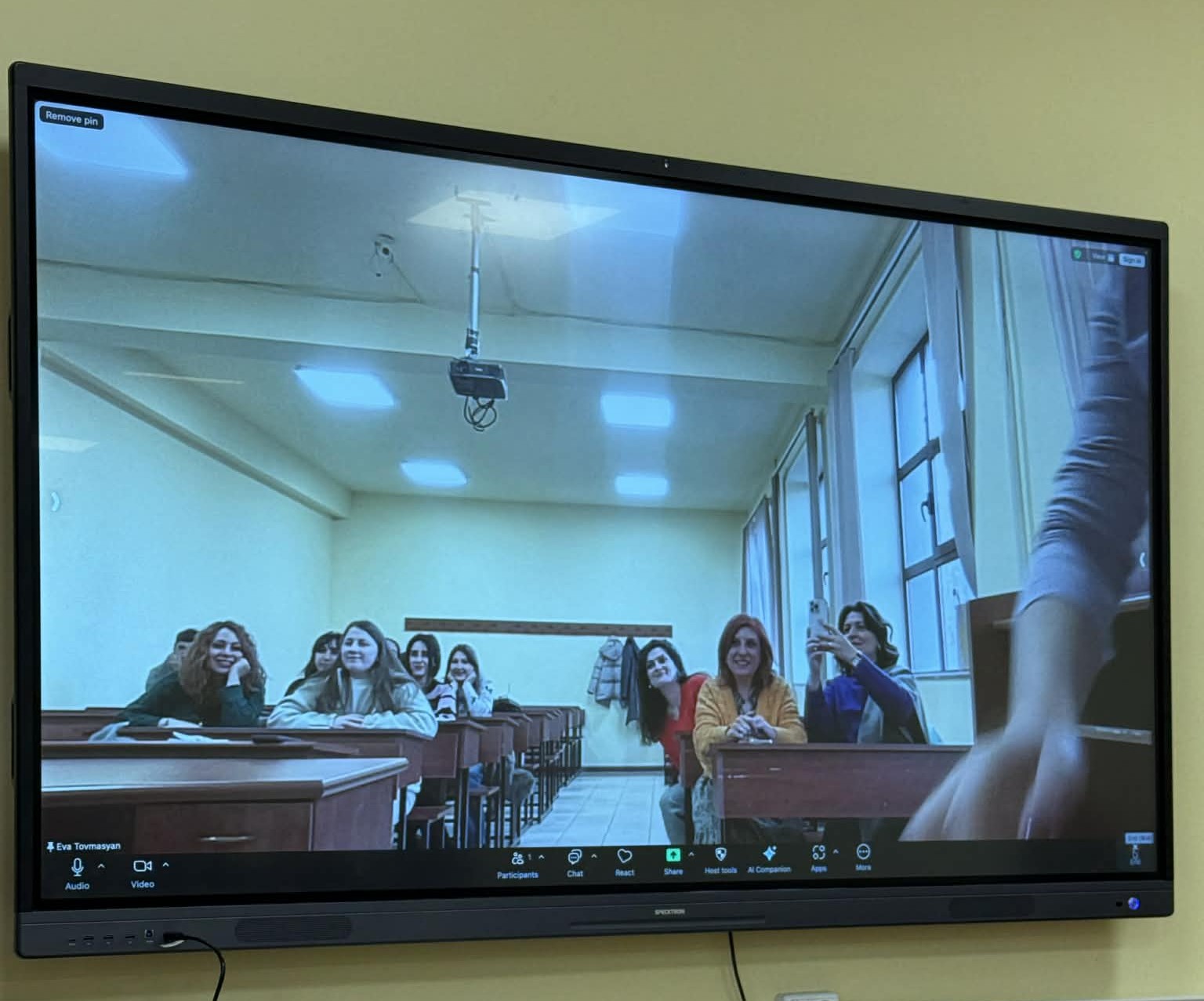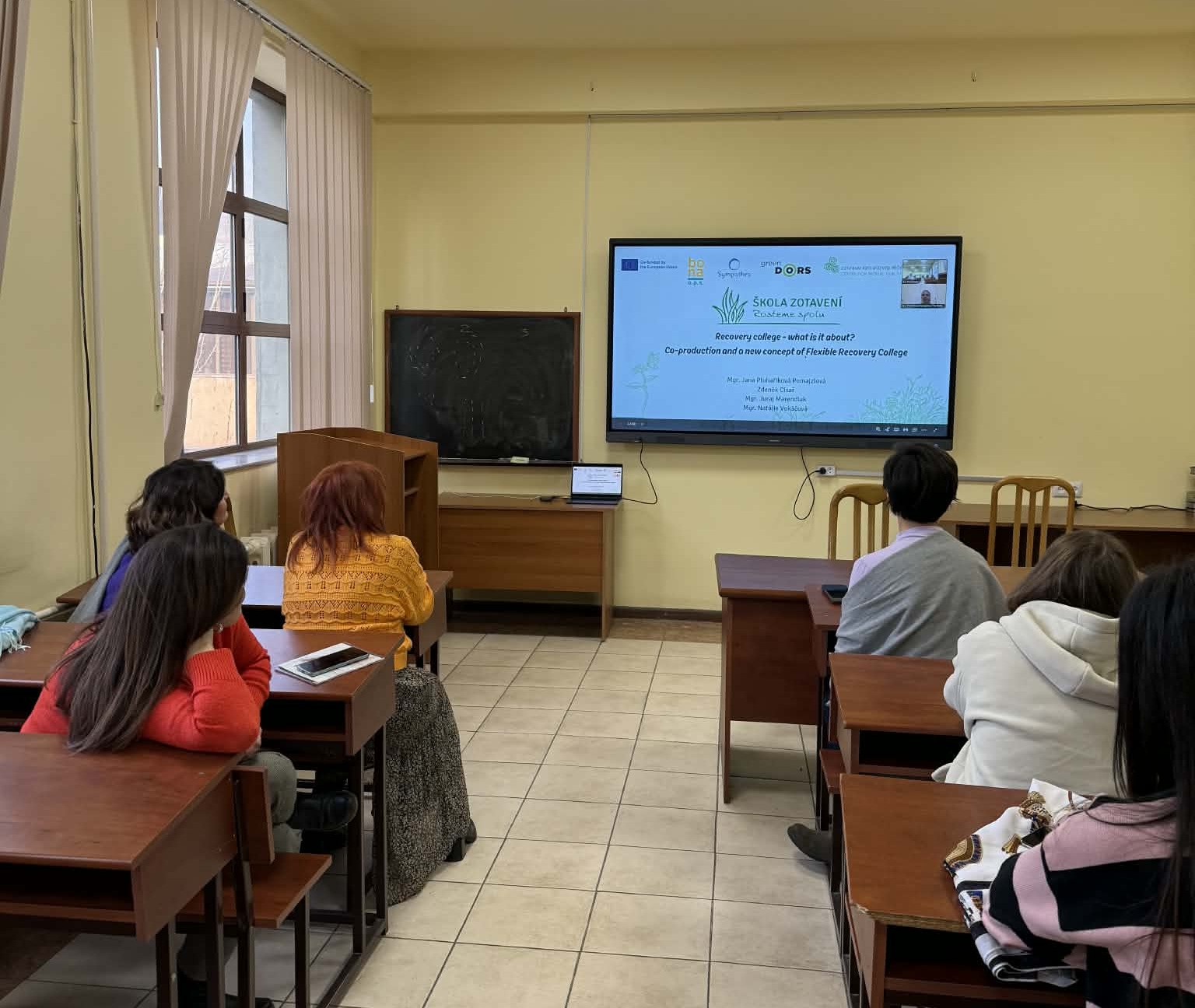
The course "Fundamentals of Psychosocial Rehabilitation in the Field of Mental Health", taught in the second year of the "Personal Psychology and Psychological Counseling" master's program, concluded with two online sessions featuring foreign experts from the Centre for Mental Health Care Development in Prague.
The centre's Director Pavel Říčan, and senior specialist Jana Pluhaříková Pomajzlová, shared their expertise in applying the CARe model.
The CARe model is a key contemporary approach in psychosocial rehabilitation and mental health care, integrating an individual's goals, strengths, and opportunities for a fulfilling life within the community.
During the first meeting, Pavel Říčan presented the successful experience of the Czech Republic in decentralization (deinstitutionalization), demonstrating how a long-term system of centralized care can be transformed into community-based living through appropriate support systems, effective coordination, and phased planning. The step-by-step integration process was outlined, along with the challenges encountered and the lessons learned, including the importance of a clear future vision to ensure sustainable and dignified living within the community.
Pavel Říčan also spoke about professional development opportunities in the field of psychosocial rehabilitation, highlighting the importance of continuous education, skills enhancement, and development pathways within the framework of the CARe approach.
During the second meeting, Jana Pluhaříková Pomajzlová focused on the necessity of a systemic approach in rehabilitation work, presenting the peer family worker method. In this approach, family members of individuals experiencing mental health challenges are trained to support other families by providing guidance, emotional support, and skills for navigating available services. This method strengthens partnerships between services and communities, while also enhancing families' crisis management and communication skills.
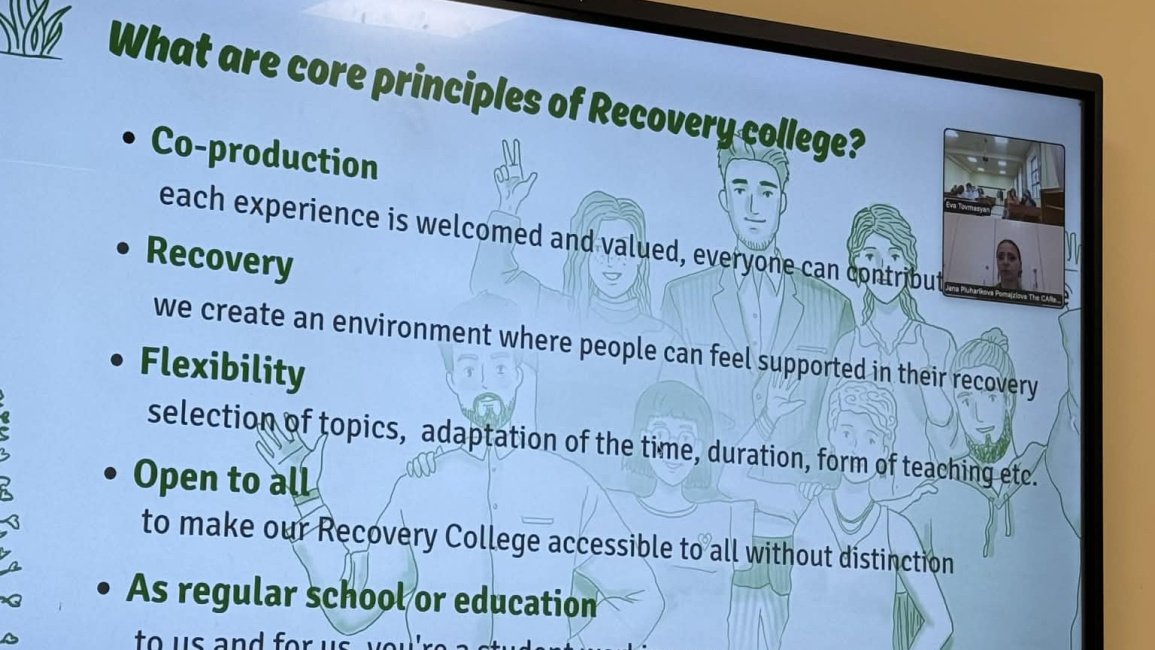
Jana Pluhaříková Pomajzlová also introduced the recovery college model, an educational approach in which courses are co-created and often co-delivered by both individuals with relevant life experience and professionals. Participants facing psychosocial challenges are regarded as "students", enabling the development of practical skills necessary for recovery and overall well-being.
Such meetings are an important component of the learning process, allowing for the application of international experience (new perspectives, tested models) and providing opportunities for professional dialogue.
The representatives of Armenia in The CARe Network for Recovery & Inclusion include Associate Professor Narine Khachatryan, Head of the Chair of Personality Psychology at the Faculty of Philosophy and Psychology, and Associate Professor Lilit Baghdasaryan from the same chair.