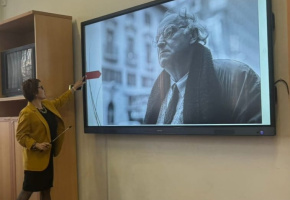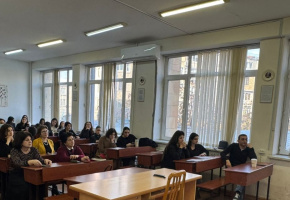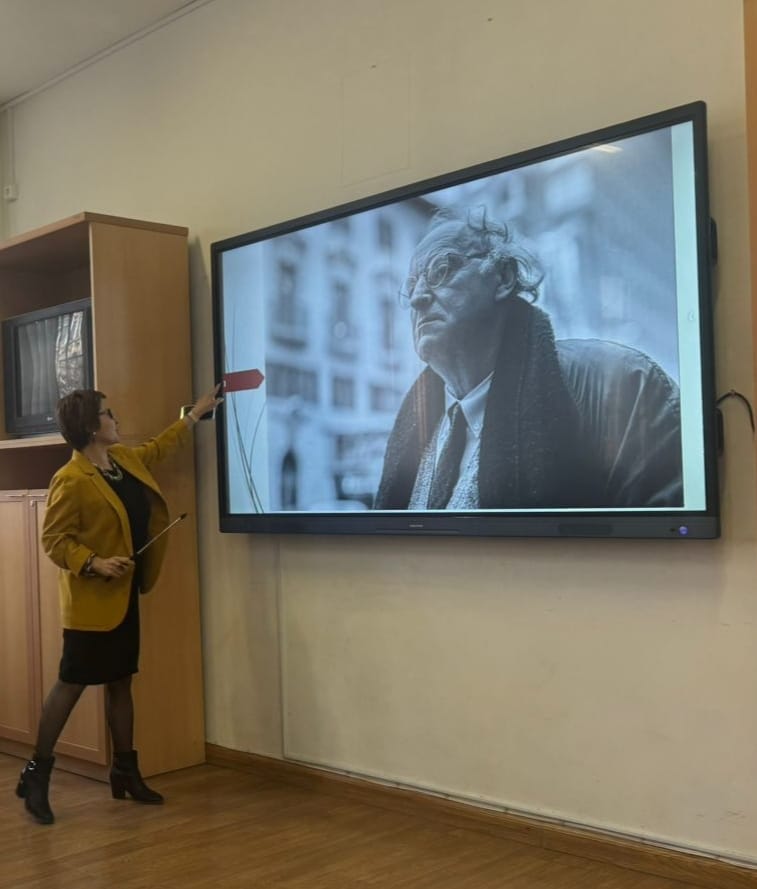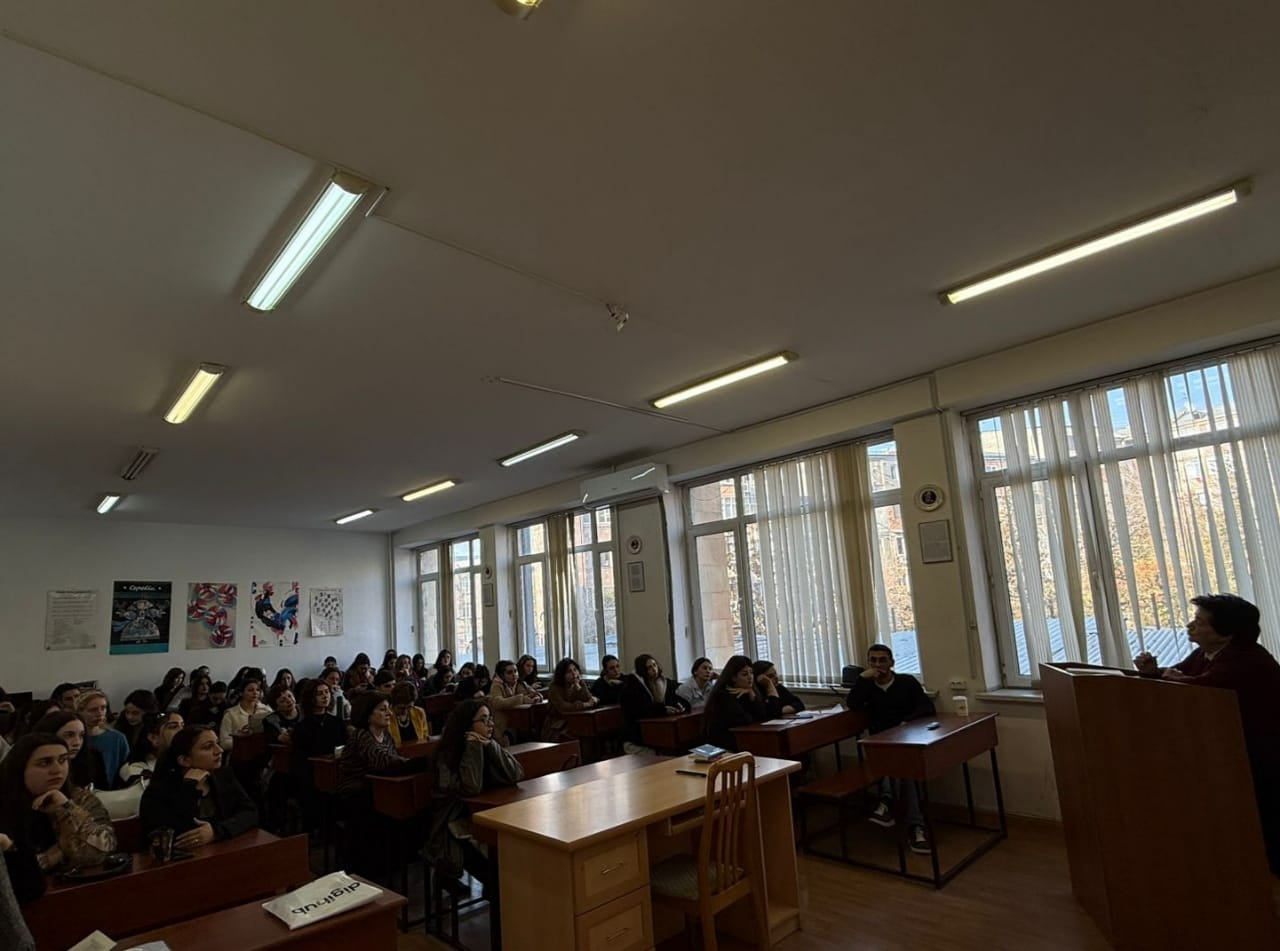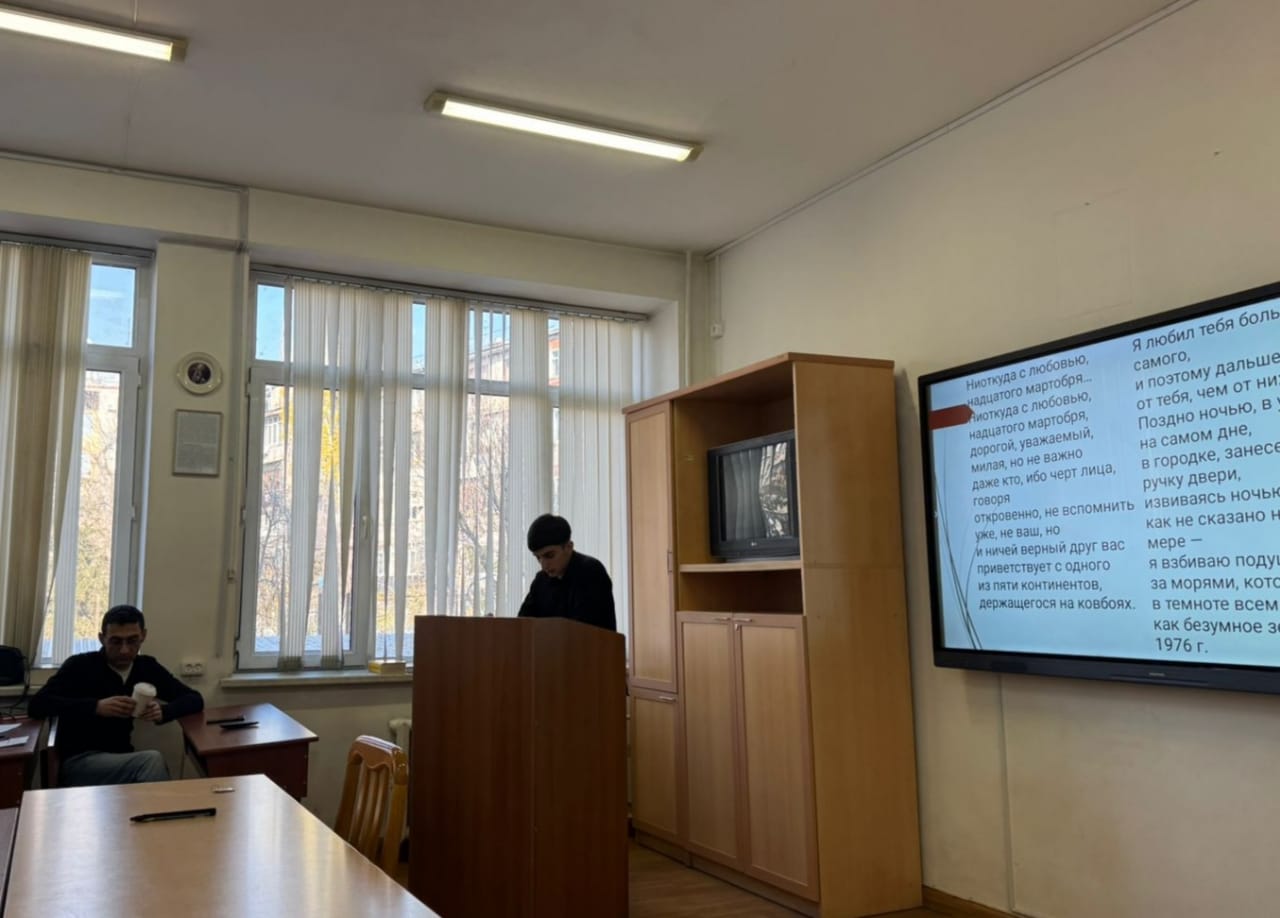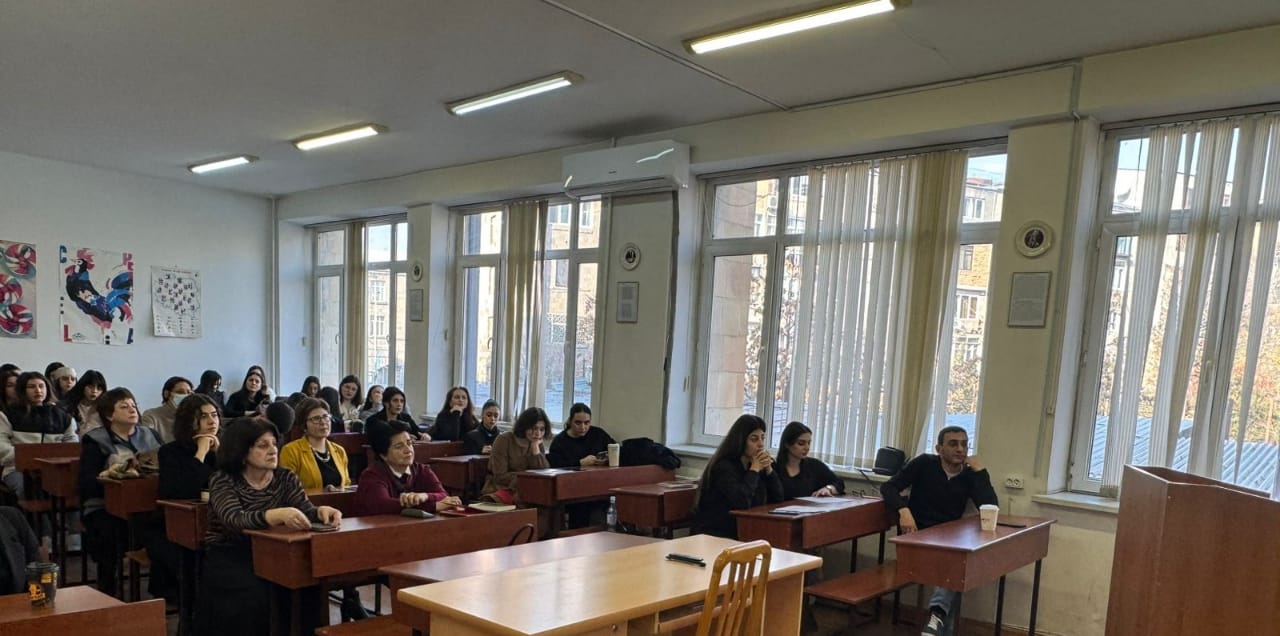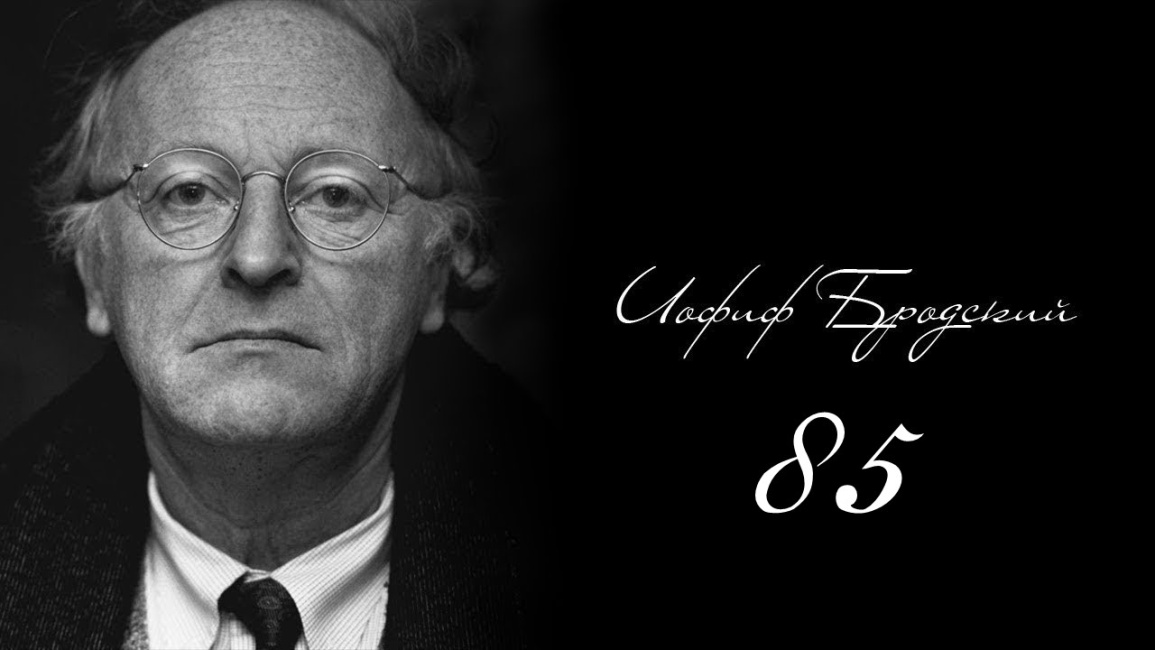
A roundtable discussion was held at the Faculty of Russian Philology of Yerevan State University, dedicated to the 85th anniversary of the birth of Joseph Brodsky, Nobel laureate and one of the most influential Russian poets of the 20th century.
"The man is what he reads". This statement by Brodsky most clearly reflects his attitude toward culture, reading, and personal development. The roundtable discussion brought together faculty members, graduates, and students, who re-evaluated the distinctive features of Brodsky's poetry and its broad cultural connections.
Organized on the initiative of the Chair of Russian Literature, particularly Associate Professor Vera Adamyan and Assistant Edgar Arshakyan, the event featured presentations offering a multifaceted analysis of Brodsky's work. Speakers discussed key stages in his biography and literary path, examined the phenomenon of syntactic transmission in his poetry, explored references to Pushkin's works embedded in Brodsky's texts, and studied the figure of Dostoevsky's "underground man", as reflected in the poet's early poems.
In her presentation, Associate Professor Ruzanna Ter-Grigoryan from the Chair of Russian Literature, spoke about Brodsky's cultural connections with Armenia and the Armenian translations of his works, emphasizing that his visits to the country left a profound imprint on his essays and worldview.
Faculty graduate Anna Petrosyan presented an analysis of Brodsky's essays, highlighting their philosophical expressiveness and relevance to contemporary humanities studies.
The discussion included bachelor's and master's students, who asked questions, actively participated in the discussions, and shared their impressions from the works they had read. The roundtable proved that Brodsky's literary legacy continues to attract significant interest among the youth and contributes to the development of analytical and critical thinking.
The roundtable discussion served as an important platform for exploring Brodsky's literary heritage, confirming that his works remain relevant, inspiring, and meaningful to this day.