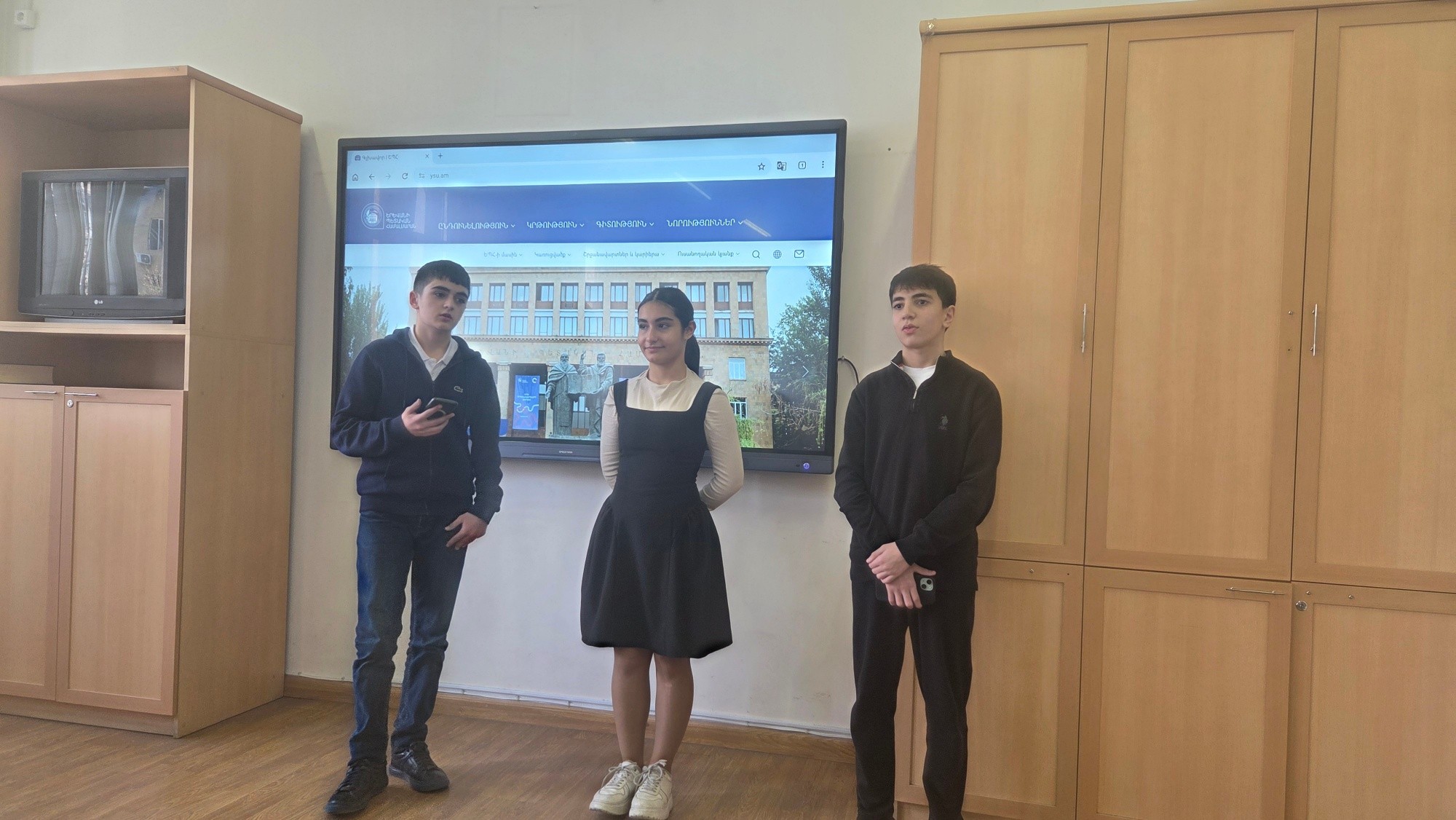
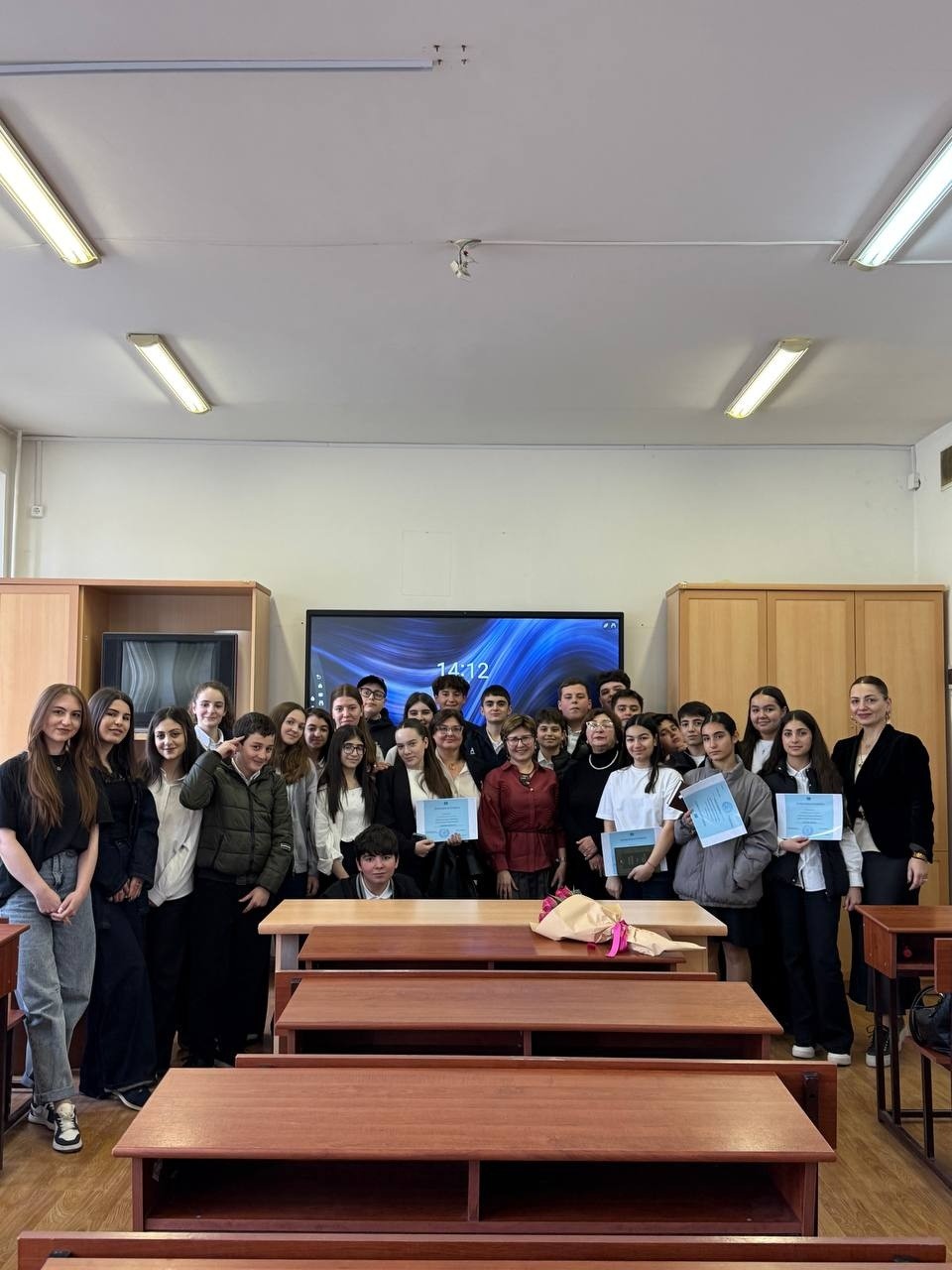
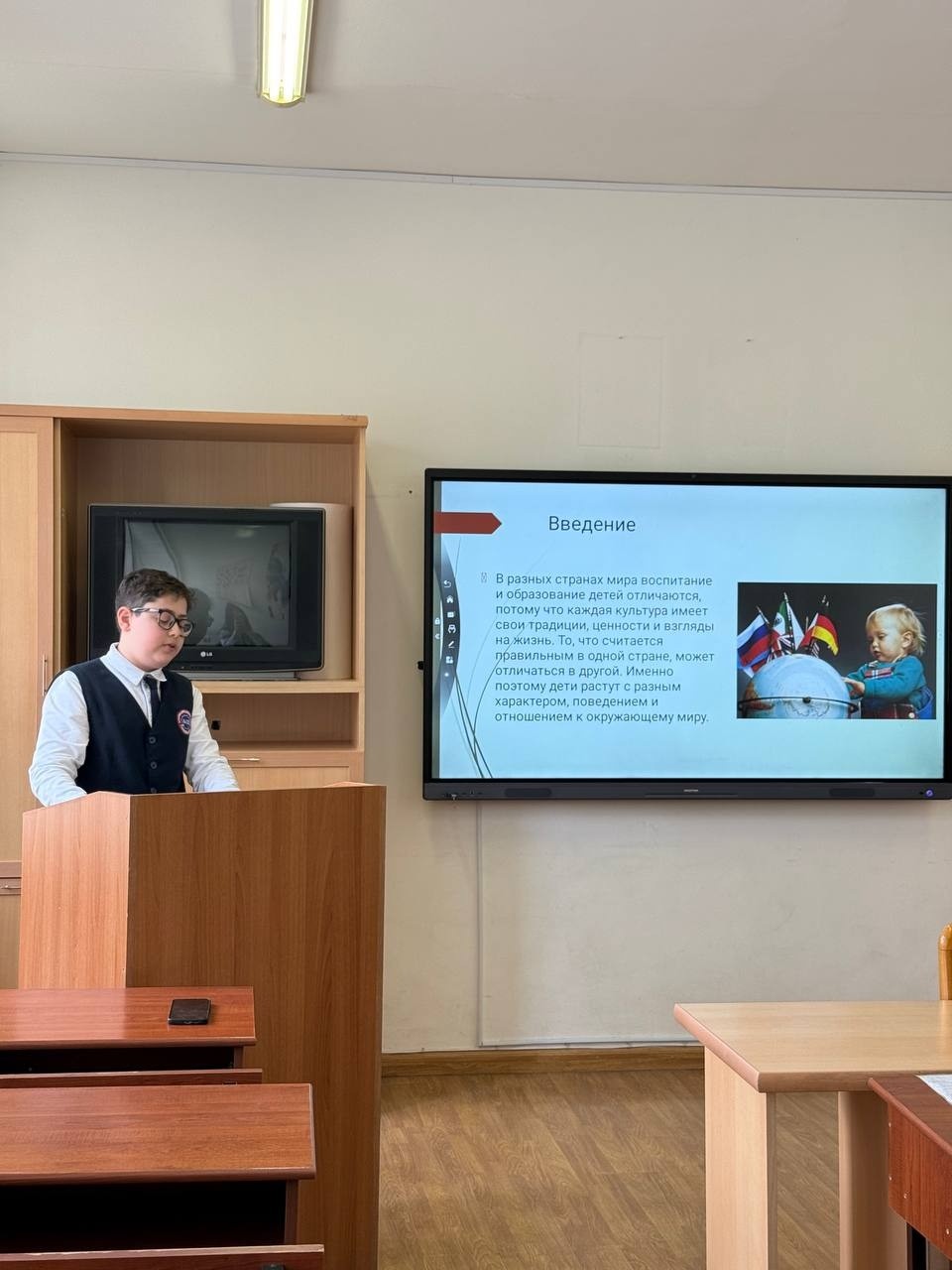
Students of Class VIII-A from Yerevan Nairi Zaryan Basic School No. 130 visited the Faculty of Russian Philology, accompanied by their homeroom teacher H. Karapetyan and Russian language teacher I. Gazarova.
The visit took place within the framework of the interactive project "Language and Culture: Features of Intercultural Communication." The students delivered presentations on topics such as "Men and Women in Different Linguacultures," "Upbringing and Education in Different Cultures," and "Fear in Different Linguacultures," addressing contemporary issues in intercultural communication. In preparing their work, the students drew on the book "Conversations on Intercultural Communication" by Professor Lilit Brutyan, Doctor of Philological Sciences at the Faculty of Russian Philology.
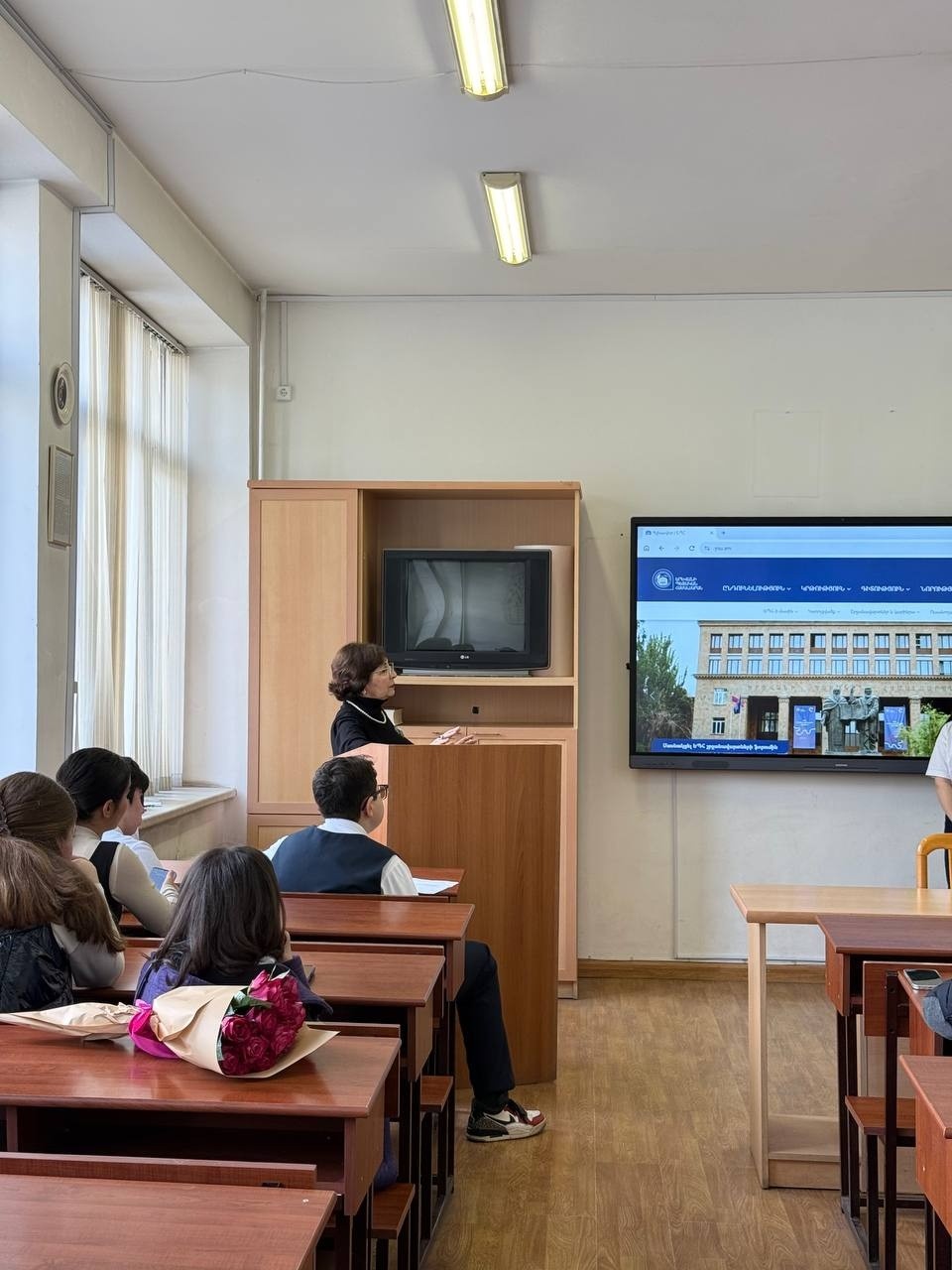
The presentations were followed by an engaging and meaningful discussion with the author, L. Brutyan. The professor answered numerous questions from the students, shared insightful real-life examples, and demonstrated how cultural differences can influence communication and sometimes lead to misunderstandings.
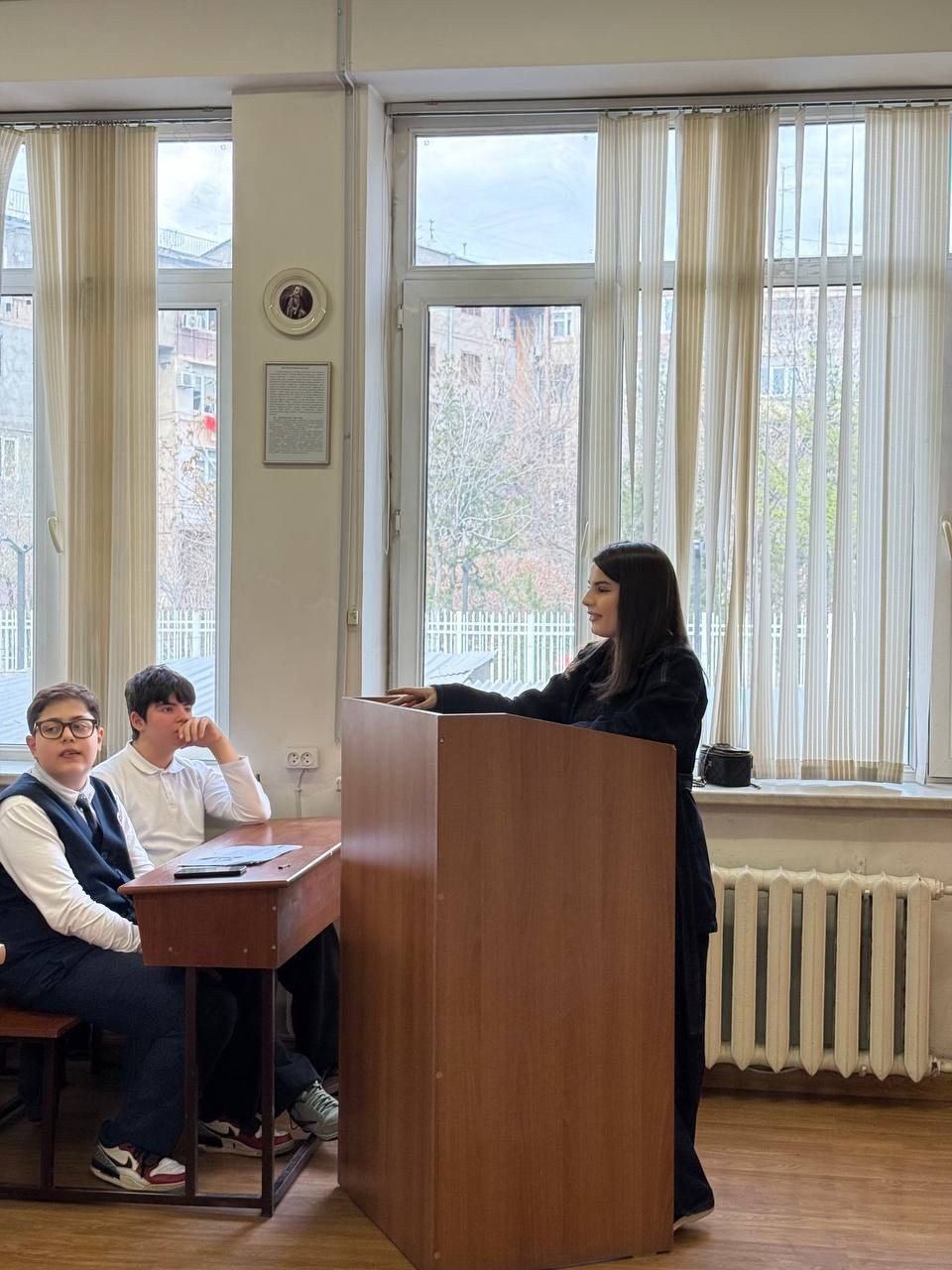
The event also featured active participation from Mane Mkrtchyan, a fourth-year student in the "Intercultural Communication and Translation (Russian)" program at the Faculty of Russian Philology. She presented excerpts from her graduation paper, which examines representations of men and women in Russian and Armenian proverbs. The students took part in the discussion with great interest, comparing Armenian and Russian family traditions and offering thoughtful linguistic observations.
The students of Yerevan Nairi Zaryan Basic School No. 130 stood out for their high level of preparation. Thanks to the professionalism of their teachers, they were able to engage deeply with complex linguistic topics.
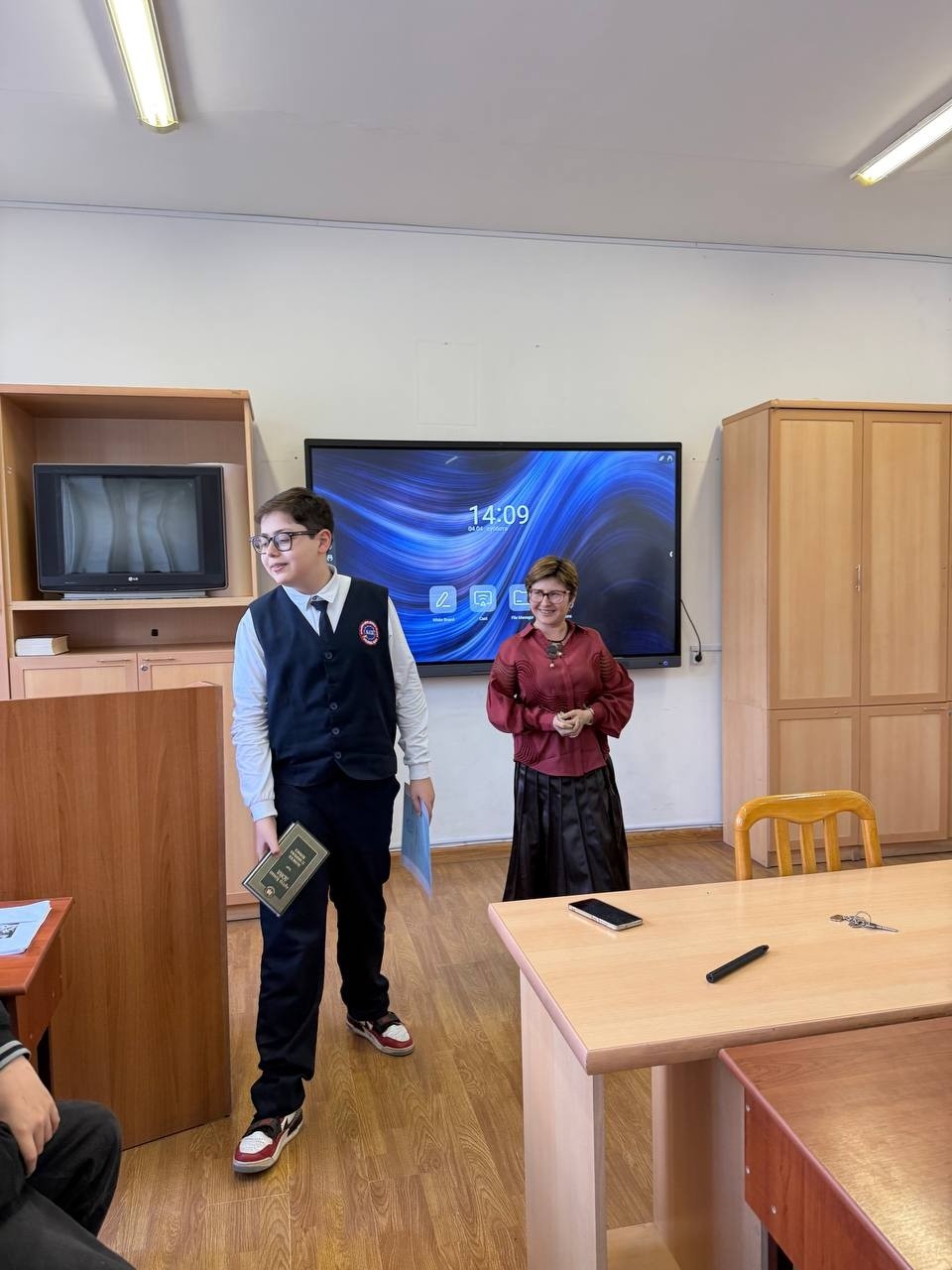
At the conclusion of the meeting, Dean of the Faculty Diana Gazarova emphasized the students' genuine interest in linguistics, communication, and intercultural dialogue. Certificates of appreciation and books were presented to the participants.
Such meetings have already become a tradition at the faculty and constitute an important component of students' academic engagement and career orientation. The Faculty of Russian Philology remains open to young researchers and is ready to organize events in various formats, including open classes, lectures, roundtable discussions, and meetings.