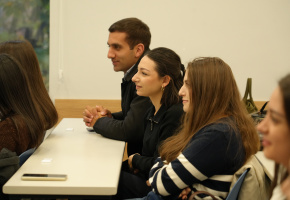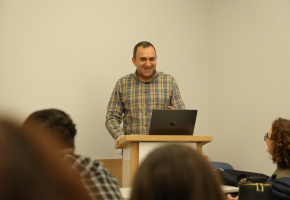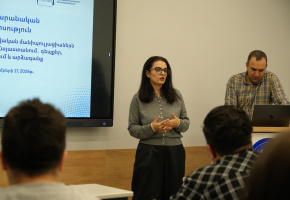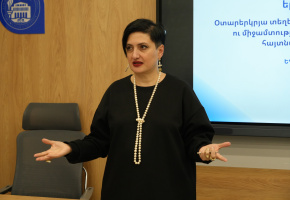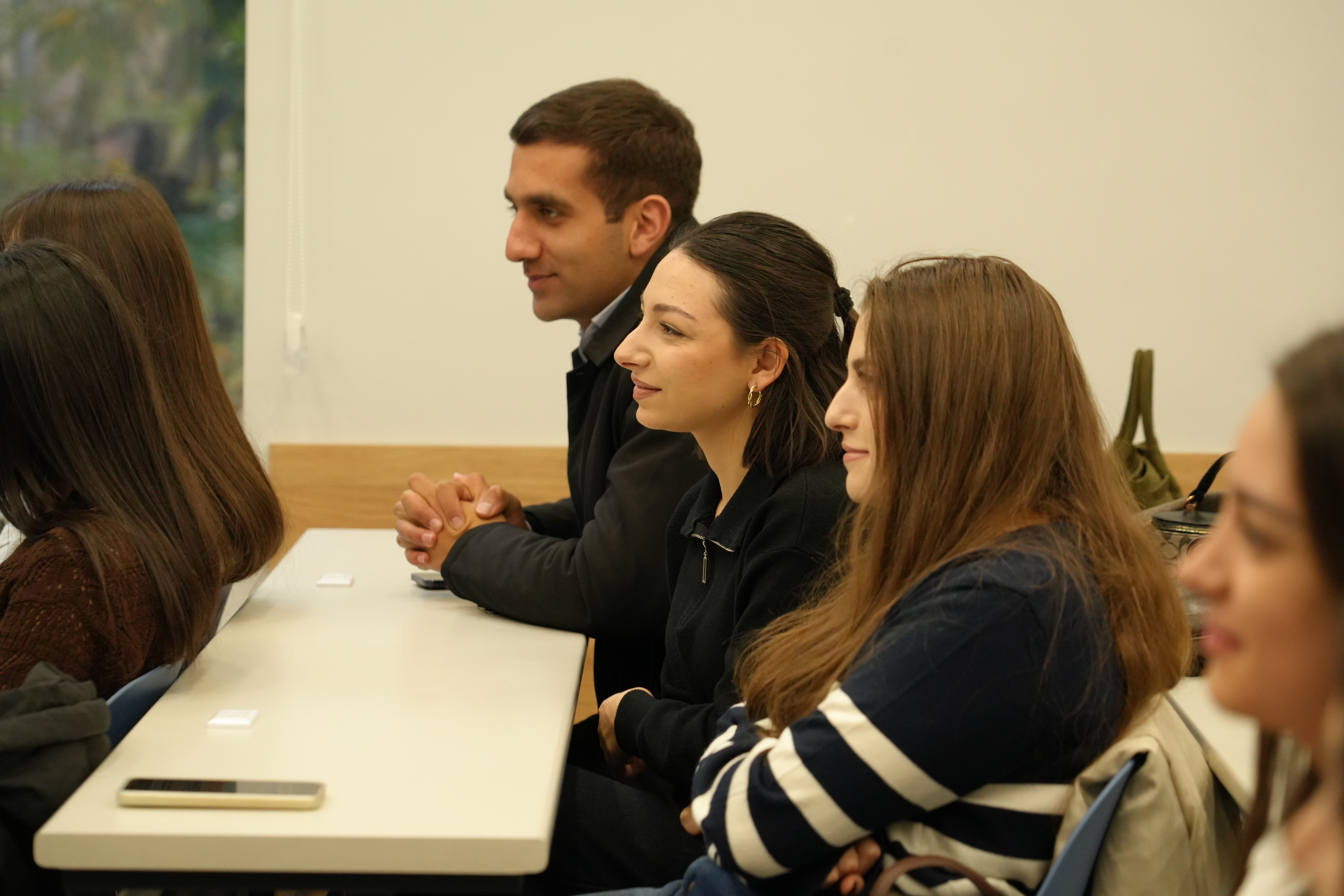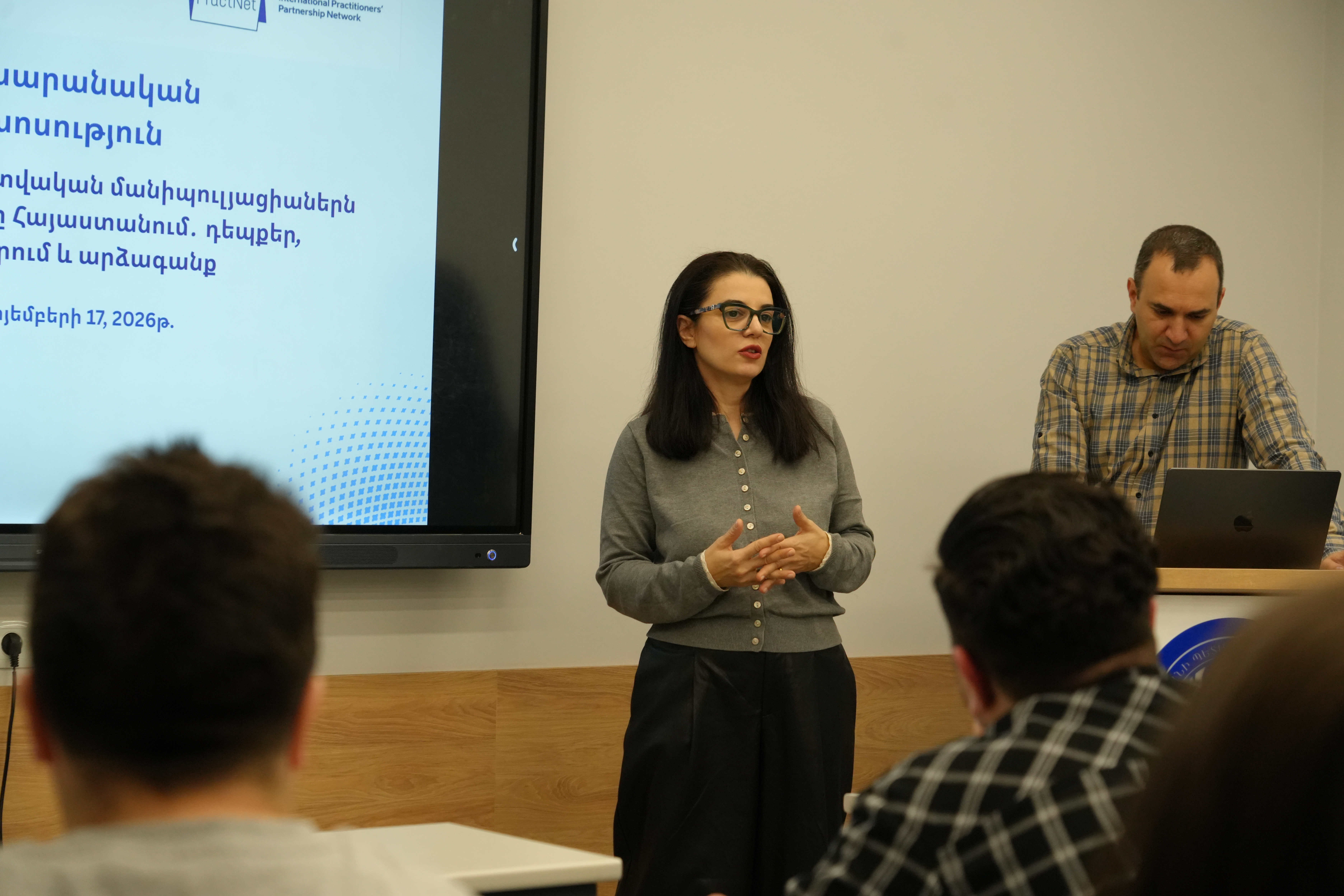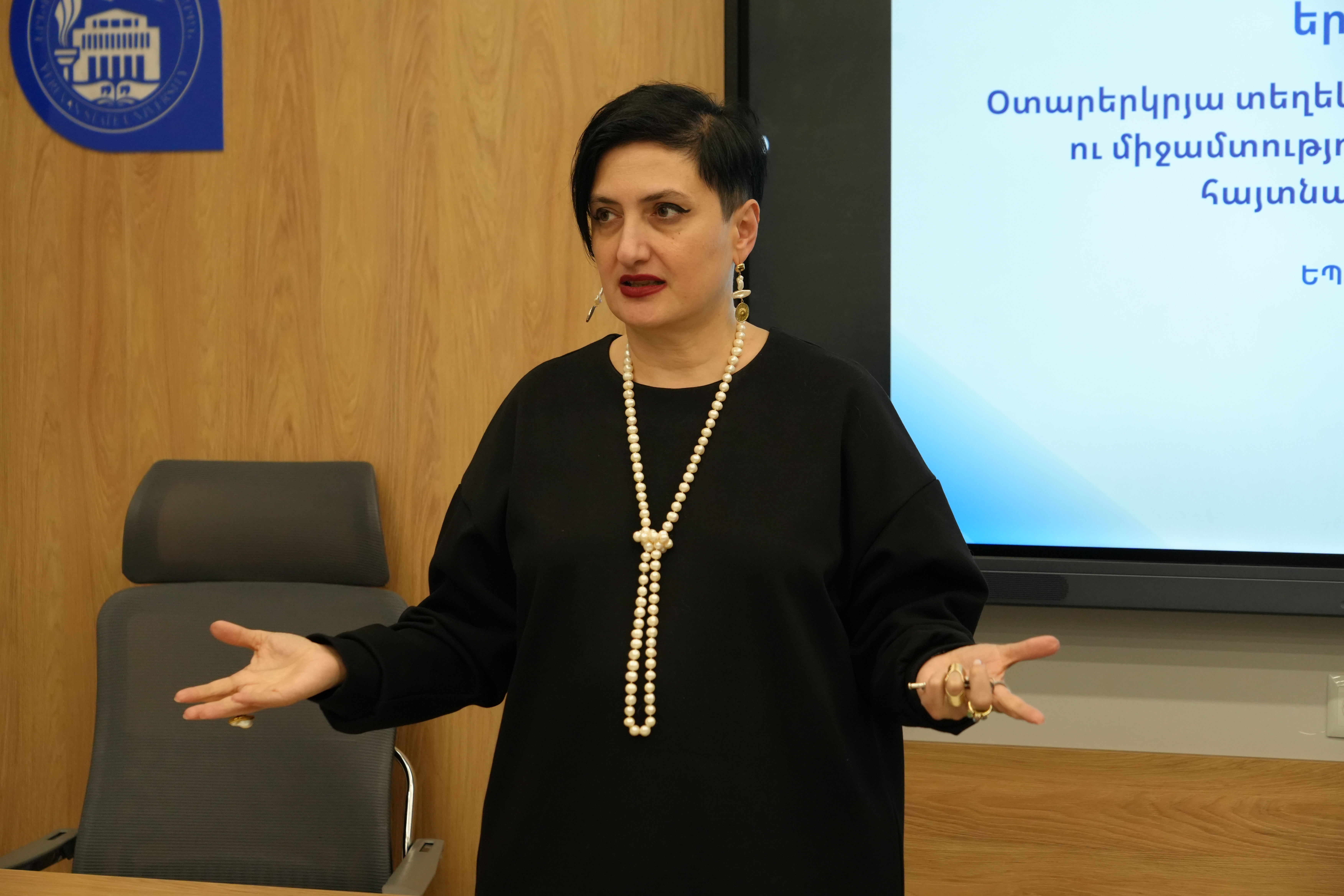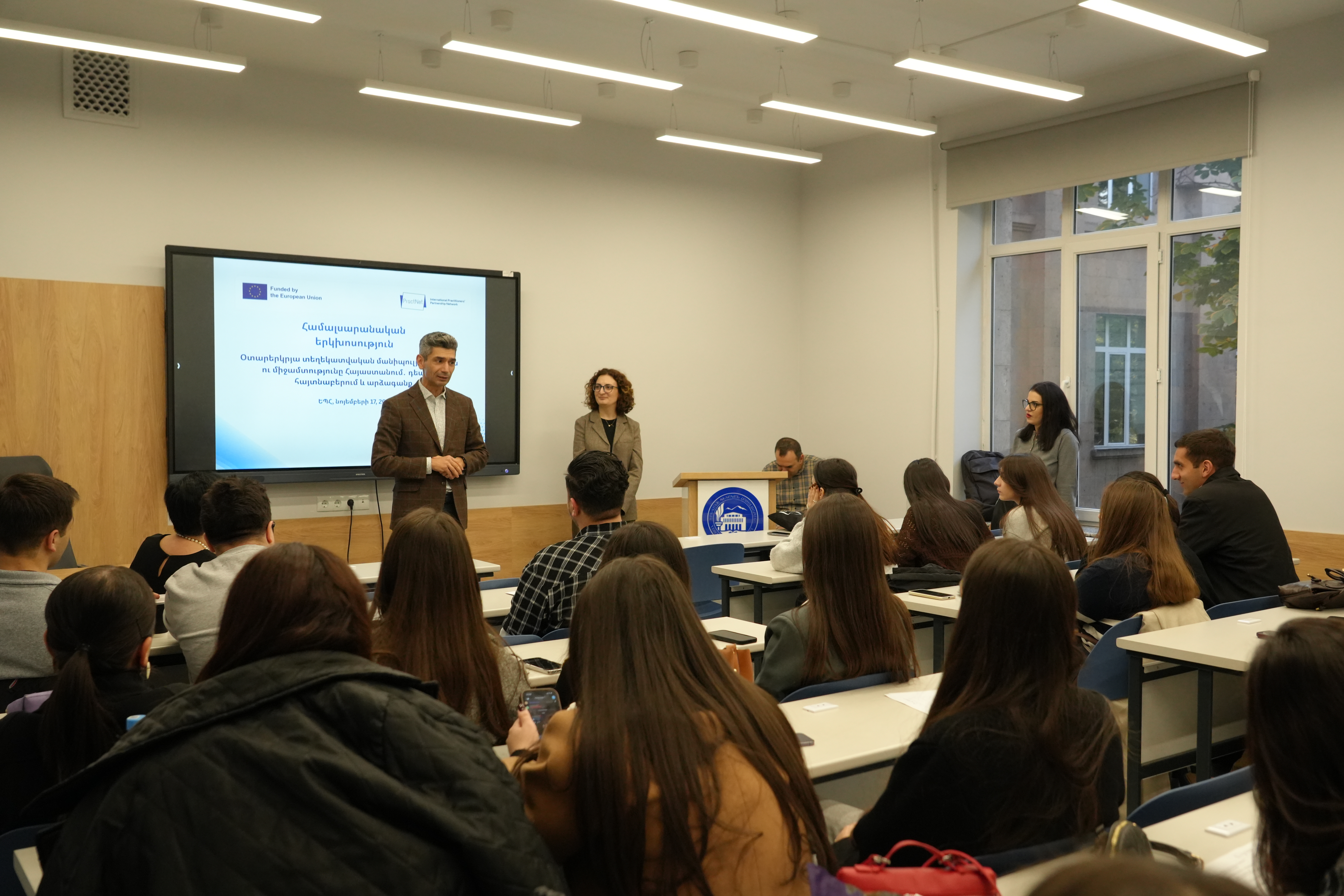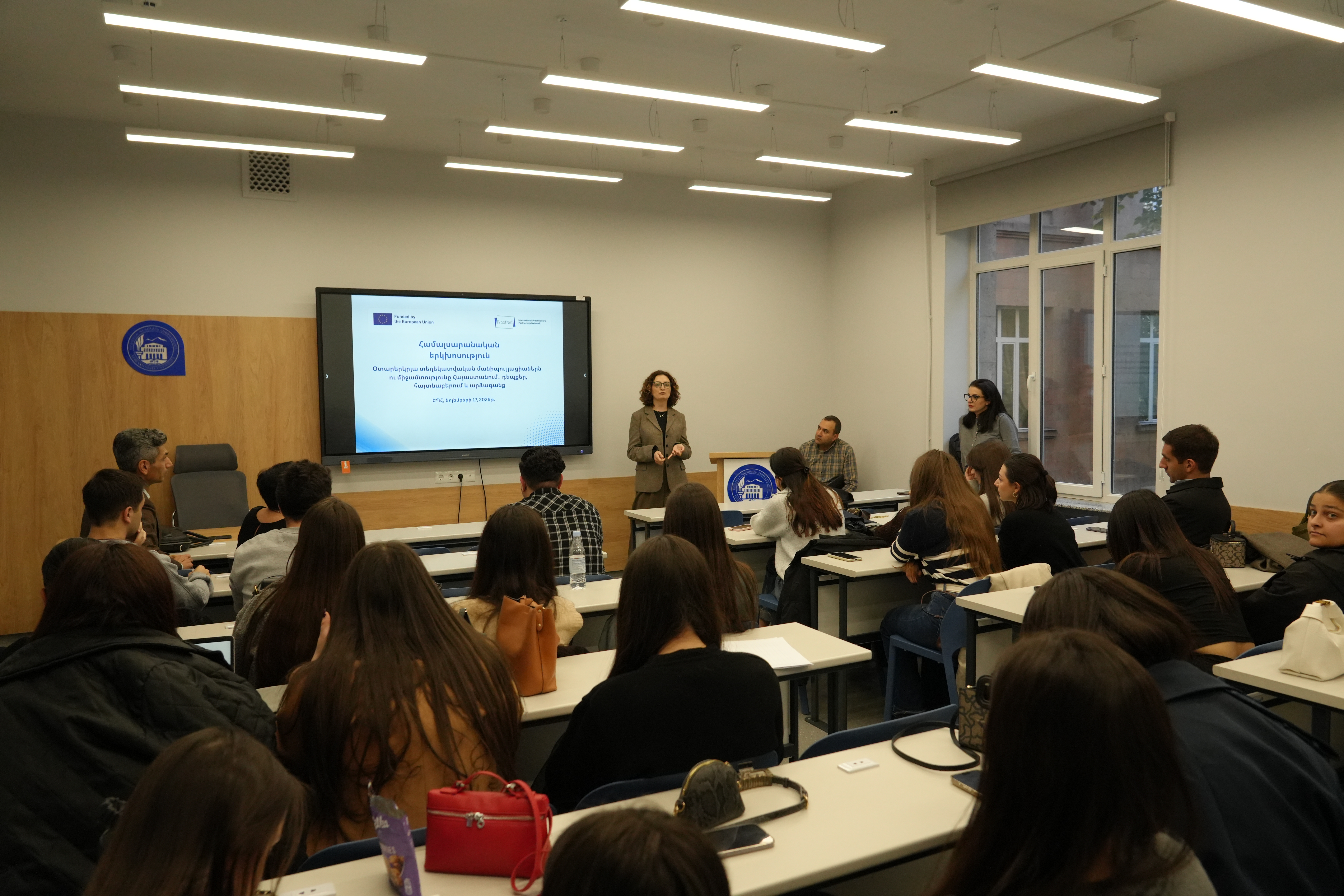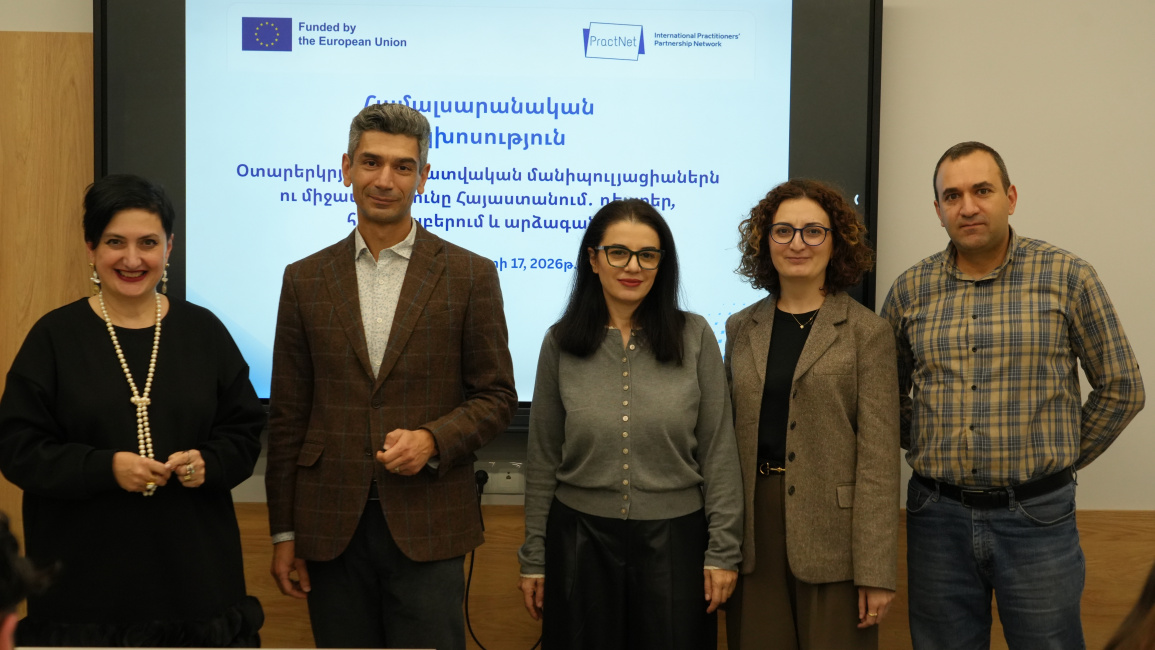
On November 17, the YSU Faculty of Sociology hosted a discussion titled "Foreign Information Manipulation and Interference in Armenia: Cases, Detection and Response" as part of its "University Dialogue" series. The event brought together students enrolled in the faculty's bachelor's and master's programs "Public Relations" and the master's program "Strategic Communication."
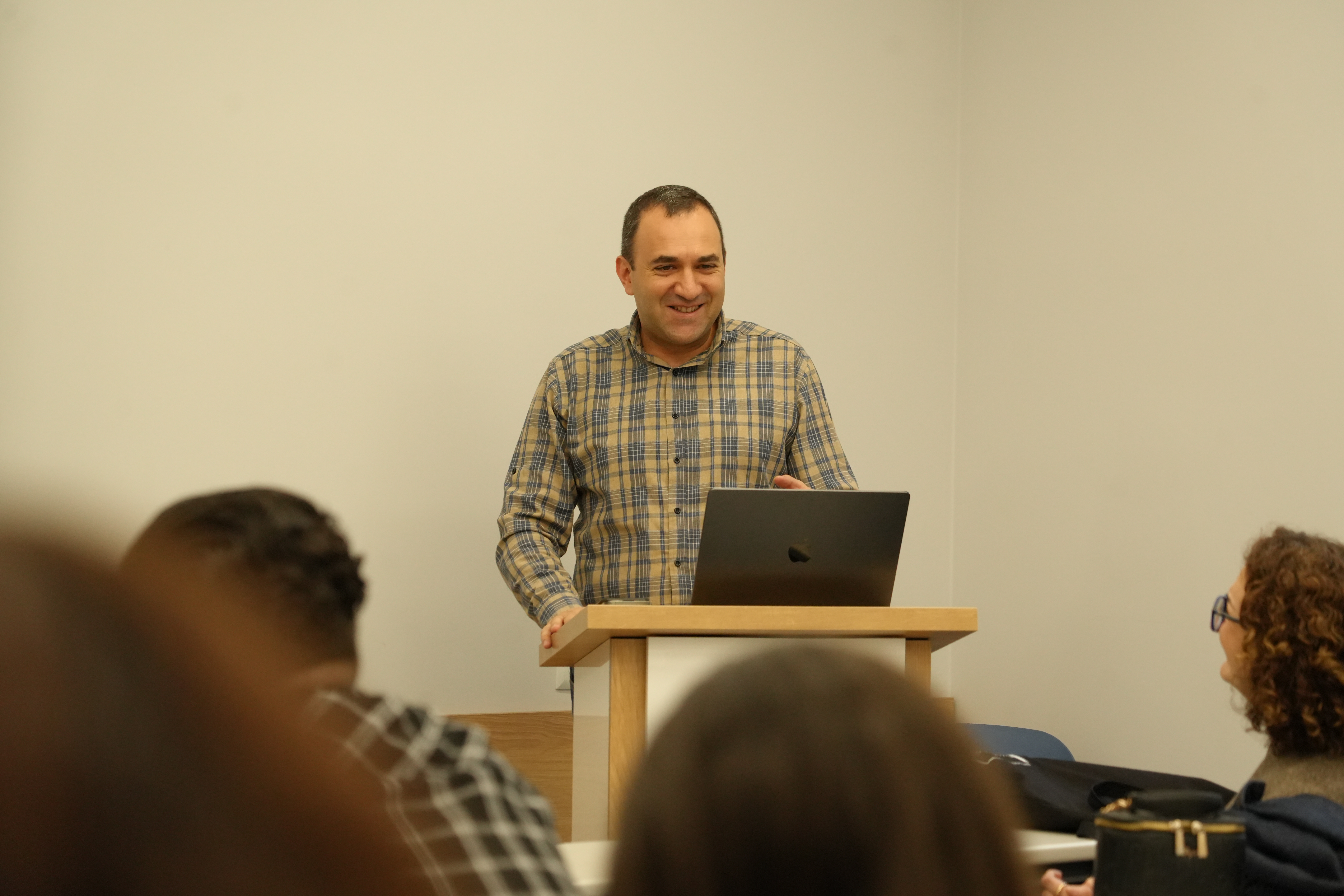
The discussion was organized as part of the EU-funded project "Strengthening Democratic Resilience: Strategic Communication and Countering Foreign Information Manipulation and Interference," implemented by the Estonian nonprofit organization International Practitioners' Partnership Network (PractNet) in cooperation with the Public Journalism Club (PJC). The guest speaker was Artur Papyan, co-founder of CyberHUB-AM.
The discussion covered documented cases of foreign information manipulation in Armenia and monitoring findings, with particular attention to incidents recorded before and after the 2026 elections. By analyzing specific examples, participants explored the main themes and targets of information influence operations, the platforms used and the methods of dissemination.
Papyan drew a clear distinction between foreign information manipulation and interference (FIMI), disinformation, misinformation shared unintentionally and the legitimate expression of opinions. Building on these distinctions, the discussion addressed the practical challenges of detecting suspicious information activity, gathering evidence, tracing sources and identifying those responsible. Papyan also presented approaches to verifying information and responding to manipulation at both the individual and institutional levels.
The relevance and practical significance of the topic generated considerable interest among students, leading to an open and lively exchange. Students actively contributed to the discussion, asked questions and shared their observations. The Q&A session allowed them to examine in greater depth the practical challenges of recognizing and responding to information manipulation.
The event gave future public relations and strategic communication professionals a valuable opportunity to connect the theoretical knowledge gained in the classroom with practical experience in the field. Discussions like this help students develop the professional skills needed to critically assess the information environment, verify the credibility of sources and communicate responsibly.