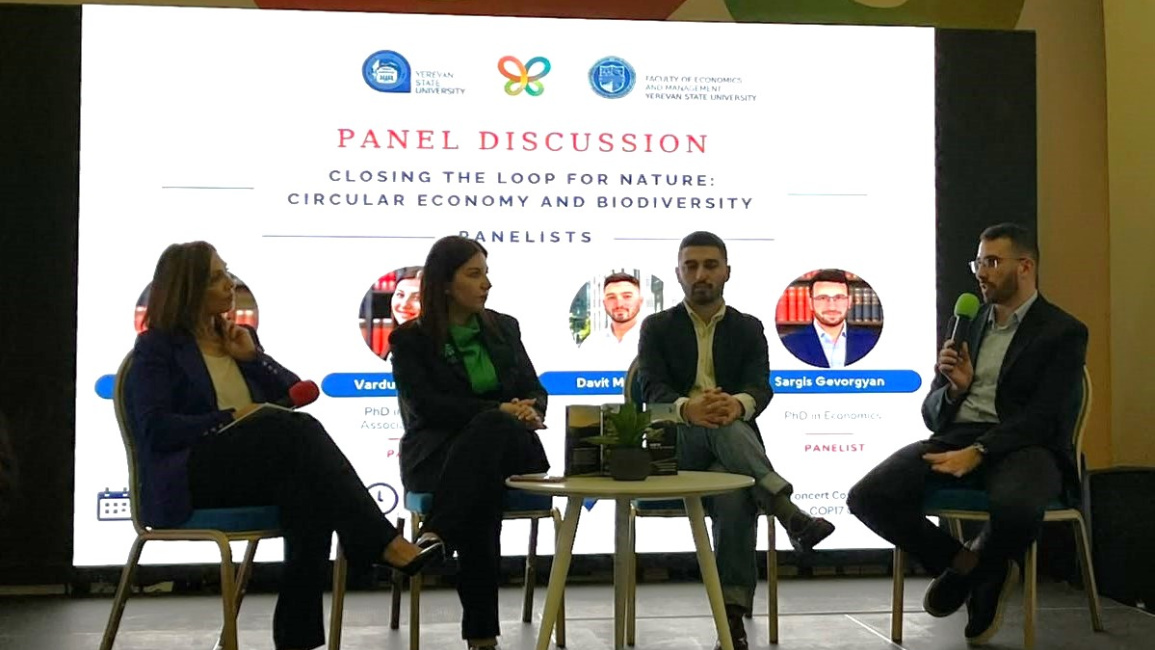
As part of COP17, the YSU Faculty of Economics and Management initiated a panel discussion, "Closing the Loop for Nature: Circular Economy and Biodiversity." The discussion focused on the interconnectedness of the circular economy and biodiversity conservation, opportunities for efficient resource use, and the socioeconomic impacts of the green transition.
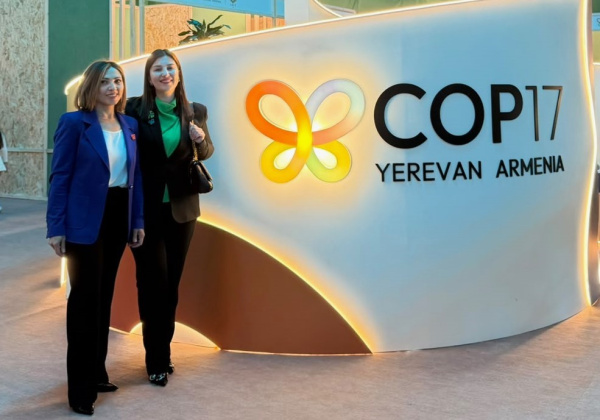
The discussion was moderated by Nonna Khachatryan, Associate Professor and Candidate of Economic Sciences at the YSU Faculty of Economics and Management. The speakers were Vardush Gyozalyan, Associate Professor and Candidate of Economic Sciences at the faculty, and Candidates of Economic Sciences Sargis Gevorgyan and Davit Markosyan.
The speakers addressed issues related to circular economy development and biodiversity conservation. They discussed alternative approaches to production, consumption, and resource management that can reduce the negative environmental impact of economic activity without hindering economic development, while contributing to improved social well-being and food security.
Discussions explored how food loss and waste affect biodiversity and why reducing them matters not only for waste management but also for conserving natural resources and protecting ecosystems. The speakers also addressed Armenia's systemic challenges in food and solid waste management and opportunities to apply circular economy approaches.
The discussion also addressed the social impacts of the green transition. The speakers examined how circular economy development can improve public well-being, create new jobs, and reduce social inequalities. They also discussed ways to balance food security, increased agricultural productivity, and biodiversity conservation.
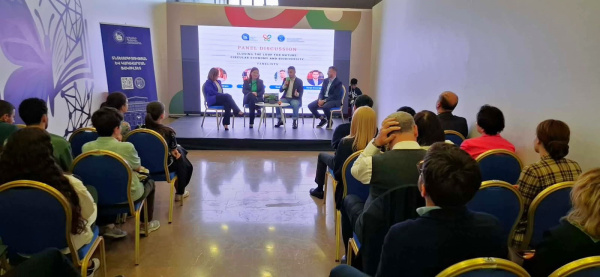
The speakers also emphasized the importance of using natural resources efficiently and ensuring fair distribution of their benefits, highlighting the need to make environmental solutions accessible to different social groups and communities. The discussion also covered opportunities for developing sustainable business models in Armenia, including initiatives to reduce waste, reuse materials, and conserve resources. These approaches can generate economic value while contributing to biodiversity conservation. In this context, the speakers highlighted the importance of cooperation between science and business, as well as the role of universities and research institutions in developing evidence-based and practical solutions.
The importance of education and developing green skills was also emphasized. The discussion addressed ways to expand access to new knowledge, skills development, and training opportunities, particularly for young people, vulnerable groups, and regional communities.
The speakers' observations once again underscored that the circular economy extends beyond waste reduction and recycling. It requires a systemic approach to economic activity and resource management that brings together environmental objectives, social equity, sustainable business development, and education.