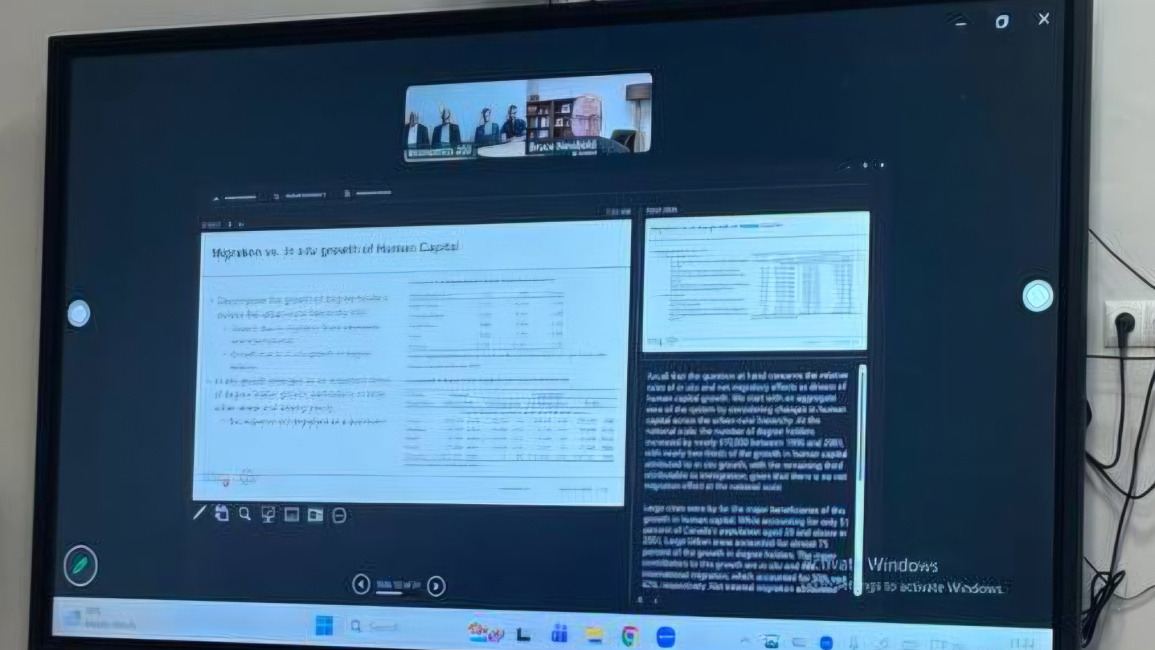
An online lecture titled "The Role of Universities in Human Capital Development" was held at the YSU Faculty of Economics and Management, featuring Professor Bruce Newbold of McMaster University (Canada) as the speaker.
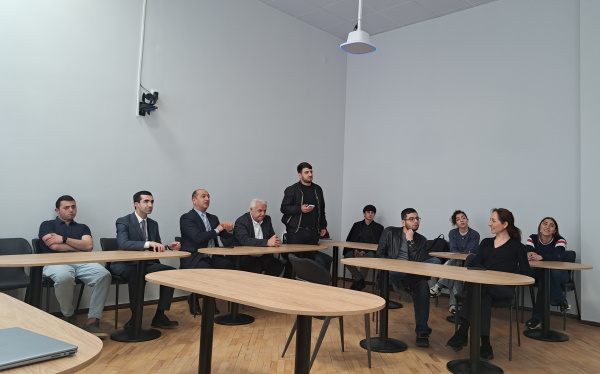
At the beginning of the lecture, Dean of the YSU Faculty of Economics and Management, Associate Professor Karlen Khachatryan, welcomed the participants and expressed gratitude to the speaker for his willingness to cooperate. He also underscored the importance of the initiative for students' professional development. According to him, such meetings provide students with an opportunity to engage directly with representatives of the international academic community and become familiar with the experience of different countries.
The lecture focused on the key role of universities in human capital development, the interconnection between education and professional competencies, and the impact of migration on the advancement of a country's human potential. One of the central topics of discussion was also the prospects for human capital development in Armenia, particularly in the context of the relationship between current labor market demands and the education system.

Bruce Newbold presented Canada's experience, emphasizing that universities are not only institutions for the transfer of knowledge but also important centers for training competitive professionals. In his view, the educational environment, research activity, and skills aligned with labor market needs together ensure the high quality of human capital. The discussion also highlighted urbanization as an important factor influencing education, employment, and quality of life.
The lecture also addressed the interconnection between professional competence and living standards. It was noted that highly qualified specialists typically enjoy not only higher incomes but also broader career opportunities. In this context, the role of human capital development in reducing brain drain was also emphasized, as favorable conditions increase the likelihood that professionals will realize their potential within their own country, thereby contributing to its economic development.
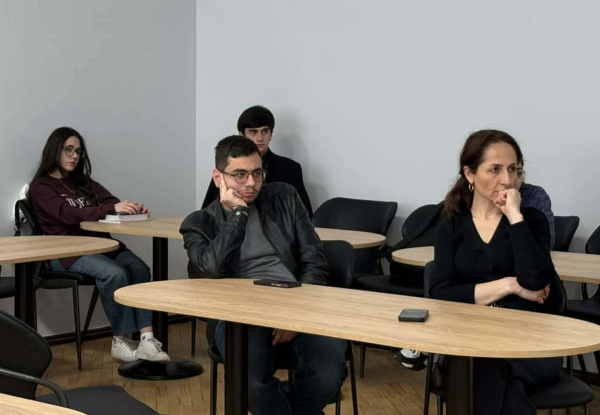
Among those in attendance were students from different academic years and faculty members. The large number of questions raised at the end of the lecture reflected students’ strong interest in the topic and their active engagement in the discussion.
During the meeting, students and faculty members shared their observations, comparing the experiences of Canada and Armenia. Among the students' questions, a notable one was raised by a second-year student of the "Economics" program, Feliks Khangeldyan: "To what extent is it appropriate to consider Canada’s development model for Armenia, and is it possible to apply that experience in our context?"
Responding to the question, the professor emphasized that direct comparisons between countries are not always effective; however, studying and adapting successful practices can serve as an important basis for development. In his view, the key is not to replicate other countries' experience, but to find effective solutions tailored to one's own context.

Feliks Khangeldyan shared his impressions, saying: "This is my second time participating in a lecture of this format, and I really like it. It helps develop critical thinking, thanks to which I have begun to analyze more deeply the challenges facing Armenia, the necessary changes, and my potential role in that process. I realized that human capital is not only the result of state policy, but also a responsibility shared by each of us—to continuously develop, learn, and contribute to society."
The YSU Faculty of Economics and Management has launched a series of online lectures by international scholars aimed at broadening students' horizons, fostering engagement with the international academic community, and promoting active learning.