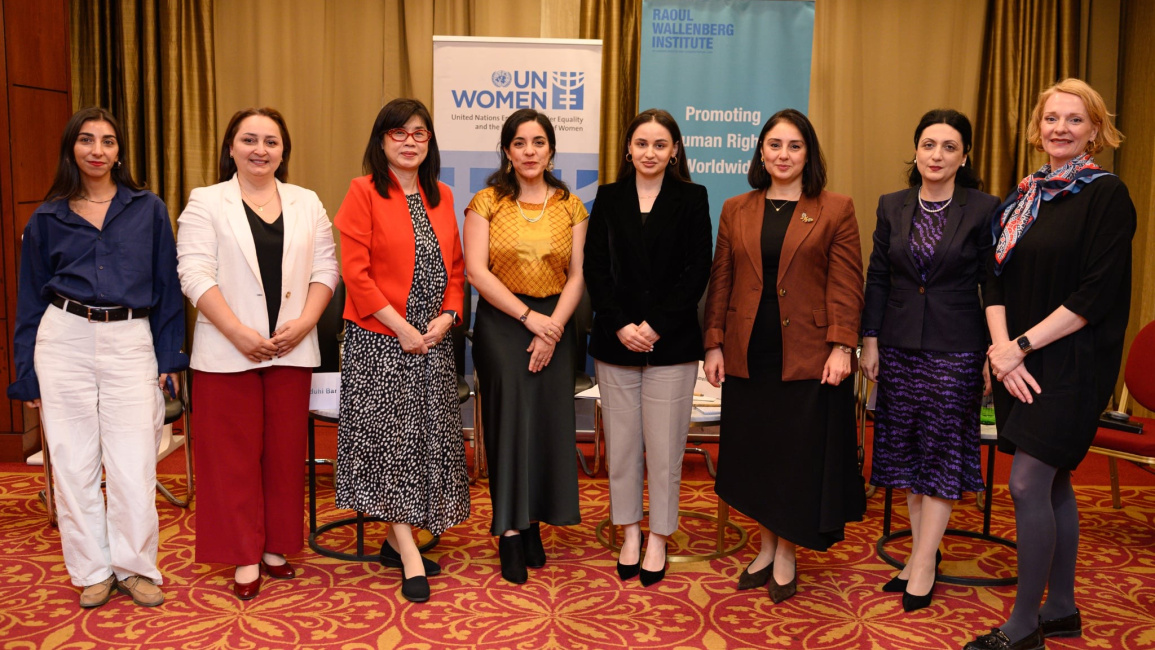
Olympia Geghamyan, Head of the A. Iskoyan Center for Environmental Law at the YSU Faculty of Law, represented academia at the conference "National Dialogue on Gender, Biodiversity and COP17," organized by the Armenia Office of the Raoul Wallenberg Institute in Yerevan on September 29.
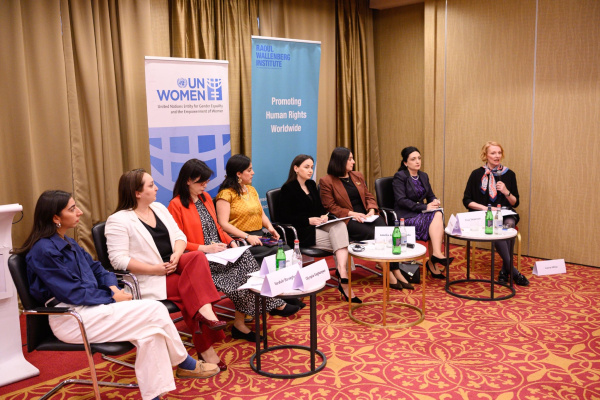
The conference brought together representatives of government bodies, international organizations, civil society, academia and the private sector to discuss the national implementation of the 2023-2030 Gender Plan of Action under the Convention on Biological Diversity and the strengthening of gender-responsive approaches to biodiversity governance in Armenia ahead of COP17.
During a panel discussion, Olympia Geghamyan presented perspectives from academia and the YSU A. Iskoyan Center for Environmental Law, addressing the implementation of international commitments at the national level, existing legal frameworks and mechanisms for ensuring women's effective participation.
Geghamyan emphasized that Armenia has made notable progress in recent years in women's involvement and participation in education and other areas of public life. At the same time, a well-developed, multilayered legal framework has been established, enshrining the rights to equality, participation and involvement in relevant processes.
According to Geghamyan, the next major challenge is to make the actual impact of this progress and these legal guarantees measurable. Participation figures alone are insufficient to assess how effective and influential that participation has been. Clear criteria and mechanisms need to be developed to assess, for example, not only the number of women involved in decision-making or consultation processes, but also how many of them submitted proposals, how many of those proposals were accepted and to what extent they were reflected in final decisions and policies.
"It is important to move beyond simply recording participation to assessing its actual impact. Enshrining rights in law and ensuring opportunities for participation are important achievements, but the next step must be to understand the extent to which that participation actually influences the substance of decisions," Geghamyan noted.
She also highlighted the role of academic institutions in developing such assessment methodologies, conducting scientifically grounded evaluations of legislation and policies, and putting forward evidence-based recommendations. She emphasized that Armenia's hosting of COP17 provides an additional opportunity to strengthen cooperation among the government, academia and civil society in this area.