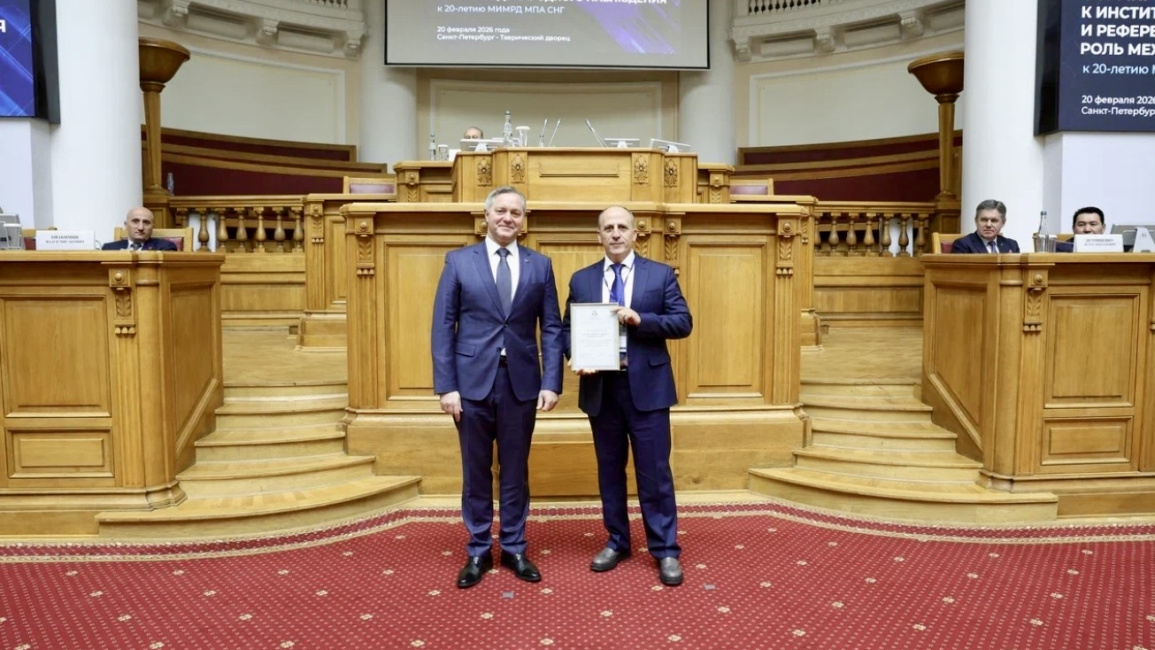
From February 18–20, Professor Vahram Avetisyan from the YSU Chair of Civil Law participated in the international conference "Building Trust in Electoral and Referendum Institutions: The Role of International Observation", organized by the IPA CIS IIMDD. At the conference, he presented a report titled "Use of Artificial Intelligence in Electoral Processes: Opportunities, Risks, and Legal Regulatory Models (International Experience and the Republic of Armenia)".

Within the framework of his report, Professor Avetisyan outlined the opportunities, risks, and legal regulatory models associated with the use of AI in electoral processes.
Considering the rapid technological progress and widespread accessibility of AI, the report examined both positive and negative manifestations of its use in elections. The author proposed current and prospective directions for the legal regulation of AI in electoral processes. These include legislatively embedding the principles of transparency and accountability when algorithmic systems are applied in elections, requiring mandatory labeling of AI-generated political content during election campaigns, establishing restrictions or specific requirements for political micro-targeting, including mandatory notification of voters when algorithmic profiling is applied. The reporters also highlighted the strengthening personal data protection guarantees in the context of political advertising and election campaigning, introducing procedures for independent technical and legal audits of AI systems used by government bodies and electoral process participants, developing mechanisms for collaboration with digital platforms to ensure transparency in political advertising and enable prompt responses to disinformation, and enhancing digital literacy among voters, including raising awareness of risks associated with deepfake and manipulative content.
According to Professor Avetisyan, the implementation of these measures would make it possible not only in the Republic of Armenia but also in several CIS states to develop a balanced regulatory model that simultaneously promotes the adoption of innovative technologies while preserving the fundamental principles of free, transparent, equal, and fair elections.