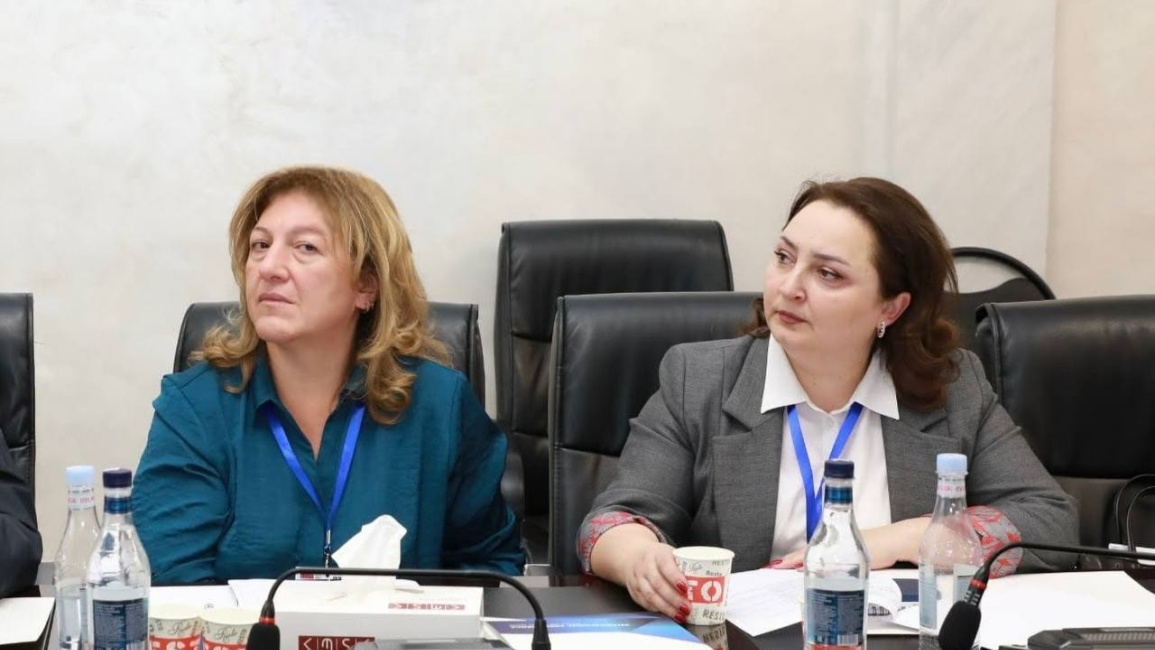
Olympia Geghamyan, PhD in Law and Associate Professor at the YSU Faculty of Law, who also heads the A. Iskoyan Environmental Law Center, took part in the international conference titled "Transforming Sustainable Socio-Economic Development: Opportunities and Threats," held on April 15–16 at the Armenian State University of Economics in cooperation with the Institute for Scientific Communications, bringing together a broad range of academic and expert representatives from various countries to discuss current challenges and future development prospects, and distinguished by its wide international participation.
Attendees represented various universities in Armenia as well as institutions from Germany, Italy, Russia, Belarus, Kazakhstan, and other countries.
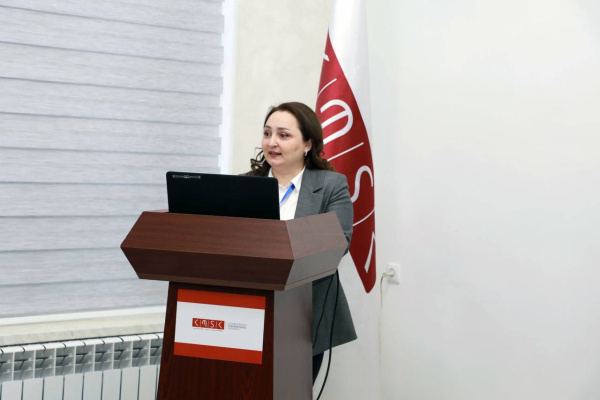
During the conference, Geghamyan delivered a presentation based on a co-authored paper, "Financial Institutions and Sustainable Development of Agribusiness: Armenia's Experience in the Context of ESG Principles Implementation." In her remarks, she addressed the role of financial institutions in Armenia's agribusiness sector, particularly in ensuring sustainable development and the preservation of natural resources.
She highlighted the importance of adopting ESG principles—environmental protection, social responsibility, and quality governance—as a key instrument for ensuring long-term efficiency and resilience in the sector. Geghamyan also highlighted the need to channel financial flows toward responsible and sustainable initiatives, noting that this approach could significantly contribute to the modernization of agriculture and the reduction of risks.
According to her analysis, Armenia's experience proves that the gradual integration of ESG approaches can enhance both investment attractiveness and the quality of agricultural production. She further underscored the importance of strengthening cooperation between the public and private sectors to ensure the effective implementation of such initiatives.
Over the course of the two-day conference, more than 60 presentations were delivered, covering key topics such as economic development, energy security, digitalization, and social sustainability. The sessions were marked by active professional dialogue and the exchange of expertise.
Geghamyan noted that the conference provided an important opportunity not only to present research findings but also to exchange expertise with international partners and establish new collaborations. Platforms of this kind, she added, foster the advancement of scientific thought and support collaborative responses to current challenges.