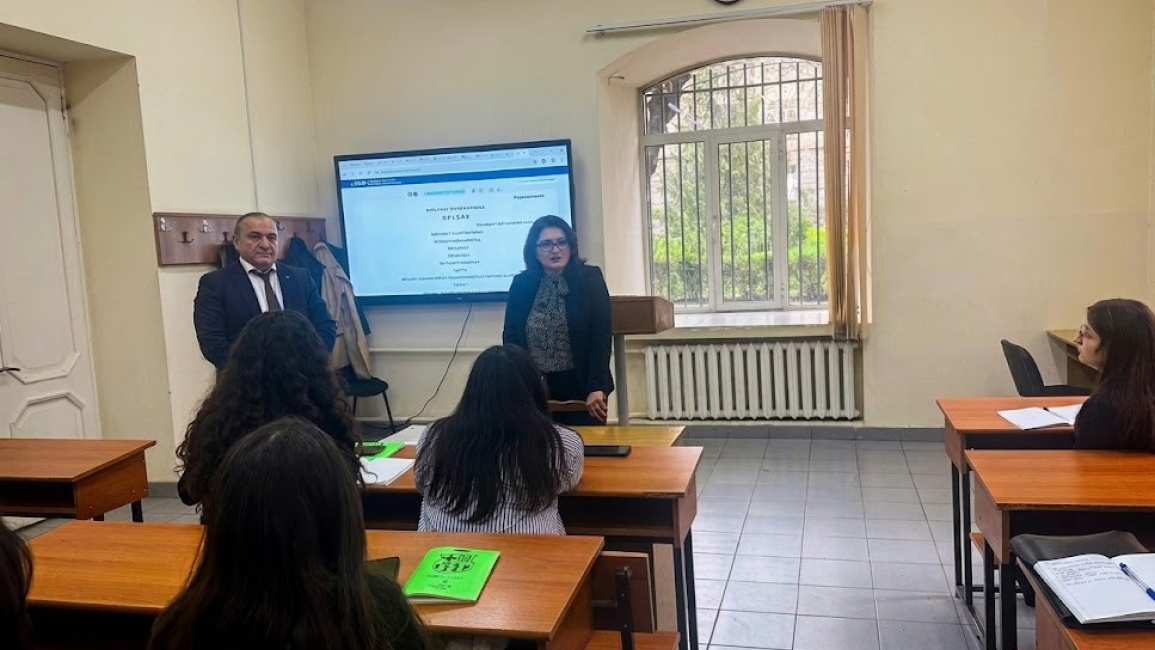
On April 13, in order to present students with the role and specific functions of the highest judicial instance of the Republic of Armenia, as well as its constitutional mandate, and to foster their interest in the judicial system, President of the Court of Cassation of the Republic of Armenia Lilit Tadevosyan met with third-year students of the YSU Faculty of Law and delivered a lecture.
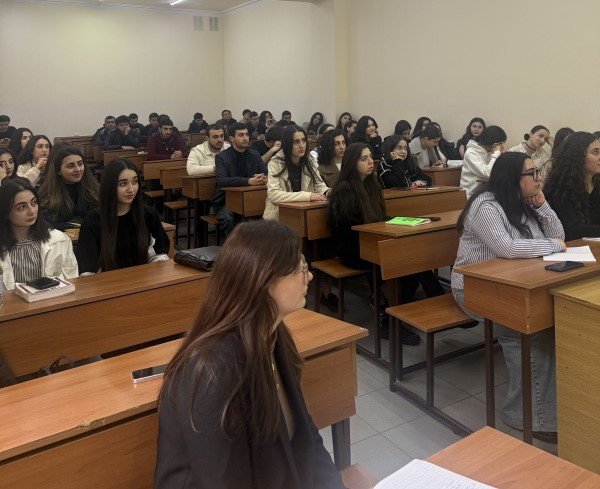
During the lecture, the president of the Court of Cassation provided a detailed overview of the place and role of the Court of Cassation within the judicial system, emphasizing the constitutional mission of the highest judicial body in ensuring legal consistency and contributing to the development of law. She underlined that the court's activities are aimed at enhancing legal predictability and strengthening public trust in the judiciary.
The speaker also touched upon the role of the judge in the state and society, highlighting the high level of responsibility and moral integrity required in upholding legal values.
Within the framework of the lecture, the president of the Court of Cassation stressed the relationship between justice as a fundamental value and the administration of justice, underscoring the importance of the judiciary in ensuring the rule of law and fairness, maintaining social balance in a legal state, and protecting human rights.
The meeting featured an active and meaningful discussion, with students raising both theoretical and practical questions related to judicial practice, judges' work, and the administration of justice. The discussion evolved into a professional dialogue, also addressing the opportunities and challenges of professional development for young lawyers, the importance of the legal profession, its role in the state and society, as well as its social and moral responsibilities.
At the end of the meeting, the president of the Court of Cassation expressed readiness to invite students to the Court of Cassation of the Republic of Armenia to observe a court session, noting that such visits provide an important opportunity for future lawyers to combine theoretical knowledge with practical experience and gain a clearer understanding of the functioning of the courts.