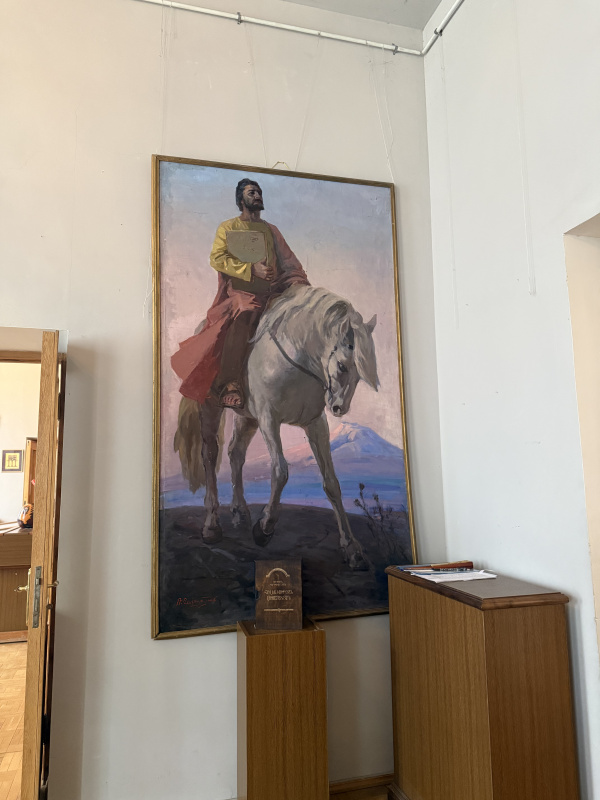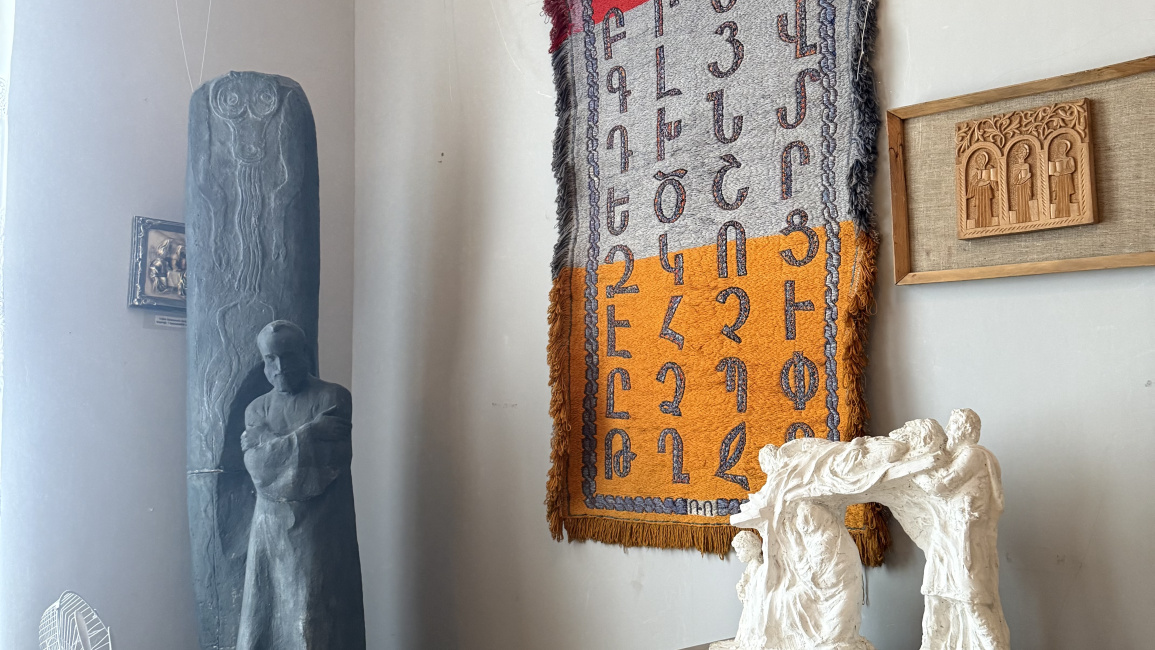
The Feast of the Holy Translators celebrates Armenian culture, language and literary heritage, honoring St. Mesrop Mashtots, St. Sahak Partev and their disciples.
The creation of the Armenian alphabet in 405 and the translation of the Bible into Armenian marked the beginning of the Golden Age of Armenian culture. The Armenian translation of the Bible later came to be known as the "Queen of Translations," while the famous words from the Proverbs of Solomon, "To know wisdom and instruction, to understand words of insight," became one of the expressions symbolizing the beginnings of Armenian written culture.
The Feast of the Holy Translators symbolizes the enduring legacy of the Armenian language, literature, national identity and spiritual heritage.
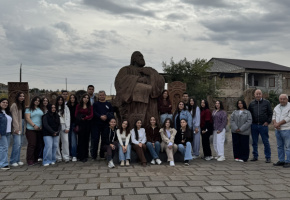
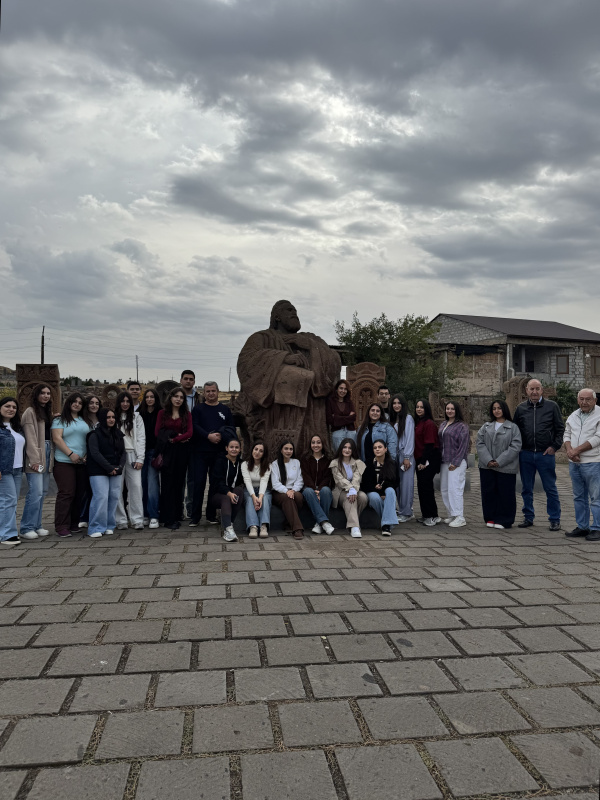
Continuing an annual tradition, the Student Scientific Society of the YSU Faculty of Armenian Philology organized a visit to Oshakan ahead of this year's Feast of the Holy Translators.
The visit offered students another opportunity to connect with Armenia's translation tradition, national culture and spiritual heritage. Throughout the day, they reflected on the historical significance of Armenian translation and its vital role in preserving the Armenian people's identity and cultural distinctiveness.
The second part of the program unfolded in a spiritual and cultural atmosphere, with participants gaining new insights and traditional Armenian dances adding to the festive spirit of the day.
According to the students, informal conversations with their favorite lecturers, academic discussions and opportunities to gain new knowledge brought a special sense of warmth and depth to the visit.
Beyond connecting with their cultural heritage, the visit also provided an opportunity for direct interaction between students and lecturers and for meaningful academic dialogue.