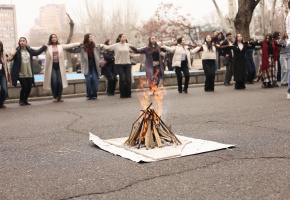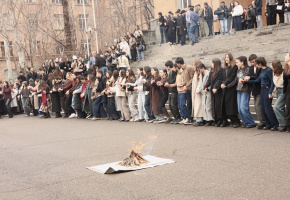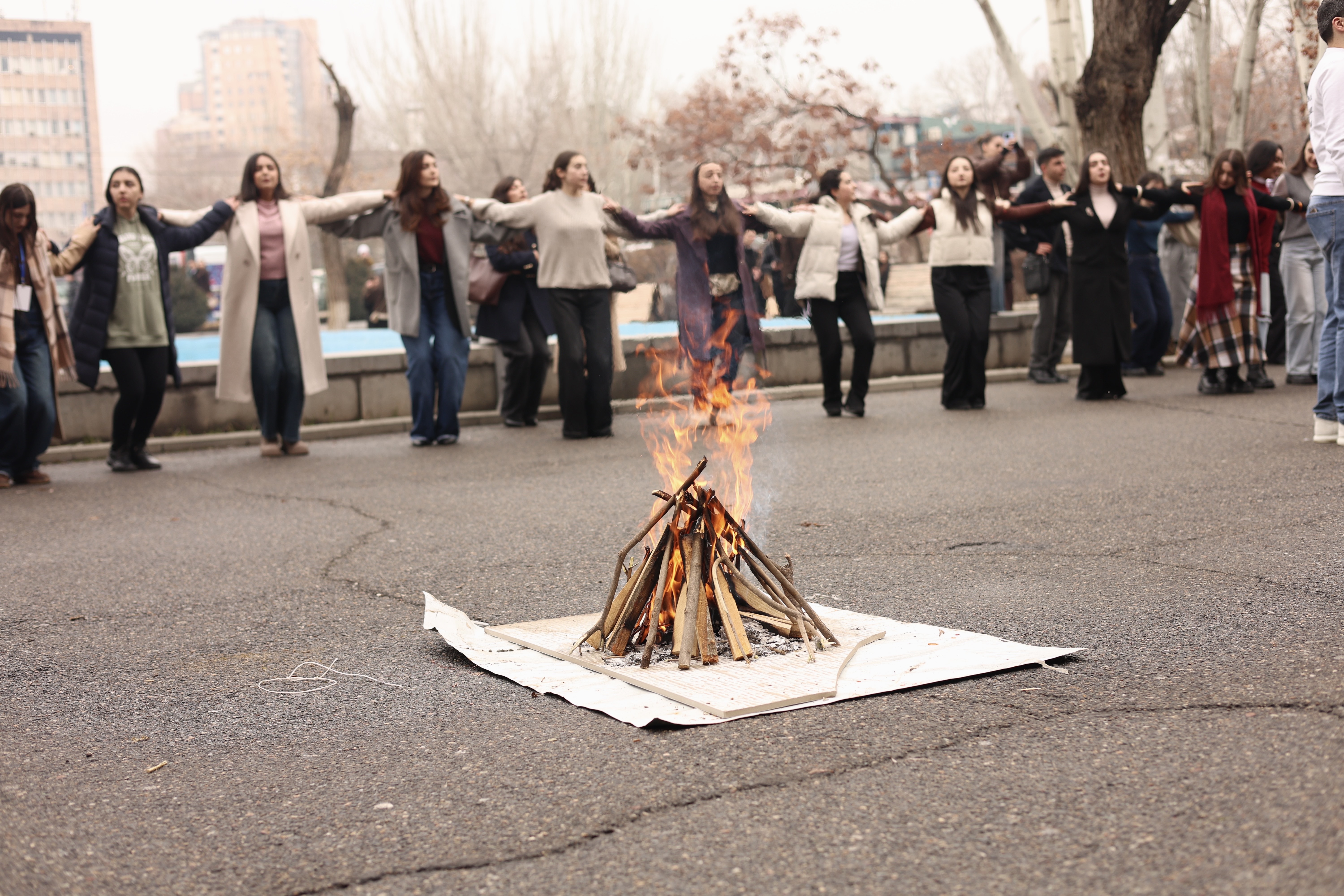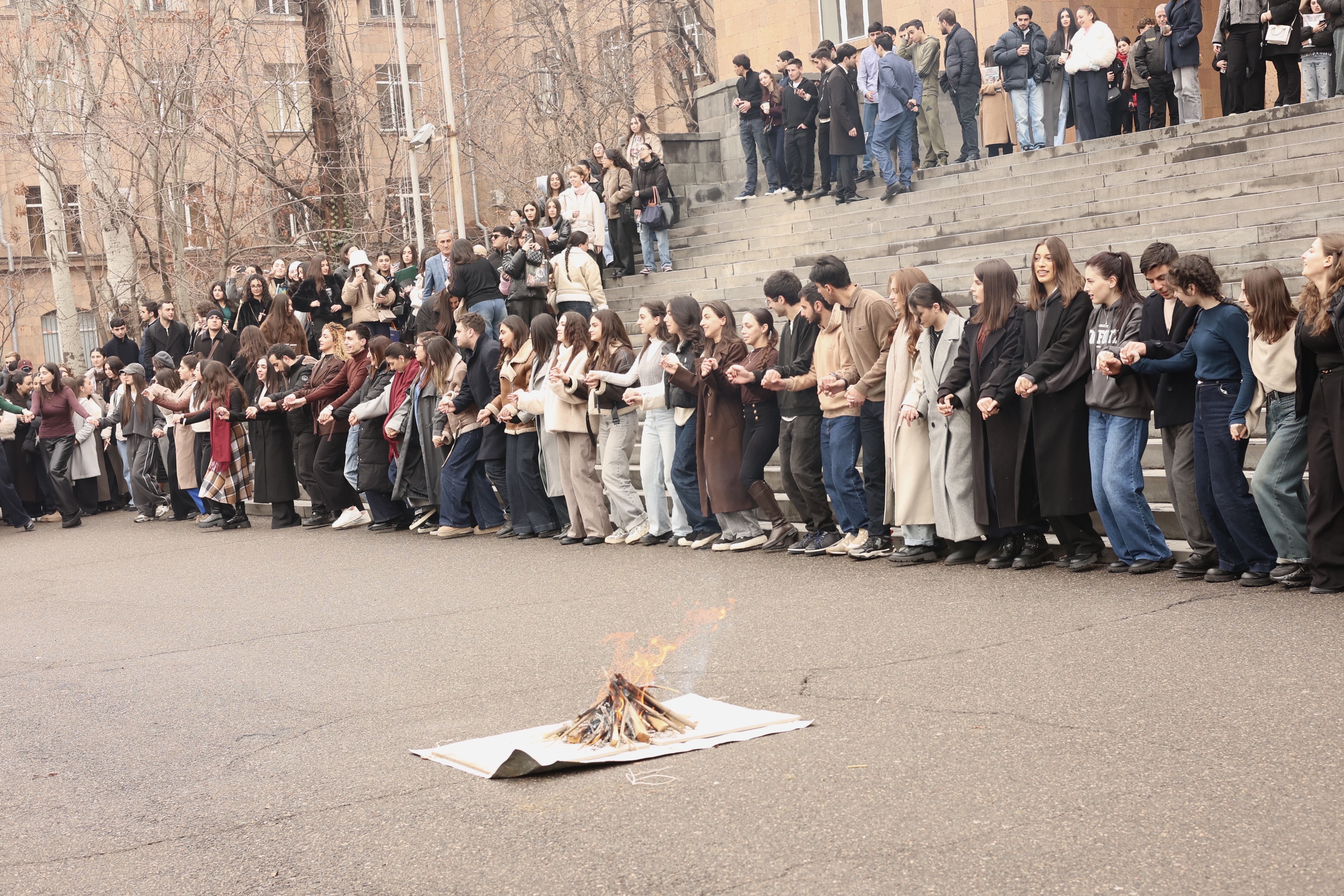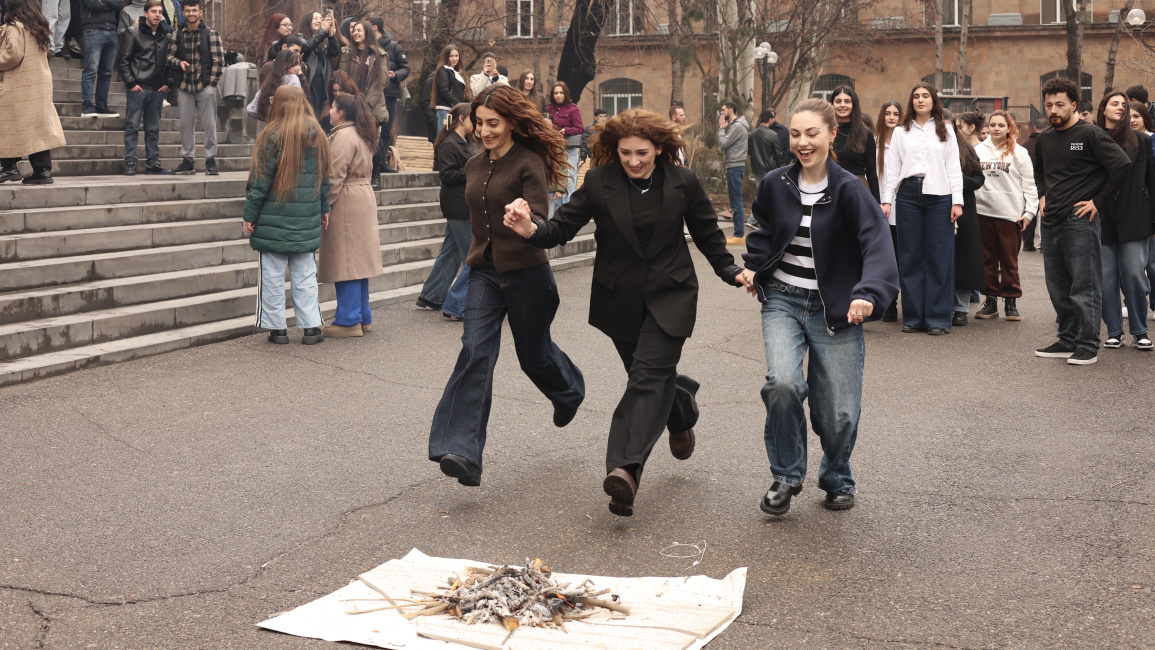
On February 13 of this year, Yerevan State University celebrated Trndez in the courtyard of the YSU Central Building, at the initiative of the Cultural Committees of the Student Councils of the Faculties of Informatics and Applied Mathematics, and Sociology.
The event commenced with a priest's blessing and the Lord's Prayer, followed by traditional circle dances and national songs.
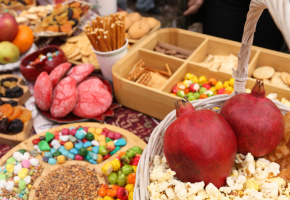
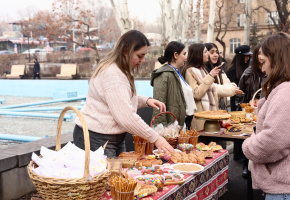
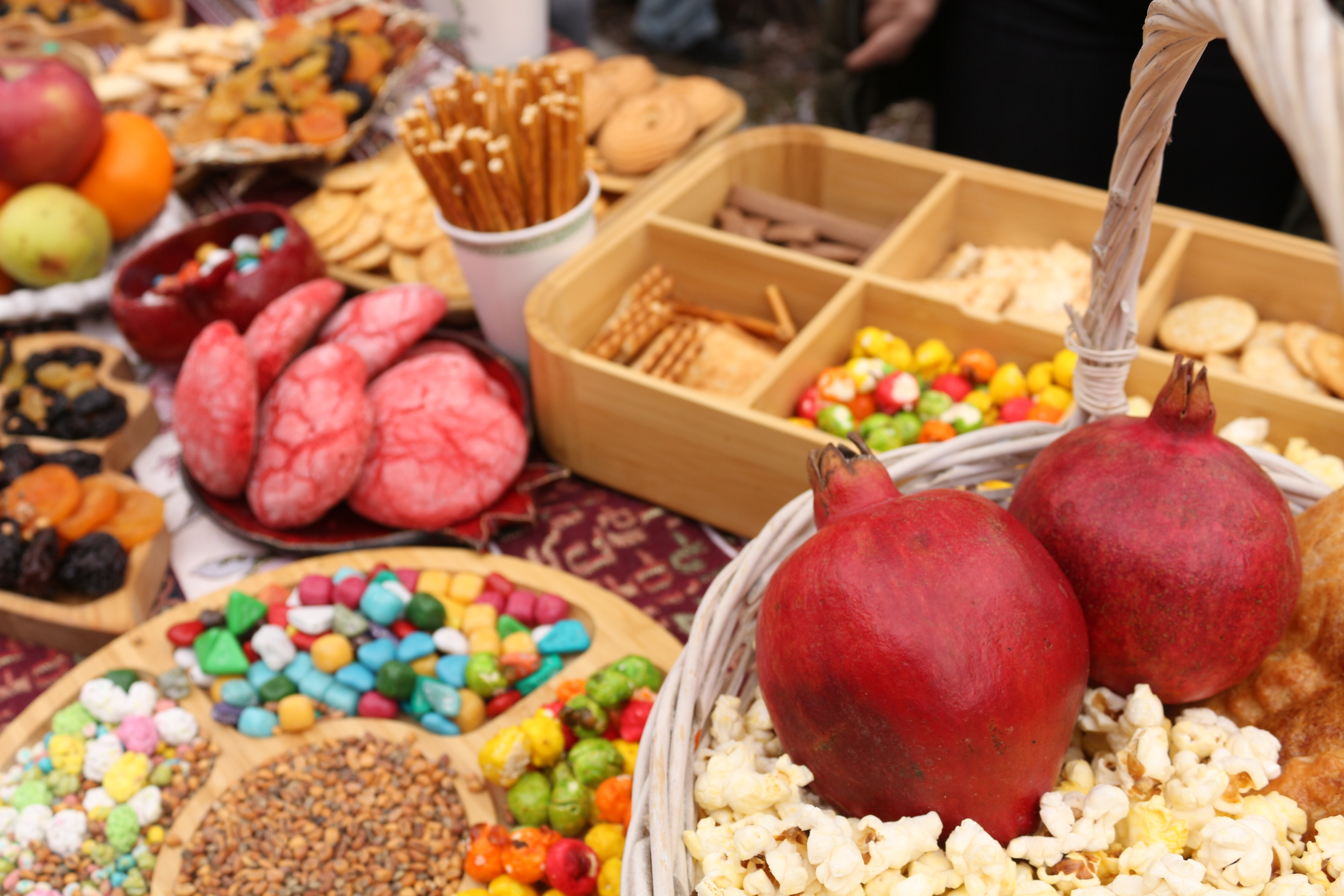
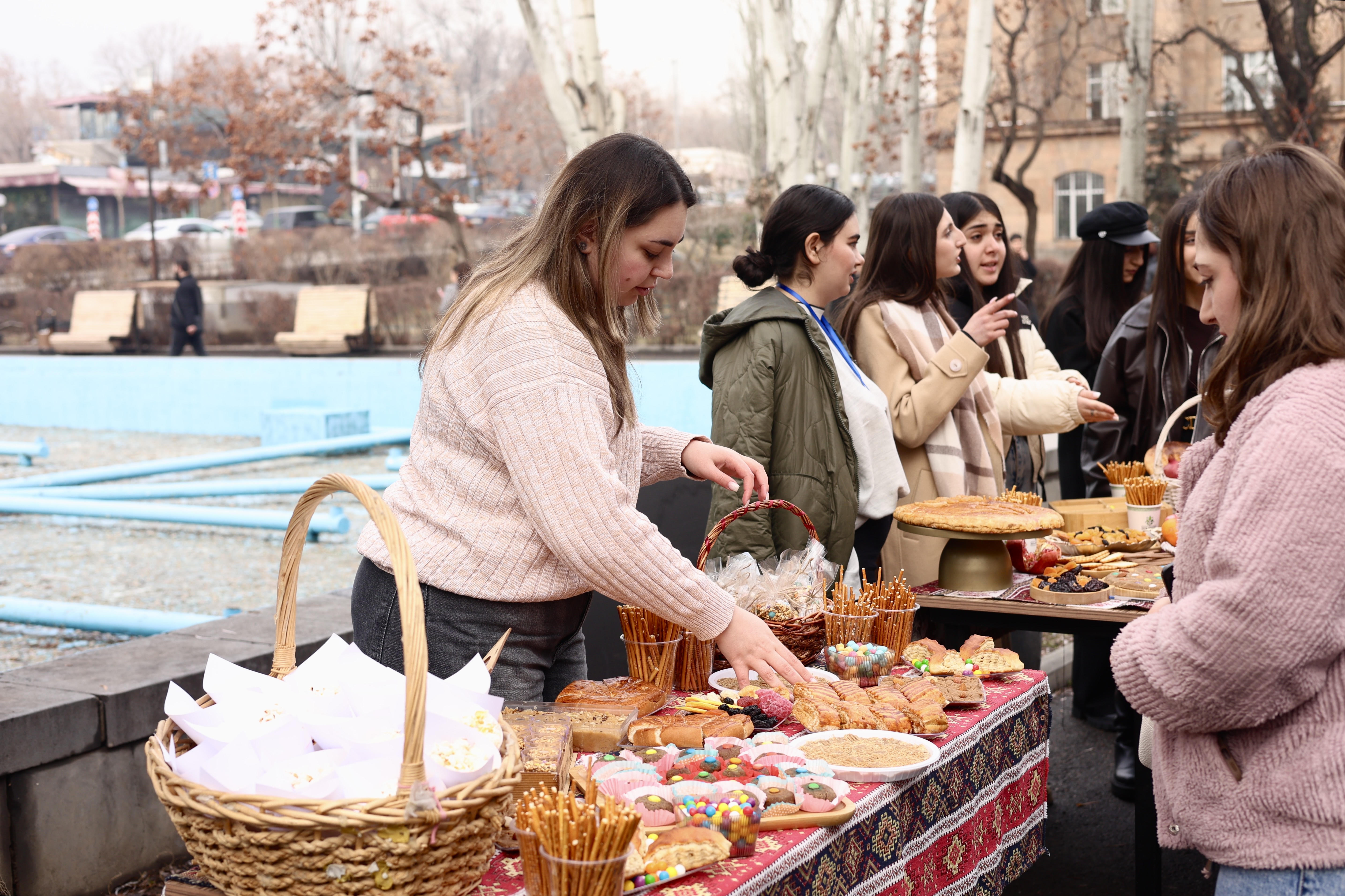
In accordance with tradition, the Trndez bonfire was lit, around which students gathered. The attendees then enjoyed roasted wheat and sweets symbolizing the feast, thereby completing the festive atmosphere.
The Feast of the Presentation of Christ to the Temple
Trndez is one of the fixed feasts of the Armenian Apostolic Holy Church. One of the most beloved celebrations of the Armenian people is observed on February 13–14, forty days after the Nativity. According to tradition, the name of the feast—"Coming Forth to Meet the Lord"—originated when the elder Simeon came forward to meet the infant Jesus.
According to the canon of the Armenian Church, on the evening preceding the feast, following the liturgical service, a pre-feast ceremony is conducted, proclaiming the beginning of the Lord's Feast. After the pre-feast rite, the Ceremony of Andastan is performed, during which the four corners of the world are blessed. This is followed by the Blessing of the Candles. Using fire taken from the church, bonfires are lit in church courtyards.
Traditionally, the right to light the bonfire first in the church courtyard is reserved for young people—especially newlyweds and engaged couples. In the past, only male participants were permitted to jump over the bonfire. It was believed that whoever leapt the highest over the flames would remain strong and fortunate throughout life.
According to accepted scholarly views in Armenian studies, the feast has been inherited from pre-Christian beliefs associated with fire and the preservation of the hearth flame. These beliefs are connected with the pagan deities Tir, Vahagn, and Mihr.
The most widespread element of the celebration is the ritual bonfire, which is traditionally kindled using juniper and mulberry branches, along with straw and dry grass.