October 14, 2026 | 14:20
Society
Research
– Mr. Babajanyan, why is it particularly important today to examine rights, freedoms and responsibilities in the digital environment from a philosophical perspective?
– We often forget that while we are users in the digital world, we remain citizens. Social media platform rules can affect our freedom of expression, how information is disseminated can shape our political judgments, and others' decisions can affect our private lives. We are therefore dealing with fundamental questions about how we live together: Who sets the rules we share? Whose interests are taken into account? And how should decisions that affect us be justified?
As more of our lives take place on digital platforms, we need to establish new rules for living together. Although these platforms are new, the fundamental principles underlying such rules, including justice, freedom and security, remain the same. In this sense, the task of political philosophy is to determine and justify how people's rights, duties and freedoms relate to one another in this new environment and, more broadly, establish the boundaries between what is permissible and what is not.
– The lecture series covered a range of issues, from children's use of social media to political lies and digital spam. What common philosophical question connects these topics?
– These topics all raise one question: What do we owe one another in an environment where our opportunities to act are expanding, while the consequences of our actions often affect others?
When considering children's use of social media, we need to determine how to protect them while taking users' autonomy and their interests seriously in communicating and participating in public life. When examining lies told by politicians, we consider whether holding public office entails a particular obligation to tell the truth and what forms of accountability might be justified when that obligation is violated. Spam, meanwhile, reveals a moral question behind an everyday annoyance: Is it acceptable to treat other people's time and attention as free resources for achieving our own goals?
These examples matter because they force us to distinguish between two questions that are often conflated: Is a particular action morally unacceptable, and should it be prohibited or punished? An affirmative answer to the first question does not automatically settle the second. We must also consider who has the right to intervene, what means of intervention are justified and how to prevent abuses arising from the intervention itself. Ultimately, the overarching question is this: What principles and rules should govern how people live together in this new environment?
– What does the course offer participants in addressing these issues in their everyday digital lives?
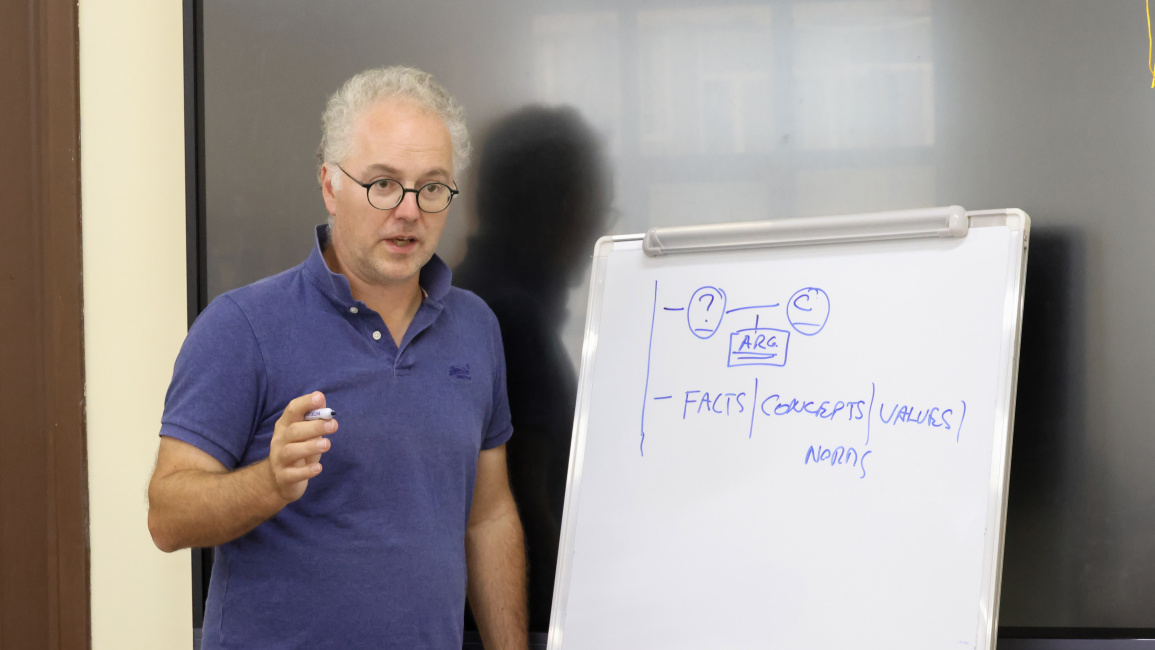
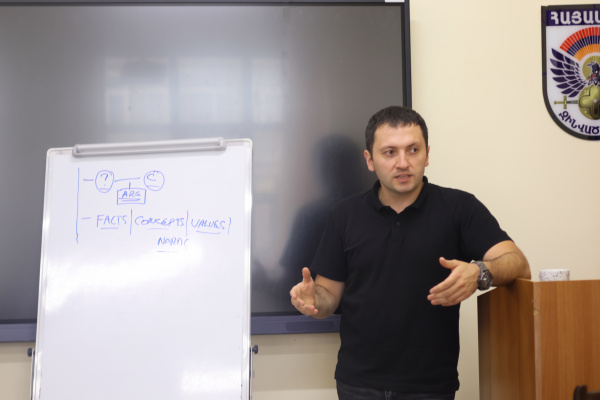
– One of the central aims of all the lectures Professor Gosseries and I have delivered at YSU, regardless of their specific subjects, is to encourage discussion of philosophical, ethical and political-philosophical questions through clear, accessible and well-supported arguments. That is why all our courses begin with an introduction to methodology. Even within this short period, students learn to distinguish between facts, definitions, values and norms, construct sound moral arguments, and differentiate a claim from the reasoning used to support it.
Through this approach, participants develop their ethical analysis skills. They learn to articulate their positions clearly, identify the assumptions underlying them, distinguish factual questions from moral judgments and carefully examine the strongest objections to their positions. At the same time, ethical judgments must account for the facts. A sound argument requires both an understanding of the situation and the consistent application of principles.
In everyday digital life, this can become a simple habit. Before sharing information, supporting a ban or justifying a politician's conduct, we can pause and ask ourselves: "What am I basing this on? Would I defend the same rule if it applied to people who share my views? What could change my mind?"
I will consider the course a success if participants become better able to make well-reasoned judgments about issues of political philosophy in the digital environment while remaining willing to reconsider those judgments. Changing one's mind in response to stronger arguments or objections is not an intellectual defeat.
As part of the Erasmus+ program, Yerevan State University has welcomed Professor Axel Gosseries, President of the Higher Institute of Philosophy at UCLouvain, for the sixth time. Gosseries and Associate Professor Levon Babajanyan from YSU's Chair of Social Philosophy, Ethics and Aesthetics jointly conducted a lecture series titled Political Philosophy of Digital Rights, comprising 10 academic hours. Covering four key topics, the series aimed to introduce participants to the principal methods of political philosophy and their application to analyzing questions of rights, freedoms and responsibility in the digital environment.
– Mr. Gosseries, what do you find most interesting about the intersection of the digital world and political philosophy?
– I think that, more and more, our lives are migrating to the online world. This is happening so quickly that we barely have time to reflect on how it is changing the core components of our lives and whether we should resist these changes. It also raises numerous ethical issues, some familiar and others new. With the students, we explored several of these issues, particularly age restrictions on social media, the ethics of illegal downloading and questions of political philosophy arising from the various impacts of AI, including cognitive atrophy, job obsolescence and carbon emissions.
What I always find fascinating when analyzing specific technological issues is combining a basic understanding of the nature and impacts of a technology with an examination of those impacts using the tools of ethics and political philosophy. We need to understand the technical details, but we should not stop there. We also need to look at these issues through the lens of philosophy and consider what specific claims we can formulate and defend.
– In your view, do digital technologies primarily expand human freedom, or do they create new ways of restricting it?
– In theory, it is possible to answer this question. In practice, however, we often begin with more specific questions. For any given technology, for example, we can ask which freedoms it expands or restricts: freedom of expression, freedom of movement and so on.
Whether social media increase our overall freedom is an extremely difficult question. But we can also ask ourselves what we value about these platforms and what we do not, what we want to allow them to do and what we do not. We can consider what uses of our personal data we find acceptable and whether we think these platforms should moderate certain content.
Of course, we can try to assess the overall effects of specific technologies on freedom, inequality and other issues. It is important to develop a sense of where we stand on such macro-level questions. But we can also use our philosophical perspective to discuss many relevant practical issues at a more "micro" level. And, of course, the aim is not merely to criticize. Ideally, we should also be able to put forward proposals.
– How should our thinking change to properly assess the new moral and political challenges arising in the digital environment?
– I think we first need to acknowledge the complexity of current technological developments. These developments are complex not only at the engineering level but also at the psychological, geopolitical and other levels. Despite the sense of urgency, we should not rush to conclusions.
For example, we need to try to understand, on a technical level, what AI can likely do and what it cannot. Even this factual question is difficult for a non-specialist to answer. It also raises philosophical questions, such as "Can AI understand anything, and if so, in what sense?" If we recognize that these changes could be radical, we then need to ask ourselves what our priorities should be from the perspective of political philosophy.
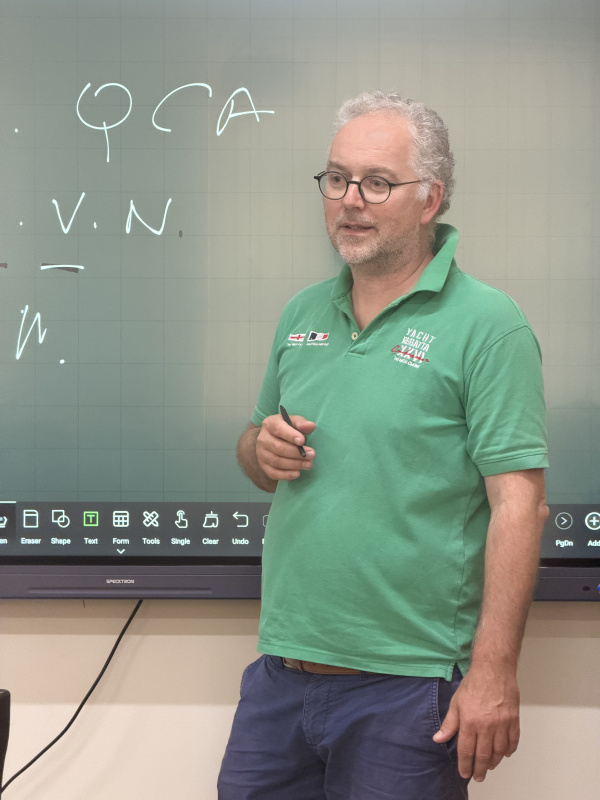
What we are seeing is that these technologies are radically transforming our lives. Our phones are doing so. Social media are doing so. AI is doing so. We also need to take seriously the fact that, because of network effects, economies of scale and other factors, these technologies are concentrated in the hands of a few actors who end up gaining immense power.
This poses a challenge to our democracies. There is no point in fighting dictatorship at the state level if, at the same time, we allow global companies to rule us. We are being asked to make collective decisions about technologies that are constantly evolving. We are also being asked to regulate actors who continually threaten to withdraw investment if we regulate them, or who simply evade our rules.
Regulating AI is difficult because our representatives need time to understand what is happening, the nature of the problems and what is realistically feasible through regulation.
To address all this, we need to keep using our critical minds. Perhaps we need to do so faster than before. But perhaps we also need to adapt our decision-making processes to the nature of the actors who run these technologies. They are global actors, and the technologies they sell are both highly complex and evolving very rapidly.
– Since this is your sixth visit to Yerevan State University, what changes have you observed over the years in the interests of Armenian students and researchers?
– That is a difficult question because each visit gives me only a snapshot. But I would say that one thing has not changed: I can still sense how concerned students are about the uncertainties surrounding their futures, whether geopolitical, technological or otherwise. The same is true of researchers. Juggling three jobs at once takes enormous energy. Under these circumstances, it is really difficult to find the time and peace of mind to do research.
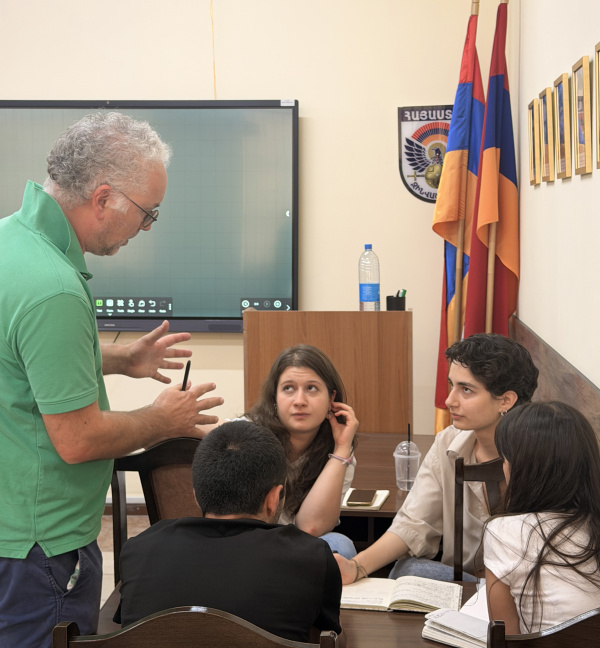
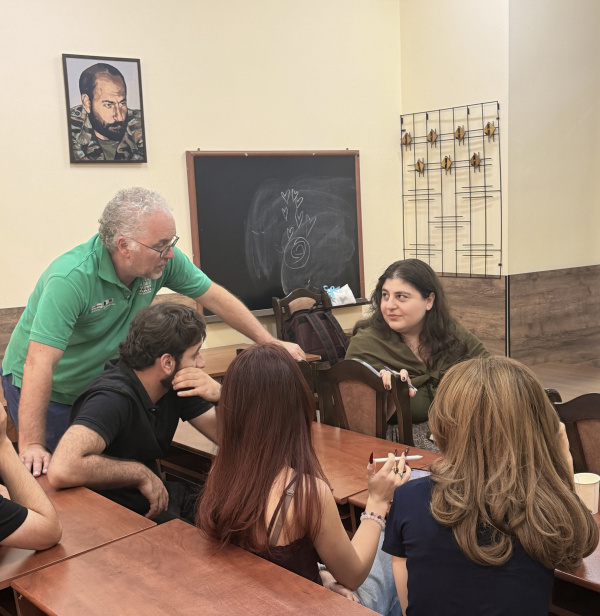
On a more positive note, it is always a privilege to exchange ideas with students who sometimes spend two hours on a bus just to attend a class. And it is a joy to see how quickly they develop their argumentation and discussion skills over the course of successive classes.
It is also wonderful to see the enthusiasm they bring to group discussions. You can sense that many of them are eager to learn despite life's hardships.
Sometimes, everyday difficulties become so overwhelming that people stop thinking about alternative futures. This can lead not only to fatalism but also to conformism: a sense that the situation is so fragile that it is better not to question the status quo or dominant social norms.
Philosophy has a role to play in keeping a small flame alive in people's minds: don't give up too quickly on the idea of a different future, and use philosophy alongside other disciplines to understand and clarify what kind of future to fight for.