October 09, 2026 | 10:30
Science
International cooperation
Graduates
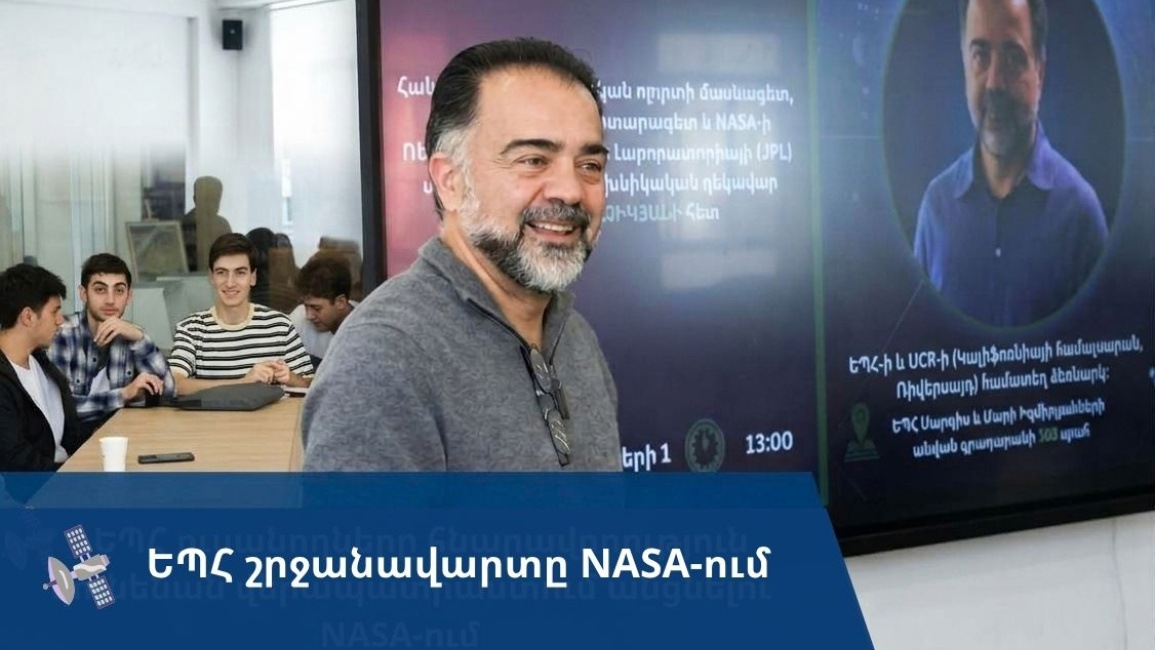
We spoke with Lermont Khachikyan about modern technologies used in the space industry, solar system exploration, space resources and opportunities for Armenian students to participate in international space programs.
– Mr. Khachikyan, you graduated from the YSU Faculty of Informatics and Applied Mathematics, then continued your studies at California State University, earning a bachelor's degree in mathematics and computer science. What led you to the space industry?
– Applied mathematics is widely used in various fields. I have always been interested in space, so over time, I decided to apply my knowledge to spacecraft design and operations.
– You have worked on new missions to Mars and the Moon. To what extent can new, as-yet untested technologies be used in space missions?
– Work in the space industry tends to be much more conservative because we cannot afford to take risks with technologies that have not been tested and proven to work. We rely on proven knowledge, which over time allows us to expand humanity's capabilities and understanding.
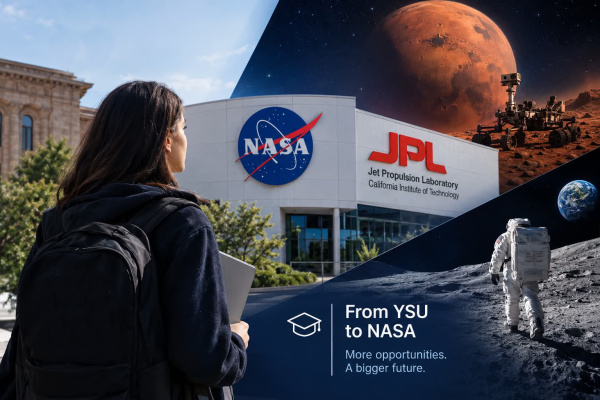
– What steps are you taking to collaborate with YSU and involve students in space programs?
– Armenia has great potential. We are currently working with YSU to offer students a 10-week summer training program at JPL. Our main goal is for students to gain international experience, return to Armenia and use their knowledge to develop the country's space sector.
– Which academic programs, specifically, would this opportunity be available to?
– The program is intended not only for students specializing in physics, mathematics or programming, but also for those studying mechanics, astrophysics, geology, law, accounting and business management.
– What advice would you give students who want to start a career in the space industry?
– First and foremost, it is important to study hard and develop a thorough understanding of your chosen field. Particular attention should be paid to artificial intelligence (AI), as it is widely used across many sectors, including the space industry. Students who are proficient in AI tools and their capabilities will therefore be much more competitive in the job market, including when applying for positions at JPL. In addition, a good command of English is important for working effectively with American specialists.
– What new insights are space research providing into the presence of water and other natural resources in the solar system?
– The presence of water in the form of ice beneath the surface has been confirmed. Massive water geysers have been discovered on Enceladus, one of Saturn's moons (referring to layers of water near the surface), and water is constantly erupting from them.
Traces of water have also been found on Mars. A number of rock samples have now been collected on Mars and are expected to be brought back to Earth in the future for study by geologists. We need to understand what these materials are and where they can be used.
The Moon also contains a rare gas called helium-3, which is currently being studied. For example, just a few tons of it could meet the annual electricity needs of a large country such as the United States without producing hazardous nuclear waste.
– Wouldn't mining of this kind damage the Moon?
– No, because we also carry out mining activities on Earth.
– Which celestial body will NASA astronauts land on in the near future?
– Astronauts will soon land on the Moon, after which Mars will be the next target.