December 19, 2025 | 12:45
Partners
Education
Research
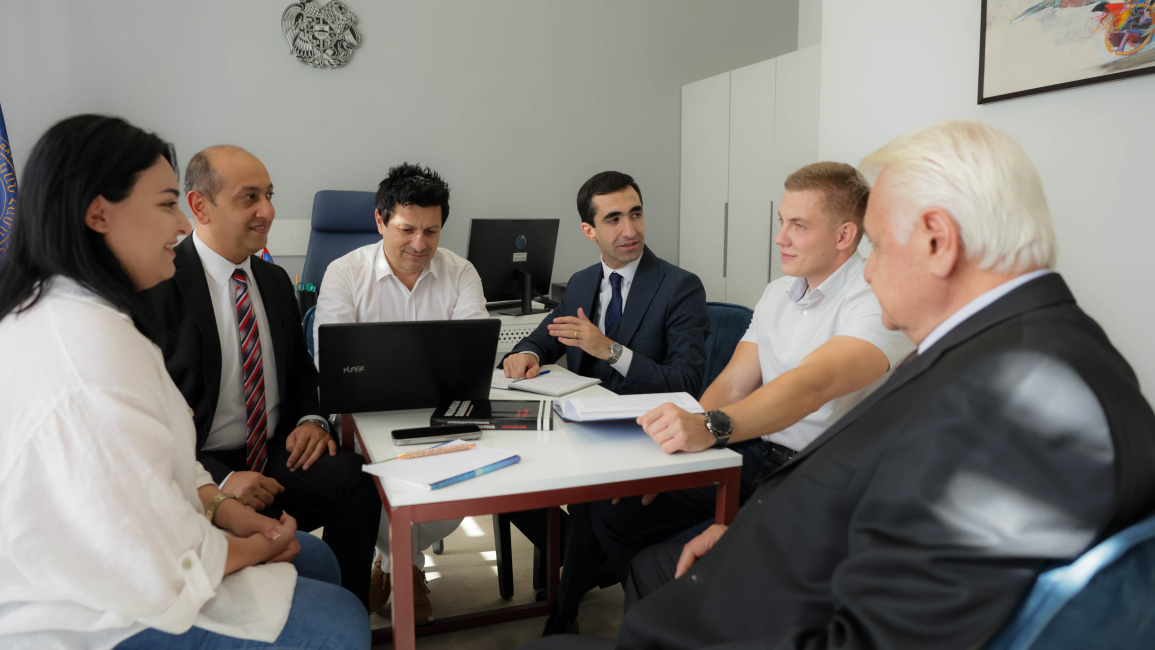
The relevance of the project, titled "Key Challenges and Solutions for Human Capital Management in the Republic of Armenia", which has secured funding through the RA MoESCS Higher Education and Science Committee's "Establishment of Remote Laboratories–2024" competition, is driven by a sharp decline in various indicators of human capital development over the past 15 years. Within the framework of the project, researchers will also conduct a comprehensive analysis of the interrelationships among human capital development, brain drain, the education system, innovation dynamics, and socioeconomic indicators.
The project aims to outline two interrelated policy directions: developing priorities for human capital development policy and creating appropriate incentives to encourage long-term investment in human capital and innovation. These measures are intended to support Armenia's innovative economic development and long-term sustainability.
To achieve its objectives, the research team will employ a hybrid methodological approach that draws on several analytical tools, including desk research, the construction of qualitative and quantitative datasets, empirical analysis, modeling, comparisons of policy scenarios, and Model validity testing.
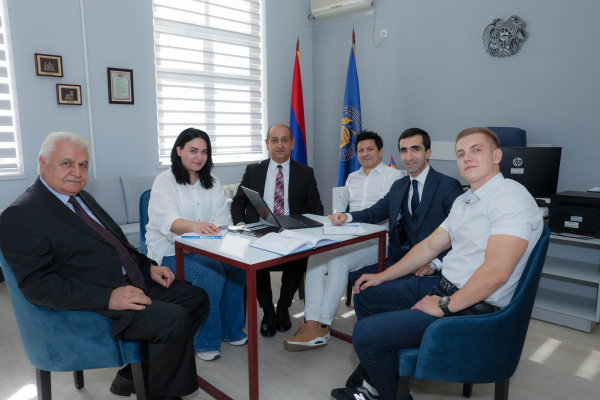
Speaking about the work completed to date, Dean of the YSU Faculty of Economics and Management Karlen Khachatryan, who also heads the project, stressed that a large-scale database has already been developed. It includes multidimensional data on human capital development, education quality, innovation activity, demographic changes, and economic indicators in Armenia over the past 15 to 20 years.
"A preliminary empirical analysis has been conducted, and several significant interconnections are already visible—for example, between brain drain, declining education quality, and the slowdown in economic growth," Khachatryan said. "At the current stage of the project, the research team is carrying out in-depth statistical and econometric analysis of the collected database, while work on model development is underway. In the near future, we will also begin evaluating various policy scenarios."
Upon completion, the project is expected to provide a comprehensive and scientifically grounded assessment of the main obstacles to human capital management in Armenia, as well as the systemic solutions needed to address them.
"Our work will result in a series of analytical reports, forecasts, and policy recommendations based on data, expert discussions, and modeling outcomes. The project's results will be applicable to the development and implementation of public policy. The data obtained and the proposed scenarios can be useful for both revising existing strategies and developing new policies, including those in education, the labor market, innovation, regional development, and demographic policy. Our goal is for scientific findings to serve as the basis for practical decision-making and to contribute to the transition toward a knowledge-based, innovation-driven model of economic growth," said Khachatryan.
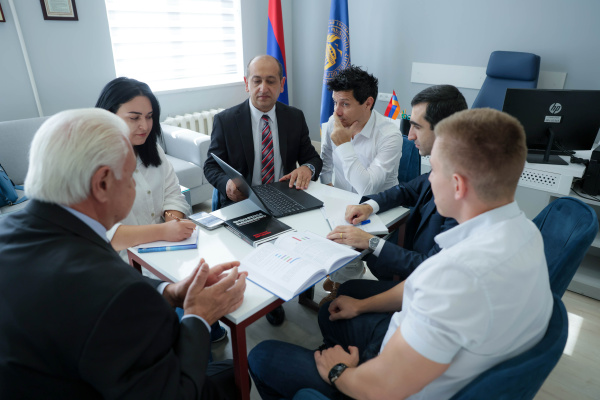
Asked about the mechanisms envisioned to align the identified challenges and proposed solutions with the needs of the business community and the education system, Khachatryan said the research primarily addresses key public policy issues in education, as well as in health care and social protection. Therefore, the project calls for close cooperation with government agencies and educational institutions. Qualitative surveys will be conducted, and thematic roundtable discussions and seminars will be organized, involving leading sectoral specialists and representatives of the expert community in Armenia.
The research team also includes Gagik Vardanyan, Professor and Associate Professor of Economics at the YSU Faculty of Economics and Management; Vardan Aleksyan, Candidate of Economics, Associate Professor and Deputy Dean–Office Manager at the same faculty; and two early-career researchers and a PhD student. Starting November 1 of this year, the team has the opportunity to include two additional early-career researchers: one PhD student and one master's student.
International partners are also actively involved in the project, including Professor Felix Arion from the University of Agricultural Sciences and Veterinary Medicine of Cluj-Napoca, Romania, and senior researcher Nikolai Dmitriev from Peter the Great St. Petersburg Polytechnic University, Russia.
These international partners have extensive experience in human capital, demographic changes, education systems, innovation, and economic modeling. Their involvement ensures a comprehensive, in-depth, and scientifically grounded foundation for the project.
The foreign partners are particularly engaged in the project's methodological work. They participate in refining methodologies for data processing and econometric evaluation, support model development, and contribute to the formulation and validation of policy scenarios. Their involvement allows the research to integrate local specifics with leading practices from Russia, Romania, and the international community, enhancing both the quality and impact of the project.
Armenian and foreign researchers operate as a single team, regularly holding joint discussions on methodological issues and interim results.
Professor Felix Arion, Head of the Department of Economic Sciences at the University of Agricultural Sciences and Veterinary Medicine of Cluj-Napoca, emphasized that his collaboration with the Armenian team has been exclusively positive and inspiring. The professionalism, curiosity, and strong commitment of colleagues at Yerevan State University particularly impressed him. He noted that the team combines academic rigor with a genuine dedication to addressing Armenia's socioeconomic challenges, creating a stimulating research environment.
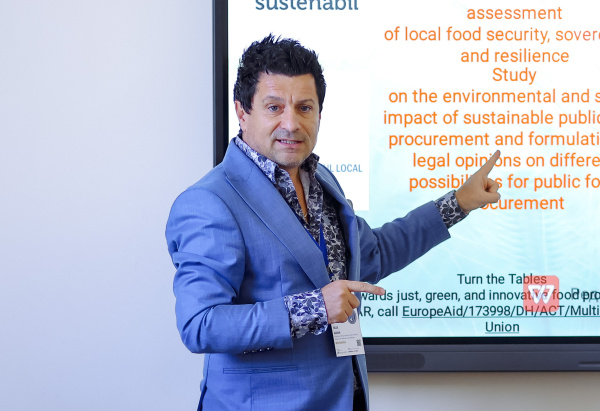
"As a researcher in the field of human capital development, I consider Armenia a highly relevant case for studying how demographic changes, institutional development, technological transformation, and global mobility together shape the quality and sustainability of human capital. Armenia is a unique 'laboratory' where both opportunities and vulnerabilities are clearly visible, making it an ideal environment for applied research with real policy implications. Second, my academic collaboration and connections with colleagues at the YSU Faculty of Economics and Management have demonstrated a strong commitment to methodological rigor, innovation, and interdisciplinary dialogue," he said. He added that the establishment of a remote laboratory at YSU provides a strategic platform to deepen research collaboration, build shared datasets, mentor young scholars, and create long-term academic value for both institutions.
Speaking on the importance of international experience, Professor Arion noted that the experience of Romania and the broader Central and Eastern European region can offer Armenia several valuable lessons in human capital development, innovation systems, and evidence-based policymaking.

"These countries share structural similarities—post-transition reforms, EU-driven modernization processes, demographic pressures, and the challenge of aligning education with labor market demands. This common ground makes the transfer of knowledge not only possible, but highly relevant," he said.
Professor Arion is hopeful that, by the end of the project, a scientifically validated human capital sustainability index for Armenia will be developed, accompanied by solid academic outputs that will strengthen the international visibility of our joint research.
He is confident that the project will contribute to deepening the collaboration between the two institutions, encourage active participation of young researchers, and provide a solid foundation for future joint initiatives and long-term partnerships.