December 10, 2025 | 13:08
Science
Education
International cooperation
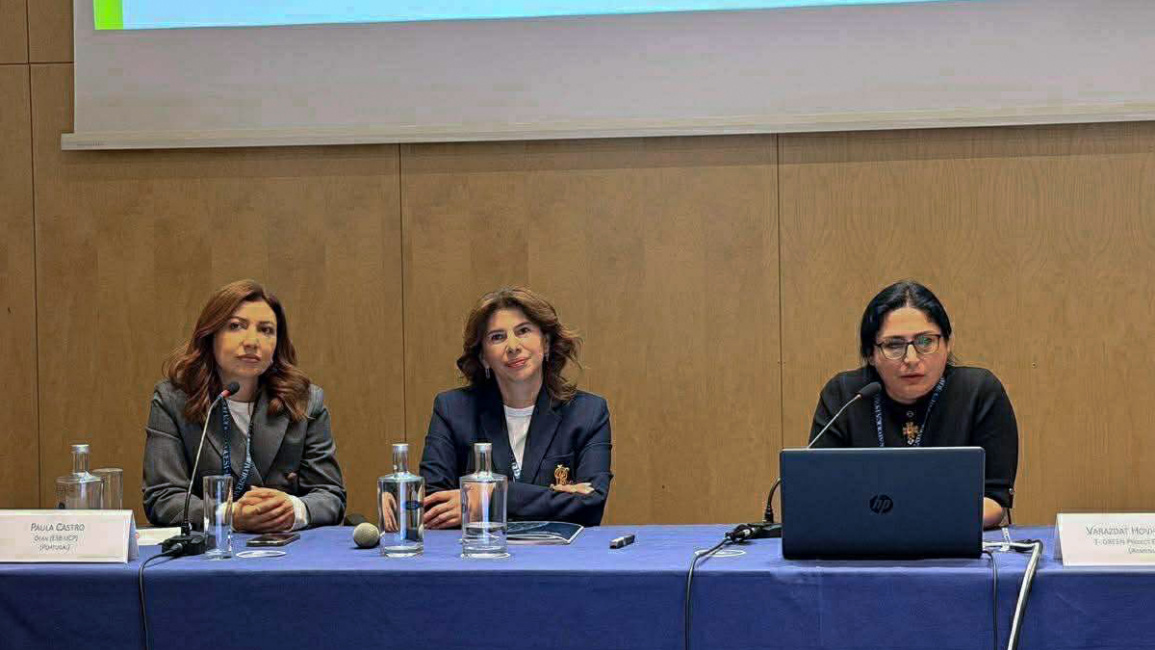
The three-day workshop, conducted from December 2 to 4 of this year, brought together representatives of partner universities from Armenia and the EU, as well as several members of the project consortium. The participants reviewed the outcomes of the pilot phase of the master's programs and discussed issues related to their further improvement and long-term sustainability.
The event opened with welcome remarks from representatives of the Catholic University of Portugal and Armenian partners, who emphasized the importance of modernizing higher education in line with the requirements of a sustainable and green future. They also highlighted the consortium’s unified approach to developing a double-degree program.
Representatives of the EU partner universities presented detailed information on the legislative frameworks, national regulations, and institutional procedures governing joint, double, and multiple master's degree programs in Portugal, Lithuania, Poland, and Greece. Through their expertise in program promotion, student recruitment, quality assurance, and internal procedures, they provided Armenian universities with clearer guidance on implementing processes in accordance with European standards.
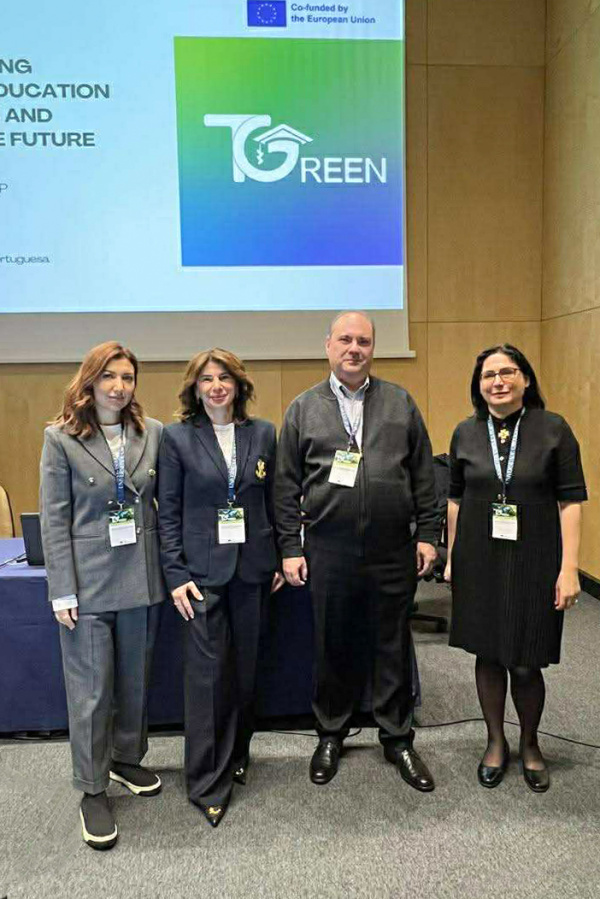
Armenian partner universities presented the results of the pilot implementation of newly developed master's programs in the fields of economics, agriculture, architecture, engineering, management, and information technology. They highlighted achievements to date, while also noting the need for continued collaboration and capacity building.
The workshop also addressed the main provisions of the newly adopted Law on Higher Education and Science of the Republic of Armenia, which establishes a comprehensive legal framework for implementing joint master's programs.
Representatives of the Higher Education and Science Committee presented the key amendments in the law, noting that the development of corresponding by-laws is essential for its full application. They emphasized that the experience gained through the T-GREEN project may play a significant role in shaping national regulations.
During the workshop, it was further noted that three new master's programs have been developed and implemented at Yerevan State University within the T-GREEN project: "Green Economy and Management" (Faculty of Economics and Management), "Blockchain and Digital Currencies" (Faculty of Mathematics and Mechanics), and "Sustainable Urban Governance" (Faculty of Sociology).
Beginning in the 2025–2026 academic year, the "Blockchain and Digital Currencies" one-year master's program has already been launched at the Faculty of Mathematics and Mechanics. In addition, several courses at the Faculty of Biology have been reprofiled, and the curricula enriched with five profession-specific subjects incorporating elements of green education.
The workshop concluded with agreement on the dates and format of the project's final international conference, which is scheduled to take place in Yerevan on February 17–19, 2026.
Launched in 2023 and co-funded by the European Union, the T-GREEN project aims to reform the post-bachelor education system, with particular emphasis on integrating green policies. The project is coordinated by the National Polytechnic University of Armenia and Eurasia International University.
Armenian partners include the Ministry of Education, Science, Culture and Sports of the Republic of Armenia; the Higher Education and Science Committee; the National Center for Quality Assurance; Yerevan State University; Armenian State University of Economics; French University in Armenia; National Polytechnic University of Armenia; Armenian National Agrarian University; Goris State University; Gavar State University; as well as the NGOs Erasmus Student Network Yerevan and Hope Bridge.
EU partners include International Hellenic University (Greece), Mykolas Romeris University (Lithuania), Catholic University of Portugal (Portugal), and Jagiellonian University of Krakow (Poland).