March 04, 2026 | 12:02
Science
Research
International cooperation

The panelists were women actively engaged in the field of science, who shared their personal journeys into the scientific world, discussing the motivations behind their choices, the challenges they faced, and their achievements.
Journey into science: from personal curiosity to purposeful mission
Moderator Yeranuhi Manukyan, Head of the YSU Science Policy Department, asked panelists why they chose to pursue a career in science. Responses varied, reflecting diverse paths into the scientific world, yet a common theme emerged: the desire to explore new horizons and realize one's potential.
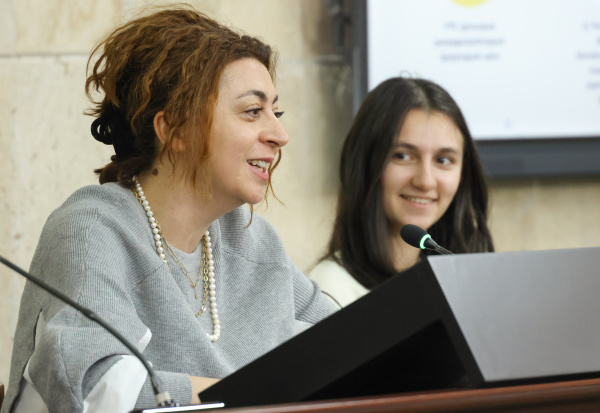
Lilit Sahakyan, Director of the Center for Ecological and Noosphere Studies at the National Academy of Sciences of Armenia (NAS RA), emphasized that science begins with an internal drive—the willingness to formulate hypotheses, test them, and sometimes even disprove them, because even disproving a hypothesis is a result in science. Having worked in the field for 26 years, she recalled that her entry into science was partly accidental. In the beginning, she was just searching for professional literature, which eventually led to job offers and research activity. Over time, pursuing science became her deliberate choice, as it allowed her to fully realize her potential.
Science as source of income
Marina Aghayan, Head of the 3D Printing Laboratory at the Institute of Chemical Physics of NAS RA, shared that she became involved in research upon entering university, although at the time pursuing science did not provide financial stability. She noted that her initial salary was modest, requiring her to work in other fields concurrently. She added, however, that the situation has changed: today, science offers not only professional fulfillment but also the potential for a stable income.
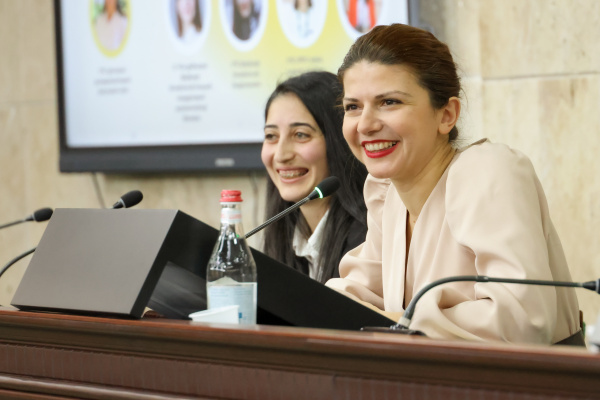
Aghayan highlighted the unique environment of scientific work—the intellectual freedom, collaborative relationships, and creative work culture—as decisive factors in her career. According to her, science is not only a profession but also a foundation for long-term effective activity. She outlined "five stages" for achieving success: knowledge, skills, collaborative networks, resources, and recognition, emphasizing that without the first two, the others can easily collapse. She also stressed that even if a young scientist later chooses a different career, experience in scientific research shapes thinking and skills that are invaluable for professional and personal growth.
Scientific environment as platform for self-realization

Nelly Gharibyan, a master's student at the YSU Institute of Physics, shared that although she had chosen physics out of curiosity about natural phenomena, she only joined research activities in her third year "to try it out". Over time, engaging in the research process made her realize that she was drawn not only to results but to the entire journey—long, sometimes uncertain, yet deeply fascinating. Today, she sees science not merely as a profession but as a means of self-realization.
For Mariam Galstyan, a student at the YSU STEM High School, science offers the chance to explore the world from a new perspective, study the surrounding environment with fresh eyes, and find answers to questions that often remain unresolved in other fields. This intellectual drive forms the foundation of her scientific journey.
The panel also recognized that pursuing science sometimes requires overcoming material challenges. However, the advantages were noted as well: science has become a competitive, growing, and attractive field, particularly due to recent grant programs, which foster innovation, encourage international collaboration, and raise visibility. The scientific environment is distinguished by a collaborative atmosphere, intellectual freedom, and a unique culture of human interaction.

It was also noted that pursuing a career in science sometimes requires overcoming financial challenges. At the same time, the advantages of the field were highlighted, which make it competitive, dynamic, attractive, and in demand. In particular, recent grant programs supporting the development of the scientific sector have fostered competitiveness, scientific innovation, international collaboration, and raised visibility. The scientific environment is distinguished by a collaborative atmosphere, intellectual freedom, and a unique culture of interpersonal relationships.
Failure as natural phase of scientific journey
Panelists discussed the role of failure and surprise in scientific work. They noted that failure is not an intimidating end but a natural and necessary phase that strengthens the researcher. Confronted with unmet expectations, one must recognize that these experiences teach one to overcome challenges and keep going. The panelists emphasized that sometimes failure is perceived as the "unrewarded effort" of one's work. However, in their view, mistakes and disappointments help build resilience and a sense of responsibility.
Wonder as starting point of scientific research
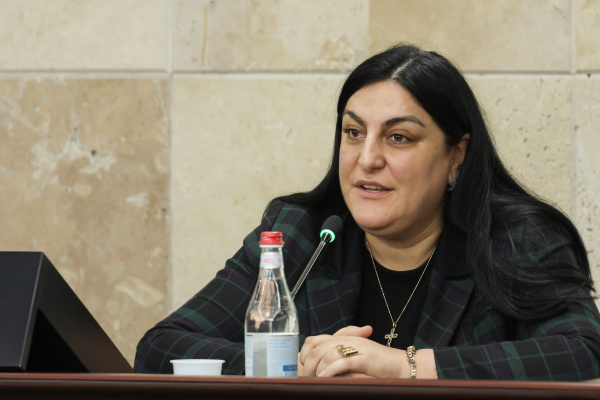
The discussion highlighted the power of wonder as the foundation of scientific thinking. Panelists shared examples of how individual observations or unexpected findings have sparked further research. It was stressed that science is unique in providing opportunities for continuous wonder and discovery over many years, and success largely depends on the researcher's consistency and patience.
Science as world-changing force
The discussion concluded that science combines personal motivation, persistent effort, experience, and patience. Even seemingly minor discoveries can have broad applications in medicine, environmental protection, technology, and other fields. Panelists shared personal examples where research findings had practical applications, contributing to solving pressing issues in their fields, enabling the commercialization of findings, and supporting entrepreneurial activity.
In summary, the appeal of science stems not only from financial stability but also from intellectual freedom, flexibility, transformative potential, and the ability to improve society and the environment. Science is not merely a source of knowledge—it is a driving force for systemic change and development.
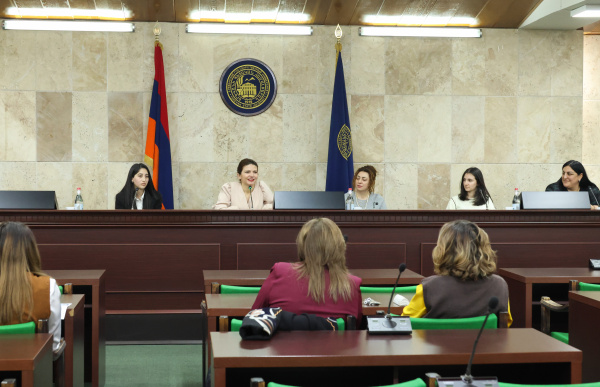
The discussion was held within the framework of the event "Women in Science: Equal Rights, Equal Opportunities", organized on the occasion of the International Day of Women and Girls in Science. The event was organized by Yerevan State University with financial support from the Government of Germany and carried out within the framework of the Feminism in Action for Structural Transformation (FAST) and Women's Empowerment for Wellbeing (WoW) programs, implemented by the German Agency for International Cooperation (GIZ).