December 26, 2025 | 15:09
Education
Policy
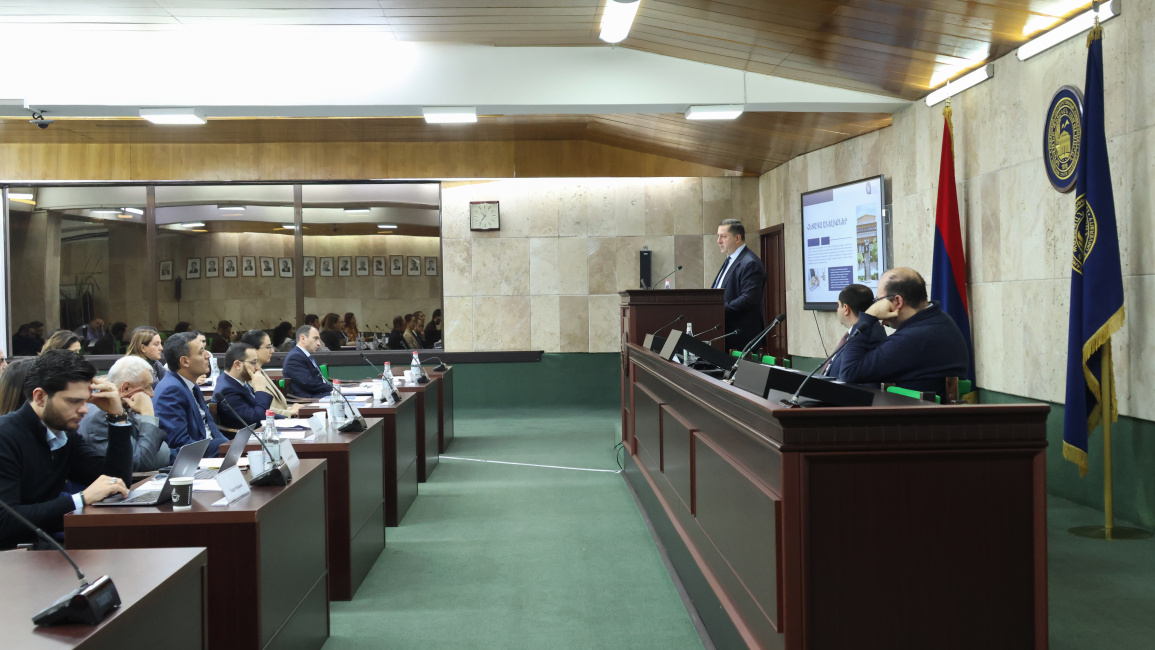
The meeting began with a summary video presentation in which the rector and vice-rectors highlighted the university's activities and key achievements across various sectors.
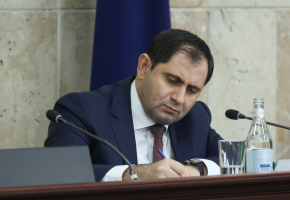
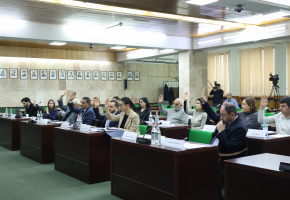
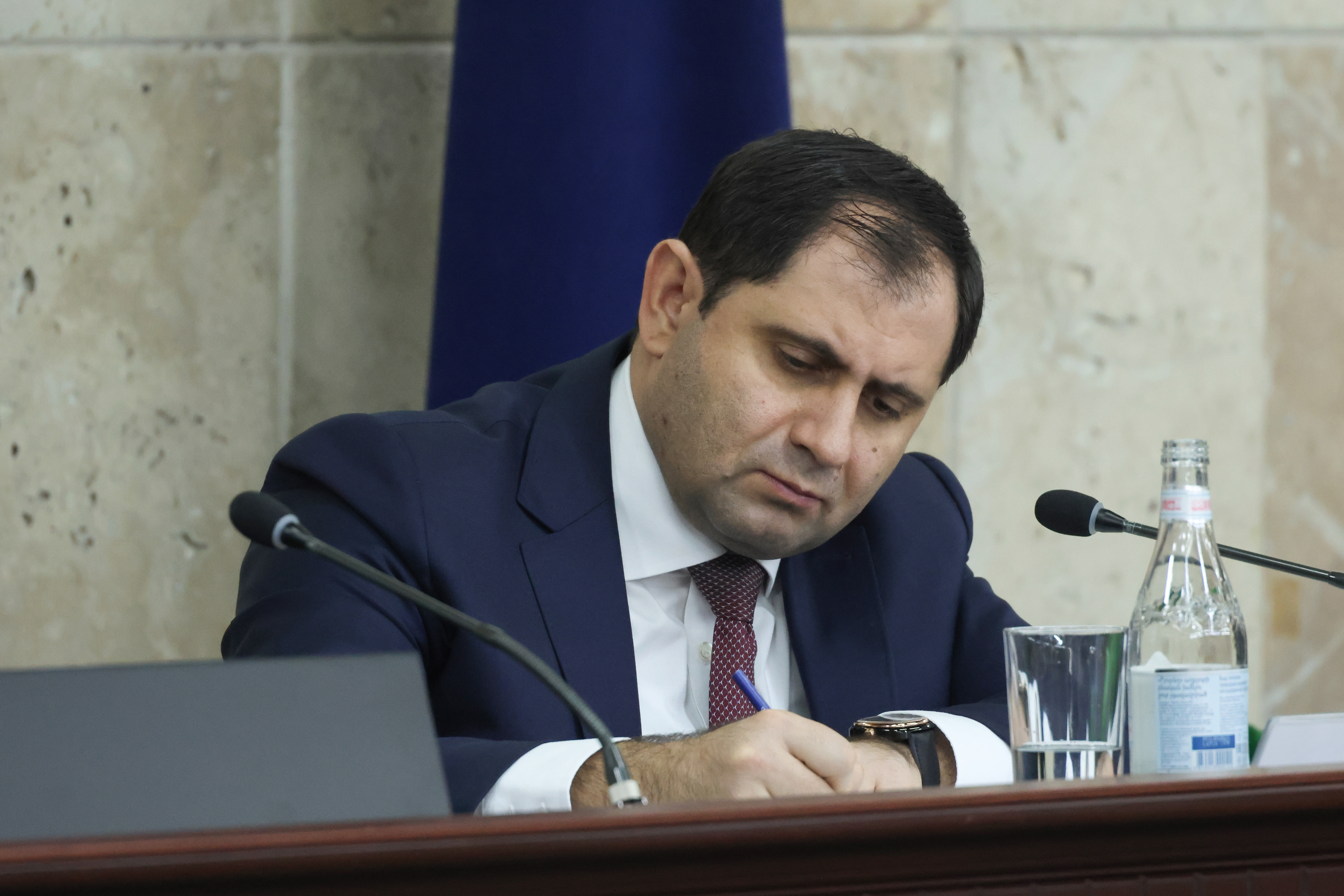
Subsequently, upon the proposal of the Board of Trustees Chairman Suren Papikyan, the agenda was amended to include the election of the board secretary. An open vote was held, resulting in the election of Board of Trustees member, Head of the Chair of Arabic Studies at the Faculty of Oriental Studies, Associate Professor Hayk Kocharyan, as secretary.
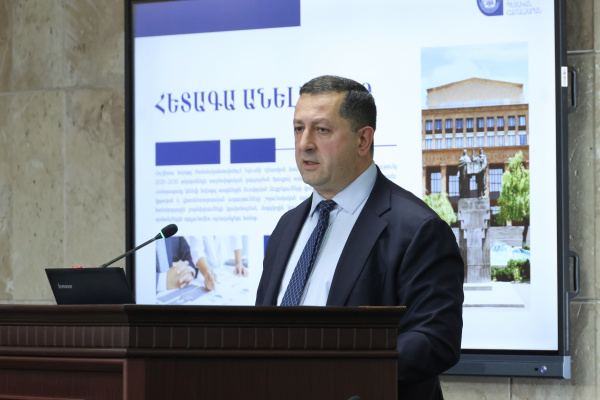
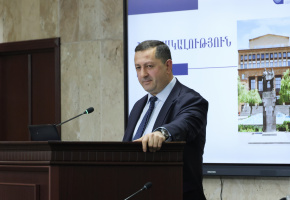
Following this, YSU Rector Hovhannes Hovhannisyan presented the board with the 2024–2025 academic year activity report, covering accomplishments in education and science, steps taken towards internationalization and communication, as well as the results of programs aimed at improving infrastructure and the university environment, recorded achievements, and current challenges.
"For Yerevan State University, the 2024–2025 academic year can be characterized as a year of strategic launch and the first full phase of systemic transformation. During this period, YSU not only formulated its development directions but actively implemented them, achieving measurable results while recognizing that these changes are long-term. The adoption of the 2025–2030 development strategy marked a qualitatively new phase in the university's life, prioritizing interconnected policies, systemic tools, and sustainable institutional solutions over isolated initiatives. Our main objective for the year was to embed the logic of this strategy into the daily operations of the university," the rector said, noting that the presented report is structured in line with this strategy.
The rector emphasized that a priority direction of YSU's development strategy is the modernization of educational content and teaching methodology to meet the evolving demands of the knowledge-based economy and the global higher education environment. He also reported that in the 2024–2025 academic year, 3,437 applicants applied to YSU, of which 2,414 were admitted, including 485 on a tuition-free basis and 1,929 on a tuition-paying basis.
Hovhannes Hovhannisyan emphasized that during the current academic year, YSU recorded significant achievements and tangible results across various fields.
"In the context of internationalization, YSU signed 17 new agreements with foreign partners during the reporting year. In cooperation with the University of Lille in France, the double-degree master's program 'International and Business Communication' was launched. In parallel, six educational programs of the Faculty of Mathematics and Mechanics received international accreditation from the ASIIN agency," the rector said, highlighting the university's key achievements.
The Board of Trustees positively evaluated the report, emphasizing both the importance of the progress made and the need to ensure its continuity.
As a result of the discussions, the Board of Trustees approved amendments to YSU's organizational structure and staffing table for 2026.
Moving on to the next item on the agenda, Rector Hovhannes Hovhannisyan submitted YSU's annual preliminary budget of revenues and expenditures for 2026 for the board's approval. The consolidated budget for 2026 includes the financial indicators of Yerevan State University and its Ijevan Branch. It has been developed to ensure financial continuity, operational stability, and optimal allocation of resources for the university's educational, scientific, and administrative activities.
"The 2026 budget has been drafted with a deficit of 585 million AMD, which is not structural in nature but rather has a temporary/accounting character, conditioned by grant and targeted funding received in previous reporting periods, the expenditure obligations of which are planned to be implemented in 2026, thereby creating a timing mismatch between revenues and expenditures," the YSU rector emphasized.
He noted that the full amount of the deficit is covered by cash reserves accumulated from prior years; therefore, the 2026 budget does not pose any risk to the university's solvency or its ability to service obligations. According to him, the university has sufficient cash coverage to meet its obligations in a timely manner without the need to attract external financing.
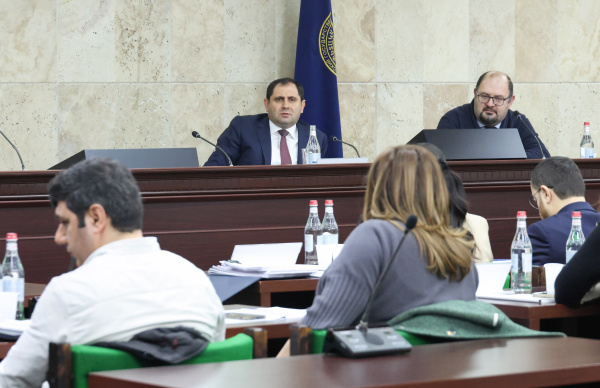
The YSU rector further explained that the budget preparation process was based on an analysis of performance indicators from previous reporting years, consideration of financial and strategic obligations, and alignment with established priorities. As a result of this analysis, stable expenditure components, development directions, and items with optimization potential were identified. The budgeting process was carried out through a participatory model involving the university's structural units, within which these units formulated and submitted their financial requirements, substantiating them with activity volumes, programmatic needs, and expected outcomes. The submitted requests were analyzed from financial, substantive, and strategic alignment perspectives.
Hovhannes Hovhannisyan also noted that for 2026, it is planned to increase the salaries of academic staff holding long-term five-year contracts under the replacement procedure by approximately 30%. The 2026 budget also provides for a 13th salary and a summer bonus amounting to 50% of the salary.
The YSU Board of Trustees deemed the annual preliminary budget of revenues and expenditures for 2026 satisfactory and approved contracts exceeding the threshold of 100 million AMD.
At the conclusion of the meeting, the Minister of High-Tech Industry of the Republic of Armenia, Mkhitar Hayrapetyan, presented a proposal regarding the possible introduction of artificial intelligence (AI) literacy. The minister noted that several months ago he had proposed to Minister of Education, Science, Culture, and Sports Zhanna Andreasyan to consider including AI literacy as a mandatory subject in both general and higher education systems. He noted that discussions with Minister Andreasyan were productive, and it was agreed to launch a pilot program starting at the higher education level. As a member of the YSU board of trustees, he suggested exploring the possibility of implementing this initiative in the 2026–2027 academic year.
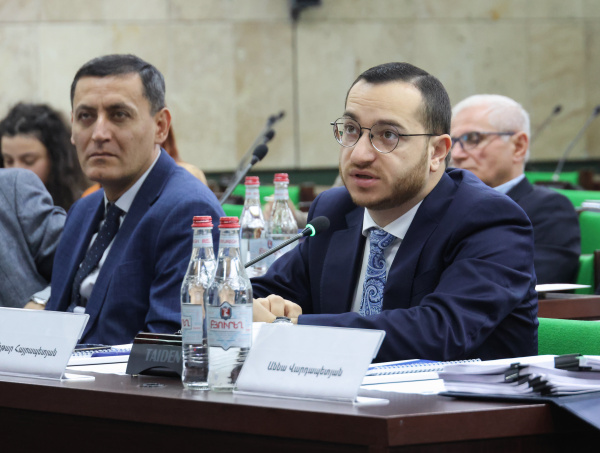
"The goal of this program is to ensure that students, regardless of their field of study, can safely and effectively use artificial intelligence tools within their professional domains by understanding core concepts—such as data, models, and limitations—critically evaluating AI outputs, and designing and managing AI-based work, services, and policies," he said.
The Chairman of the Board of Trustees, Suren Papikyan, emphasizing the importance of Yerevan State University's involvement in this process, noted that Mkhitar Hayrapetyan's initiative is fully aligned with the demands of the time.
The meeting concluded with a substantive exchange of views and the adoption of decisions, designed to ensure the continued implementation of the university's strategic programs and to establish clear priorities for the year ahead.